

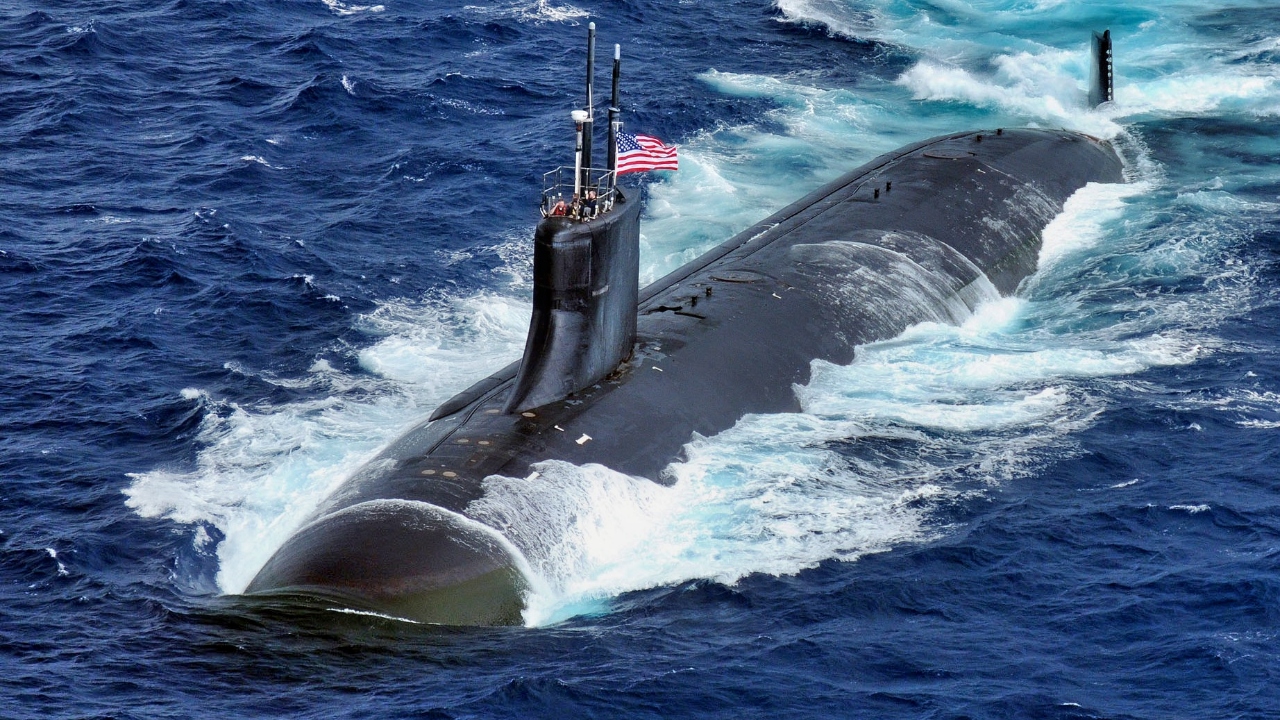
Key Points and Summary – In October 2021, the advanced Seawolf-class submarine USS Connecticut struck an uncharted underwater mountain in the South China Sea.
-An official investigation concluded the $3 billion incident resulted from an “accumulation of errors and omissions” that fell far below Navy standards. Failures in navigation planning, watchteam execution, and risk management allowed the collision to happen, injuring 11 sailors and causing extensive damage.
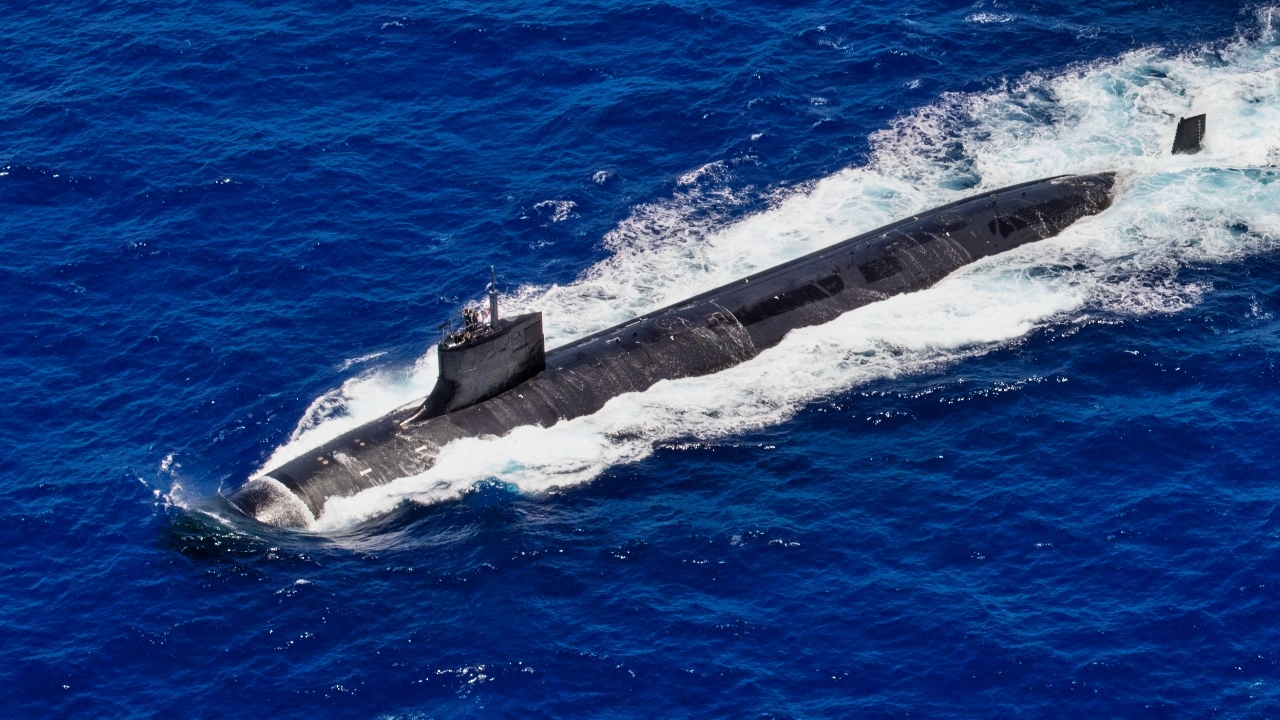
(June 22, 2021) Seawolf-class fast attack submarine USS Seawolf (SSN 21) transits the Pacific Ocean, June 22, 2021. Seawolf is currently underway conducting routine maritime operations in U.S. 3rd Fleet. (U.S. Navy photo by Mass Communication Specialist 3rd Class Olympia O. McCoy)
-The costly repairs are expected to keep the submarine out of service until at least late 2026, a significant blow to the U.S. Navy’s elite and very small Seawolf fleet.
The U.S. Navy Nearly Lost a Seawolf-Class Submarine
Besides actual capsizing in a tidal wave and being hijacked by pirates, one of the biggest concerns for a ship’s crew is the thought of running aground.
For the crews of underwater vessels, i.e., submarines, add running into underwater mountains to that list of fears and undesirable occurrences. One might wonder how such a collision could occur, given (1) the sheer size of underwater mountains and (2) the sophisticated sonar of modern submersibles.
Yet it has happened on more than one occasion. Accordingly, the National Security Journal now wraps up a two-part series on incidents in which US Navy submarines ran afoul of—and ran into—seamounts.
We started with the story of the Los Angeles-class submarine USS San Francisco (SSN-711), and now conclude with the star-crossed tale of the Seawolf-class boat USS Connecticut.
USS Connecticut (SSN-22) History in Brief
First, a wee bit of backstory is in order. USS Connecticut is the second ship of the Seawolf-class of nuclear-powered fast-attack submarines (SSN; “Submersible Ship Nuclear”).
She was laid down on September 14, 1992, launched on September 1, 1997, and commissioned on December 11, 1998. SSN-22 displaces 9,138 tons fully laden whilst submerged, has a hull length of 353 feet (108 meters), and has a maximum submerged speed of approximately 35 knots (20 knots in silent mode).
Connecticut has a crew complement of 14 commissioned officers and 126 enlisted seamen, and an armament suite consisting of eight 26-inch (660 mm) torpedo tubes for Mk-48 ADCAP torpedoes, Harpoon anti-ship missiles, and Tomahawk cruise missiles.
NOTE: SSN-22 is the fifth active naval vessel to bear the moniker of USS Connecticut. Her most recent eponymous predecessor was BB-18, a Connecticut-class pre-dreadnought battleship that served as the flagship of the so-called Great White Fleet and also served during World War I.
Seawolf-Class Connecticut vs. Seamount Story
The unlucky submarine’s incident took place sometime in October 2021, somewhere underneath the South China Sea; the location of the incident added embarrassment and insult to injury for the US Navy, as it spurred allegations by China about spying on its own submarine base in Hainan (which the USN vigorously denied, of course).

Seawolf-Class. Image Credit: Creative Commons.
The seamount was uncharted; according to the National Oceanic and Atmospheric Administration (NOAA), an estimated 100,000 seamounts could rise more than 3,000 feet from the seafloor.
Luckily, no sailors were killed (unlike in the tragic aforementioned case of USS San Francisco), and the vessel was able to safely reach Guam under its own power a week later.
However, 11 crew members were still injured, and the ship was so badly damaged that she was unable to properly ascend toward the surface for 11 minutes; finally, at a depth of 74 feet (22.55 meters) and increasing, the Chief of the Watch “restored the trim pumps by pumping from one vented auxiliary tank to another…With the system restored, he commenced deballasting and pumped approximately 100,000 pounds of water overboard.”
So, Why Did It Happen?
As noted by defense expert Maya Carlin in an October 2024 article published by the Center for Security Policy:
“As detailed in the official report, the incident “resulted from an accumulation of errors and omissions in navigation planning, watchteam execution, and risk management that fell far below US Navy standards … Prudent decision-making and adherence to required procedures in any of these three areas could have prevented the grounding … Stars and Stripes also notes that prior to the crash, ‘At least one sailor detected sonar readings that were not matching the navigational chart of the undersea area. However, the officer of the deck did not report the hazard to the Connecticut’s commanding officer, who was not standing duty at the time.’”
Mrs. Carlin added that the unfortunate boat’s collision was an example of the Swiss cheese model, where inconstant weaknesses (or holes) can align and cause catastrophic damage that would otherwise be prevented.
Connecticut’s Current Status?
SSN-22 is still undergoing repairs and is not expected to be able to return to service until at least late 2026, a significant hit in the USN’s pocketbook, as the ship cost $3 billion USD to build. In the meantime, that leaves only two currently operational Seawolf submarines, the USS Seawolf (SSN-21), the lead ship of the class, and the USS Jimmy Carter (SSN-23).
That, in turn, increases the sense of urgency to get additional Virginia-class SSNs up and running to replace the aging Los Angeles-class boats sooner rather than later.
About the Author: Christian D. Orr, Defense Expert
Christian D. Orr is a Senior Defense Editor. He is a former Air Force Security Forces officer, Federal law enforcement officer, and private military contractor (with assignments worked in Iraq, the United Arab Emirates, Kosovo, Japan, Germany, and the Pentagon). Chris holds a B.A. in International Relations from the University of Southern California (USC) and an M.A. in Intelligence Studies (concentration in Terrorism Studies) from American Military University (AMU).
More Military
F-35: The Best Fighter on Earth


