

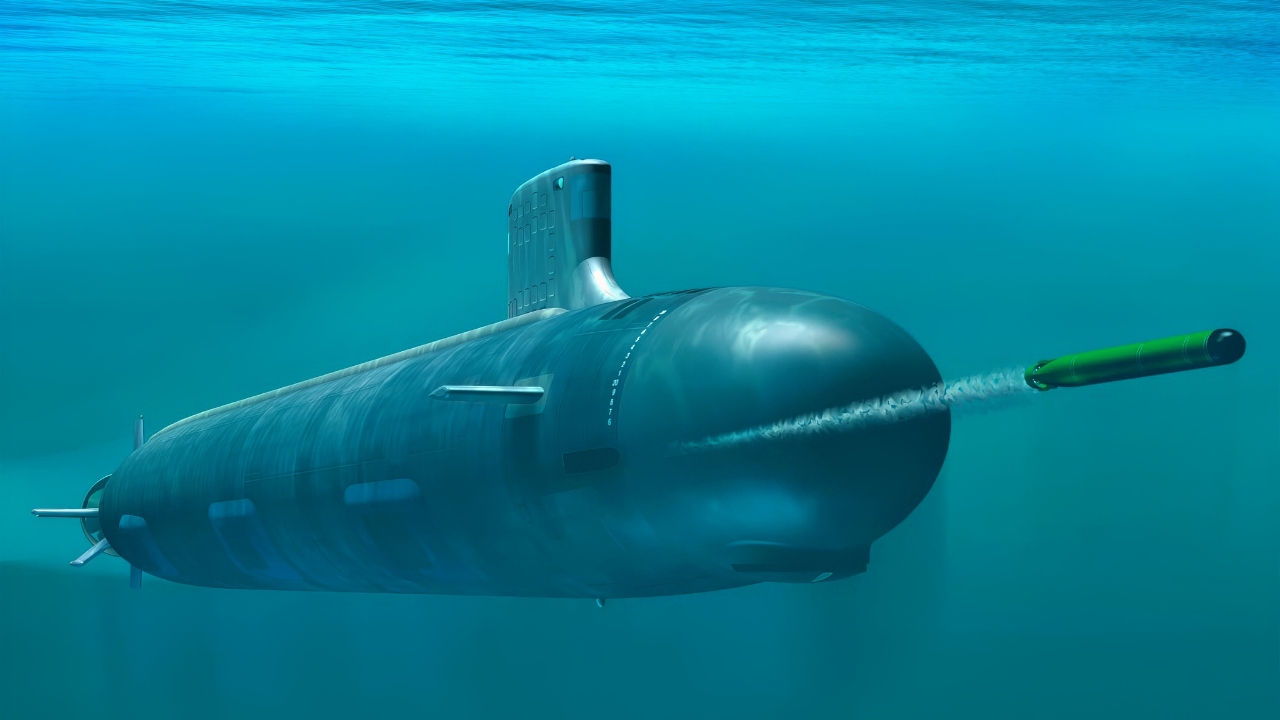
Key Points and Summary – The U.S. Navy faces a “worsening attack submarine deficit” because its aging Los Angeles-class submarines are retiring faster than new Virginia-class boats can be built.
-Despite a long-standing goal to procure two Virginia-class subs per year, the industrial base—strained by the demands of the new Columbia-class ballistic missile submarine program—has failed to meet this production rate since 2019.
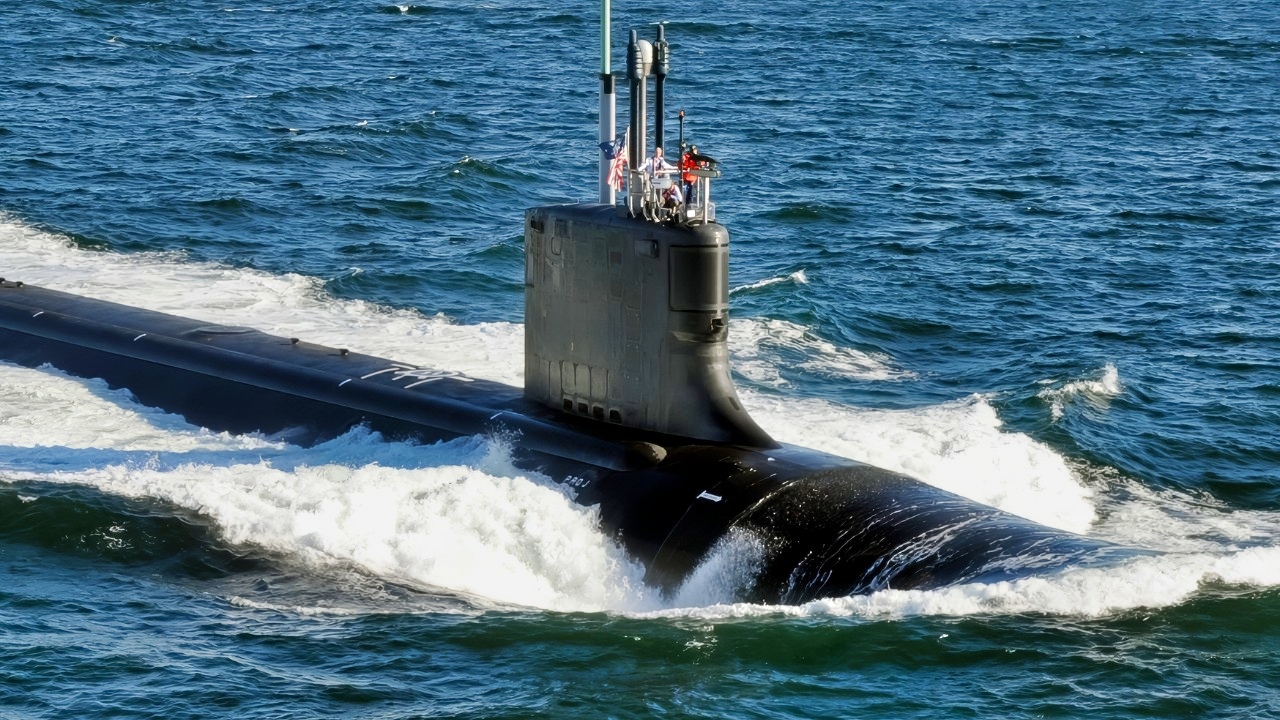
USS Missouri Virginia-Class Submarine. Image Credit: Creative Commons.
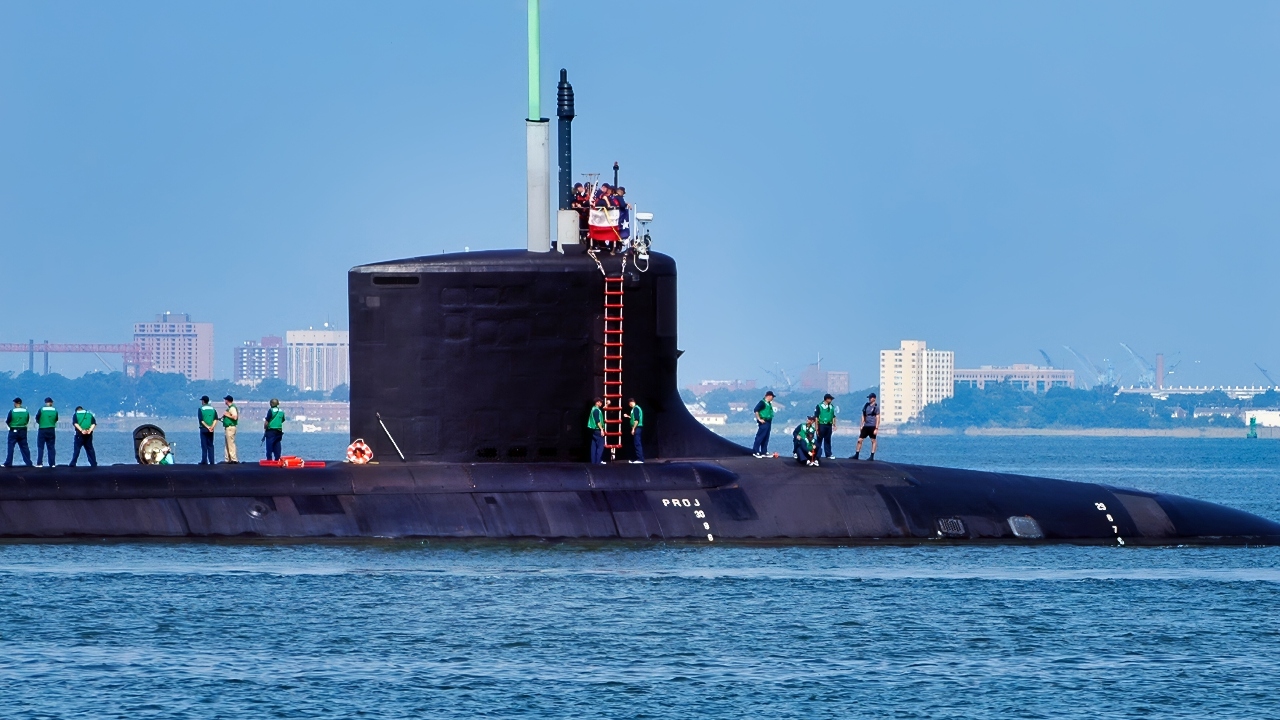
Norfolk, Va. (Aug. 22, 2006) – Sailors stationed aboard the Pre Commissioning Unit (PCU) Texas (SSN 775) stand topside as she gets underway from Naval Station Norfolk.
-This growing gap is critical, as the stealthy Virginia-class submarines are considered “essential” to countering a potential Chinese amphibious assault on Taiwan, and the fleet is falling short of its 50-boat goal for the 2040s.
The Virginia-Class Submarine Crisis?
For many years, the United States Navy, Congress, and defense industry leaders have been planning and discussing a significant increase in attack submarine production each year to address and offset the worsening attack submarine deficit now faced by the Navy.
More than a decade ago, the US Navy’s combatant commanders’ needs for attack submarines outpaced the available supply, and the gap has progressively worsened over the past decade.
At several points in recent years, the US Navy commissioned and launched specific industrial base studies to assess the industry’s ability to flex and accommodate the need to build two Virginia-class submarines per year, even as the Columbia-class begins to emerge.
At several points, Navy decision-makers and congressional appropriators even outlined an ambitious plan to build three Virginia-class submarines per year.
Despite large-scale efforts from General Dynamics Electric Boat and HII, as well as some funding increases implemented by lawmakers and Navy decision-makers, the desired pace of submarine construction has yet to materialize.
This problem of an attack submarine deficit has been outlined for years in the US Navy’s 30-year shipbuilding plan, which, among other things, detailed the growing drop in available submarines.
The question is one of production capacity, budget, and simple math.
Los Angeles-class submarines, which have served admirably for decades, are retiring at a faster pace than the Virginia-class attack submarines can be replaced; therefore, the submarine deficit has been growing.
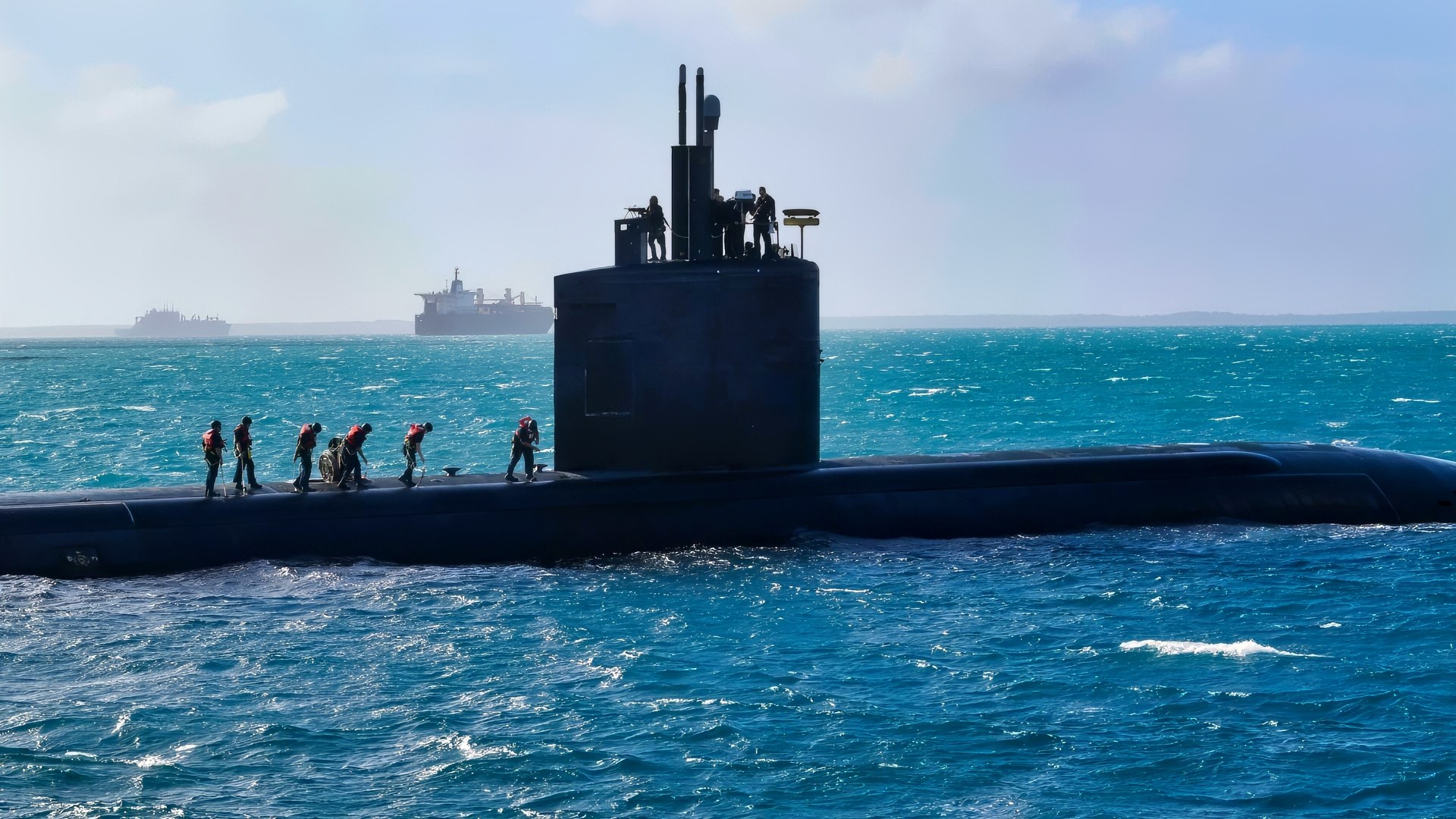
DIEGO GARCIA, British Indian Ocean Territory (Aug. 21, 2020) – USS Greeneville (SSN 772) enters Diego Garcia’s harbor Aug. 21, 2020. Sailors assigned to U.S. Navy Support Facility (NSF) Diego Garcia provided mail delivery and trash disposal for Greeneville. NSF Diego Garcia provides logistic, service, recreational and administrative support to U.S. and Allied Forces forward deployed to the Indian Ocean and Arabian Gulf. U.S. Navy Photos by Mass Communication Specialist Seaman Michael T. Porterfield. (Released)

(Mar. 21, 2025) – The Los Angeles-class fast-attack submarine, USS Santa Fe (SSN 763), transits the Pacific Ocean, March 21, 2025. Santa Fe is one of four Los Angeles-class fast-attack submarines assigned to Commander, Submarine Squadron 11. Santa Fe is part of Commander Submarine Squadron 11, home to four Los Angeles-class fast-attack submarines, which are capable of supporting various missions, including anti-submarine warfare, anti-ship warfare, strike warfare and intelligence, surveillance and reconnaissance. (U.S. Navy photo by Mass Communication Specialist 1st Class Keenan Daniels)
The challenge has been intensified by the arrival of the Columbia-class, nuclear-armed ballistic missile submarines, which are also now under construction.
The service, along with its industry partners, has struggled to sustain a pace of two Virginias per year as construction demands for the Columbias emerge and intensify.
Two Virginia-class Boats “Per Year”
The Navy has procured two Virginia-class submarines per year since 2011; however, the service and its industrial partners have been unable to build the submarines at this pace since 2019, a circumstance that has significantly exacerbated the service’s submarine deficit problem in recent years.
As of mid-2025, the US Navy operated 19 Virginia-class boats and 29 Los Angeles-class submarines, according to Embleholics.
Yet, the Navy has long hoped to operate a fleet of up to 50 Virginia-class attack submarines by the mid-2040s, according to its 2016 30-year shipbuilding plan.
The US Navy’s 2025 “30-Year Shipbuilding Plan” states that the service plans to again build two Virginia-class submarines per year by 2028.
Virginia-class submarines are built by a cooperative arrangement between the Navy and Electric Boat, a subsidiary of General Dynamics, and Newport News Shipbuilding, a division of Huntington Ingalls Industries.
Each industry partner constructs portions, or “modules,” of the submarines, which are then integrated to form a complete vessel.
Need for Submarines
There is virtually “zero” ambiguity when it comes to “why” the US Navy needs additional submarines, as the reasons emerge purely from operational need, particularly in the Pacific theater.
The need for advanced Block III and beyond Virginia-class submarines arises from their ability to access high-risk areas while remaining less detectable than large surface warships.
Block III, Block IV, and Block V Virginia-class submarines, in particular, are now operating with enhanced quieting technologies, including engine adjustments, sound-absorbing coating materials, and new generations of antennas that are less likely to emit a detectable signal.
In a world of contingency, Virginia-class attack submarines could prove essential to stopping any People’s Liberation Army (PLA) amphibious assault on Taiwan, given that they may be able to maneuver into position to destroy Chinese warships, such as destroyers and amphibious ships, without being detected.
Surface warships can, of course, easily be seen by drones, satellites, and other surveillance systems.
Yet, ultra-quiet, stealthy attack submarines lurking beneath the surface are far more difficult to locate.
This is particularly true in expansive combat theaters such as the Pacific, as the US Navy would likely need to “mass” undersea firepower should it be forced to confront a PLA invasion of Taiwan.
About the Author: Kris Osborn
Kris Osborn is the President of Warrior Maven – Center for Military Modernization. Osborn previously served at the Pentagon as a highly qualified expert in the Office of the Assistant Secretary of the Army—Acquisition, Logistics & Technology. Osborn has also worked as an anchor and on-air military specialist at national TV networks. He has appeared as a guest military expert on Fox News, MSNBC, The Military Channel, and The History Channel. He also has a Masters Degree in Comparative Literature from Columbia University.
More Military
The M113: America’s “Forgotten” APC That Just Won’t Quit
How British Aircraft Carriers Keep Sinking in War Games
Boeing F-47 NGAD Fighter: One Missing Fact Could Decide Its Fate
Canada Knows How to Sink U.S. Navy Nuclear Aircraft Carriers


