

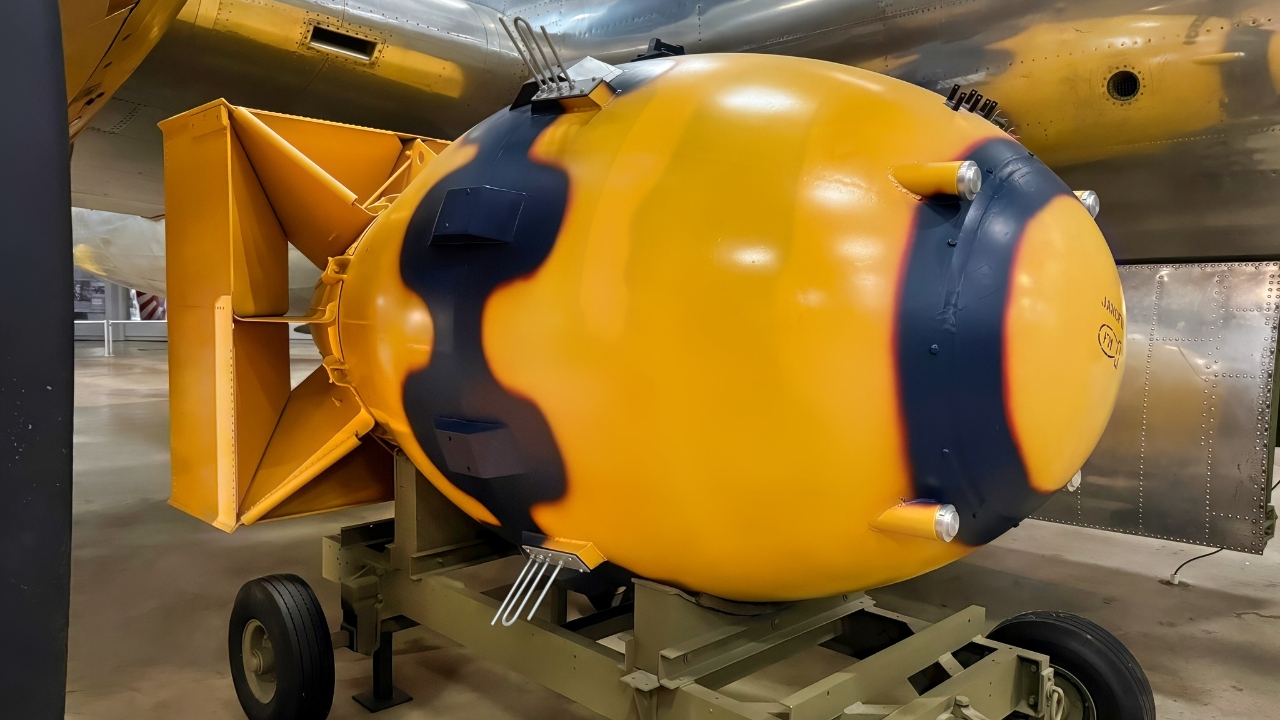
In April and again last month, Kim Yo-Jong, North Korean dictator Kim Jong-Un’s sister and influential policy adviser, demanded that President Trump explicitly acknowledge and accept that her country possesses a nuclear arsenal. Her comment has increased speculation throughout the international community about which other nations might follow the Democratic People’s Republic of Korea (DPRK) into the once-exclusive club of nuclear weapons powers. It is an important question, and the probable consequences vary significantly from case to case.
The Nuclear Weapons Challenge
Some of the most likely candidates have been discussed for many years, but others are relatively recent entrants. The former category includes major powers such as Japan and Germany. Indeed, if the United States had not emphasized its emphatic commitment to extended deterrence to shield those countries, both Tokyo and Berlin might well have opted to follow London and Paris to build their own independent deterrents. A similar dynamic influenced the decisions of secondary, but quite technologically capable, U.S. allies such as South Korea and Taiwan to remain nonnuclear.
During the 1960s, it was widely assumed both among international affairs experts and general populations throughout the world that by the early twenty-first century as many as two dozen countries would possess nuclear arsenals. Washington’s passionate support for the 1968 Nuclear Nonproliferation Treaty (NPT) helped slow the probable proliferation trends, especially among key U.S. allies. The incentives for all of those governments to continue relying on U.S. extended deterrence pledges, though, have gradually weakened for multiple reasons.
The emergence of additional nuclear-weapon powers, including the People’s Republic of China (PRC), Israel, India, Pakistan, and most recently, North Korea, has created a less stable and unpredictable strategic environment.
The addition of the DPRK causes obvious worries for both Japan and South Korea, and it strengthens domestic sentiment in those countries for an independent nuclear deterrent. The long-standing animosity between India and Pakistan unsettles the entire surrounding region, as does the rivalry between India and China. Leaders in Japan and South Korea understandably wonder if Washington’s extended deterrence commitment can truly deter a volatile regime like that in Pyongyang—especially now that North Korean missiles can reach the U.S. homeland.
Why Do States Want Nukes Now? Ask America
Domestic political changes in the United States also foster doubts about the U.S. commitment to Washington’s allies in East Asia and Europe. Even during his first term as president, Donald Trump issued warnings that the U.S. defense commitment to allies was not unconditional.
His principal motive was to pressure those allies to assume more of the collective defense burden by increasing their own military spending. Abandoning the allies Trump viewed as a drastic alternative, not the preferable option, but his hectoring and criticisms created uneasiness.
Trump’s return to the White House following the 2024 presidential election squelched the brief sense of relief that officials and populations in allied countries had experienced after his defeat in 2020 and the elevation of Joe Biden with his utterly conventional views regarding the sanctity of Washington’s alliances. The confrontational rhetoric and harsh trade policies toward traditional U.S. allies and security dependents that Trump quickly adopted during the initial months of his second term have already revived uneasiness about the U.S. relationship among countries in both Europe and East Asia. That development is leading to a reassessment of nuclear weapons policy in Japan. Seoul, as well as Tokyo, still hopes to terminate Pyongyang’s nuclear buildup, but those hopes grow fainter and fainter even as the level of confidence in Washington’s security guarantees diminishes.
A more volatile security environment, combined with greater uncertainty about the reliability of Washington’s security commitments is sparking renewed interest in several countries about developing independent nuclear capabilities. It is a prominent topic of discussion again in both South Korea and Japan. New entrants are also making an appearance with respect to that issue. There appears to be significant and growing sentiment in Poland that the country must “have access to nuclear weapons” to adequately provide for its own defense against a looming Russia. It is not yet clear what the term “access to” means in operational terms.
Are Polish leaders talking about something akin to French President Emmanuel Macron’s comment earlier this year that he would consider extending the protection of his country’s nuclear deterrent to France’s nonnuclear NATO partners in Central and Eastern Europe? Do Polish leaders instead have in mind authorizing the United States (or Britain or France) to deploy nuclear weapons in Poland? Or does Warsaw want control over such weapons regardless of which nuclear NATO ally retains official ownership? At the moment, such details remain unclear. However, there is no longer any doubt that Poland wants a nuclear weapons capability in some form.
Another rising European power, Turkey, also is showing interest in developing that capacity, to the approval of public opinion. Such an attitude should create considerable uneasiness. Ankara is displaying aggressive ambitions on multiple fronts. It is working closely with the new Islamist government in Damascus to eradicate the last remaining Kurdish self-governing enclaves in northeast Syria along the Turkish-Syrian border. Ankara’s military assertiveness has spiked to the point of generating tense aerial confrontations with Israeli planes also operating in Syrian airspace.
Turkey’s ongoing effort to play an outsized diplomatic and economic role in the conflict between Ukraine and Russia also indicates surging great power ambitions. Although Ankara has yet to express explicit intentions to build a nuclear arsenal, it has indicated interest, and the country has the technological capabilities to do so. Crossing that line may be the final phase of Turkey fully joining the ranks of the world’s great powers.
What Happens Next?
These are the countries that should be monitored with the greatest scrutiny if one wants to identify the next power to elbow its way into the global nuclear weapons club. The nonproliferation system has had a good run since the signing of the NPT in 1968. Indeed, it has had a longer run than anyone had the right to expect. However, the world is changing rapidly, and we likely must deal with a new international system that has a larger number of nuclear players.
That development will test the arguments embraced by respected realist international relations scholars, especially the late Kenneth Waltz and Professor Christopher Layne, currently the Robert M. Gates Chair in Intelligence and National Security at the George Bush School of Government and Public Service at Texas A&M University. Waltz, Layne, and others have argued that nuclear proliferation might actually prove stabilizing rather than destabilizing by recreating the cold-war era’s global dynamic of mutual assured destruction in multiple regions.
Time will tell.
About the Author: Ted Galen Carpenter
Ted Galen Carpenter is a senior fellow at the Randolph Bourne Institute and a contributing editor at The National Security Journal. He is the author of 13 books and more than 1,300 articles on national security, international affairs, and civil liberties. His latest book is Unreliable Watchdog: The News Media and U.S. Foreign Policy (2022).
More Military
F-35: The Best Fighter on Earth


Vlad
August 28, 2025 at 9:23 am
Unlikely, but japan now has one of the largest plutonium stockpiles in the world, currently put at about 45 tons with an approximate 10 tons of that being kept on home soil.
Today germany, italy, turkey, netherlands are already closet-type nuclear powers as they have US-supplied tactical nuke arsenals kept in storage ready for immediate use in a coming ww3.
But would those nukes save them during the real ww3.
That question alone shows those countries are fully prepared to sign their own death warrants without the approval or permission of their own citizenry.
As for south korea, there’s every chance of the entire korean race or people disappearing altogether from the face of the Earth in a coming nuke confrontation. With whoever they choose to confronted or fight.
The south koreans have totally no say in the matter.
Uncle sam today holds them in a very tight chokehold, held tightly under the armpits with totally zero right to protest or oppose.
Today, now, the entire world is transitioning straight into the Age of Thermonuclear Struggle, thanks to washington being so eager to acquire and possess the ability to deliver a decapitating first-strike against all rivals.
That was the reason why vladimir on march 1 2018 unveiled his six novel weapons.
Though admittedly, those weapins are still very much a work-in-progress. Unlikely to impress or move washington.
NOT one little bit.
Off-CNN
August 28, 2025 at 5:45 pm
When joe biden was US president, the world was in total chaos. Total mayhem.
The bloody ukro conflict broke out, the genocidal war in gaza broke out, and extremely violent haitian gangs took over control of port au prince.
Cartel gangs shot up people in next-door mexico as if tomorrow’s not coming.
And prison riots and gang fights occurred in equador, el salvador and colombia and eleswhere.
Then came trump’s election victory on 5 nov 2024.
Yet today, things haven’t changed at all. Still high chaos and mayhem everywhere.
So, in 2029, the next US president could well be gavin newsom, a warlike hawk democrat who’s a splitting image of joe biden.
That spells massive trouble for the world and for mankind.
The top reason for all the above is the US and its allies, or cronies, have a stranglehold on possession of nuclear weapons.
Possession, as they say, is nine-tenths of the law.
Thus, countries like russia and iran MUST develop space-based nuclear arsenals.
And give newsom a nasty surprise.
Matt Musson
August 29, 2025 at 10:29 am
South Korea could go nuclear over a long weekend. But, could they detonate Nukes in the North without showering themselves with fallout and EMP?