
Australia has committed another A$11 billion to extend the operational life of its six Collins-class submarines into the 2030s, Deputy Prime Minister and Defense Minister Richard Marles confirmed this month. The decision is a hedge against the AUKUS submarine program, which is supposed to deliver three Virginia-class boats to Australia in the early 2030s before transitioning to the jointly developed SSN-AUKUS design with Britain. Some U.S. Virginia-class submarines are now arriving up to four years late, and American yards are building roughly 1.2 boats per year against a Navy target of 2. Analysts at ASPI are openly raising the B-21 Raider as a bridge.
AUKUS Subs or AUKUS B-21 Raiders?
Australia this month committed another A$11 billion to extending the operational life of its six Collins-class submarines, with Deputy Prime Minister and Defense Minister Richard Marles confirming the additional funding as part of Canberra’s effort to keep the aging fleet operational into the 2030s.
The decision is intended to prevent a major capability gap while Australia waits for the American Virginia-class nuclear-powered submarines under the AUKUS agreement and, eventually, its future SSN-AUKUS fleet.
The announcement is a good reminder that the AUKUS submarine program is far from guaranteed success, with the entire plan heavily dependent on a U.S. submarine industrial base that is already struggling to produce enough boats for the American Navy.
Under the AUKUS agreement, Australia is expected to purchase at least three Virginia-class attack submarines from the United States beginning in the early 2030s before eventually operating a new jointly developed SSN-AUKUS design with Britain.
But American submarine construction delays and workforce shortages, combined with maintenance backlogs and industrial issues, mean the program remains technically at risk. Despite commitments from all parties involved, concerns remain about whether Washington can realistically deliver the boats on time while meeting U.S. Navy requirements.
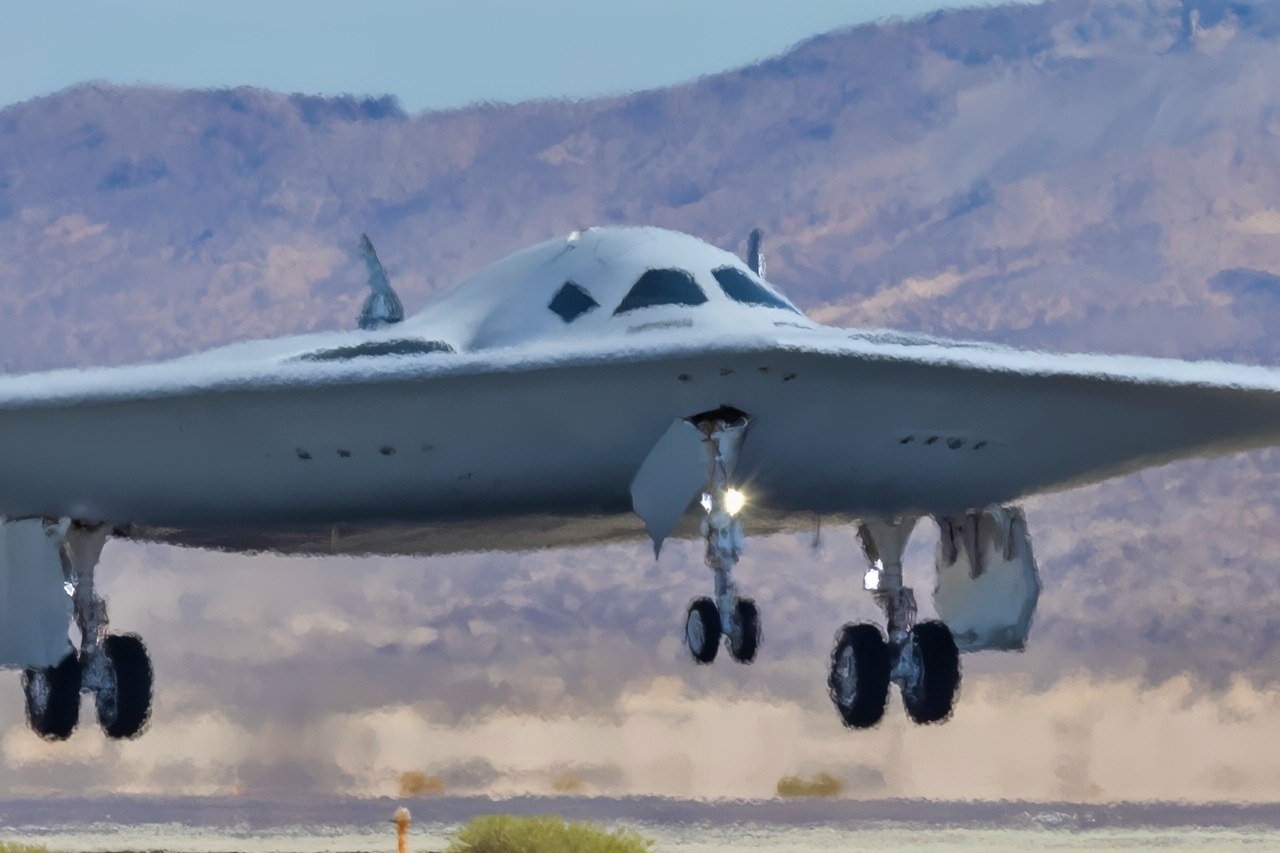
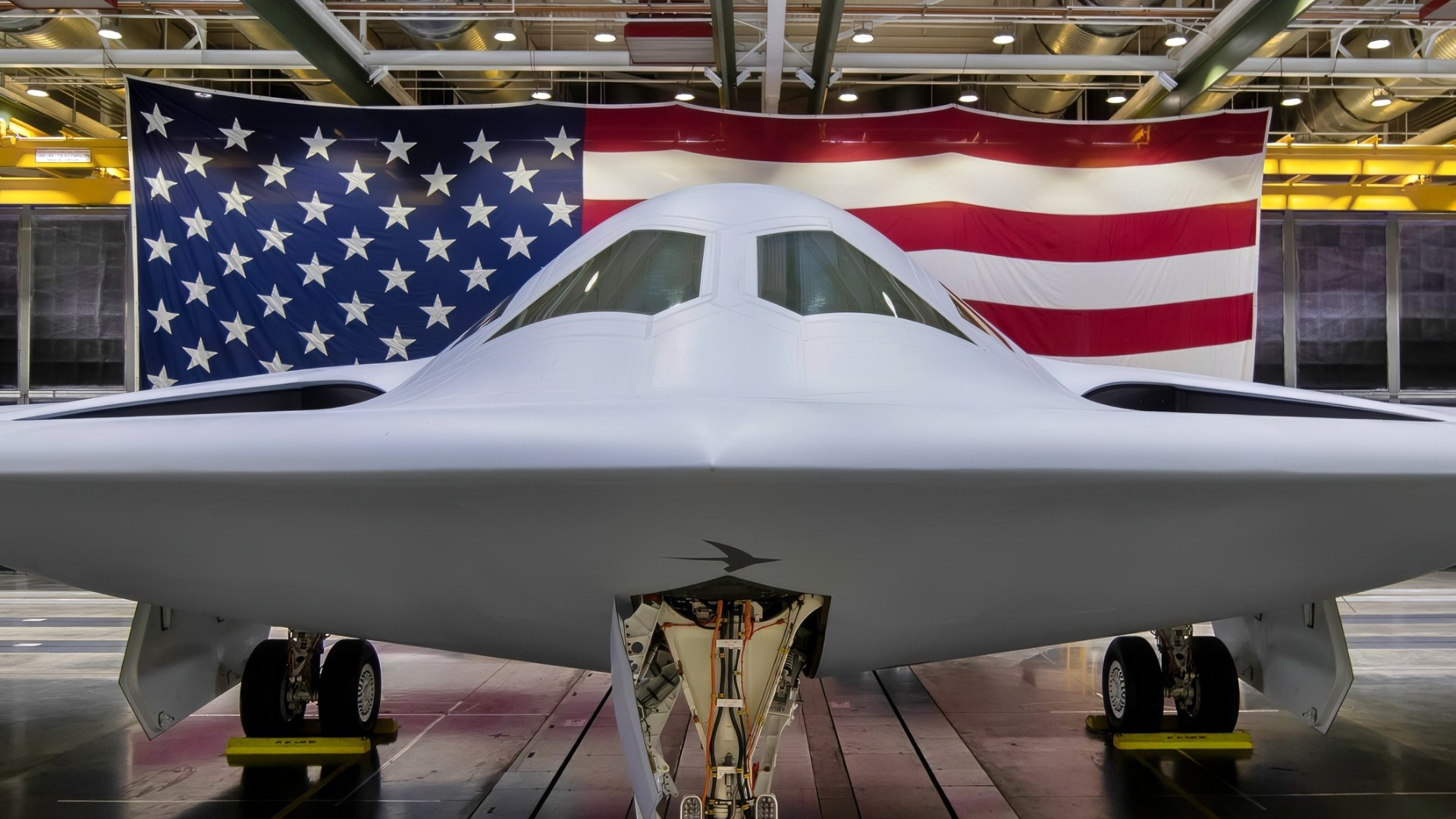
A B-21 Raider test aircraft lands at Edwards Air Force Base, Calif., during ongoing developmental flight testing, Sept. 11, 2025. The B-21 will be the backbone of the bomber fleet; it will incrementally replace the B-1 Lancer and B-2 Spirit bombers. (U.S Air Force photo by Todd Schannuth)

A second B-21 Raider, the nation’s sixth-generation stealth bomber, joins flight testing at Edwards Air Force Base, Calif., Sept. 11, 2025. The program is a cornerstone of the Department of the Air Force’s nuclear modernization strategy, designed to deliver both conventional and nuclear payloads. (Courtesy photo)

A second B-21 Raider, the world’s sixth-generation stealth bomber, test aircraft arrives at Edwards Air Force Base, Calif., Sept. 11, 2025. The addition of the second test aircraft expands mission systems and weapons integration testing, advancing the program toward operational readiness. (Courtesy photo)
That growing uncertainty has led some strategists to openly discuss alternatives or interim capabilities. Analysts at the Australian Strategic Policy Institute (ASPI) have argued that long-range stealth bombers such as the Northrop Grumman B-21 Raider or the Northrop B-2 Spirit could provide Australia with a strategic strike capability before AUKUS submarines fully arrive.
What AUKUS Is Supposed to Deliver
AUKUS is a security pact among Australia, the United States, and the United Kingdom, announced in 2021. It aims to provide Australia with nuclear-powered attack submarines for the first time in its history.
The current “optimal pathway” for the program involves Australia first rotating American and British submarines through Australian bases while training Australian crews and building industrial infrastructure.
Canberra would then buy three Virginia-class submarines from the United States, with an option for two more, before transitioning to the future SSN-AUKUS design co-developed with Britain.
Australian leaders continue to publicly insist that the plan remains on track, with Marles describing AUKUS as the “single biggest leap in Australia’s defense capability in our history.” In April, Marles also said the Australian government is “working really well” with the United Kingdom and that Canberra is “comfortable that AUKUS is on track.”

SSN-AUKUS. Image Credit: Creative Commons.
The logic behind the project is this: nuclear-powered submarines can operate across the Indo-Pacific for long periods without surfacing, threaten hostile naval forces, launch cruise missile strikes, and remain extremely difficult to detect. For Australia, they are intended to serve as the country’s primary long-range deterrent against China.
America’s Industrial Problem
The program is ambitious, and it exists as the American submarine industrial base faces continued pressure.
The U.S. Navy has struggled for years to increase production of Virginia-class submarines while simultaneously maintaining its existing fleet.
American shipyards are currently delivering submarines years behind schedule due to labor shortages, supply chain problems, and broader industrial bottlenecks.
Earlier this year, reports revealed that some Virginia-class boats are arriving up to 4 years late.
In January, the Congressional Research Service reported that the U.S. submarine industrial base is still producing Virginia-class submarines at a rate of roughly 1.2 to 1.4 boats per year, well below the Navy’s long-term target of 2 per year.
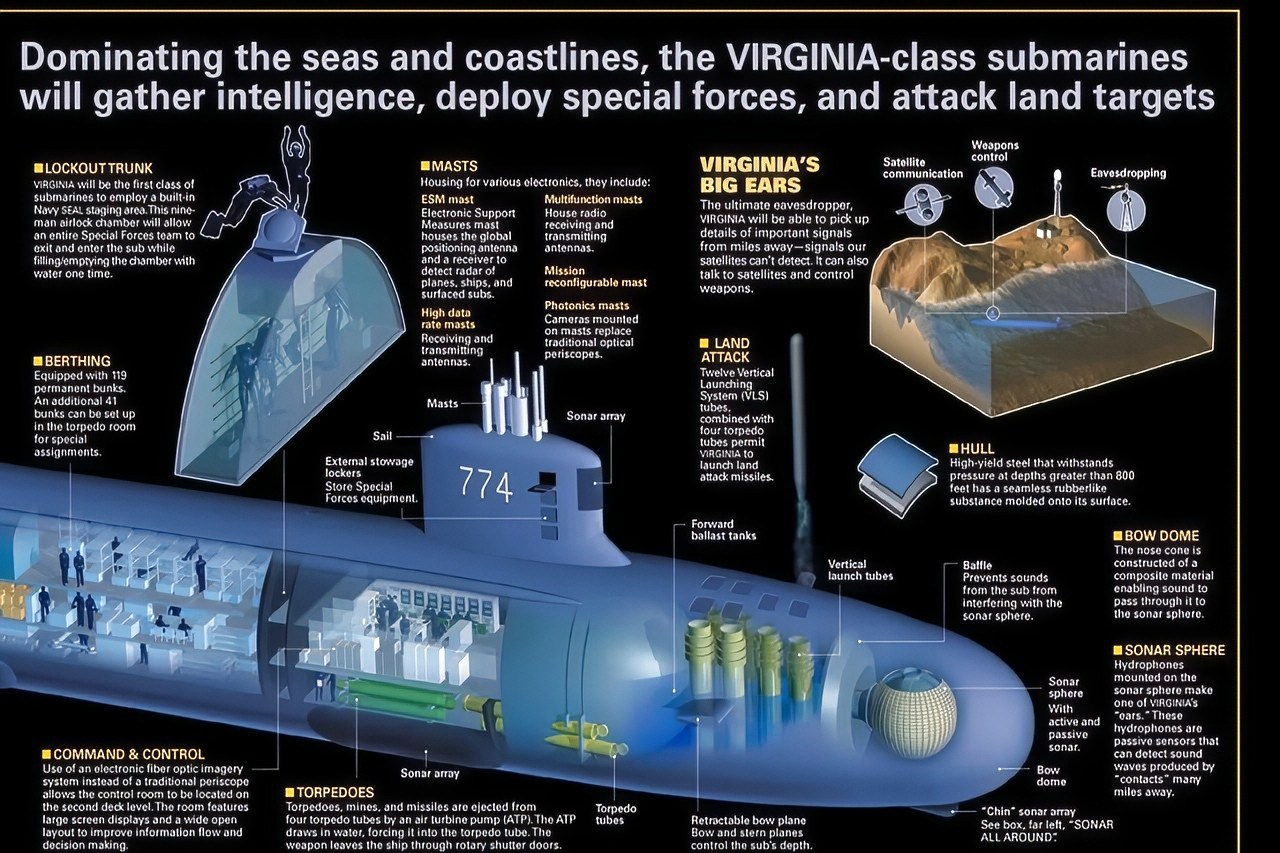
Virginia-Class Submarine Cut Out. Image Credit: Creative Commons.
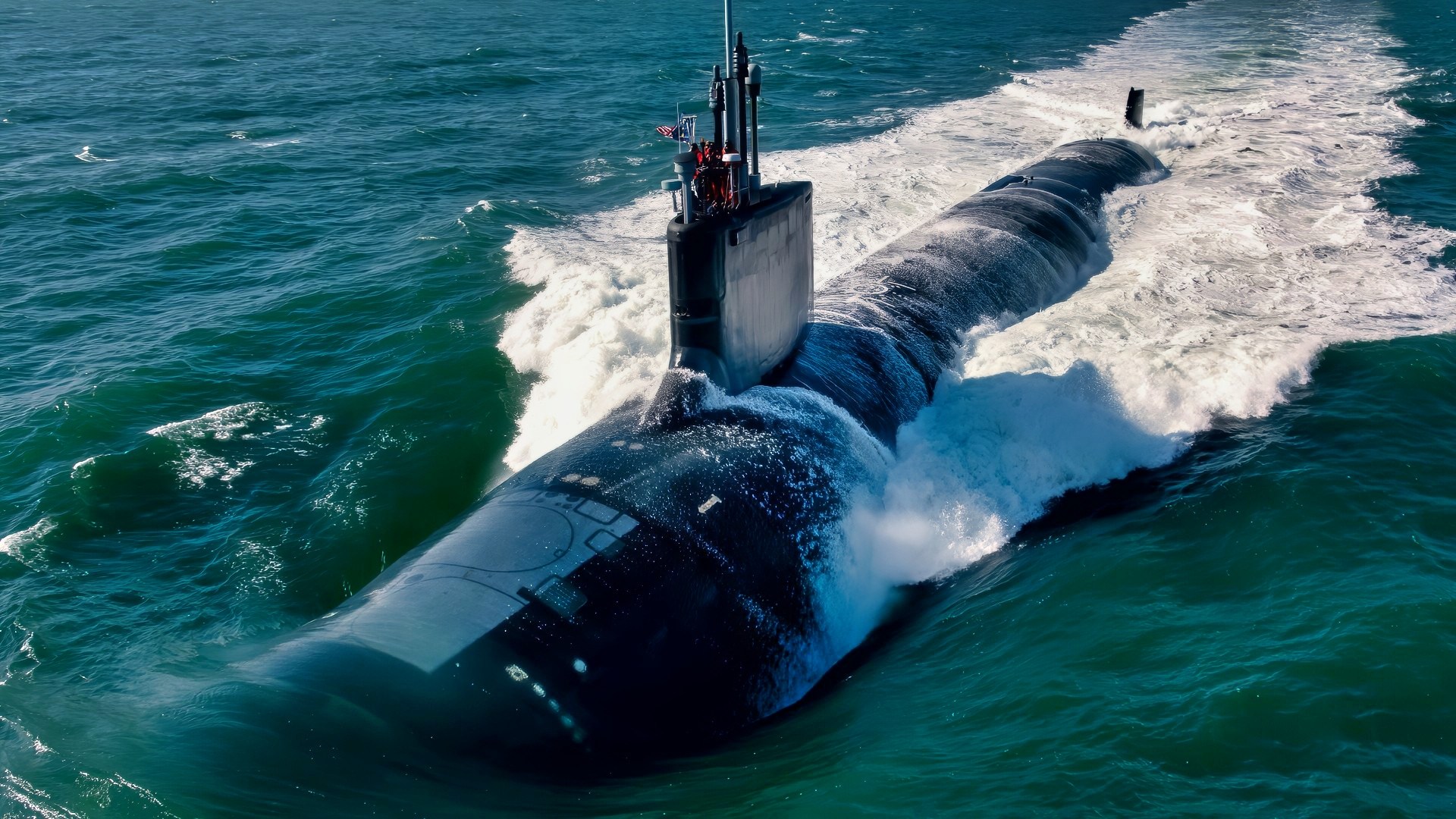
ATLANTIC OCEAN (Feb. 1, 2022) The future Virginia-class attack submarine Montana (SSN 794) conducts initial sea trials Feb. 1, 2022 in the Atlantic Ocean. Montana is the 10th Virginia-class submarine. (U.S. Navy photo courtesy of HII by Ashley Cowan) Montana SSN 794 Alpha Sea Trials
Are B-2s and B-21s the Solution?
If AUKUS falls apart – or even if it is delayed – Australia is left with a capability gap.
This is where ASPI’s work becomes relevant.
In December 2022, ASPI analysts Marcus Hellyer and Andrew Nicholls argued that Australia should examine the B-21 Raider as part of its long-range strike planning, describing it as the “gold standard” in strike capability and estimating that 12 aircraft would cost about A$25 billion to A$28 billion to acquire.
Their argument was that Australia’s existing strike options lacked range, payload, and survivability, while the B-21 could operate from secure bases in southern Australia and still reach targets across the Indo-Pacific. The authors noted that a single B-21 can deliver the same effect as many F-35As, and warned that the ADF’s strike cupboard is “rather bare.”
In April 2025, ASPI returned to the topic and specifically tied the possibility of acquiring B-2 stealth bombers to possible AUKUS delays.
“China’s recent naval circumnavigation of Australia has highlighted a pressing need to defend Australia’s air and sea approaches more effectively. Potent as nuclear submarines are, the first Australian boats under AUKUS are at least seven years away. Air power is well-positioned to fill the gap in Australia’s long-range strike capability: It has clear advantages over submarines and ships in terms of its responsiveness in the maritime strike role,” a report notes.
The authors argued that Australia should consider acquiring the B-2 as a “fully sovereign capability” to strengthen deterrence and war-fighting capacity, while also helping the United States by allowing a close ally to contribute more to the regional balance of power.
Will It Happen?
To date, however, there is no evidence that Washington has explored delivering B-2s or B-21s to Australia, and there is no official acquisition path for Australia to obtain the B-21. But the idea has not just come from nowhere.
In 2022, U.S. Air Force Secretary Frank Kendall said Washington would be willing to “have a conversation” if Australia had a long-range strike requirement.
If the AUKUS submarine timeline slips, proposals involving the B-2 or B-21 could well appear.
They are not being discussed as replacements for nuclear-powered submarines. Still, they could provide interim long-range strike platforms to help Australia bridge a capability gap.
At the same time, it waits for the submarines AUKUS is intended to provide – and then provide continued deterrence for as long as the aircraft remain operational.
About the Author: Jack Buckby
Jack Buckby is a British researcher and analyst specializing in defense and national security, based in New York. His work focuses on military capability, procurement, and strategic competition, producing and editing analysis for policy and defense audiences. He brings extensive editorial experience, with a career output spanning over 1,000 articles at 19FortyFive and National Security Journal, and has previously authored books and papers on extremism and deradicalization.


chuanpu
May 19, 2026 at 10:18 pm
Australia today has become a blatant extension of the anglo-american global doctrine spread into far eastern asia.
That’s not a good development, not good at all, for both australia and far east asia.
Most australians, in a totally bogus apology for that ‘development’ will say oh, we are just standing up for freedom and human rights.
Right.
Freedom is little relevant, maybe zero, even today, for australia’s aborigines.
The indigenous people often get the short end of the stick compared to all other australians, even compared to the fast growing immigrant communities.
Thus you have the drug problems, the drink problems, the domestic violence problems, the crime problems, the high-proportion-in-jail problems and other problems.
When it comes to human civil rights, australia is right down THERE with mexico.
Teenage gangs, drug gangs, mafia gangs, middle-eastern gangs, killers-for-hire gangs and kill car gangs.
Right down there with mexico.