


Key Points and Summary – In early-2000s war games, Australia’s upgraded Collins-class submarines shocked observers by silently detecting and “sinking” U.S. Navy warships, including an aircraft carrier, from stand-off range.
-Quiet diesel-electric propulsion, improved combat systems, and advanced passive sonar helped the boats evade towed arrays and exploit gaps in U.S. networking and command-and-control.
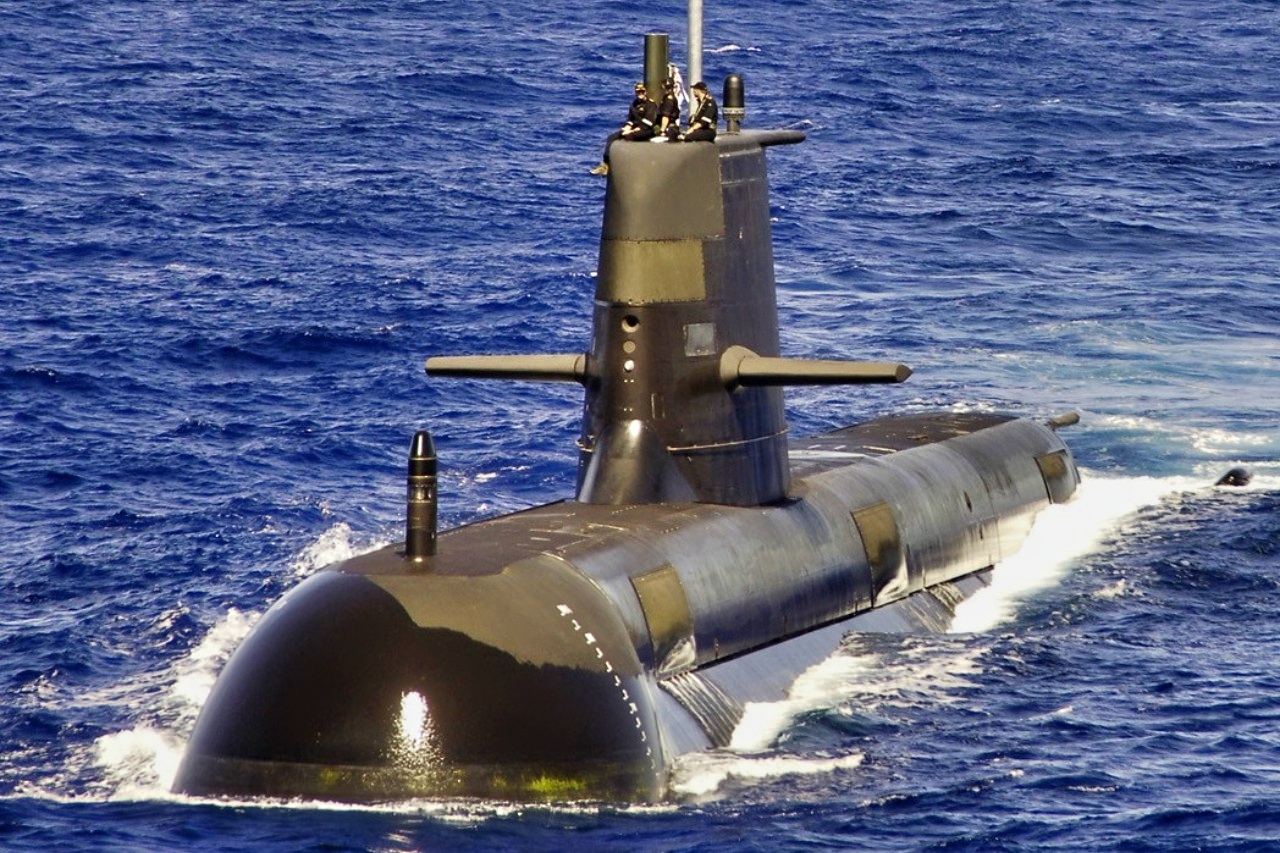
(July 25, 2006)- The Australian Submarine HMAS Rankin (Hull 6) and the Los Angeles Class attack submarine USS Key West (SSN-722) prepare to join a multinational formation with other ships that participated in the Rim of the Pacific exercise. To commemorate the last day of RIMPAC, participating country’s naval vessels fell into ranks for a photo exercise. RIMPAC includes ships and personnel from the United States, Australia, Canada, Chile, Japan, Peru, the Republic of Korea, and the United Kingdom. RIMPAC trains U.S. allied forces to be interoperable and ready for a wide range of potential combined operations and missions. Abraham Lincoln Carrier Strike Group are currently underway on a scheduled Western Pacific deployment. U.S. Navy photo by Mass Communications Specialist Seaman James R. Evans (RELEASED)
-Those same strengths—stealth, stand-off torpedoes, and low observability from space—explain why Canberra extended Collins’ service life into the 2030s and is now funding fresh AN/BYG-1 software upgrades with Raytheon.
-As AUKUS nuclear boats slowly arrive, the much-criticized Collins class remains a potent, relevant attack submarine force.
How Australia’s ‘Broken’ Collins-Class Submarines Sank a U.S. Carrier in War Games
In the early 2000s, Australian Collins-class submarines succeeded in detecting and destroying US Navy warships in a simulated wargame, a feat that generated surprise.
The Collins-class was known for a series of developmental problems, including maintenance and technological complications, and many weapons developers may not have been aware of its many successful upgrades.
The Australian Royal Navy upgraded the submarines with diesel-electric propulsion and a series of additional enhancements, improvements that would greatly expand the submarines’ mission scope, effectiveness, and operational performance.

The guided-missile destroyer, USS William P. Lawrence (DDG 110) sails with ships from the Royal Australian Navy (RAN), Japan Maritime Self-Defense Force (JMSDF) French Navy aircraft carrier, FS Charles de Gaulle (R 91) and its escort ships through the Gulf of Bengal during exercises La Perouse. The exercise, comprised of multiple anti-submarine warfare drills, was designed to enhance unit-level training, improve the strike group’s ability to respond to a submarine threat, and enhance interoperability between the U.S. and French navies.
The Collins-class submarines demonstrated their ability to find and target US Navy warships from substantial stand-off distances underwater during the simulated wargame, indicating that the boats could elude sonar detection and destroy the surface combatants with torpedoes.
A Navy carrier was among the ships “sunk” in the wargame, and computer-simulated wargames are known for their precision and ability to replicate real-world combat circumstances.
Diesel-Electric propulsion
Diesel-electric submarine propulsion is known for being much quieter than other alternatives and, of equal or greater significance, for generating on-board power to a much greater degree.
This enables the integration and sustainment of new generations of electronics, communications, sonar, and targeting technology on a submarine.
Therefore, upgrading the Collins-class boats to diesel-electric propulsion may not only have added “quieting” attributes but also enabled more advanced target detection, fire control, and communications technology.
This could be a reason why the submarines were able to elude US Navy warship submarine detection systems in simulated wargames.
Yet another factor may have been the US Navy warships’ sonar detection systems, as their variable-towed-array sonar may not have operated at sufficient depth, or the ship’s command and control may not have operated sufficiently or been adequately networked.
Regardless, the event in the early 2000s underscores the inherent value of attack submarine operations as they are generally more able to conduct clandestine missions.
Not only are they less detectable by satellites and overhead drones by remaining beneath the surface, but they increasingly use long-range, high-resolution passive sonar technologies that enable submarines to detect warships without revealing their position.
When a sonar system operates in passive mode, it does not emit an acoustic signature, so it can patrol and detect without surface ships, quickly determining its location.
US Navy Block III Virginia-class submarines, for example, have been upgraded with a series of cutting-edge “quieting” technologies, including coating materials, engine modifications, and antenna adjustments, all intended to increase stealth and reduce detectability.
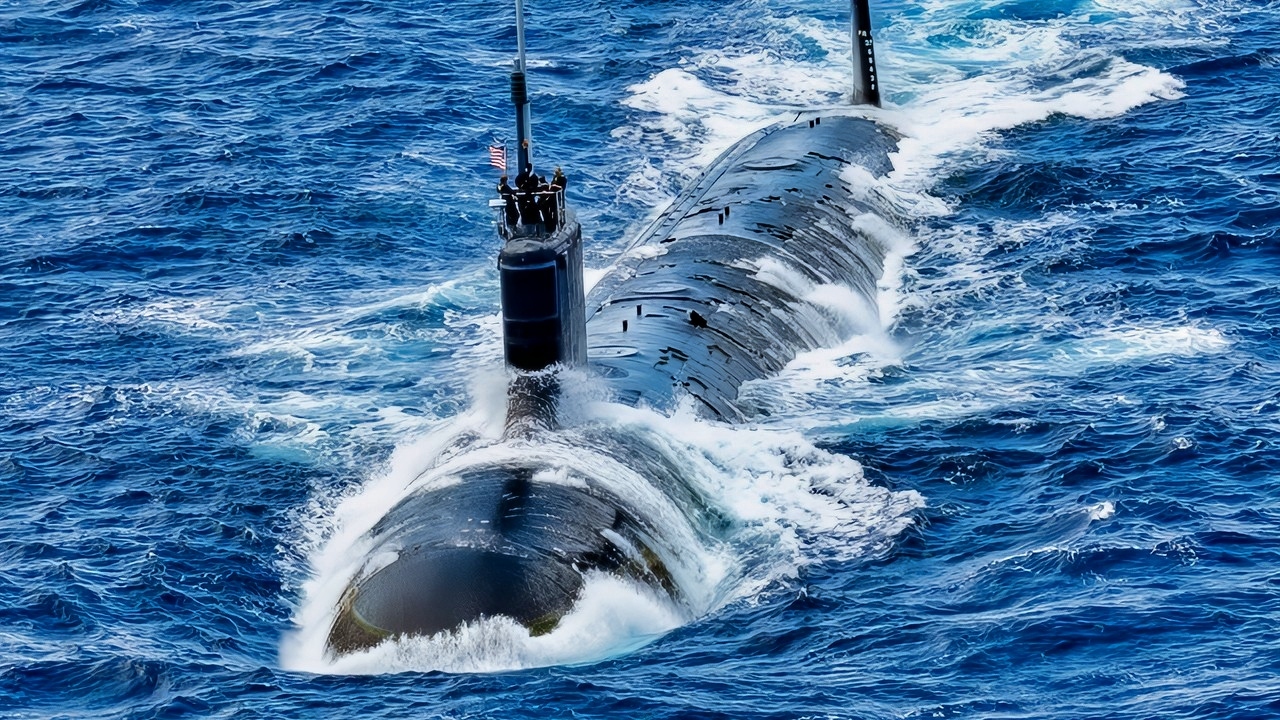
Virginia-class attack submarine USS North Carolina (SSN 777) sails in formation, off the coast of Hawaii during Exercise Rim of the Pacific (RIMPAC) 2024, July 22. Twenty-nine nations, 40 surface ships, three submarines, 14 national land forces, more than 150 aircraft and 25,000 personnel are participating in RIMPAC in and around the Hawaiian Islands, June 27 to Aug. 1. The world’s largest international maritime exercise, RIMPAC provides a unique training opportunity while fostering and sustaining cooperative relationships among participants critical to ensuring the safety of sea lanes and security on the world’s oceans. RIMPAC 2024 is the 29th exercise in the series that began in 1971. (U.S. Navy photo by Mass Communication Specialist 1st Class John Bellino)
It’s unclear how much advanced quieting technologies may have been integrated into the Collins-class.
Yet, an Australian white paper in 2016 extended the boats’ service life beyond 2026 into the 2030s, likely due in considerable measure to the success of the upgrades.
As a result of this extension, the Collins class will receive yet another series of upgrades to enhance its effectiveness in the decades ahead as AUKUS boats begin to arrive.
Collins-Class Submarine Updates
In November 2025, Australia’s Department of Defence continued working with Raytheon Australia on a series of ongoing software upgrades to the Collins Submarine’s Submarine Combat System AN/BYG-1. An interesting essay in Army Recognition explains that the Raytheon deal is intended “to
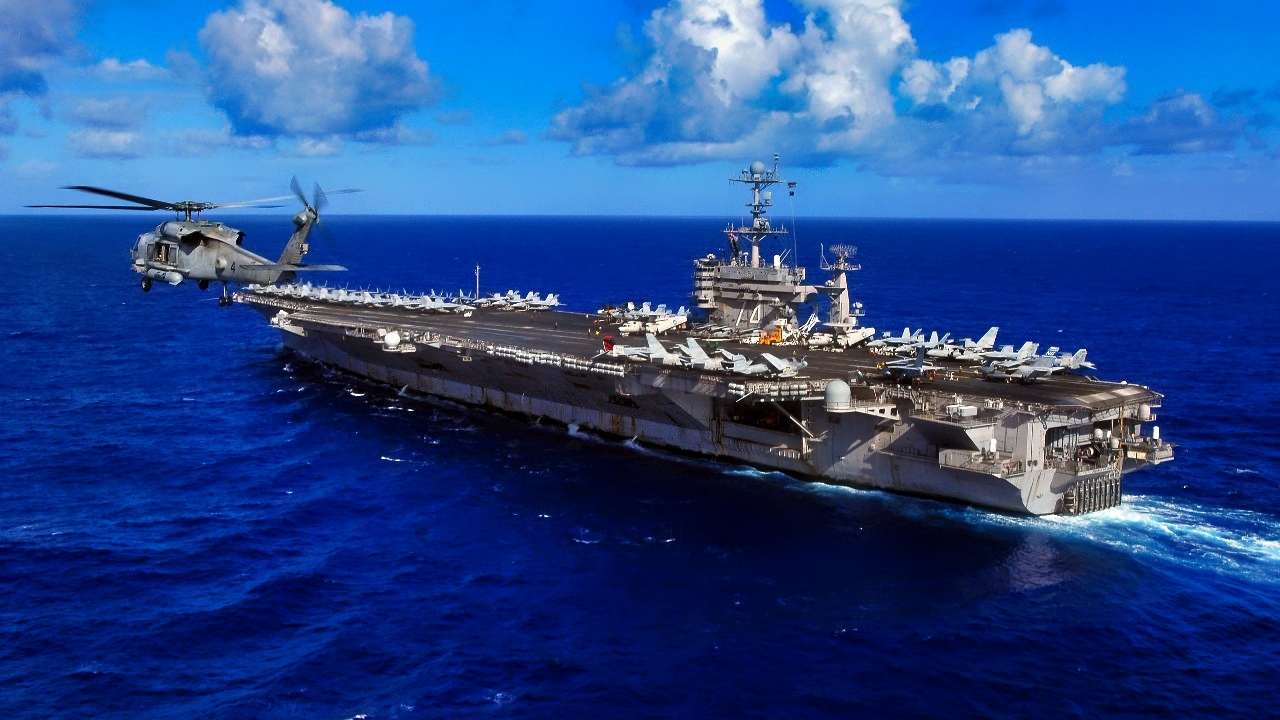
An HH-60H Seahawk, from the “Eightballers” of Helicopter Anti-Submarine Squadron (HS) 8, flies past Nimitz-class aircraft carrier USS John C. Stennis (CVN 74) during flight operations. Stennis is on a scheduled deployment to promote peace, regional cooperation and stability.
preserve coherence between sensors, data links, and effectors while reducing interface risks.”
This combat system emerged from a cooperative US-Australian agreement to integrate data fusion, fire control, and heavy-weapon management.
About the Author: Kris Osborn
Kris Osborn is the President of Warrior Maven – CAenter for Military Modernization. Osborn previously served at the Pentagon as a highly qualified expert in the Office of the Assistant Secretary of the Army—Acquisition, Logistics & Technology. Osborn has also worked as an anchor and on-air military specialist at national TV networks. He has appeared as a guest military expert on Fox News, MSNBC, The Military Channel, and The History Channel. He also has a Masters Degree in Comparative Literature from Columbia University.


