

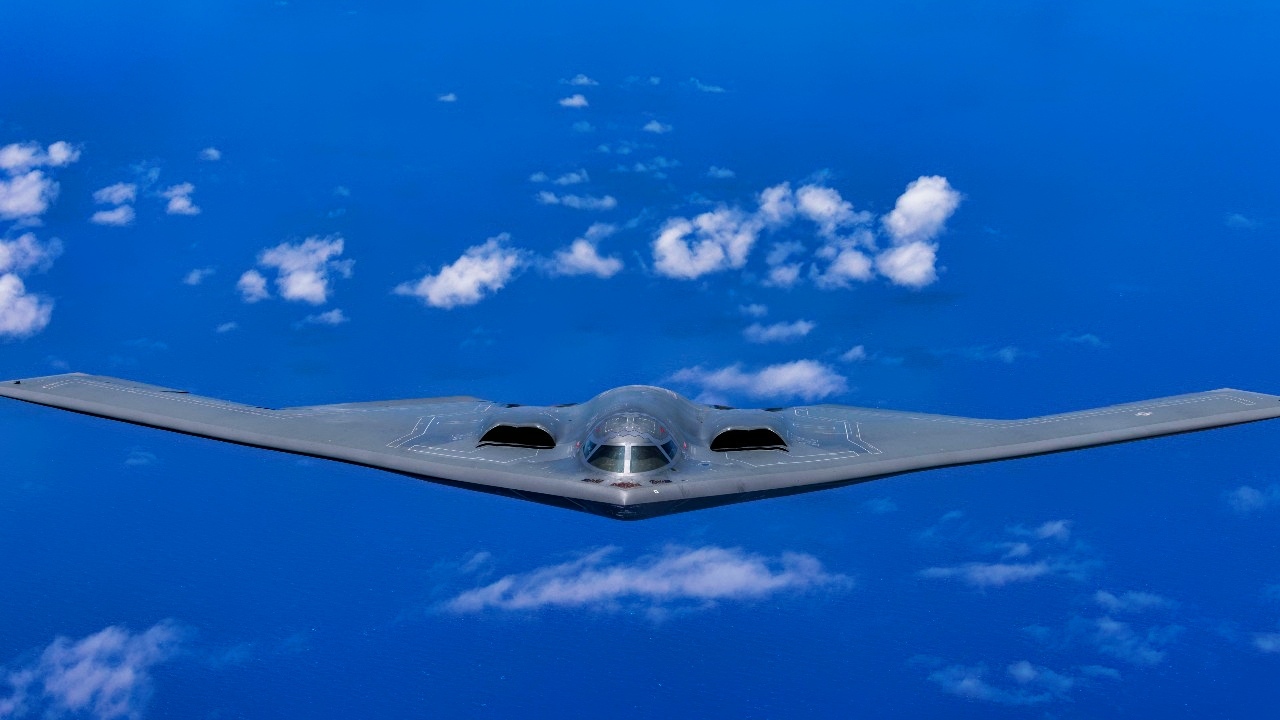
Key Points and Summary on Iran Attack – The Pentagon has revised its assessment of the recent US strike on Iran, with Chief Spokesman Sean Parnell stating on Wednesday that the attack set back Iran’s nuclear program by “about two years.”
-This new timeline contradicts President Trump’s repeated claims that Iran’s capabilities were “completely obliterated.”
-The “two-year” estimate is also more substantial than a previously leaked preliminary intelligence report suggesting only a “months-long” delay.
-This latest in a series of shifting and confusing assessments from Washington leaves the true, long-term impact of the “Operation Midnight Hammer” strikes on Iran’s nuclear ambitions highly uncertain.
B-2 Bomber Raid: Not Exactly Obliteration of Iran’s Nuclear Program
Donald Trump has been saying, since the U.S. strike on Iran’s nuclear facilities, that Iran’s capabilities were “completely obliterated.” That assertion has since been challenged, including by an internal Pentagon report, reported on by CNN, that the attack “did not destroy the core components of the country’s nuclear program and likely only set it back by months.”
The White House has pushed back on that report, threatening both the leakers of the report and the CNN reporters, one of whom Trump has called to be fired.
But now, the Pentagon has released more information about where it sees the attack.
“About Two Years”: B-2 Bombers Setback the Nuclear Program, Not Destroyed
According to the Department of Defense website, Chief Pentagon Spokesman Sean Parnell discussed the Iran strike at a briefing on Wednesday.
“Iran is much further away today from a nuclear weapon than they were before the president took bold action to fulfill his promise to the American people, and that promise was Iran will not have a nuclear weapon,” Pentagon spokesman Sean Parnell said in the briefing.
“Our assessment of the battle damage … remains unchanged,” Parnell added. “We believe, and certainly all of the intelligence [reports] that we’ve seen have led us to believe that … those facilities especially, have been completely obliterated.”
Parnell also said that intelligence assessments from “allies around the world” reflect the U.S. position.
“They share our sentiments about the degradation of Iran’s nuclear program,” Parnell said. He added that the U.S. believes the Iranian program, as a result of the strike, “has been set back by about two years as a result of the operation.”
Elsewhere in the briefing, per Reuters, Parnell listed the timeline as “one to two years.”
What ‘Two Years” Means on Iran Nuclear Program
So even if the “completely obliterated” talking point is true, “obliteration,” it would appear, is not forever.
In fact, in the absence of another attack or a diplomatic agreement between the parties, the two-year timeline indicates that Iran’s nuclear program will be back to where it was before the attack, before the end of the Trump presidency.
A CNN analysis after the strikes stated that Israeli Prime Minister Benjamin Netanyahu “bet, correctly, that after Israel disabled Iran’s air defenses, Trump would take the chance to try to wipe out Iran’s nuclear program once and for all.”
Trump certainly tried to couch the attacks as a decisive blow that would take the possibility of a nuclear Iran off the table for good.
The New York Times characterized the Parnell briefing as “the latest in a confusing series of shifting assessments of the damage the bombs inflicted on Iranian nuclear facilities.”
This is beyond the question, still unanswered, of whether Iran even had an active nuclear weapons program at the time before Israel started bombing them in early June, with Director of National Intelligence Tulsi Gabbard testifying before Congress in March that the U.S. “continues to assess that Iran is not building a nuclear weapon and Supreme Leader Khamenei has not authorized the nuclear weapons program he suspended in 2003.”
A “Capability Review”
Also in the briefing, Parnell talked about the decision earlier in the week to pause some aid to Ukraine.
“This capability review … is being conducted to ensure U.S. military aid aligns with our defense priorities,” Parnell said, per the Pentagon release. “We see this as a common-sense, pragmatic step towards having a framework to evaluate what munitions are sent and where.”
How will that work?
“What we’ve done here at the Department of Defense is create a framework to analyze what munitions we’re sending [and] where,” the Pentagon spokesman said. “Ultimately, our job here at the Department of Defense is to pursue the president’s ‘America First’ agenda and make sure that we achieve peace through strength throughout the world.”
About the Author: Stephen Silver
Stephen Silver is an award-winning journalist, essayist and film critic, and contributor to the Philadelphia Inquirer, the Jewish Telegraphic Agency, Broad Street Review and Splice Today. The co-founder of the Philadelphia Film Critics Circle, Stephen lives in suburban Philadelphia with his wife and two sons. For over a decade, Stephen has authored thousands of articles that focus on politics, technology, and the economy. Follow him on X (formerly Twitter) at @StephenSilver, and subscribe to his Substack newsletter
More Fighters
China’s J-20 Stealth Fighter Looks Like a Powerhouse
China’s White Emperor Space Fighter Looks Fake
China’s Aircraft Carriers Have Arrived (Just Not Nuclear Carriers)


