


Key Points and Summary – “Beast Mode” lets the F-35 carry up to 22,000 pounds by adding external weapons to its internal bays, massively boosting firepower but sacrificing stealth, range, and agility.
-Israel’s F-35I Adir has used this configuration in Gaza, hauling JDAMs from external pylons to hit hardened targets while leveraging robust ISR.
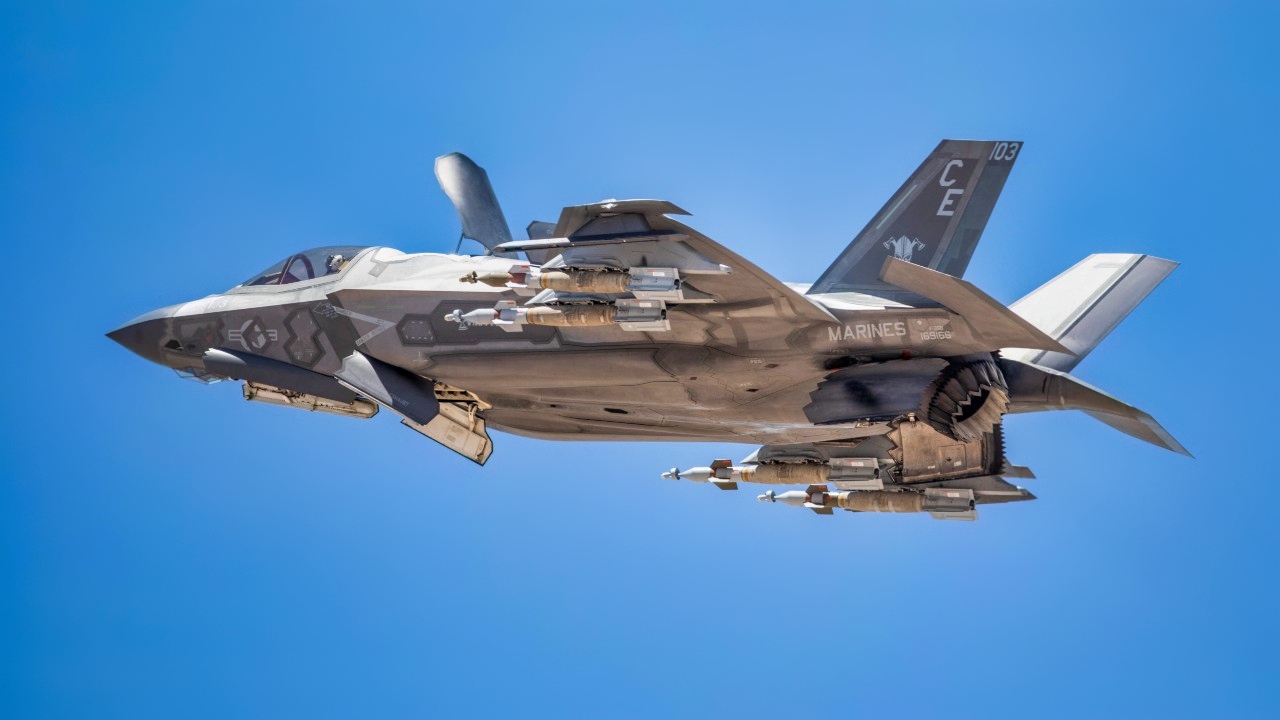
F-35 Beast Mode. Image Credit: Creative Commons.
-U.S. loadouts can reach six 2,000-lb JDAMs with as many as 14 AMRAAMs, but combat radius drops (≈870 miles) and radar signature grows.
-Best practice: Day One stealth to crack air defenses, Day Two beast for strikes—ideally under SEAD and counter-drone cover. In peer fights, beast mode demands careful, mission-specific use.
Looking Deeper Into F-35 Beast Mode
The F-35 Lightning II is one of the best stealth fighters on the planet—if not the best. The fifth-generation warbird is far superior to fourth-generation jets, thanks to its mix of stealth and high performance. The F-35 is updatable, and can be made steadily more effective as upgrades become available.
Israel took the F-35 and transformed it into a highly effective tool of warfare: the F-35I Adir variant. The Adir led the fight against Iran during the recent 12-day war in June. Missions flown by the F-35I were highly successful, taking out military and nuclear-infrastructure targets, and the Adir returned to base unscathed every time.
The F-35 can be made even more lethal through a configuration known as beast mode. In this configuration, additional munitions are fastened to the airplane using exterior hard points and pylons. This negatively affects stealth, but such an aircraft becomes far more lethal and destructive during a ground strike mission or aerial combat.
What Beast Mode Means in Battle
A squadron of F-35s in beast mode could overwhelm enemy air defenses during Day One warfare. Suppressing those defenses paves a path of clear blue sky for bombers such as the B-2, B-52, and the new B-21.
The F-35, after dropping its beastly ordnance, could remain overhead to collect Intelligence, Surveillance, and Reconnaissance data to distribute to its network—data including battle damage assessment for follow-on attacks. Then the F-35 could fight its way home. Battle damage assessment proved very important during Operation Midnight Hammer, the attack against Iranian nuclear infrastructure by a flight of B-2s.
Over Three Times the Combat Payload
An F-35A in stealth mode can carry 5,700 pounds of internal weapons. In beast mode, it can carry 22,000 pounds of internal and external munitions.
Beast Mode Is Old Hat for Israel’s F-35I
Israel’s F-35I used its Adirs in beast mode during combat in Gaza, during ground strikes against Hamas fighters in tunnels below sensitive buildings such as hospitals.
“The Israeli ‘Adir’ aircraft is the only aircraft in the world that has carried out operational strikes with an external armament configuration, which increased the attack capabilities,” the Israeli Air Force said on X.
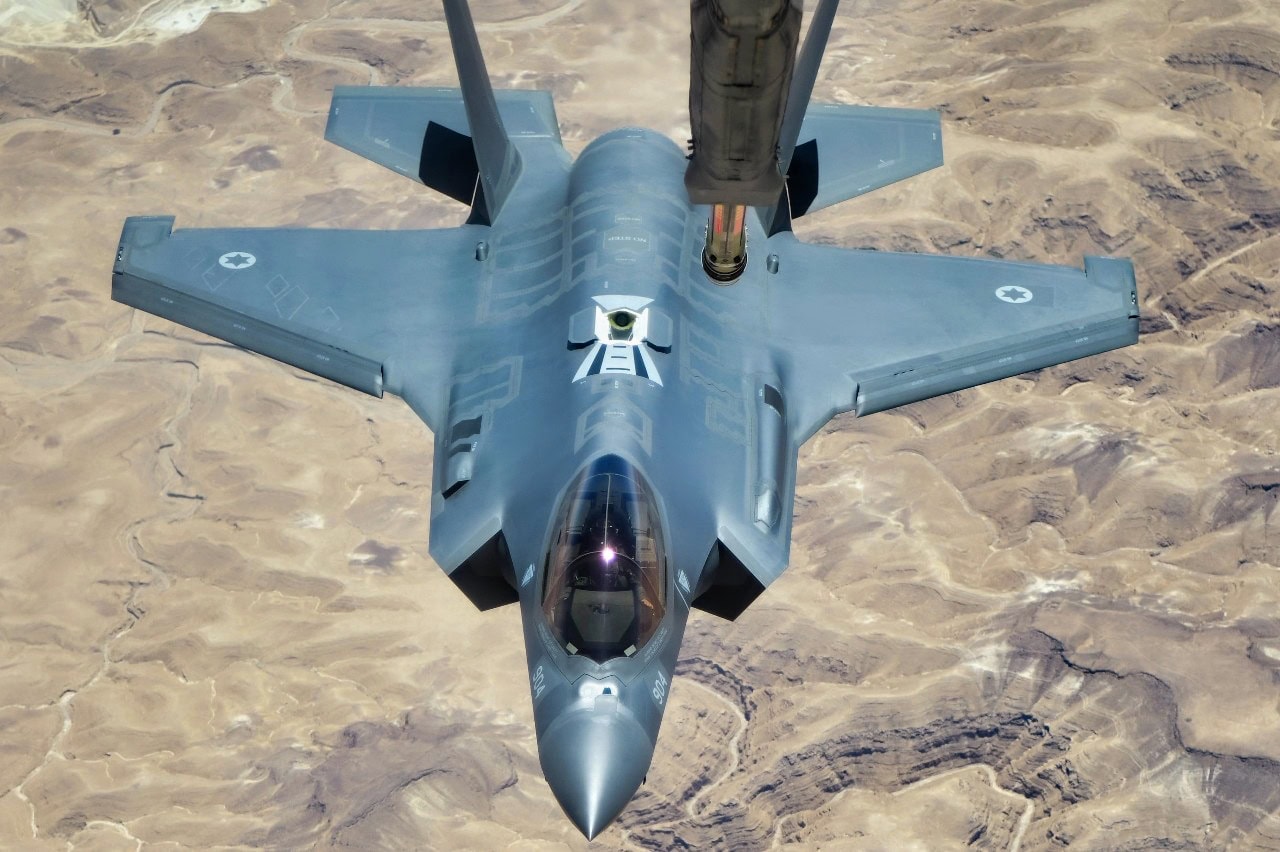

F-35I Adir Fighter from Israel. Image Credit: Creative Commons.
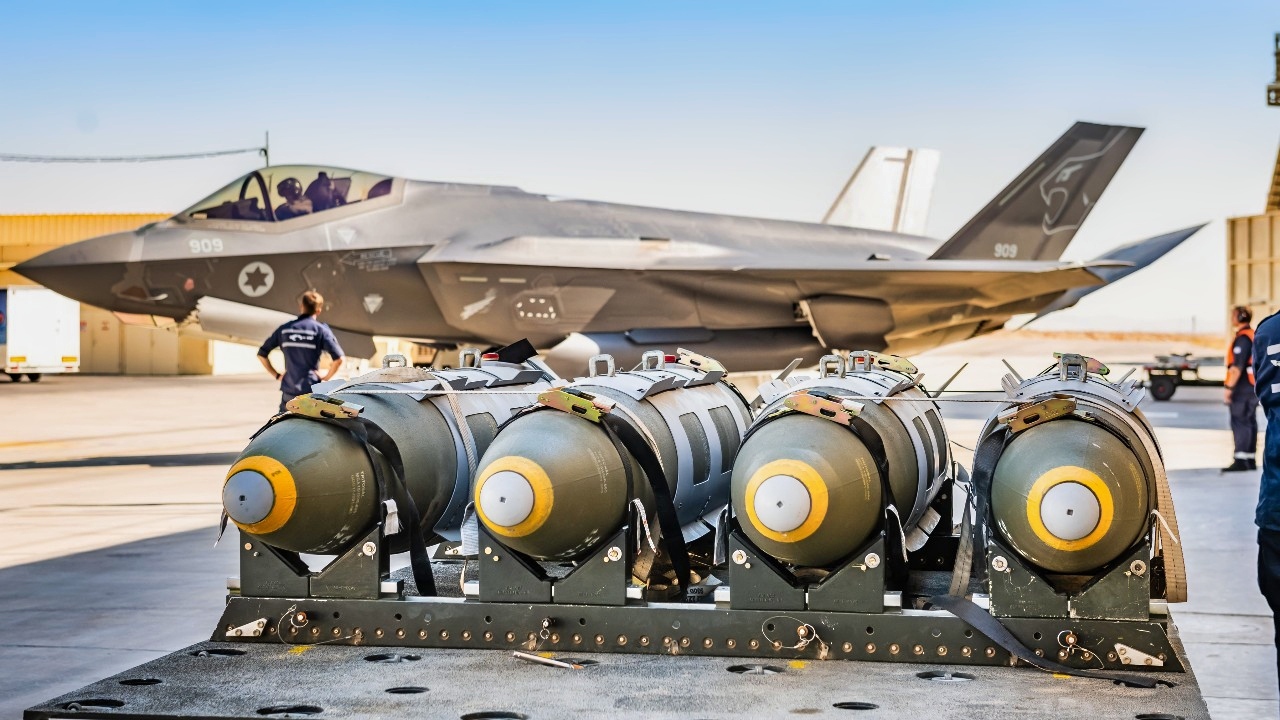
Israel F-35I Adir Stealth Fighter. Image Credit: IAF.
The Israelis have flown more than 15,000 operational flight hours with their F-35Is, amounting to thousands of sorties.
Israel has learned to make Joint Direct Attack Munitions (JDAMs) more effective from external hardpoints. The precision-guided weapons strike carefully, staying within the rules of engagement in Gaza and helping avoid civilian casualties. The F-35I is likely flying with 2,000-pound-class GBU-31 JDAMs.
“The nature of the store just visible in the left weapons bay is unclear, but some kind of telemetry pod would make a lot of sense for an ordnance test mission like this one. Also noteworthy is the blanked-off Electro-Optical Targeting System (EOTS) fairing under the nose, which is transparent on operational jets” according to the War Zone.
How the Americans View Beast Mode
For U.S. pilots, beast mode means the ability to carry six 2,000-pound JDAMs and a chunky 14 Advanced Medium-Range Air-to-Air Missiles (AMRAAMs). By comparison, a regular F-35 in typical operational capacity has either four AMRAAMs for an air-superiority flight that emphasizes dogfighting, or two AMRAAMs and two JDAMs for a multi-threat mission.
In a beast mode geared toward dogfighting, the F-35 can carry 14 AMRAAMs and two Sidewinders—shorter-range air-to-air missiles.
F-35s have a shorter range in beast mode of only 870 miles. Further, the F-35 in beast mode may not be as fast or maneuverable, and would be more susceptible to detection by radar.
When Should Beast Mode Be Used
Beast mode should probably only be used during ground strike missions. The F-35 could fly with a normal weapons configuration on Day One to suppress enemy aircraft and ground air defenses, then on Day Two fly in beast mode for better surface strike capability.
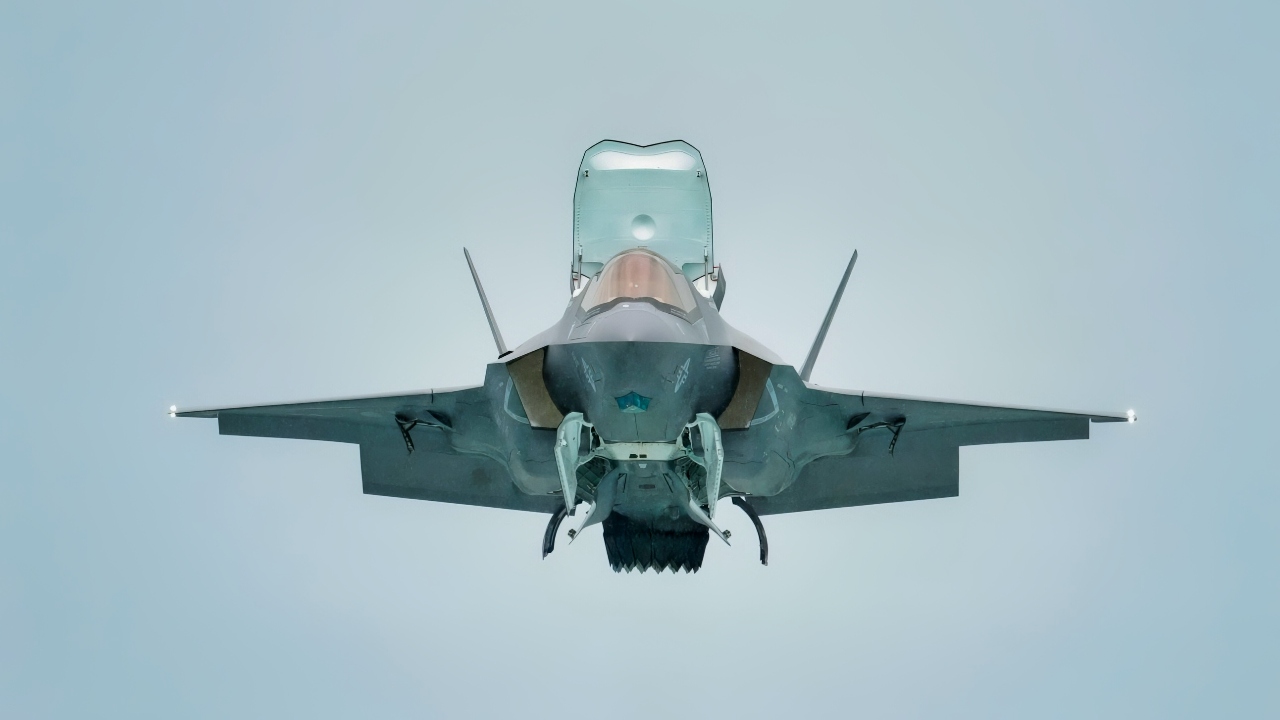
A U.S. Marine Corps F-35B Lightning II assigned to the Marine Fighter Attack Squadron 242, Marine Aircraft Group (MAG) 12, Marine Corps Air Station, Iwakuni, conducts an aerial demonstration during the Singapore Airshow 2022 at Changi Exhibition Center, Republic of Singapore, Feb. 16, 2021. Through participation in regional events like the Singapore Airshow, the U.S. demonstrates its commitment to the security of the Indo-Pacific, promotes interoperability, displays the flexible combat capabilities of the U.S. Military, creates lasting relationships with international audiences, and strengthens partnerships throughout the Indo-Pacific region. (U.S. Air Force photo by Master Sgt. Richard P. Ebensberger).
I’m not sure that beast mode during an air superiority dogfighting mission is such a great idea. Israel in Gaza did not have to worry about maintaining air dominance, since Hamas had no combat aircraft or air defense systems. For these missions, beast mode made sense.
However, beast mode gives the F-35 a much more diverse array of weapons to deliver. If the mission calls for combined air superiority and ground strike capabilities, the battle configuration is doable.
Pilots would simply need to be aware of the lower combat radius and reduced stealth, and they might have to deal with a downgrade in speed and maneuverability.
Beast mode is better-suited to counter-insurgency and counter-terror strikes, and that is how the Israelis have elected to use the configuration. In a potential confrontation against China or Russia, beast mode may not be the best option, given surface-to-air missiles would threaten the aircraft.
Beast mode–equipped aircraft would need to be supported by a clearly defined Suppression of Enemy Air Defenses mission.
The Israelis learned some valuable lessons while employing the F-35I in beast mode, and use of the configuration should be carefully thought out before execution. But beast mode makes the F-35 even better.
Battle planners will find this hybrid ability, when used during missions that fall between air superiority and ground strike, gives F-35 pilots more confidence and options in combat.
About the Author: Brent M. Eastwood
Brent M. Eastwood, PhD is the author of Don’t Turn Your Back On the World: a Conservative Foreign Policy and Humans, Machines, and Data: Future Trends in Warfare plus two other books. Brent was the founder and CEO of a tech firm that predicted world events using artificial intelligence. He served as a legislative fellow for US Senator Tim Scott and advised the senator on defense and foreign policy issues. He has taught at American University, George Washington University, and George Mason University. Brent is a former US Army Infantry officer. He can be followed on X @BMEastwood.
More Military
‘Long Way from Production’: China’s J-36 Might Be ‘Paper Tiger’ Stealth Fighter
‘Mach 2’ JAS 39 Gripen Is a Rocket Fighter Plane
New ‘Ferrari’ F-35 Stealth Fighter Is Aimed Right at Russia and China
Putin’s Poseidon Nuclear “Doomsday” Torpedo Looks Like a Bluff
The Air Force’s B-21 Raider Stealth Bomber Plan Doesn’t Make Any Sense


