


Key Points and Summary – The F-35 is worth its high cost because stealth, sensor fusion, and data-sharing deliver outsized battlefield effects.
-Citing Israeli F-35I operations against Iranian air defenses, it contends fifth-gen “ambush predator” tactics—backed by the APG-81 AESA radar and fused electro-optical/IR sensors—enable first-look, first-shot kills with minimal risk.
-Beyond air-to-air, internal bays and “beast mode” external pylons support a wide mix of precision weapons. While Block 4 upgrades are late and over budget, the article says they’ll keep the jet dominant.
-With 20 nations flying more than a thousand F-35s, the fighter’s combat-proven edge justifies the price.
Is The F-35 Worth The Money? Hell Yes
The F-35 Lightning II fifth-generation stealth fighter has always drawn complaints regarding its high cost. But you get what you paid for, and with the F-35 you get the best, most advanced fighter aircraft in the world.
When It Absolutely, Positively Has To Be Bombed Overnight
Just ask Iranians about the quality of the F-35.
Twice in the past calendar year, the Israeli Air Force degraded Iran’s air defenses so badly that they were able to fly over Tehran in broad daylight. And in two air campaigns that were as impressive as they were shocking to Tehran, the IAF accomplished the mission without the loss of a single aircraft.
The Israelis Showed The Way, And In A Big Way
Israel took the U.S.-made F-35 and remodeled it into a perfect weapon for combat in the Middle East. The Israelis have heavily modified the F-35I Adir (which means Mighty One in Hebrew) to suit their needs, and it has been incredibly successful.
The F-35’s unmatched stealth and advanced sensor capabilities give it a significant advantage in beyond-visual-range engagements.
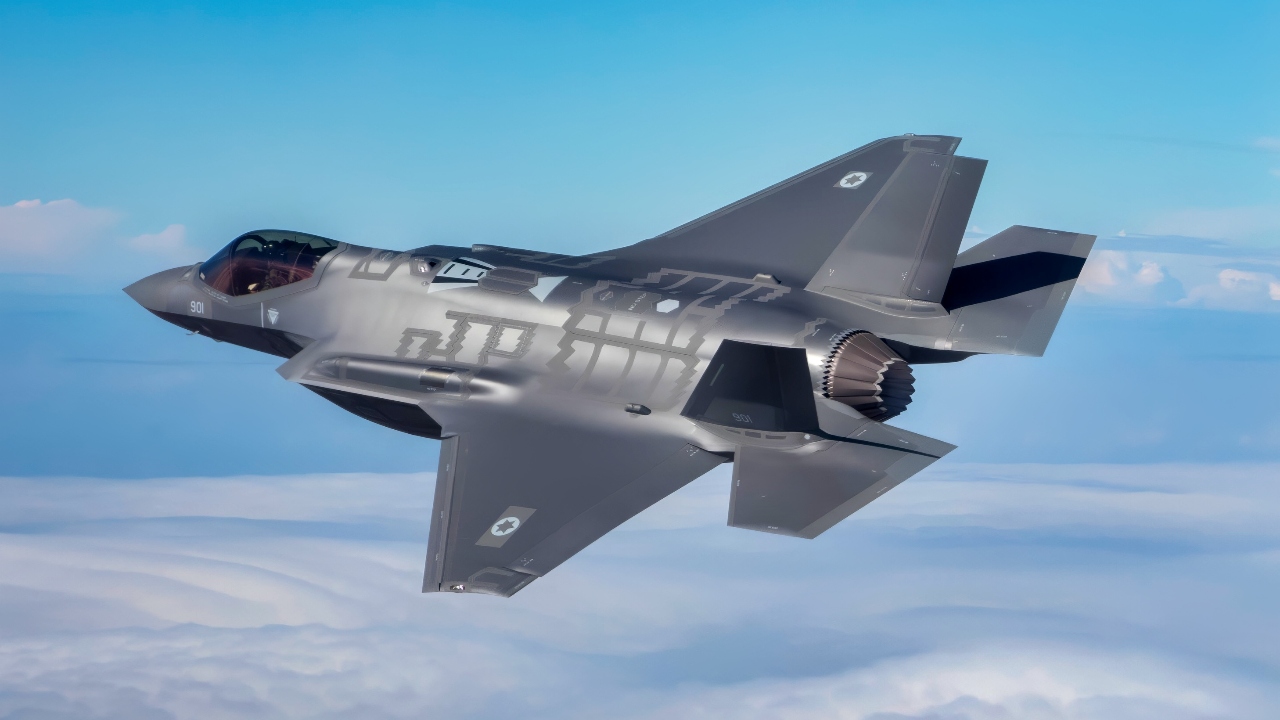
F-35I Fighter from Israel. Image Credit: Creative Commons.

F-35I Adir High in the Sky. Image Credit: IDF/Creative Commons.
The jet’s design emphasizes stealth, sensor fusion, and situational awareness over raw speed. It’s designed to be an “ambush predator,” using its stealth to get close and engage targets before the aircraft is even detected. This makes its speed a powerful asset – that is, when combined with its other capabilities.
Indeed, while the F-35 may not have been primarily designed for maximum speed, it’s still a fast and capable aircraft. Its speed contributes to its effectiveness in conjunction with its stealth, sensor systems, and overall mission profile.
It’s Not The Fastest, But You Can’t Hit What You Can’t See:
The F-35 is not a pure dogfighter. However, its ability to avoid detection and targeting allows it to bring weapons to bear against threats that can’t even see it. The F-35 is agile enough to hold its own against many enemy fighters, although not at the same level as the Eurofighter.
The fighter jet is powered by a single, powerful Pratt & Whitney F135 engine. The turbofan F135 is the most potent fighter-jet engine currently in service. It provides the thrust and performance needed to power the F-35’s advanced capabilities and pushes the F-35 to Mach 1.6 (1,200 miles per hour).
The F-35’s calling card, though, is its ability to act as a mobile sensor platform. It can assess the effectiveness of an entire fleet — a whole military front — by sharing data and coordinating information such that the situational awareness of every warfighter present increases exponentially.
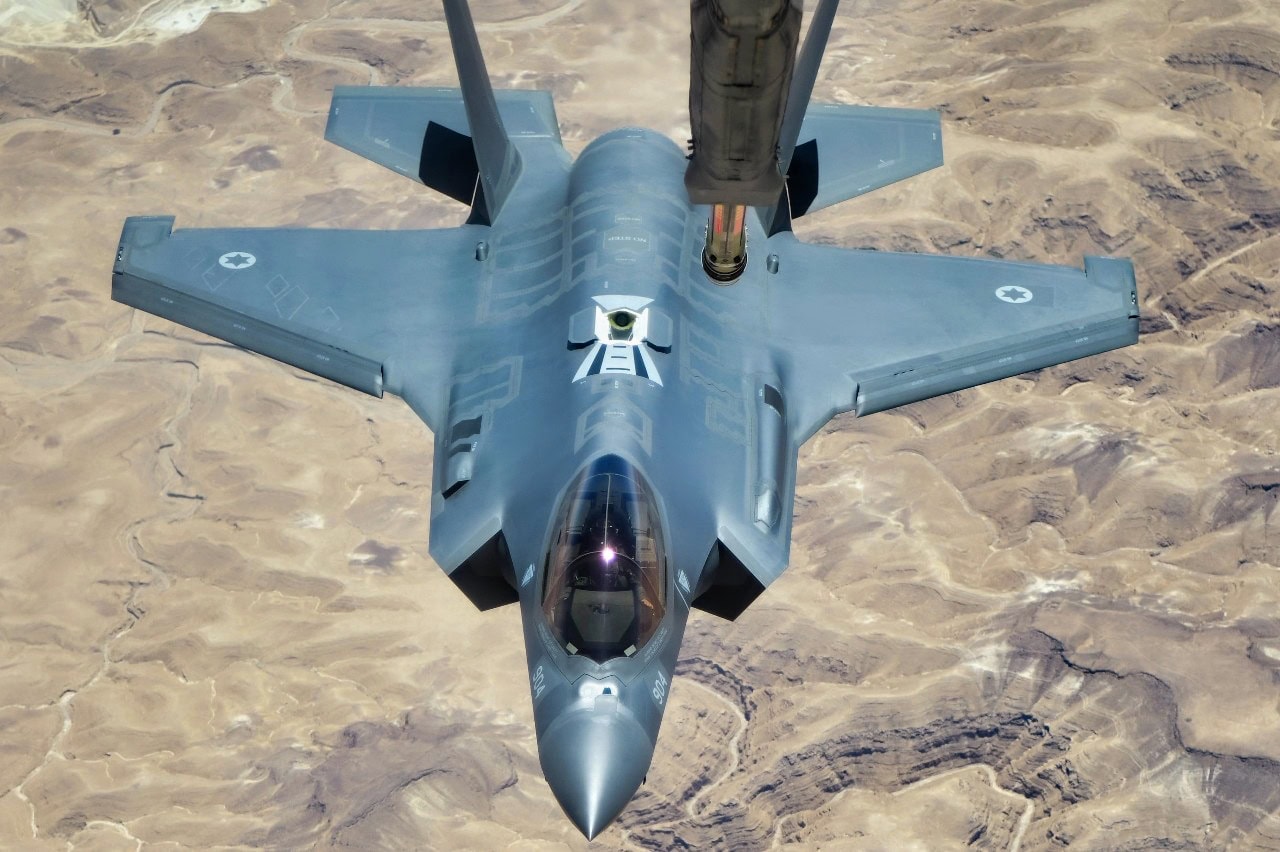
F-35I Adir. Image Credit: Creative Commons.

F-35I Adir Fighter from Israel. Image Credit: Creative Commons.
Advanced sensor fusion automatically analyzes data from sensors embedded throughout the aircraft and merges it to provide relevant information to pilots. This gives F-35 pilots an integrated, intuitive view of their surroundings that greatly enhances survivability, effectiveness, and interoperability.
The F-35’s advanced AN/APG-81 active electronically scanned array (AESA) radar is the most capable in the world. Long-range active and passive air-to-air and air-to-ground modes support a full range of missions.
F-35’s Armament, Including “Beast Mode”
The F-35 can carry a variety of weapons in its internal weapons bays. For air-to-air engagements, it arms up to four AIM-120 AMRAAM missiles – an upgrade to six-missile capacity is planned.
For air-to-ground missions, it can carry GBU-31 or GBU-32 Joint Direct Attack Munitions (JDAMs), GBU-12 Paveway II bombs, and GBU-54/B Laser JDAMs.
Further, it can carry GBU-39 Small Diameter Bombs and AGM-154 Joint Standoff Weapons. The F-35A’s weapons include an internally mounted 25-mm GAU-22/A cannon with 182 rounds.
When it is operating in what is called beast mode, the F-35’s external pylons allow for a significantly larger weapons load, including bombs, missiles, and fuel tanks.
The F-35 can carry up to 22,000 pounds of ordnance externally, including GBU-49 small glide munitions, AIM-9X Sidewinder missiles, and various other bombs. In beast mode, the F-35 can carry a mix of air-to-air and air-to-ground weapons, such as a load-out of two AMRAAMs, two Sidewinders, and six 2,000-pound JDAMs.
The F-35’s stealth, combined with the most advanced sensor suite of any fighter in history, redefines interoperability and allied deterrence. It gives the global fleet of F-35s a considerable advantage over anyone it might take on.
I recently wrote that the next round of planned improvements, Block 4, is behind schedule and over budget (imagine that). The details have to be worked out, but they will, and the upgrade will keep the Lightning II at the top of the food chain.
Stealth Beats Speed Today
The F-35I Adir’s ability to evade radar led to stunningly successful airstrikes against Iran last October. The F-35I suffered no losses while attacking Iranian air defenses and other military targets.
Adm. Tony Radakin, the United Kingdom’s chief of defense staff, said that during the strikes, “Israel used more than 100 aircraft, carrying fewer than 100 munitions, and with no aircraft getting within 100 miles of the target in the first wave, and that took down nearly the entirety of Iran’s air-defense system.
“It has destroyed Iran’s ability to produce ballistic missiles for a year and left Tehran with a strategic dilemma in how it responds. That is the power of fifth-generation aircraft, combined with exquisite targeting and extraordinary intelligence. And that was all delivered from a single sortie.”
The operation convinced the U.S. Air Force that the Israelis had made the baseline F-35 even better. But the Israelis weren’t done yet.
Operation Rising Lion
During Operation Rising Lion, the F-35I’s stealth capabilities were put to the test against Iran’s rebuilt layered air-defense network, which includes Russian-made S-300 systems and Iran’s domestically produced Bavar-373.
Iran claimed that it shot down several F-35s, but its “proof” consisted of poorly photoshopped images, one of which showed a supposed F-35 the size of a B-52. Israeli Adirs wiped out the Iranian air defenses again and were flying over Tehran during daylight hours, which shows just how complete Israel’s air dominance of Iran was.
While no one will confuse Iran’s air defenses with those of China or Russia, this was still a modern system. The F-35I’s success will give U.S. enemies pause, especially since there are more than 1,200 F-35s flying under the guidance of U.S. and allied pilots.
The F-35I variant is adapted to operations in precisely the kind of mission profile that the Israelis have long planned for. When it came time for them to act, they did so with speed, stealth, and chilling precision.
Is it any wonder that the F-35 is now in the hands of 20 nations? The U.S. plans on purchasing many more of these stealth fighters. They will be the backbone of the U.S. air fleet for many years to come.
Is The F-35 worth the cost? That all depends on whether you want to win your next conflict. If you do, then hell yes it is worth it.
About the Author:
Steve Balestrieri is a National Security Columnist. He served as a US Army Special Forces NCO and Warrant Officer. In addition to writing on defense, he covers the NFL for PatsFans.com and is a member of the Pro Football Writers of America (PFWA). His work was regularly featured in many military publications.
More Military
The K3 Tank Looks Like a B-21 Raider For a Reason
Canada’s F-35 Mistake Still Stings
The F-14 Tomcat: You Bet the Navy Misses This Fighter
M2 Bradley: America’s Obsolete Mini-Tank?
YF-23 Black Widow II: The Best Stealth Fighter You Never Heard Of


