

PUBLISHED on August 7, 2025, 08:40 AM – Key Points and Summary – Restarting the F-22 Raptor production line is a “pipe dream” that is not feasible or strategically wise.
-The industrial base, including the assembly line and specialized subcontractors, no longer exists, and a 2017 Air Force report estimated a restart would cost a staggering $50 billion.
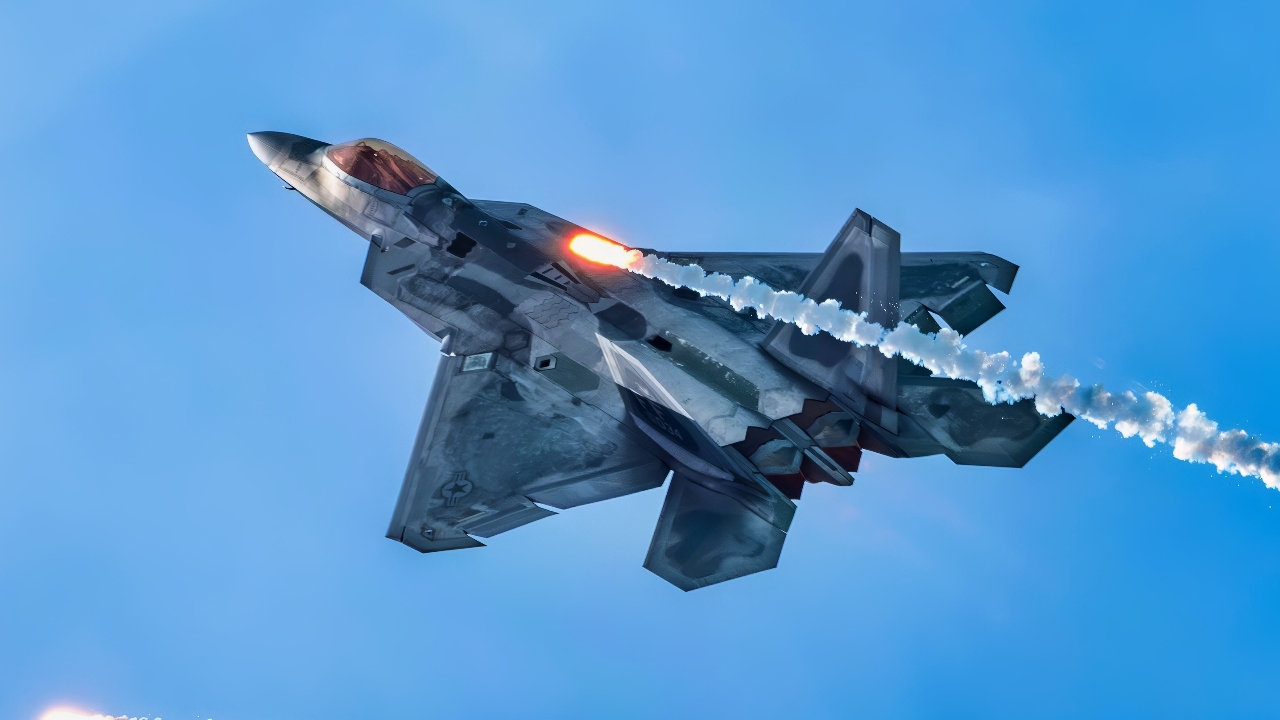
F-22 Raptor. This will be replaced by the F-47. Image Credit: National Security Journal.
-Furthermore, the F-22’s 1990s-era technology is now obsolete and would require an extensive and costly redesign to remain relevant.
-Investing in current programs like the F-35 or future platforms like the F-47 is a more cost-effective and strategically sound path forward.
The F-22 Raptor Isn’t Making a Comeback, Sorry
Could the United States decide to double down on the F-22 Raptor — to rebuild a cold production line — and begin, once again, to build that stealthy air superiority fighter?
It is a question that has been raised more than once, but it also has a definitive answer.
Ultimately, the cost of rebuilding an airplane that first flew nearly 30 years ago is not feasible.
The advancements made in stealth technology, combined with the emergence of sixth-generation aircraft, do not justify rebuilding the F-22 Raptor, despite its numerous positive qualities.
Why Reopen the F-22 Raptor Production Line?
There are several arguments against reopening the F-22 Raptor production line — which has actually been proposed several times before — but the obstacles against it are substantial.
Feasibility is one issue, as is the cost associated with reopening the closed line, which has been closed for years.
Though Lockheed Martin, the aerospace firm behind the Raptor fighter, reportedly retained most of the tooling needed to build the stealth fighter, that jet’s assembly line is closed.
Additionally, a significant number of F-22 project subcontractors no longer exist, or their available production for F-22-related components is now dedicated to other projects.
Many of the specialized materials used in the Raptor design, particularly niche titanium alloys and other exotic materials, as well as stealth materials, may no longer be available today.

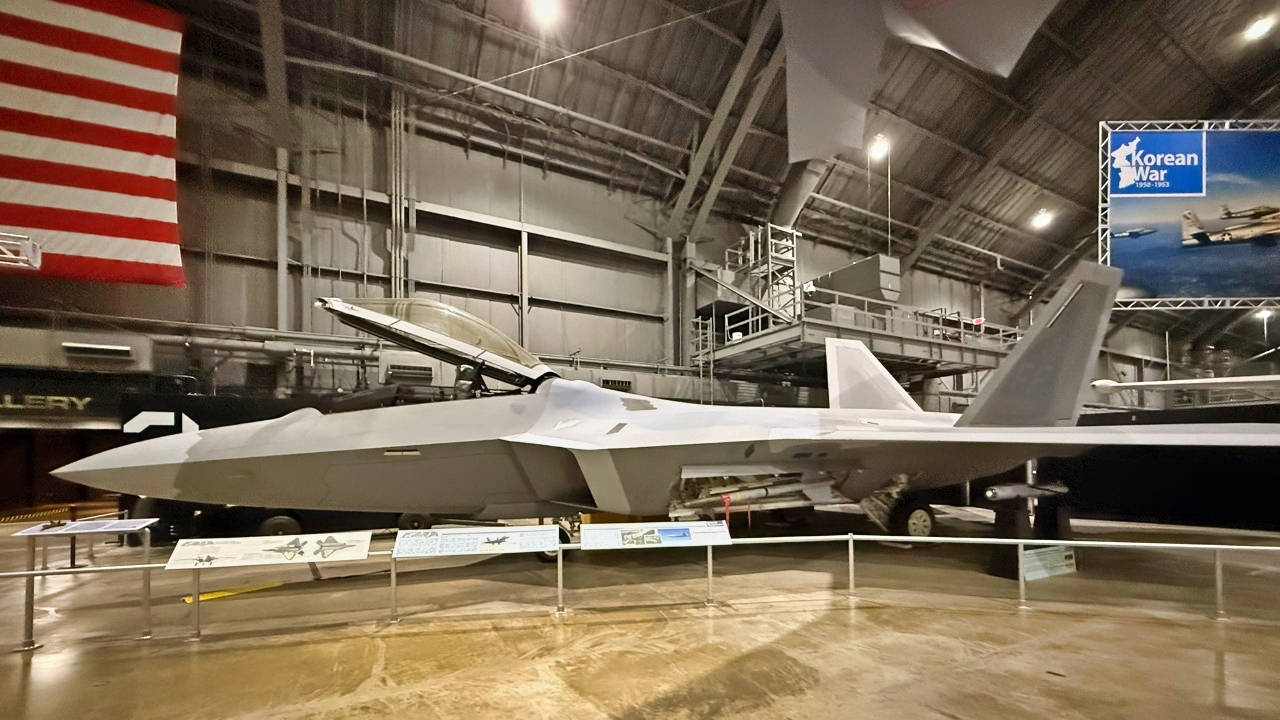
F-22 Raptor at the U.S. Air Force Museum.
Another essential part of the equation is the human workforce behind the F-22 and the knowledge inherent to building a sophisticated fifth-generation fighter.
Another relevant factor for the F-22 is the jet’s avionics and related architecture, which date back to the late 1990s and early 2000s. A new production run of F-22s would necessitate a potentially extensive redesign of the jet’s technology to integrate electronic warfare, communications, and other sensors, in order to remain relevant today.
Given the advancements made in aircraft design since the F-22 entered service, it would be more cost-effective to build a new, from-scratch design rather than simply restarting the old F-22 production line.
Show Me the Money
The flyaway cost of the F-22, a relatively high $150 million per aircraft, would likely increase significantly if production of that aircraft were to resume.
Restarting the F-22’s manufacturing infrastructure would be extremely expensive and would lose the economies of scale that the platform benefited from during its initial production run.
The initial benefits of that platform in terms of costs and production volume would simply not be achievable today. In addition to inflation, vastly increased labor costs, and the cost of reviving a dead production line would be insurmountable.
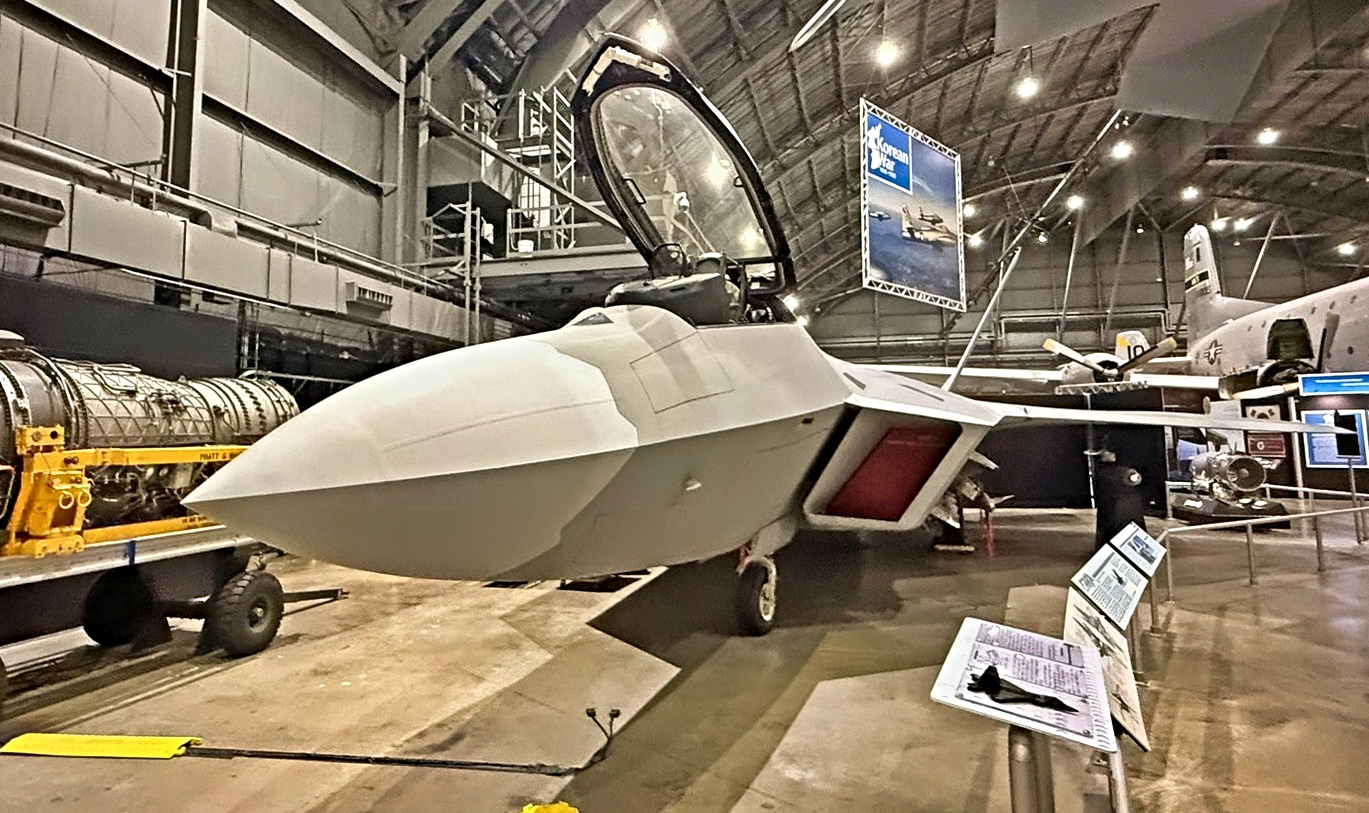
F-22 Raptor Nose Shot from U.S. Air Force Museum. Image Credit: National Security Journal.
In 2017, the United States Air Force made a report estimating the costs of restarting the F-22 line. The report explained that building 194 additional F-22 Raptors would cost approximately $250 million per airframe, totaling between $50 billion and $60 billion — a cost that is certainly not cost-effective for increasing the number of stealth fighters at the U.S. Air Force’s disposal.
Instead of investing in the F-22 Raptor platform, it would be not only more cost-effective, but also more strategically relevant and straightforward to invest available Pentagon dollars into existing stealth fighter projects.
Among these, the F-35 and F-47 programs are potential candidates. The continuous development of unmanned platforms — so-called Loyal Wingmen aircraft — would be a much wiser investment than reviving older projects.
Import-Export
One of the great strengths of the F-35 program has been not only its international involvement with partners, but also the countries abroad that have chosen to join.
That foreign interest has injected a measure of interest and funding into a program — infamously the most expensive defense project in U.S. history — that has helped diffuse costs across multiple international partners, bringing down costs not only for the United States but also for its friends and allies.
The F-22, however, is explicitly banned from export to other countries, including those friendly to the United States and its close allies.
Even if Raptor production could be restarted, the program would be unable to spread costs across international partners in the same way the F-35 program was able to do.
Postscript: F-22 Fighter Reboot Is RIP
At the end of the day, restarting production of the F-22 Raptor is a pipe dream — and one of the most compelling arguments against trying to restart that production would be the Raptor’s obsolescence once production is jump-started.
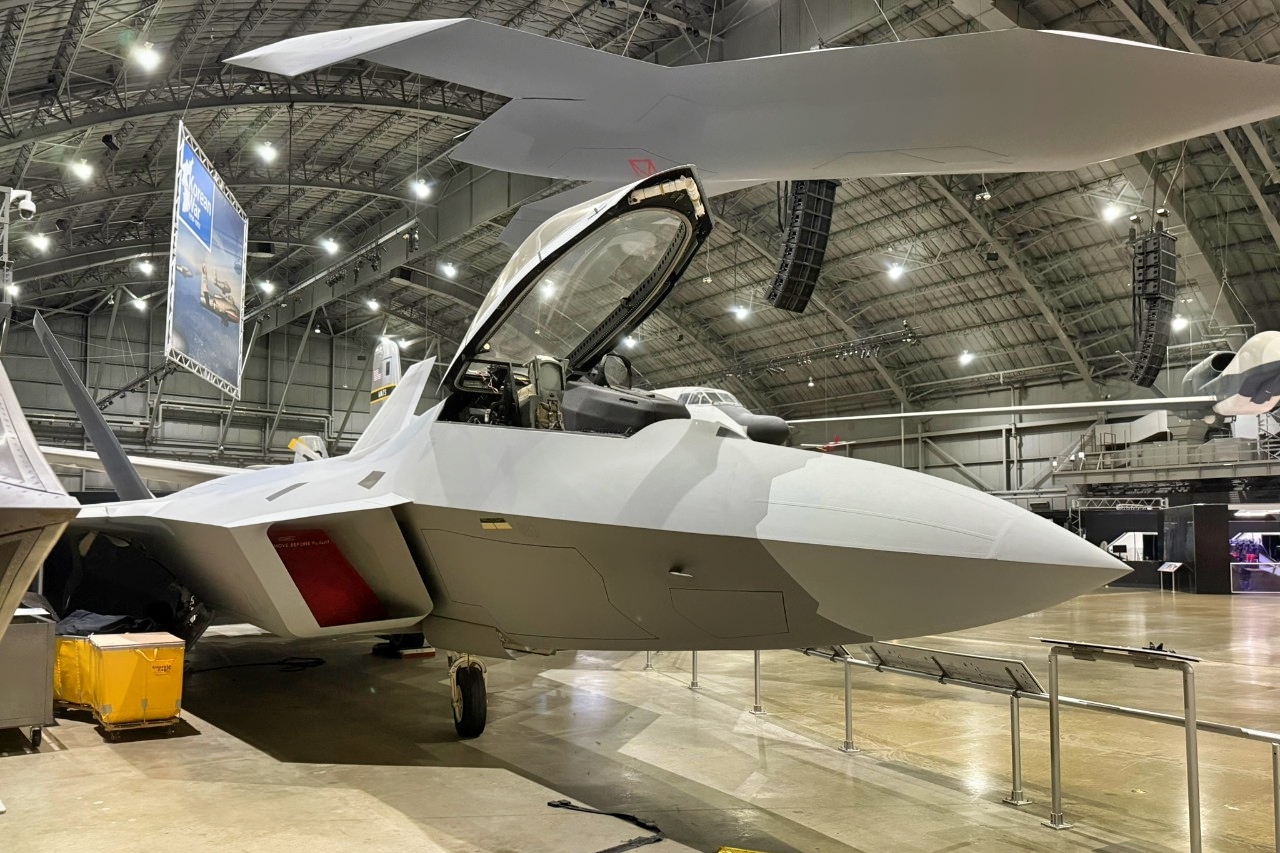
F-22A Raptor with YF-118G Overhead. Image Credit: National Security Journal.
Heavy reinvestment in technology that came of age in the 1990s would be, strategically speaking, a dead end, with little room for growth compared to a design from scratch.
And with other, much more advanced platforms on the horizon — including the F-47, the directed replacement for the F-22 Raptor — attempts to make that older jet more relevant in the future would appear futile.
About the Author: Caleb Larson
Caleb Larson is an American multiformat journalist based in Berlin, Germany. His work covers the intersection of conflict and society, focusing on American foreign policy and European security. He has reported from Germany, Russia, and the United States. Most recently, he covered the war in Ukraine, reporting extensively on the war’s shifting battle lines from Donbas and writing on the war’s civilian and humanitarian toll. Previously, he worked as a Defense Reporter for POLITICO Europe. You can follow his latest work on X.
More Military
China’s New J-36 Fighter Has 1 Mission
America Wants ‘Drone’ Aircraft Carriers
Putin Might Have Made Strong Thanks to Drone Test in Poland


Bo 20MM
August 7, 2025 at 12:01 pm
The only affordable and immediately available solution to Americas’s tiny 5G/6G fighter fleets in the $95M F-35 Block 4 and then accelerate LM’s designs for new F-35D/E/F fighters with bigger delta wings and bigger more powerful engines — GE already has one ready to go! The real obvious airpower secret that nobody is talking about is that the F-35A/I was the true unsung hero of the Israel-US 12 Day Iran War with its far superior connectivity, sensors, LPI radar and all-spectrum stealth. There is no better survivable, lethal, multi-role stealth fighter bargain in the Western or Commie world than the $95M F-35A, which is now down to $30k cost per flying hour. We need to ramp up to 130 F-35A/B/C for the USAF/USMC/USN as originally planned.
Your mom
August 8, 2025 at 9:25 am
How much does the Chinese government pay you for these trash articles
Pingback: YF-23 Black Widow II Stealth Fighter vs. J-20 Mighty Dragon: Who Wins in a Fight? - National Security Journal
Raptor1
August 10, 2025 at 2:03 pm
The F-35 is a never ending dead end. it isnt ready and isnt going to produce the oh so “necessary” Block 4 capabilities until after the current threats that they claim Block 4 is required to address have been advanced to the point of requiring yet another insane double-down in this turkey. And thats the insanity of the program, from day one until today: Its ready and its here, we just need to cancel F-22 production ti provide protection and funds, another 10 years of unaccepta le product and dev, and then we’ll let you kniw which of the capabilities we can deliver AFTER we get the billions more and 10 years of dev for the new engine and tech required to deliver what was promised a decade earlier, now kindly just sell the fighter worldwide and we’ll get back to you quickly with another reason why this is your only option, as if we hadnt figured it out 20 years ago.
Fools and idiots fascinated with technology powerpoints and taxpayer dollars.