

Key Points and Summary – F-47 Delay Due to Strike? – Boeing’s St. Louis walkout by 3,200 machinists has entered a second month with little progress after a mediated session the union called “a waste of time.”
-Management is moving to hire replacements and plans a Sept. 16 job fair—steps labor leaders vow to fight.

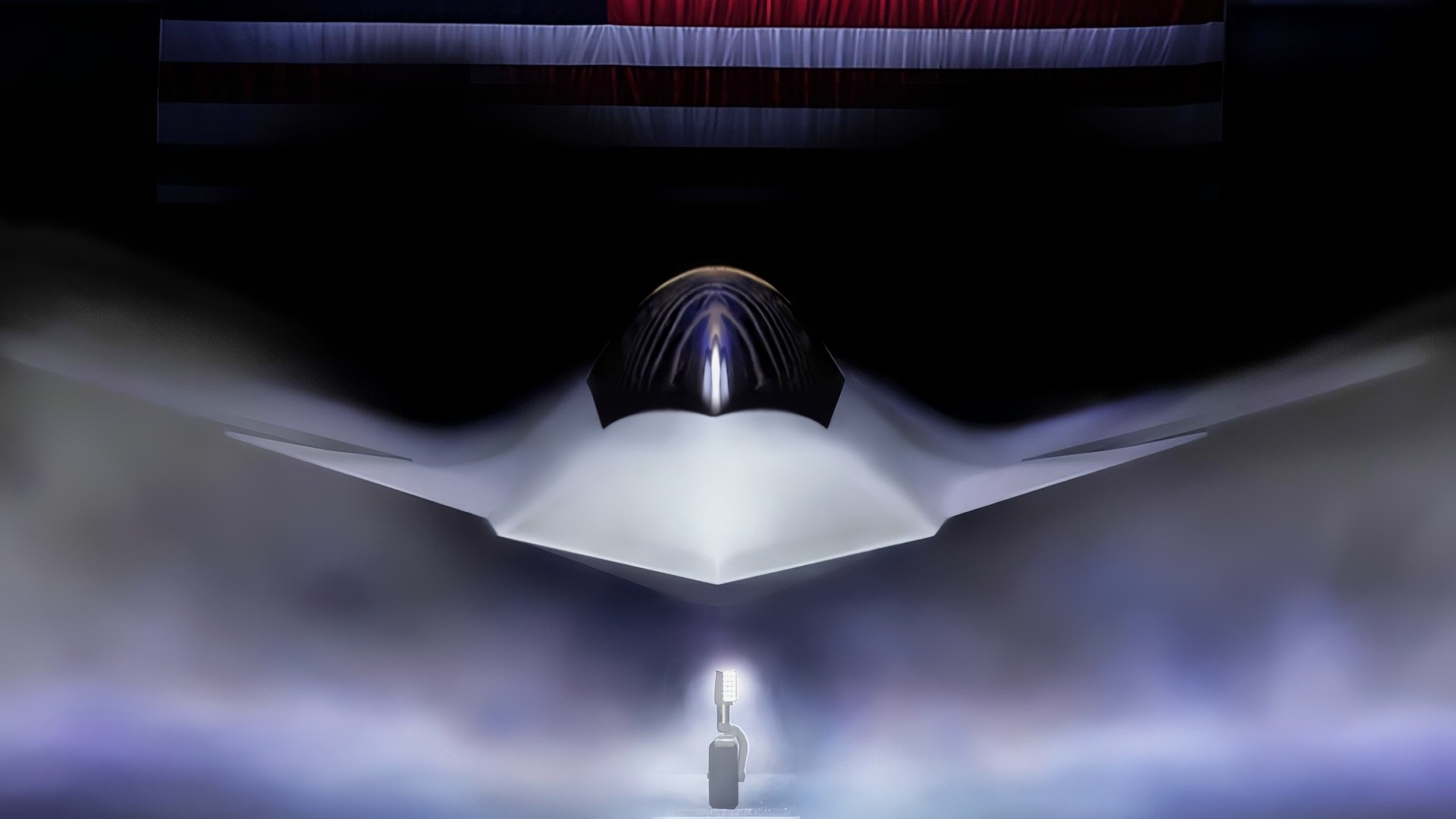
Shown is a graphical artist rendering of the Next Generation Air Dominance (NGAD) Platform. The rendering highlights the Air Force’s sixth generation fighter, the F-47. The NGAD Platform will bring lethal, next-generation technologies to ensure air superiority for the Joint Force in any conflict. (U.S. Air Force graphic)
-The work stoppage is rippling through manufacturing jobs and suppliers, and Boeing acknowledges slower work on F-15, F/A-18 and MQ-25 programs.
-Executives, however, say the newly awarded F-47 remains on schedule despite early media warnings of delay.
-The company touts a pay package with big headline raises; the union says safety, staffing and skills can’t be replaced.
No F-47 Delay from Boeing Strike? What We Know
The strike by 3,200 machinists who work for Boeing in the St. Louis area is now in its second month, and while it shows few signs of being solved anytime soon, the strike also seems unlikely to affect efforts to move forward on the new F-47 NGAD 6th-generation fighter jet.
There have been a few recent developments in the ongoing dispute.
A “Waste of Time”
According to local TV station KSDK, the two sides in the labor dispute recently came to the table for a mediation session, although indications are that there was little to no progress made.
The sides met for four hours on Tuesday, and Tom Boelling, president and directing business representative of the International Association of Machinists and Aerospace Workers District 837, described the meeting as “a waste of time.”
He added that the union gave Boeing some opportunities to “save face,” but it didn’t appear that anything came of that.
Federal mediator Glen Reed presided over the session, which began with both sides in the room together, before they retreated to separate rooms, and Reed shuffled between them.
The Replacements
Earlier in the week, the St. Louis Business Journal reported that Boeing had begun the process to hire replacement workers to step in for the striking workers. In a statement, Boeing described the move as “the next step in our contingency plan.”
Boeing told the outlet that it would follow labor law in executing the replacement plan. It also said that if workers are replaced while out on strike, they might not have a role to return to, once the strike is over.
Per CNBC, Boeing has not said how many replacement workers it plans to hire.
Dan Gillian, Boeing Air Dominance vice president and general manager and senior St. Louis site executive, sent an email to Boeing employees, in which he announced that job requisitions would be posted and a job fair would take place on September 16.
In an interview with the Business Journal, Boelling, the union chief, referred to the potential replacement workers as “scabs,” and predicted that the dispute would escalate if Boeing went through with that step.
Boeing workers described the replacement worker plan as “dangerous,” per a local NPR report, with one machinist telling the outlet that hiring unskilled workers was a problem. Another worker said that he doubted the company could find enough skilled workers to replace more than 3,000 striking workers.
Boeing operates a website on which it offers updates on the strike, although it has not been updated since August 25. In that update, the company stated that its prior offer remains in place, one that included 4what it called 40 percent average wage growth, as well as more vacation, sick leave, and “a faster path to the top of the pay scale.”
Manufacturing Losses
A report this week by Manufacturing Dive cited the latest Bureau of Labor Statistics data from the government to show that the manufacturing sector lost 12,000 jobs in the second quarter. Despite the losses, the quarter represents a 70 percent improvement over the same quarter the year before.
The manufacturing equipment sector, meanwhile, saw 14,500 job losses, much of that driven by the Boeing strike, as well as a separate strike at GE Aerospace plants in Ohio and Kentucky.
What of the F-47?
When Boeing had a strike last year that ended after seven weeks, it actually affected the company’s aircraft output.
The current strike is much smaller, and per Reuters, Gillian has acknowledged that it has “slowed work on some programs,” including the F-15, F/A-18, and the MQ-25 military drone.
Fox Business had reported, the week the strike started, that the F-47, which Boeing received the contract to build earlier this year, could be “threatened by potential delays” due to the strike, Boeing has denied that, with the company’s CEO Kelly Ortberg saying in early August that “I wouldn’t worry too much about the implications of the strike. We’ll manage our way through that.”
The Boeing F-47 is not currently in mass production and has not undergone flight testing, but efforts are underway for an eventual test flight. Thus, while it’s hard to tell for sure, being in the early days, at least for now, the impact on the NGAD fighter seems pretty minimal, at least, for right this second.
About the Author: Stephen Silver
Stephen Silver is an award-winning journalist, essayist, and film critic, and contributor to the Philadelphia Inquirer, the Jewish Telegraphic Agency, Broad Street Review, and Splice Today. The co-founder of the Philadelphia Film Critics Circle, Stephen lives in suburban Philadelphia with his wife and two sons. For over a decade, Stephen has authored thousands of articles that focus on politics, national security, technology, and the economy. Follow him on X (formerly Twitter) at @StephenSilver, and subscribe to his Substack newsletter.
More Military
J-36: China’s Diamond Stealth Fighter Is a Total Mystery
China’s J-20S Is Double Trouble For a Reason


