

Article Summary – Ottawa’s long-delayed plan to buy 88 F-35s is back in play as Prime Minister Mark Carney weighs walking away from the deal amid soaring cost estimates and political friction with Washington.
-Sweden has mounted a full-court press for its Gripen fighter, dangling local production and jobs, while Canadian industry warns that canceling the F-35 would sacrifice lucrative work on every jet built worldwide.

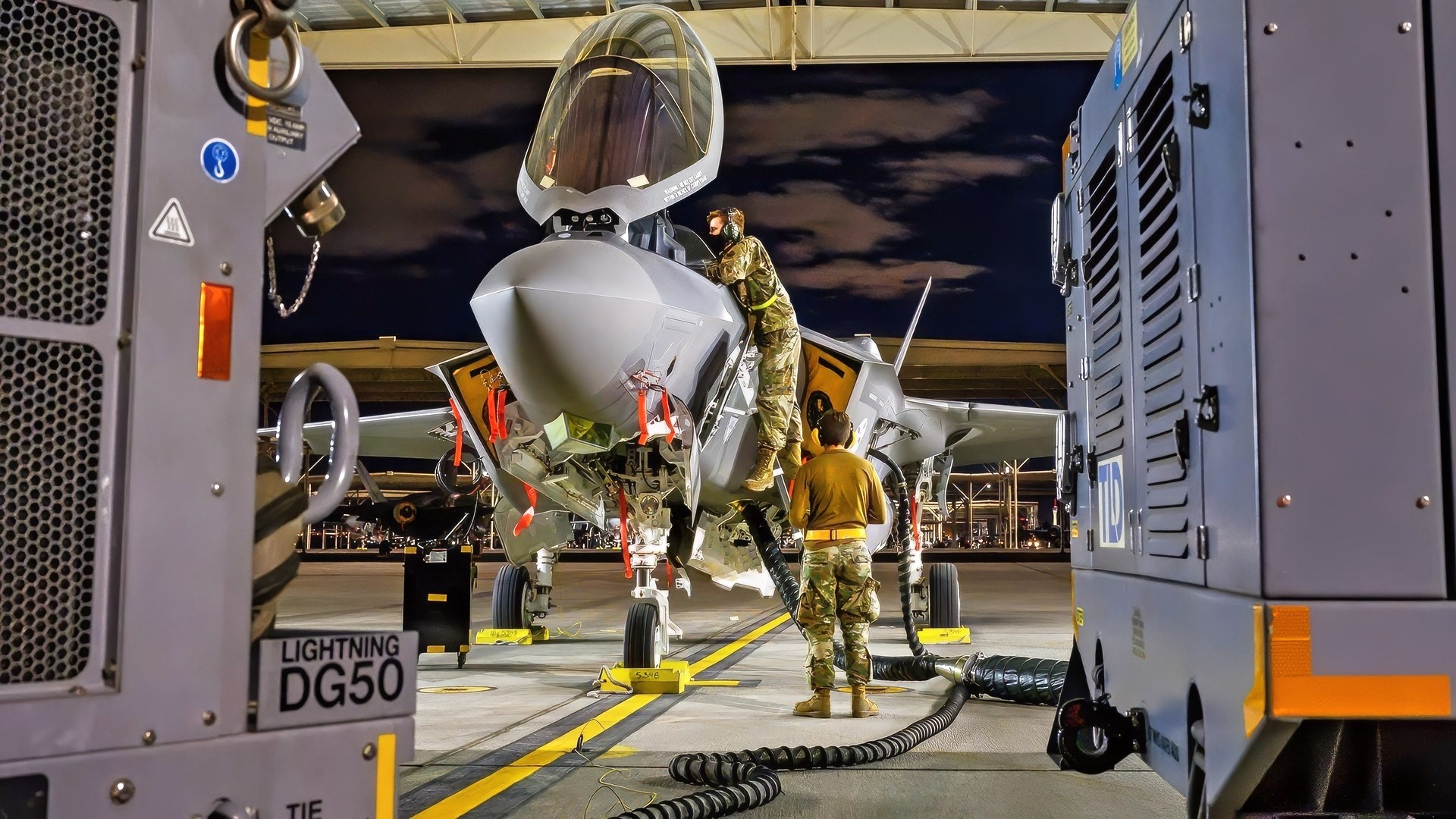
Two U.S. Air Force F-35A Lightning II aircraft, with the F-35 Demonstration Team, approach a U.S. Air Force KC-135 for in-flight refueling en route to their next airshow at Pensacola, Florida, on 28 October, 2024. The F-35 Demo Team travels to various bases to showcase the capabilities of the most advanced 5th generation fighter aircraft. (U.S. Air Force photo by Senior Airman Nicholas Rupiper)
-Retired commanders and U.S. officials insist a mixed fleet would be a wartime liability and a diplomatic own goal. Canada’s choice now sits at the intersection of alliance politics, budgets, and industrial strategy.
Canada Has a Big F-35 Fighter Choice to Make Soon
The Canadian government has dragged its feet for most of 2025 in deciding whether to buy a full complement of F-35 stealth fighter aircraft from Lockheed Martin.
Under former Prime Minister Justin Trudeau, Canada in 2022 agreed to purchase 88 F-35’s to replace the country’s fleet of CF-18 Hornets.
New Prime Minister Mark Carney broached a reconsideration of the deal while he was on the campaign trail. After Canada’s election earlier this year, Canada’s then-Defense Minister, Bill Blair, told CBC that Canada was looking at alternatives to the F-35 buy. A scathing government report in June, meanwhile, found that the cost of the jet program had swollen from the original press tag of $19 million to $27.7 billion.
A formal military review was put in place to examine the decision, with the ultimate decision resting with Carney. All of this is happening against the backdrop of the worst tensions between the U.S. and Canada in decades.
So, where do things stand now?
The King and the Letter
Swedish King Carl XVI Gustaf recently visited Canada, as part of a larger government delegation, amid speculation that Ottawa could choose Swedish Gripen E/F fighters instead of purchasing the full complement of F-35s.
Canada and Sweden agreed to a “strategic partnership” agreement. The statement announcing that arrangement did not mention jets.
“We are like-minded Arctic nations with shared interests in the North Atlantic and the Arctic region, and who recognise the vital contributions and rights of Indigenous Peoples in the Arctic in keeping with the UN Declaration on the Rights of Indigenous Peoples and international law,” the statement read. “Canada and Sweden affirm our strong commitment to democracy and multilateralism, and to upholding human rights, including gender equality, the rule of law and the rules-based international order and trade system.”
According to Breaking Defense, Sweden has made a “royal push” on the benefits of the Gripen jets.
“We are looking for increased production,” Sweden’s Defense Minister Pål Jonson said during the king’s visit. “To produce 100 to 150 additional Gripen fighters on top of what we’re doing right now in Sweden—and with Brazil, Colombia, and others already in the queue—might be challenging to do it all in Sweden. That’s why I am talking about partnership.”
Meanwhile, according to the CBC, Saab CEO Micael Johansson says Canada’s air force could have Gripen jets within three years, and the company would build both a manufacturing facility and a “full-fledged manufacturing center and a research and development hub.”

U.S. Air Force Capt. Melanie “MACH” Kluesner, F-35A Lightning II Demonstration Team pilot and commander, flies an aerial demonstration certification flight at Hill Air Force Base, Utah, Feb. 22, 2024. Upon the 388th Fighter Wing commander certification, the F-35 Demo Team pilot is required to complete the Air Combat Command Heritage Flight Training Course. (U.S. Air Force photo by Staff Sgt. Kaitlyn Ergish)
But the deal to build the jets, says the executive, “would be predicated on Canada deciding to purchase the fighter.”
According to the CBC report, the 16 F-35s that have already been purchased will arrive at a U.S. Air Force base late next year before they land in Canada in 2028.
A Pro-F-35 Letter
Newsweek, citing Radio Canada, reported that a group of former Canadian military officers has written a letter urging the Canadian government not to make the switch.
“The letter has not been made public, but Radio-Canada said it had been signed by former chief of staff of the Canadian armed forces Tom Lawson,” Newsweek reported. “Lawson would not confirm this, but he did tell the Canadian broadcaster that the F-35 was superior to the Gripen and that having a hybrid fleet with two different sets of infrastructure would be ‘close to useless’ during wartime.”
Several experts have weighed in on different sides of the debate.
“The F-35 is so far beyond anything that the Gripen can provide that anything you’d be saving in terms of money by going to a second fleet would be lost,” Lawson said.
“Nobody is saying the F-35 is a bad plane. … The government has to make decisions around how it’s balancing what it sees as our defense requirements and industrial requirements and how to build partnerships,” Canadian defense policy expert Philippe Lagassé told the CBC.
Meanwhile, in a Toronto Sun op-ed published earlier this week, columnist Brian Lilley chided Carney for even considering a change in the fighter jet order.
“Mark Carney can’t help himself when it comes to taking shots across the bow of the Americans,” the columnist wrote. “The problem is every time he does it, he’s putting Canadian jobs in harm’s way and making the possibility of a deal on tariffs with Washington less likely.”

U.S. Air Force Maj. Melanie “Mach” Kluesner, pilot of the F-35A Demonstration Team, performs aerial maneuvers at the Sun ‘n Fun Airshow in Lakeland, Florida, April 4, 2025. The demonstration team showcases the skill and precision U.S. Air Force pilots and aircraft are capable of. (U.S. Air Force photo by Senior Airman Nicholas Rupiper)
He also argued that getting the F-35s would help Canadian companies.
“There are more than 30 Canadian companies supplying parts for the F-35 project. As part of the F-35 program, Canadian companies are able to supply parts and benefit from every single F-35 built and not just the ones built for Canada,” Lilley said. Those are jobs that would “disappear” in the event of the government cancelling the contract.
The View From the U.S.
According to BNN Bloomberg, U.S. Ambassador to Canada Pete Hoekstra this week called the F-35s a “phenomenal success.”
“It’s not an American plane. It’s an international plane,” Hoekstra said of the F-35 fighter jet, noting that Canada has been part of the F-35 consortium all along.
“You’ve got companies in Canada that are learning and developing—and probably contributed to—the development of (F-35) technology that you can use on future products and future efforts,” he added. Hoekstra has been vocal in the past about not wanting Canada to split its fleet.

JAS 39 Gripen. Image Credit: Creative Commons.
Per the Toronto Star, Hoekstra said this week that the future of trade talks between the two countries would depend on Canada agreeing to purchase the F-35 fighter jets.
“Well, on a number of these issues, we are, we’re actually waiting to see exactly where the Canadian government is going to come out on this,” the ambassador said in the interview.
Where Things Stand Now
There has yet to be an announcement on the Carney government’s intent. Defense Minister David McGuinty said in an interview this week, reported by Bloomberg, that “the government is open to purchasing jets from several companies.”
About the Author: Stephen Silver
Stephen Silver is an award-winning journalist, essayist, and film critic, and contributor to the Philadelphia Inquirer, the Jewish Telegraphic Agency, Broad Street Review, and Splice Today. The co-founder of the Philadelphia Film Critics Circle, Stephen lives in suburban Philadelphia with his wife and two sons. For over a decade, Stephen has authored thousands of articles that focus on politics, national security, technology, and the economy. Follow him on X (formerly Twitter) at @StephenSilver, and subscribe to his Substack newsletter.
More Military
The YF-23 Black Widow II Stealth Fighter Almost Made the Ultimate Comeback
The New Leopard 2A8 Tank Has a Message for the Russian Army
The F-22J Raptor Stealth Fighter Will Never Fly For Japan (China Is Smiling)


William Finbarr Wilson
November 22, 2025 at 5:43 pm
“It’s not an American plane. It’s an international plane,” Hoekstra said… well except Canada has no access to the source code. None. And the source code is all that matters. Plus the USA has threatened us (Canada) with annexation. Sorry but when your head of state repeatedly says we’d be better off as part of the USA… the discussion is kind of over.
William Finbarr Wilson
November 22, 2025 at 5:49 pm
“Hoekstra said this week that the future of trade talks between the two countries would depend on Canada agreeing to purchase the F-35 fighter jets.” so buy are stuff or else? geez and you wonder why Canadians are PO’ed
Rick Schaubel
November 22, 2025 at 6:24 pm
You idiots want to deal with that crook Trump? You never learn.
You know they will not build to speck. Just want to money. Lets build our own.
Don’t you care about work here?
.
Mike Emmerson
November 22, 2025 at 6:41 pm
You guys really need to do a better job at spell checking and fact checking your articles, instead of just pumping them out.
Shawn
November 22, 2025 at 6:47 pm
Canada’s F-35s are not Canadian military assets at all,they are entirely American assets,a bloodsucking machine for Canada. As a Canadian,I firmly oppose the purchase of American fighter jets. American hostility and sabotage against Canada is the greatest threat to Canada’s national security.
Swamplaw Yankee
November 22, 2025 at 10:55 pm
How many times did the US citizen Pete Hoekstra vote in the last Canadian Election of this year, 2025? 800 times, 900 times, zero times?
Nobody voted for defence spending increases! No politician of any party even dared mention that! Got that, short pants petey! You missed your chance to blather your bull, before, when the election was still ongoing!
Now, FIRST speak openly about how Trump will reduce the huge tax burden placed on low income Canadian Citizen Seniors. -30-
BRAD FALCK
November 23, 2025 at 9:45 pm
Nothing more than an American “Choke Chain” to keep Canada 🇨🇦 in line
Jack
November 24, 2025 at 1:39 am
When Trump leaves office, I fully expect my country, the USA, will repair the damaged relationship that Trump has inflicted upon Canada.
The F-35 is an amazing, though expensive, aircraft. Any other fighters would simply be targets as they lack the stealth and situational awareness the F-35 affords.
Paul Mullin
November 24, 2025 at 8:47 am
It’s correct to say operating two fleets in war would be problematic. The question is, was with who?
Russian fighters in the Arctic, or American fighters in Ontario? The latter is more likely, and depending on American jets in that case would be STUPID.
We bought them. We should park them. If we hear another “or else” from your moronic ambassador, we should deliver them to Ukraine. Free
alex doiron
November 24, 2025 at 10:05 am
There is no reason why Canada can’t operate both the F35 and the Gripen. Agree to purchase 16 Gripens and 16 more F-35’s with the future purchase of F-35’s dependent on performance of the ones that are delivered. If the F-35 is a dud, then you have your insurance policy in place. If the F-35 is great, then you have a small number of Gripen’s as backup. Smaller countries operate fleets of multiple types of fighters. There is no reason that Canada can’t. It’s time for Canada to stop thinking like the junior partner to the states.
David C
November 24, 2025 at 10:46 am
Trump has turned his back on Canadians
The bible does say an eye for and eye etc
So it only be fitting for Canada to turn its back on Trump
The sooner the better
Elias Moreau
November 24, 2025 at 11:22 am
Reports suggest about 3,000 Canadian aerospace jobs are tied to the F-35 in Canada, while SAAB’s offer could generate 6,000 to 10,000—creating a net gain of three to seven thousand jobs, even in a worst-case scenario. Trump has even hinted at moving F-35–related jobs to the U.S. Taken together, these factors strongly bolster the Gripen’s case.
The claim that a mixed fleet is a ‘wartime liability’ falls apart under closer scrutiny. War is expensive, and the F-35 offers little to no benefit to a strained wartime economy—especially with its poor readiness and rising maintenance costs. A mixed fleet with cheaper jets is financially and operationally smarter, and the Gripen is uniquely suited for wartime conditions, requiring minimal support and resources to stay airborne. Moreover, a single piece of equipment rarely wins a war on its own. Logistics tend to play a much larger role.
Despite Hoekstra’s best efforts to praise the F-35, he still comes up short. Its only real advantage is stealth—and even that is questionable. In most other areas, it lags behind the Gripen. To be fair, its network and sensor systems may be comparable; we don’t know. Stealth no doubt comes in handy during surprise attacks, but then what? Far from all flight missions would benefit from stealth. And as an interceptor, the slow F-35 is hardly impressive.
Hoekstra may call the F-35 an international aircraft, but even if that’s true, it’s also irrelevant. The U.S. controls every part of its life cycle—assembly, maintenance, spare parts, and software. You can fly the F-35 only as long as Washington allows it, and if the U.S. suddenly charges more to cover its debt, your choices are to pay up or ground your fleet.
The reality is that the F-35 is a plane that never should have materialized. It becomes increasingly and painfully clear that it should have stayed on the drawing board. Even though the F-35 was intended to replace the F-16, it was never actually designed nor engineered to do so. That is the oxymoron plaguing the F-35 program, and no amount of marketing material is going to change that.
However, in the end, none of the technical specifications or differences between the two fighter jets actually matter. Fighter jet procurement is about trust and politics. It is a long-term financial, industrial, and political commitment. The two sides need to be sure they can work together for the next 30 years. The current administration south of the border simply doesn’t qualify, and we don’t know if or when that will change.
The Canadian government would do their country a great disservice by buying more F-35s instead of choosing a true hero to complement the overpriced American sidekick they’ve already paid for. Operational and political logic suggests that hero can be found in Europe. Whether Canada chooses the Gripen remains to be seen. Given the industrial benefits of SAAB’s proposal, it would be a political own goal to reject it.
R. Yokubynas
November 24, 2025 at 4:04 pm
If you think Canadian parts jobs would be secure with the purchase of American jets I have a bridge in Brooklyn that I can sell you. Just sneeze the wrong way and Trump will pull those jobs to the US faster than the jets can fly. He will likely pull the jobs anyway as he wants everything to be built and sourced in the US. How many times do you have to be fooled before you realize the current US administration is untrustworthy!
James Perreault
November 25, 2025 at 10:54 am
Just throwing it out there, but if Saab were to build a plant or announce the intent to build a plant in Canada, it would go a long way towards swaying the fence sitters. Why would they want to do it? 1) access to cheaper materials, 2) Canada’s skilled labour force, 3) off Continental manufacturing and boosted production capacity 4) how do you say no to a domestically produced aircraft. 5) Reduced reliance on American political whims 6) Jobs in Canada and finally and 7) investment in the Canadian economy, meaning defense dollars invested would remain in Canada. And as a person note, it gives the US war machine the middle finger. Much like Pierre has said when advised Mr. Trudeau, you can’t do that to the Americans. His response was priceless. “Oh ya, just watch me “
Lelly
November 26, 2025 at 9:34 pm
When the US is betraying it’s allies, turning its back on NATO and threatening to annex Canada, I don’t see Canada has any choice.
Buying any F-35’s seems very dangerous to me. I would drop all of them and take whatever monetary cost that comes with it. It you can’t get out of the whole deal, then sell what you get for spare parts to other countries.
Simon Blyth
November 27, 2025 at 12:14 pm
Militarily, these are very different planes. F-35s are better all out attack aircraft, while Gripens offer cheaper and more reliable defensive capabilities in particular in the north. It makes sense to run two different fleets. The extra cists of doing so are more ethan offset by the vastly cheaper running costs of the Gripen. Also total dependence on the US means Canada does not have an independent foreign policy, since the US completely controls the F-35 software and supply chain.
Gary Hansen
November 28, 2025 at 12:56 am
Yes to Sweden and the Saab griphen…Canadian governments, both conservative and liberal have neglected our country’s defense for too long.f35 comes with too much baggage and ties to US. Kill switch is reality and Canada can’t make our independent decisions when or how to use our jets.
The Griphen is the best choice