


Summary and Key Points: China calls it the aircraft carrier killer. The DF-26B is built to do what most weapons can’t — track a U.S. aircraft carrier moving across open ocean and slam into it from thousands of miles away at Mach 15. Beijing says it works. The Pentagon has to assume it might. But no one outside China’s Rocket Force really knows what this missile can actually do — and that uncertainty may be the most dangerous thing about it.
The Aircraft Carrier Question

NAVAL AIR STATION NORTH ISLAND, Calif. (July 10, 2024) USS George Washington (CVN 73) arrives at Naval Air Station North Island, July 10, 2024. USS George Washington and crew are in the process of completing a homeport change, replacing USS Ronald Reagan (CVN 76) as the forward-deployed U.S. Naval Forces Japan aircraft carrier at Fleet Activities Yokosuka, Japan.(U.S. Navy photo by Mass Communication Specialist 1st Class Keenan Daniels)
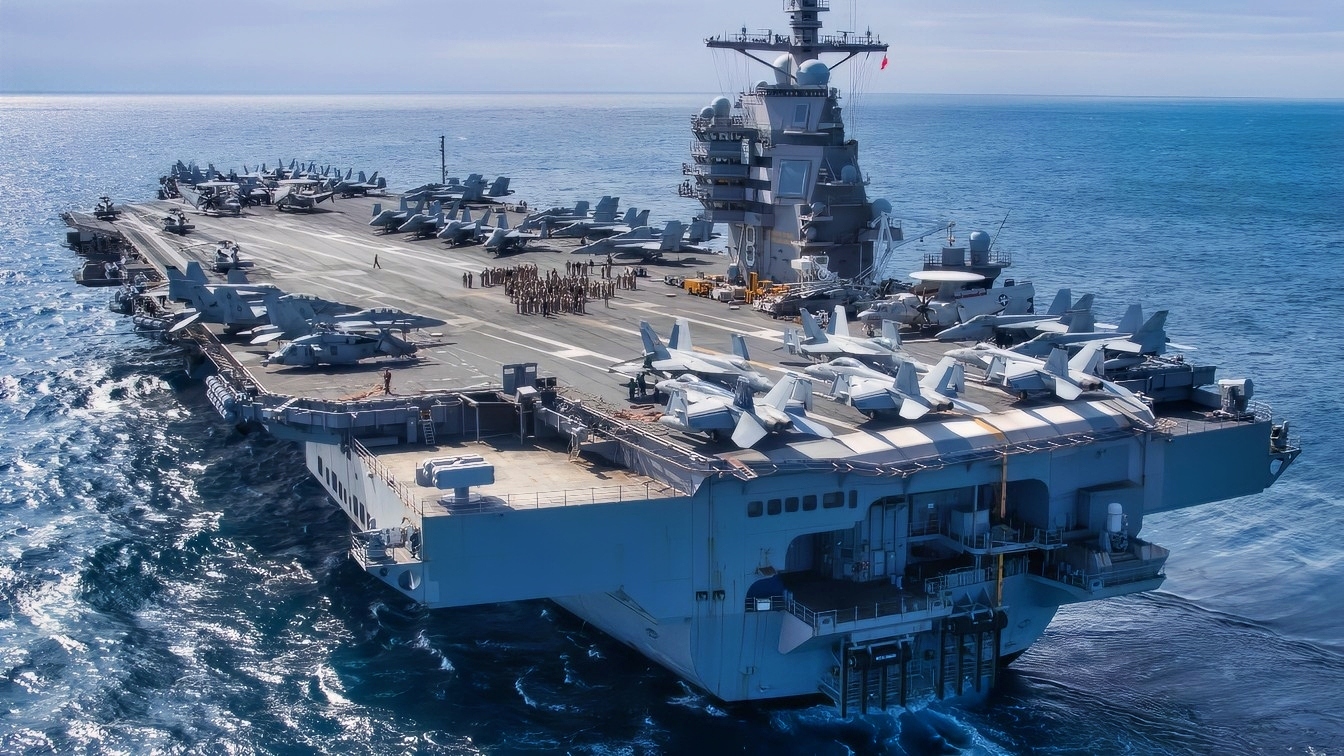
The first-in-class aircraft carrier USS Gerald R. Ford (CVN 78) transits the Atlantic Ocean, March 19, 2023. Ford is underway in the Atlantic Ocean executing its Composite Training Unit Exercise (COMPTUEX), an intense, multi-week exercise designed to fully integrate a carrier strike group as a cohesive, multi-mission fighting force and to test their ability to carry out sustained combat operations from the sea. As the first-in-class ship of Ford-class aircraft carriers, CVN 78 represents a generational leap in the U.S. Navy’s capacity to project power on a global scale. (U.S. Navy photo by Mass Communication Specialist 2nd Class Jackson Adkins)
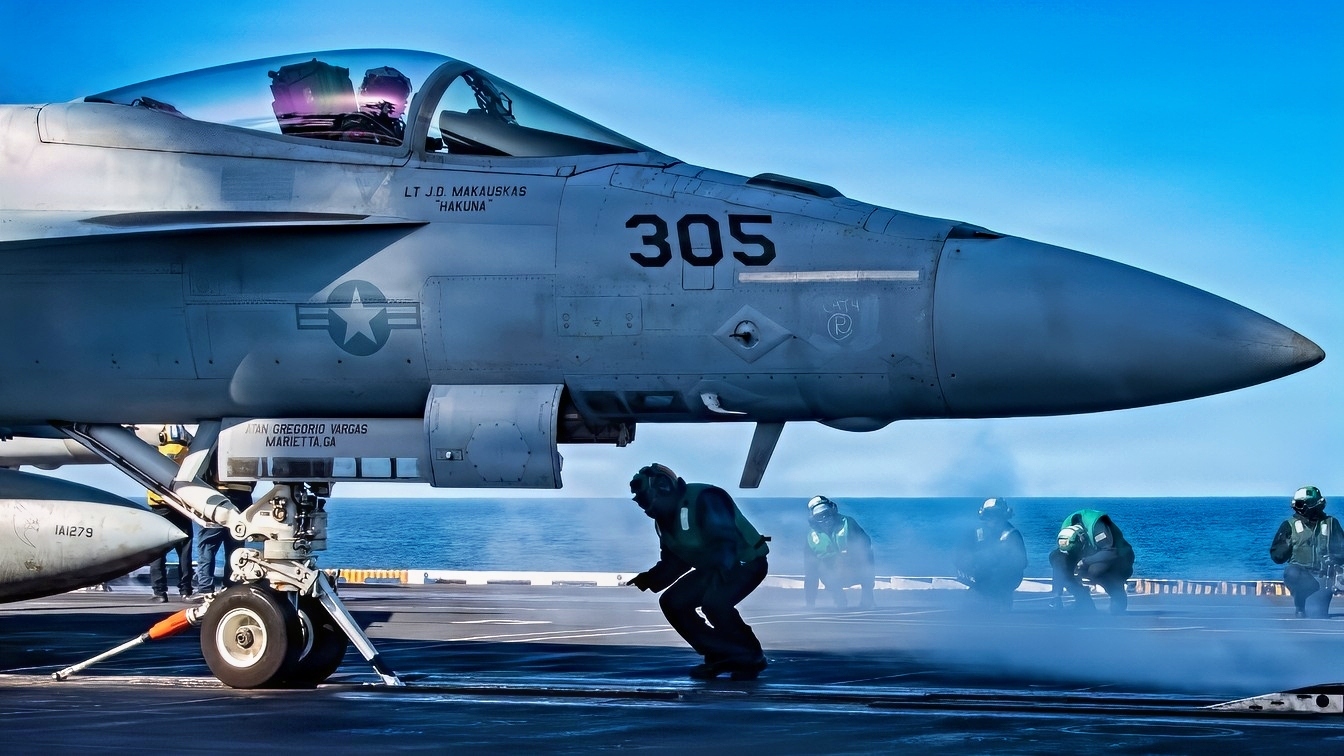
An F/A-18E Super Hornet, attached to the “Kestrels” of Strike Fighter Squadron (VFA) 137, prepares to launch from the flight deck of the Nimitz-class aircraft carrier USS Nimitz (CVN 68) in the Pacific Ocean, April 22, 2026. Nimitz is deployed as part of Southern Seas 2026 which seeks to enhance capability, improve interoperability, and strengthen maritime partnerships with countries throughout the region through joint, multinational and interagency exchanges and cooperation.
The Dongfeng-26B (DF-26B) is an anti-ship ballistic missile (ASBM) developed from the DF-26 ballistic missile line. The missile is allegedly designed to strike moving naval targets from long ranges. Designed by the China Aerospace Science and Technology Corporation and fielded by the People’s Liberation Army Rocket Force, it is one of China’s premier carrier killers. Although it is not a hypersonic missile, the DF-26B still poses a significant threat to U.S. naval assets in the South China Sea near Japan.
Development of the DF-26B
The base DF-26 is a land-based medium-range ballistic missile (MRBM) designed to bridge the gap between shorter-range systems like the DF‑21 and longer-range intercontinental missiles. According to some estimates, the missile has a range of around 4,000 to 5,000 kilometers, allowing it to reach targets deep into the Western Pacific and even strike U.S. military installations on Guam. This extended range has earned the missile the nickname “Guam killer.” The missile is also dual-capable, meaning it can carry either nuclear or conventional warheads, which adds to its deterrent value and makes any contingency planning a nightmare for the U.S.
The DF‑26B is an anti-ship version of the DF-26. It was adapted to engage moving ships at sea, such as aircraft carriers and large surface combatants. Unlike traditional anti-ship cruise missiles that travel at relatively low altitudes, the DF‑26B follows a ballistic trajectory for most of its flight. After launch, it ascends into the upper atmosphere before descending rapidly toward its target.
During its terminal phase, the missile uses advanced guidance systems that allow it to adjust its trajectory and home in on a moving vessel. This makes it ideal for targeting large flattop aircraft carriers and other large surface vessels.
Design and Specs
The missile’s payload is housed in a maneuvering reentry vehicle (MaRV). This technology allows the warhead to make course corrections during its descent, which is essential when targeting ships that can change position while the missile is in flight.
The guidance system is unknown but likely involves multiple layers, including inertial navigation during the early stages and satellite updates through China’s BeiDou navigation system. These systems enable the DF‑26B to pursue a non-stationary target, a challenge that has historically made anti-ship ballistic missiles difficult to perfect.
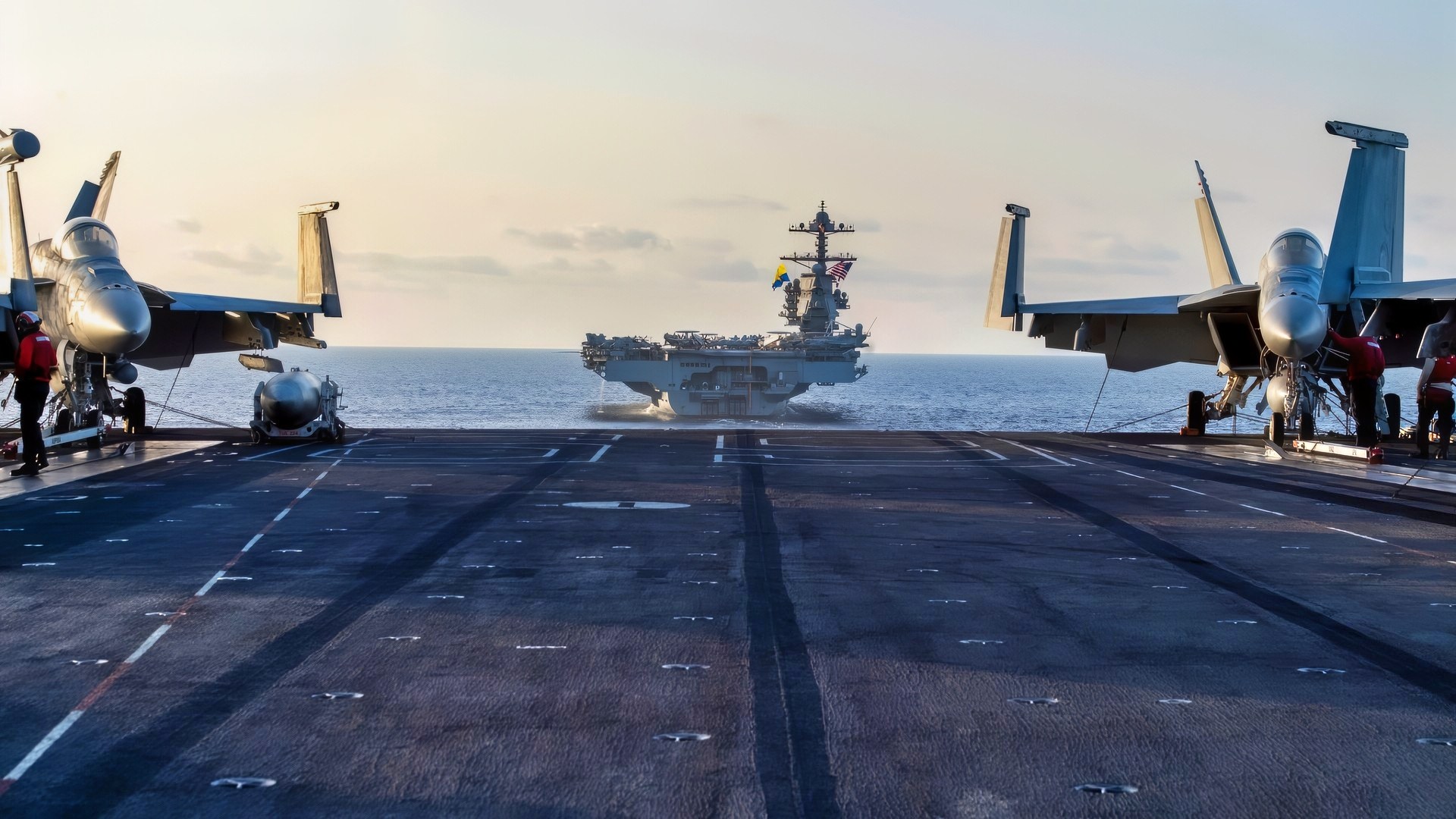
USS Eisenhower Aircraft Carrier. Image Credit: U.S. Navy.
The DF‑26B understandably shares much of its hardware with the base DF‑26 missile. It is a two-stage, solid-fueled system mounted on a road-mobile transporter-erector-launcher (TEL), which enhances its survivability by enabling rapid relocation and helping it avoid detection or preemptive strikes.
The missile is approximately 14 meters long, with a payload capacity estimated between 1,200 and 1,800 kilograms. During its terminal phase, the warhead travels at speeds of Mach 15+, which is typical of ballistic missiles, making interception extremely challenging, though not impossible, for existing missile defense systems.
Deployment and Operational History
The DF-26B has never been used in combat, although it has been tested and used in other military exercises. A life-fire test was conducted in 2020, when a DF‑26B missile was launched into the South China Sea during military exercises.
According to some reports, the tests were intended to simulate strikes against moving maritime targets. The results of the test were reportedly satisfactory to the People’s Liberation Army Rocket Force (PLARF) as the missile was said to have successfully hit its target.
Compared with the earlier DF‑21D, another Chinese anti-ship ballistic missile, the DF‑26B offers a significant increase in range and payload capacity. The DF‑21D has an estimated range of about 1,500 to 2,000 kilometers, whereas the DF‑26B can extend that reach to roughly double the distance.
This expanded coverage allows the DF‑26B to engage targets beyond China’s first island chain and into the broader Pacific theater, thereby threatening targets as far as Guam.
The DF-26B as Part of China’s A2/AD Strategy
The DF‑26B plays a central role in China’s anti-access/area-denial (A2/AD) strategy, which seeks to limit the ability of adversary forces to operate freely near China’s coastline and surrounding regions.
The missile’s long range allows it to threaten naval forces far from the mainland, forcing opposing fleets to operate at greater distances. This is particularly relevant for American carrier strike groups, which have traditionally been a cornerstone of U.S. naval power projection. By putting these high-value assets at risk, the DF‑26B complicates operational planning and creates additional strategic challenges for any navy operating in contested waters.
The DF-26B is a major unknown that complicates any U.S. planning in the INDOPACOM region. Like every other Chinese platform, it has never been used in combat, and thus, its actual capabilities are unknown. There is a real possibility that the missile does not possess the range or accuracy that China claims that it has. However, the mere possibility that it could accurately strike naval vessels at long range is enough to force the U.S. to think twice before launching any major naval operations. Ultimately, the DF-26B is one of many tools in China’s ever-growing A2/AD arsenal.
Its true capabilities are unknown, but its presence is enough to provide a credible deterrent.
About the Author: Isaac Seitz
Isaac Seitz, a Defense Columnist, graduated from Patrick Henry College’s Strategic Intelligence and National Security program. He has also studied Russian at Middlebury Language Schools and has worked as an intelligence Analyst in the private sector.


MrObvious
June 1, 2026 at 5:33 pm
That missile IMHO is like all the mines in the Strait of Hormuz it doesn’t exist either!
Jim Belbeck
June 1, 2026 at 9:00 pm
Mach 15? Holy cow it takes 4 seconds at Mach 1 from the horizon at Mach 15 it can’t be seen or followed, I was on a Carrier in Vietnam, it was different then because Mach 1 was still a goal to achieve. Mach 15 was unheard of, I think the carrier’s would be greatly compromised if faced with it. Perhaps making them obsolete, they’re close to it anyway.
Michael Eiford
June 2, 2026 at 12:35 am
Why we have the F-47, and associated unmananed support.
Brian Fortin
June 2, 2026 at 6:27 am
When the big one hits, there won’t be any Chinese satellites so this missile won’t work, even if it would have operated as designed, which I doubt.
dennis winebrinner
June 2, 2026 at 7:38 am
has China solved the plasma blackout problem?? at about mach 10 the plasma generated by the missel renders communication extremely difficult/impossible. so updating the targeting data to a missel traveling mach 15 ain’t happening, unless China, (who has not advanced any science/tech ever, only copy and pasted stolen info) has made a major break thru in communications.
the carrier killer missels are mostly bluff and bluster, but if you throw enough darts, you will eventually hit a bullseye.