


China Is Building a Lot of J-20 Fighters Fast: Although the United States builds more stealth fighters of a higher caliber than China, the production gap between the two countries is rapidly narrowing, an expert on Chinese air power explained.
During comments given as part of the Air & Space Forces Association’s annual Warfare Symposium, J. Michael Dahm, a senior fellow at the Mitchell Institute for Aerospace Studies, explained that commercially available satellite imagery reveals China is greatly expanding its production base for fifth-generation aircraft.

J-20 Fighter Firing Missile. Image Credit: PLAAF Photo/Public Domain.
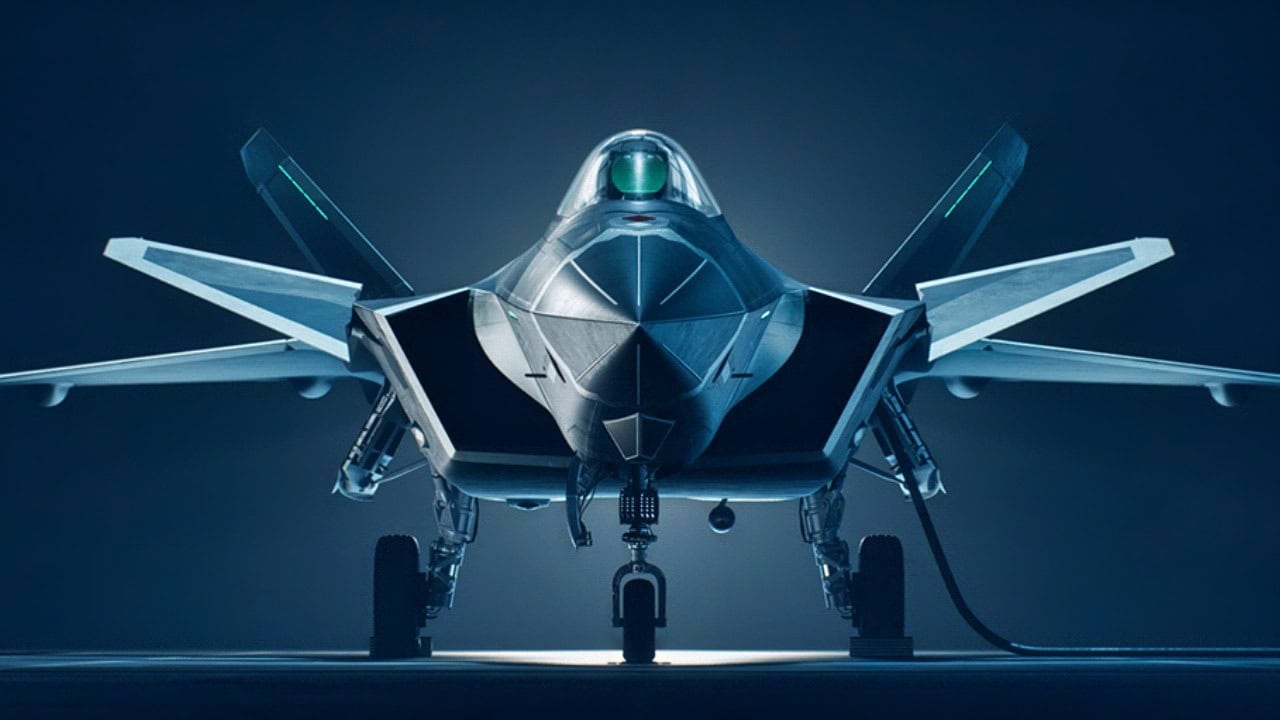
J-20 Fighter Artist Image. Image Credit: Creative Commons.
“China’s inventory of fighter and attack aircraft is going to grow significantly over the next five years,” Dahm said, adding that China’s Aviation Industry Corporation, a state-owned aerospace conglomerate, had added around 3 million square feet of production and manufacturing space to the facility that builds the J-20 stealth fighter.
“Looking back at commercial satellite imagery and substantial infrastructure improvements support the assessment that the Chengdu plant has increased its capacity and could be producing as many as 100 J-20s per year,” Dahm added. His comments were first reported by Flight Global.
China Is Rapidly Expanding J-20 Production
One analysis compiled by Justin Bronk, a senior research fellow at the Royal United Service Institute, the United Kingdom’s leading defense think tank, found that China has built 320 to 350 J-20 fighters as of mid-2025, and pegs the country’s output for last year at around 120.
“In addition, around 450 J-16s will probably have been delivered to the PLAAF [People’s Liberation Army Air Force] by the end of 2025, based on public estimates of 350 J-16s in service in 2024 and a production rate of around 100 new fighters per year,” Bronk added, indicating the overall scope of China’s aircraft production.
Citing satellite imagery, Dahm explained that three other aircraft manufacturing sites in China have also seen an expansion of their production facilities, an expanded footprint which he said totals more than 8 million square feet. The expansion, Dahm said, represents “more than the entire F-35 manufacturing complex in Fort Worth, Texas.”
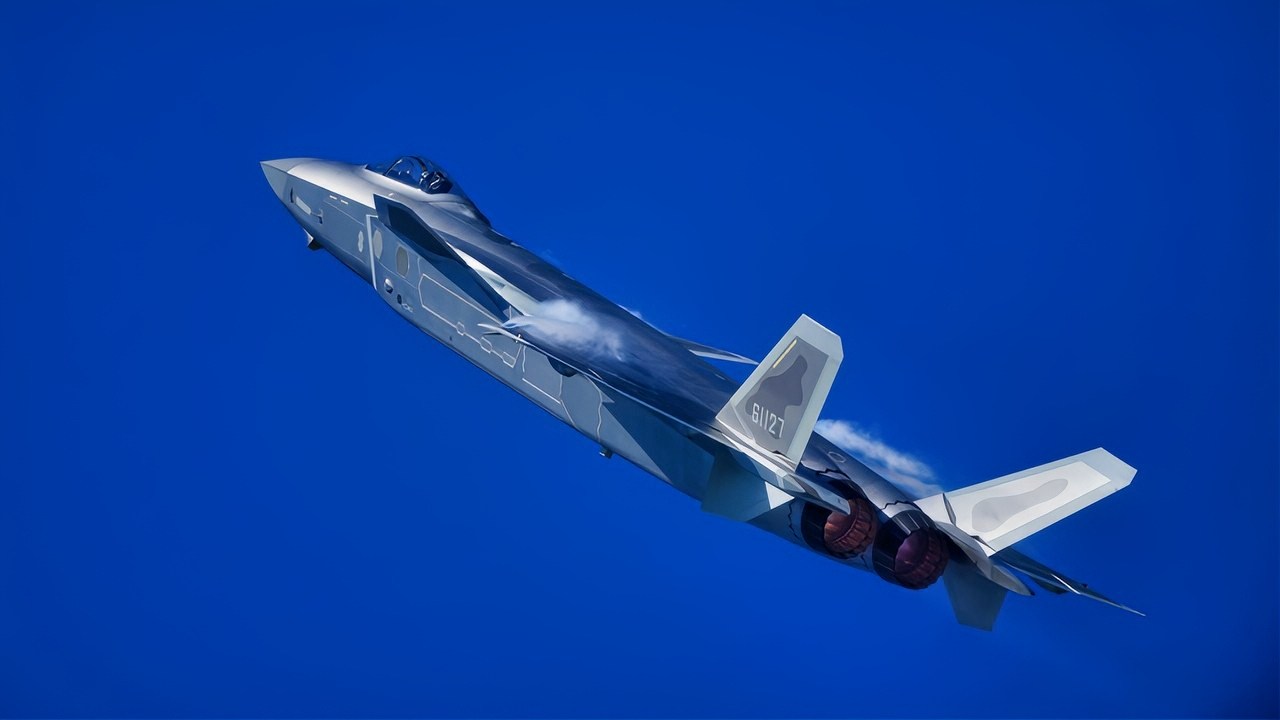
J-20 Stealth Fighter in 2024. Image Credit: Creative Commons.

J-20 Fighter Weibo Screenshot.
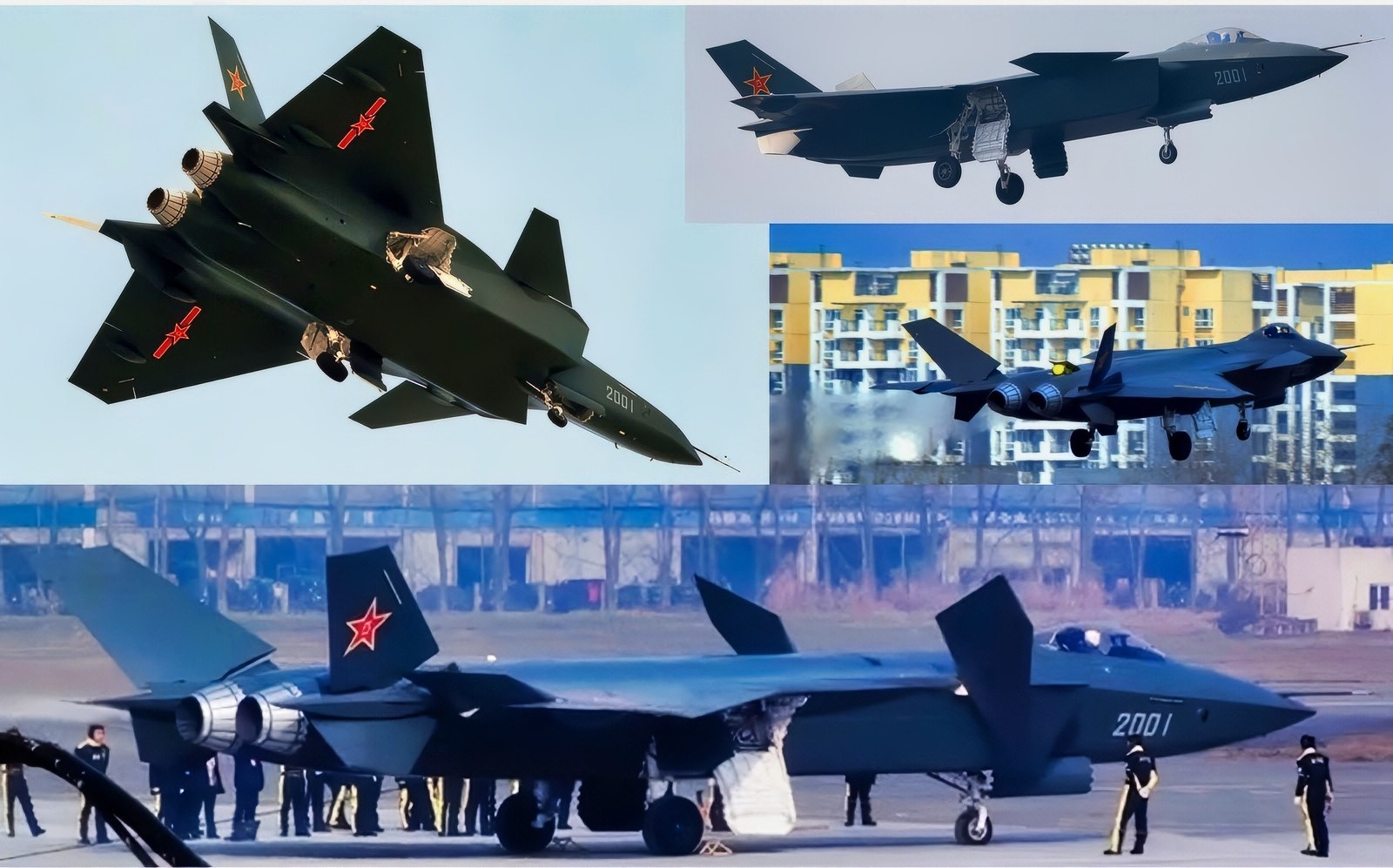
J-20 Fighter Maiden Flight. Image Credit: X Screenshot.
Production by Lockheed Martin, the defense prime that manufactures the F-35 stealth fighter, stands at about 156 F-35s per year. The defense company also builds the latest iteration of the Cold War-era F-16 fighter at a maximum build rate of 48 airframes per year. Beginning in 2027, China “will have the capacity to produce 300-400 fourth- and fifth-generation fighters per year for the PLA,” Dahm warned.
Quality vs. Quantity
Though China’s industrial might is unquestioned, the quality of Beijing’s aircraft builds is thought to be less than that of the United States—at least according to senior aerospace personnel. One aspect of China’s jet designs that lags behind its American counterparts is jet engines.
General Electric’s Steve Russel, who is the general manager of GE’s Edison Works division within the company, explained that his firm’s jet engines—and those manufactured by GE rival Pratt & Whitney—are qualitatively superior to those made in China.
“Our reliability tends to be still an order of magnitude better than theirs,” Russell said as part of comments given to Flight Global. The crux of the issue, he explained, is that China’s jet engines are broadly similar to their American counterparts in performance, but their longevity is considerably less impressive. While the high-performance jet engines GE manufactures require servicing after thousands of flight hours, China’s engines require deep maintenance after accruing just hundreds of flight hours.
“But they’re getting better and we’re seeing them get better,” Russel added. “That’s why it’s important that we take this next generational leap to make sure that we maintain that advantage that we have.”
Flying Off into the Sunset
One quote, often attributed to Soviet Premier Joseph Stalin, maintains that “quantity has a quality of its own.”
Though perhaps apocryphal, that quote strikes at the heart of what the ongoing war in Ukraine has laid bare: the ability to sustain troops on the battlefield by backfilling lost equipment and ensuring they are supplied with adequate ammunition is crucial to fighting and winning.
In terms of pure production numbers, China will soon, if not already, be the world’s leader in warplane manufacturing, even if the quality and performance of those built are not as exquisite as those in the United States.
During the Cold War, senior military planners within the Department of Defense sought to offset the Soviet Union’s massive industrial capacity by developing superior equipment designs that, in aerospace, favored higher performance and cutting-edge technology that eventually included stealth and precision weapons.
Against Beijing, will this well-worn playbook be enough?
About the Author: Caleb Larson
Caleb Larson is an American multiformat journalist based in Berlin, Germany. His work covers the intersection of conflict and society, focusing on American foreign policy and European security. He has reported from Germany, Russia, and the United States. Most recently, he covered the war in Ukraine, reporting extensively on the war’s shifting battle lines from Donbas and writing on the war’s civilian and humanitarian toll. Previously, he worked as a Defense Reporter for POLITICO Europe. You can follow his latest work on X.


