
Chinese weapons researchers say they have developed a new artificial intelligence system capable of recognizing simulated U.S. F-22 and F-35 stealth fighters based on their infrared signatures, and that it can do so in milliseconds.
The news could give future missile systems a new way to distinguish advanced aircraft from decoys and complicate U.S. planning in future military and combat scenarios.
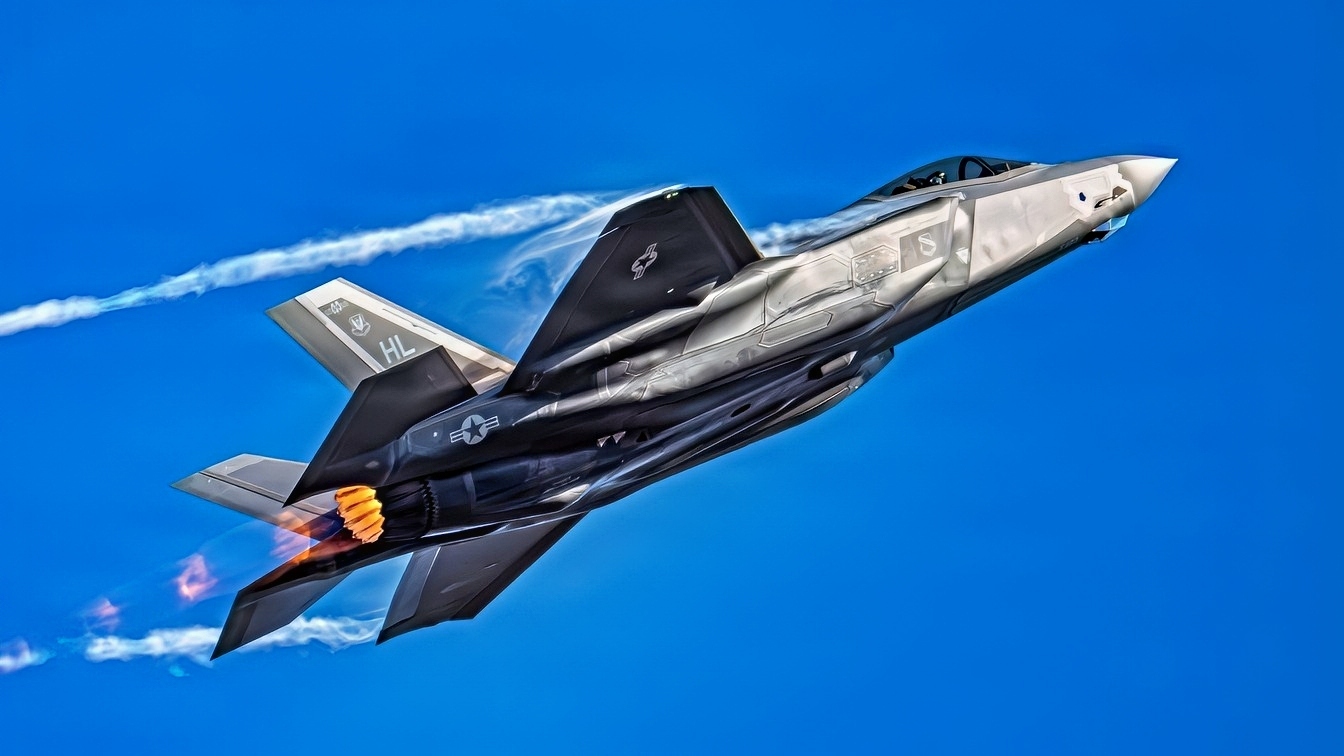
U.S. Air Force Maj. Sean “Rambo” Loughlin, pilot for the F-35A Lightning II Demonstration Team, performs aerial maneuvers during a practice flight at Hill Air Force Base, Utah, Jan. 6, 2026. The flight supported Loughlin’s training as the team’s new demonstration pilot as he prepares for the upcoming air show season. (U.S. Air Force photo by Staff Sgt. Nicholas Rupiper)
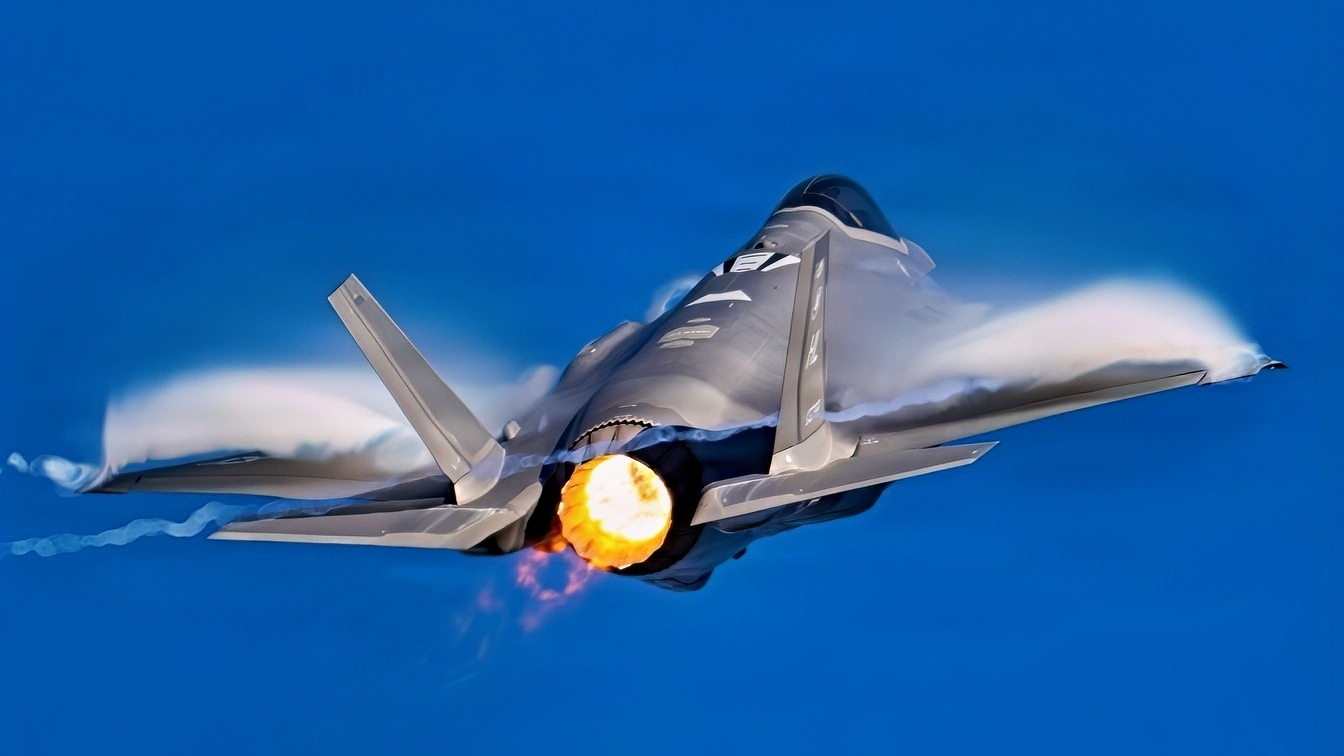
A U.S. Air Force F-35A Lightning II assigned to the F-35A Lightning II Demonstration Team performs a maneuver during the Feria Internacional del Aire y del Espacio (FIDAE) over Santiago, Chile, April 8, 2026. The F-35A Demonstration Team showcases the aircraft’s advanced performance and versatility through dynamic aerial maneuvers. (U.S. Air Force photo by Staff Sgt. Zachary Rufus)
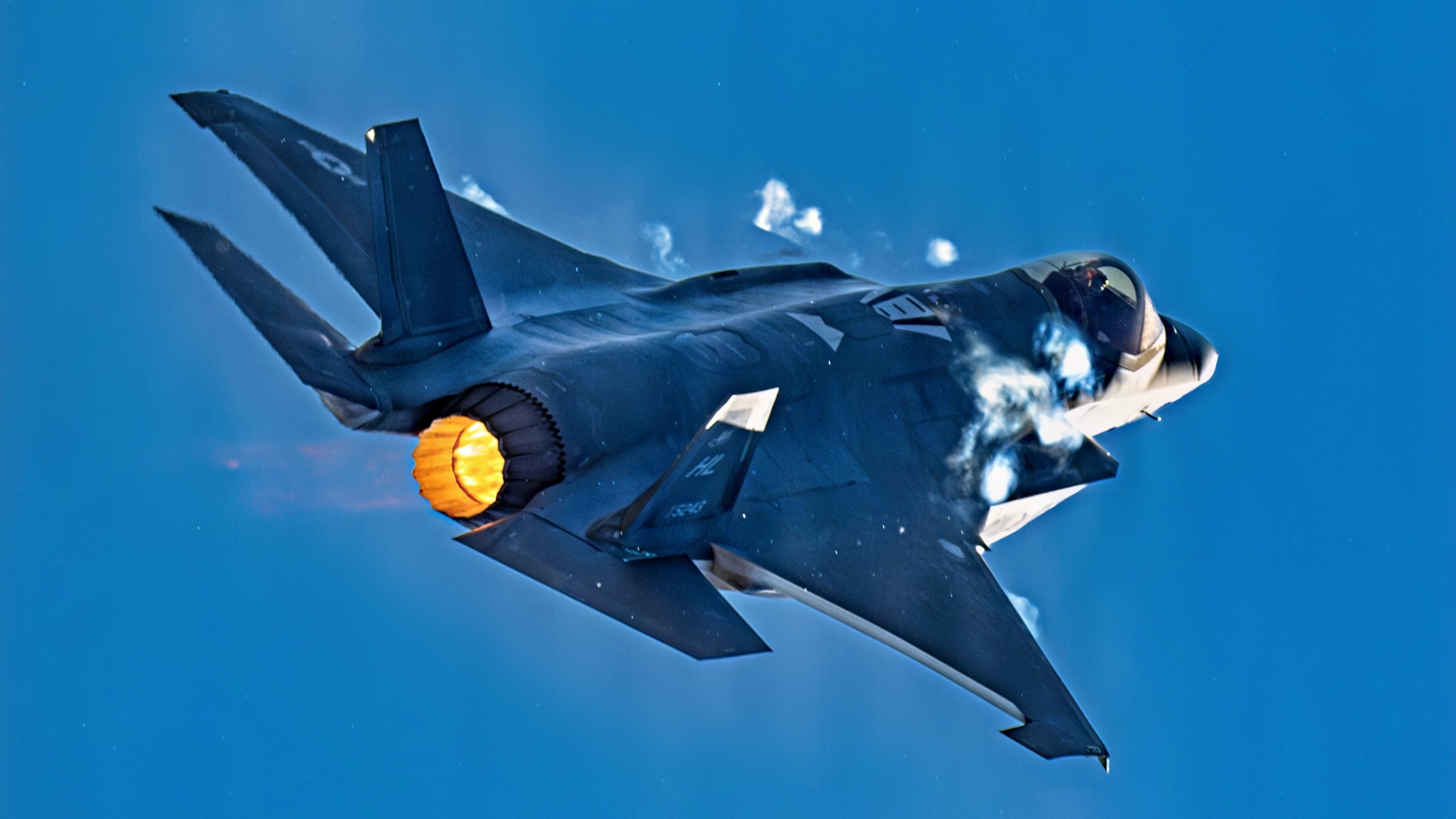
U.S. Air Force Maj. Sean “Rambo” Loughlin, pilot of the F-35A Demonstration Team, conducts aerial maneuvers during a practice demonstration at Hill Air Force Base, Utah, May 4, 2026. These practice demonstrations maintain the skills required to execute precise maneuvers at airshows worldwide. (U.S. Air Force photo by Staff Sgt. Nicholas Rupiper)
The experimental system achieved recognition accuracy of up to 97.1% in a laboratory setting, according to research from the Beijing Institute of Technology and the China Airborne Missile Academy.
The results, however, come with an important qualification: China has not actually demonstrated that the technology can detect, track, or destroy an operational American stealth fighter under real-world combat conditions.
What the study does demonstrate, however, is how artificial intelligence could make the sensors carried by heat-seeking missiles significantly smarter than they already are, while using so little electricity and computing power that it can fit inside the weapon itself.
China Is Catching Up
While America’s F-22 Raptor and F-35 Lightning II are both stealth fighters, they are not completely invisible.
Their shapes, coatings, internal weapons bays, and management of electronic emissions are primarily designed to make an aircraft considerably harder for an enemy sensor network to detect, identify, track, and ultimately target.
Infrared also presents another problem.
Jet engines produce huge amounts of heat, while airflow during high-speed flight also warms portions of the aircraft’s surface.
The F-35 incorporates measures intended to reduce its infrared signature, Lockheed Martin says, but no conventional jet aircraft can eliminate heat altogether.
Instead, engineers work to minimize it to the point that it becomes exceptionally difficult to detect.
Infrared-guided missiles exploit this problem, and engineers are in a constant race to design aircraft that minimize heat signatures and weapons that can detect them.
While engineers work to minimize the signature, other measures have historically been deployed to mitigate the problem, including firing flares and creating alternative hot targets intended to confuse an approaching missile.
But today, sophisticated heat-seeking missiles no longer simply chase the hottest object they can see.
Chinese researchers are utilizing remarkable new AI technology to determine what is a true aircraft signature, what may be a decoy, and what might not be an aircraft at all.
Decisions In Milliseconds
A study published by a team of Chinese researchers in the Journal of Electronic Measurement and Instrumentation revealed that China is developing technology that could enable smart missiles to make decisions in milliseconds, identifying the most advanced U.S. fighter aircraft currently deployed.
Researchers, according to the study, built and tested a lightweight neural network system designed to work with limited computing power, meaning it could theoretically be installed in missile-borne infrared imaging systems.
To test the system, researchers trained it using 3,245 infrared images collected by a missile-based scanning system.
The dataset included three categories of airborne targets: two designed to mimic the F-22 and F-35 aircraft and another representing a form of loitering munition.
Success So Far
The neural network reportedly reached 97.1% recognition accuracy during testing.
But just as significant was what happened when the technology was then transferred onto compact hardware intended to resemble the computing constraints inside a missile.
The hardware accelerator retained 96.4% recognition accuracy while taking roughly 1.5 milliseconds to process an image and consuming just 2.2 watts of electricity.
Researchers reduced the model to 16.1% of the parameters required by earlier methods and cut its computational requirements to about 19.2%.
It’s relevant because missiles have very limited space and electrical power – and the results so far are promising.
America Is Adapting, Too
The developments don’t mean China is currently capable of targeting the U.S. military’s most advanced fighter jets, but they do mean it is getting closer to being able to challenge U.S. airpower.
The F-35, after all, is expected to remain a cornerstone of American airpower for decades, even as next-generation fighter jets are deployed.
The Pentagon ultimately plans to acquire 2,470 of the aircraft, while allies including Japan, South Korea, Australia, and several NATO members also operate the fighter and will do so for decades longer.
But the U.S. is not simply standing still as China and other adversaries build new technologies.
The F-35’s ongoing Block 4 modernization program includes upgrades to its electronic warfare capabilities, while a next-generation Distributed Aperture System is being developed to improve the aircraft’s ability to detect threats, including incoming missiles, according to the Government Accountability Office.
The challenge now is staying ahead of China while AI acts as a digital equalizer between larger, more advanced forces and smaller, less capable ones – and as drone warfare acts as a physical equalizer, as demonstrated in the ongoing conflict in Ukraine.
About the Author: Jack Buckby
Jack Buckby is a British researcher and analyst specializing in defense and national security, based in New York. His work focuses on military capability, procurement, and strategic competition, and he produces and edits analysis for policy and defense audiences. He brings extensive editorial experience, with a career output spanning over 1,000 articles at 19FortyFive and National Security Journal, and has previously authored books and papers on extremism and deradicalization.


