

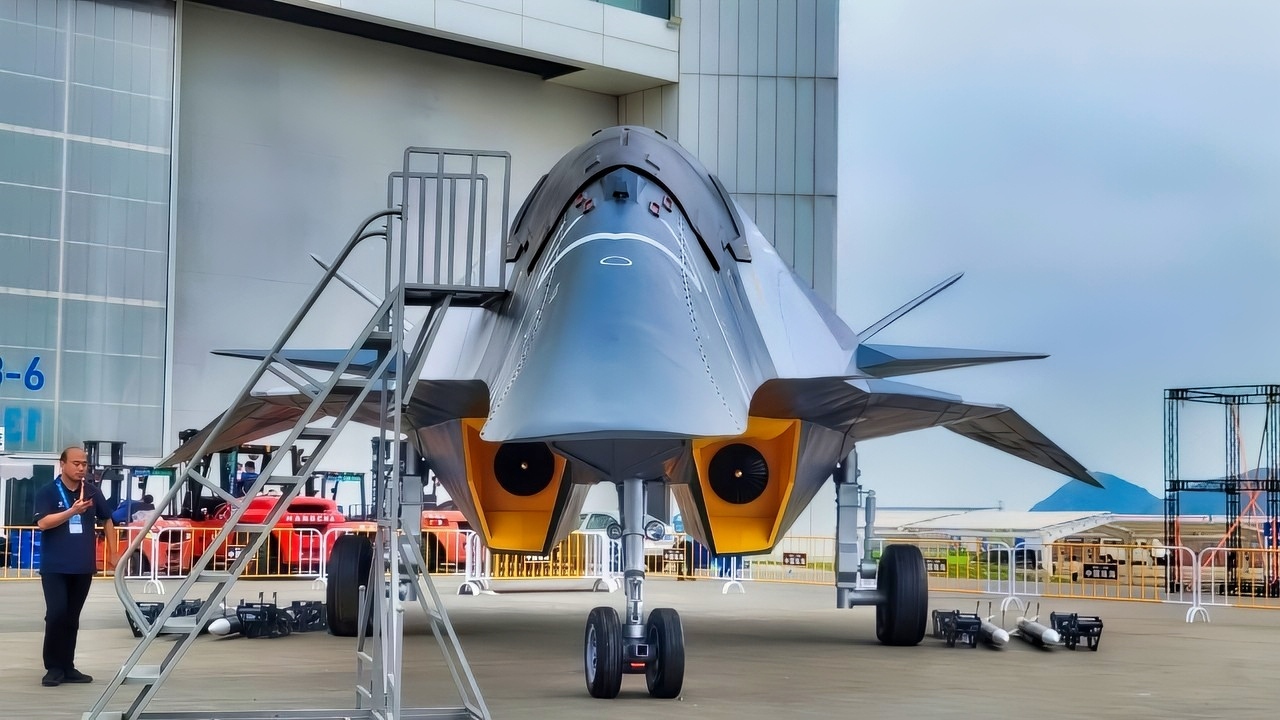
Key Points and Summary – America and China tell grand stories about external threats—carrier fleets, alliances, missiles—but the most decisive constraint on both powers is internal: debt.
-China’s growth model now collides with an aging population, a broken property sector, and massive local-government liabilities.
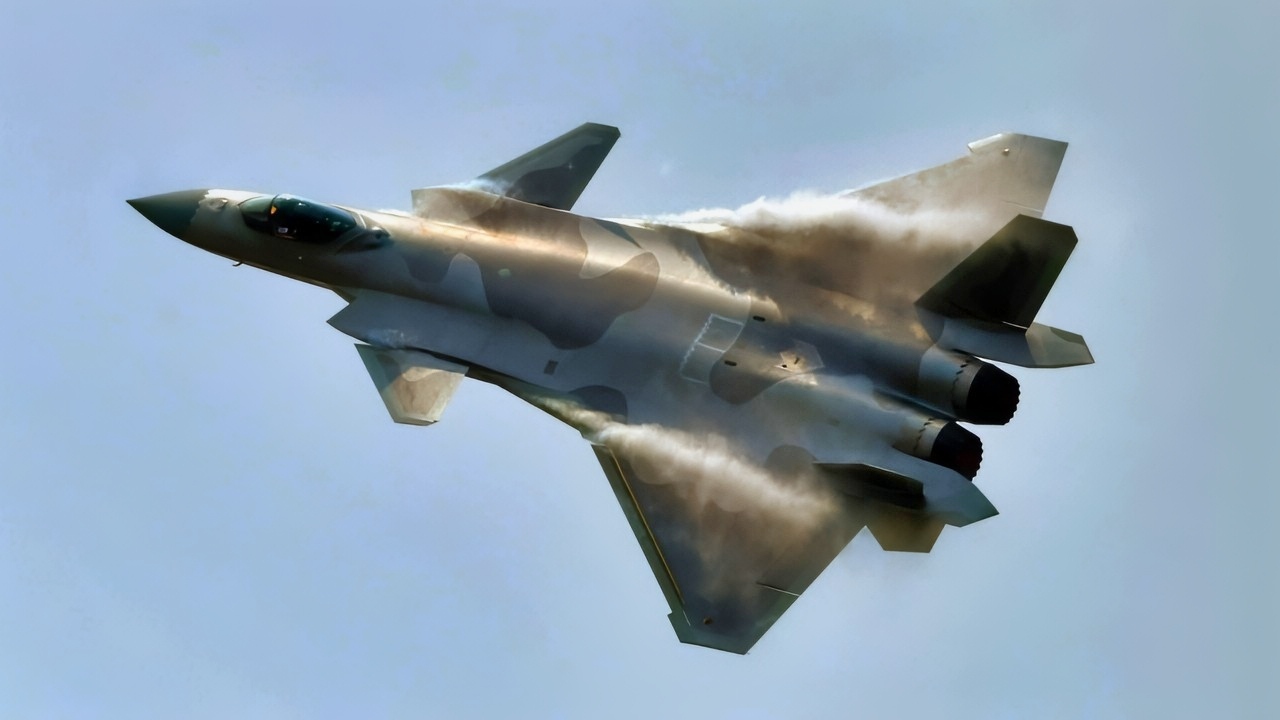
China J-20 Fighter in Camo 2021. Image Credit: Creative Commons.
-Beijing’s centralized system can hide bad loans and redirect capital, but it cannot manufacture new productivity.
-That turns debt from a strategic tool into a strategic brake, forcing hard trade-offs between guns, bailouts, and social stability.
-The real contest, Dr. Andrew Latham argues, is between models of political economy—and for Washington, the smartest strategy is restraint and fiscal discipline, not overextension.
China’s Great-Power Ambition Can Be Summed Up in One Word: Debt
Great powers have always narrated the dangers beyond their borders with great conviction. Washington points to China’s shipyards, missile programs, and expanding naval reach. Beijing counters with warnings about America’s alliances, technological choke points, and global military presence. These stories dominate the grammar of great-power competition and shape how each side imagines the threats it must prepare to meet.
But the forces that most powerfully shape a state’s ability to respond to those threats are not found offshore. They accumulate quietly at home. Debt—its scale, its origins, and the political-economy that sustains it—does more than strain balance sheets. It conditions the strategy itself. It narrows options, accelerates some choices, forecloses others, and, over time, erodes the national capacity that underwrites military power. In both the United States and China, it is debt—not the rival’s navy or missile arsenal—that now poses the more immediate threat to the ability to defend national interests.

China J-20 Fighter Yellow. Image Credit: Creative Commons.
And nowhere is this dynamic more visible than in China.
The world’s second-largest economy carries a colossal weight of local-government liabilities, quasi-fiscal obligations, and a property sector that is still sagging from last decade’s excesses. The numbers are opaque, but the direction of travel is not. China is not being undone by American containment. It is being gnawed from within by the compound arithmetic of a system that has long deferred hard choices.
Debt and power do not mix. Great powers are not felled by sudden collapse. They are constrained into strategic stagnation. Debt tightens the room for maneuver; it narrows political imagination; it forces states to prioritize what they would rather postpone. America is already grappling with that reality, and now China is confronting its own version of it.
For Beijing, the problem is not simply economic. It is a strategic bottleneck at a moment when China’s ambitions have outgrown its societal capacity to sustain them. A slowing economy, an aging population, a contracting workforce, a brittle real estate market, and staggering local government liabilities are converging just as China seeks to expand its naval presence, acquire technological dominance, and project power and influence across Eurasia and the Indo-Pacific.
Power requires resources, and resources require growth. Beijing’s model is discovering its limits in real time.
The Political-Economic Question
The central question is whether China’s distinctive political-economic system—centralized authority, state-directed finance, and top-down industrial policy—offers any advantage in navigating the debt-strategy nexus. On the surface, the system provides tools. The Party can command banks to restructure loans, steer investment to priority sectors, suppress dissent, and impose austerity without the electoral backlash that would greet similar measures in Western democracies.

A U.S. Air Force F-16 Fighting Falcon taxis to be disarmed after returning from a flight during Combat Archer UK at RAF Lakenheath, England, April 15, 2025. Combat Archer UK was one of six elements in the Combat Weapons Systems Evaluation Program, typically held in the U.S. By hosting Combat Archer UK in Europe, U.S. Air Forces Europe saved millions of dollars, allowing them to enhance the mission in other capacities. (U.S. Air Force photo by Airman 1st Class Zachary Jakel)
Yet these are instruments of control, not engines of productivity. They can mask problems but not solve them. China’s capacity to direct resources is formidable, but its ability to generate new ones is weakening. Command can reallocate capital, but it cannot conjure growth. And without growth, China’s debt burden becomes a strategic drag rather than a strategic lever.
The Limits of Centralization
Centralization offers speed, not wisdom. Beijing can mobilize capital on a scale that no other political system can match. It can push through major infrastructure, redirect lending, and impose discipline on firms that stray too far from the Party line. But centralization also suppresses the feedback loops that usually correct excess. It discourages transparency. It punishes candor. It subordinates economic repair to political stability.
The result is a paradox. The system that gives China an advantage in managing debt is the same system that produced the crisis in the first place. Local governments engaged in years of off-balance-sheet borrowing because the political system rewarded growth targets over financial prudence. Banks enabled the leverage because the Party demanded it. Real estate became the engine of growth because alternative engines were stifled by state dominance and political suspicion.
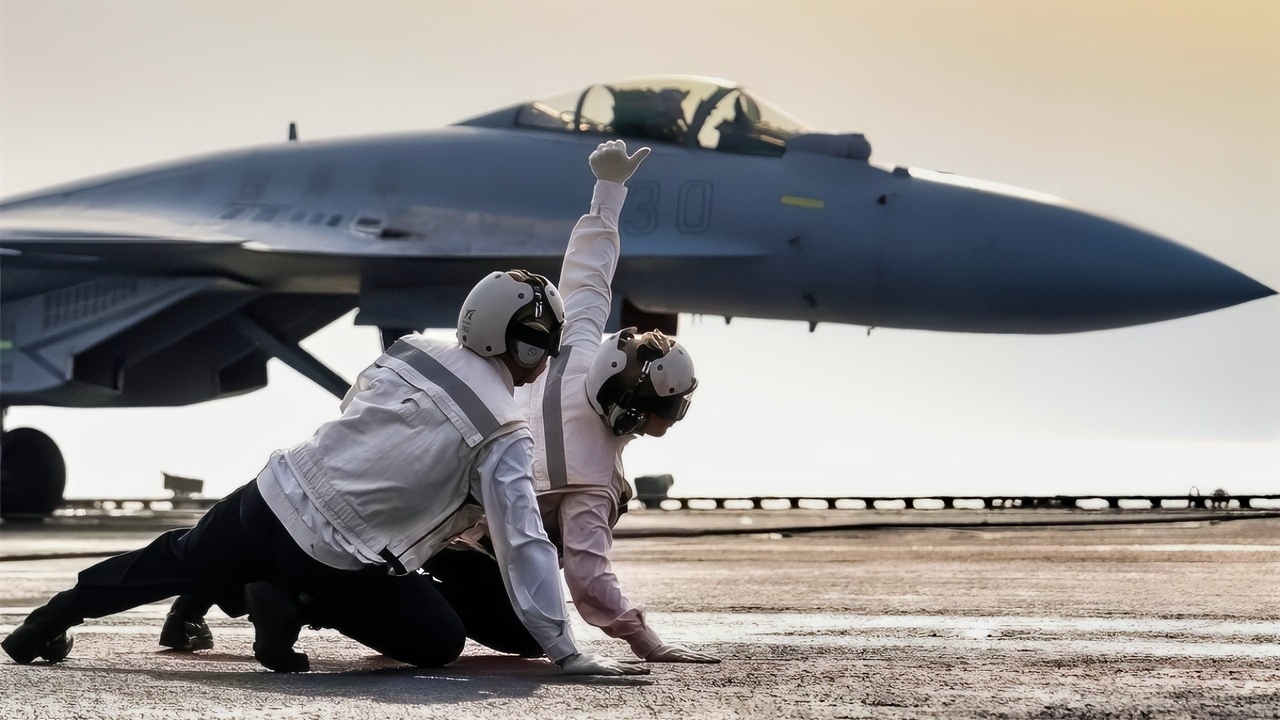
China Aircraft Carrier Operations. Image Credit: Chinese Navy.
In other words, the tools of control that China relies on today are the tools that inflated the bubble in the first place.
Strategic Consequences
Debt changes strategy in quiet ways. It forces complex trade-offs between domestic stability and external ambition. Beijing’s defense budget continues to rise, but the pace is slowing. Capital-intensive naval and aerospace programs are still advancing, but they now face competition from demands for social spending, stimulus, and local-government bailouts.
China cannot both reflate its economy and bankroll every element of its military modernization at the same rate. Something will eventually yield.
America faces similar constraints, though they play out differently. But the comparison matters. Much commentary treats China’s political system as a kind of strategic cheat code, granting Beijing the ability to direct national power with ruthless efficiency. Yet China’s system also locks it into costly commitments, misallocates capital, and resists the structural reforms necessary to escape the debt trap.
The question is not whether China can delay the reckoning. It can and it will. The question is whether its system will allow it to escape the trap altogether. On that score, the future is far less promising.
Strategic Reckoning Ahead
As Washington and Beijing circle each other, building fleets and gaming contingencies, the real constraint on both powers may not be found in the South China Sea or the Taiwan Strait. It may be found in balance sheets, demographic trends, and the political limits of their respective systems.
China’s greatest enemy is not the United States. It is the structural weight of an economy that can no longer outrun the debts accumulated in the pursuit of greatness.
And Beijing knows it. That is why it suppresses bad news, buries liabilities in accounting fog, and demands political loyalty in the face of economic gravity.
But gravity does not negotiate. If China cannot arrest its slide, the world’s most ambitious rising power may discover that the real contest was never with American primacy at all, but with the contradictions of its own model. Great powers rarely fall to rivals; they are undone by the forces they hoped to command.
For Washington, that should be liberating rather than alarming.
A strategy of restraint does not mean surrendering influence; it means recognizing when structural forces are doing the heavy lifting. China’s internal vulnerabilities are already imposing limits that U.S. pressure could never fully achieve. Washington does not need to chase every crisis, fund every demand, or militarize every rivalry. It requires only conserving its own strength, avoiding unnecessary entanglements, and letting China’s debt-laden system reveal its boundaries.
In that sense, China’s crisis is not so much a warning to America as a reminder. The United States weakens itself not by failing to confront China everywhere, but by forgetting that fiscal discipline is a strategic asset.
The decisive contests ahead will turn not on who can spend the most, but who understands that power endures longest when it is husbanded, not squandered.
About the Author: Dr. Andrew Latham
Andrew Latham is a non-resident fellow at Defense Priorities and a professor of international relations and political theory at Macalester College in Saint Paul, MN. You can follow him on X: @aakatham.


Swamplaw Yankee
February 13, 2026 at 12:48 pm
The pie graphic is key to all countries who must expand to 5-7 % defence spending in 2026-27. Do they expand the size of their pie or do they slice the same diameter pie in ever smaller slices? Who is collecting this data?
In the new KHOLOD War that the PRC has initiated, the innovative World War Xi is still avoided as a reality. The successful 2014 attack on Ukraine has been accepted by POTUS “Benedict Obama” as he sold out Ukraine + NATO-UK-EU in the largest geopolitical betrayal of the last century.
The question of debt deserves much attention as a component of WW Xi. yes?
Rick Bolin
February 22, 2026 at 6:14 pm
Part of China’s problem is that narrow AI has automated things to such an extent that job numbers have been greatly reduced, whihc is compounding the debt problem. The US is on the same road as AI technology becomes more widely adopted. Compound this with the excessive leverage in the US tech community, shift of former allies away from the US, and the President’s constant wavering and you have a situation described by one word …. unpredictable.
Johnny Doe
March 23, 2026 at 4:54 am
The thing about US and EU authors, and people in general, is that, they have their head so far up their rear, they seem to forget that China controls/produces over 90% of critical raw minerals which are vital and indispensable for modern aircraft, naval and aero-engine technologies.
There is a reason trump backed down from imposing heavy reciprocal tarrif from ONLY ONE country – China.
ALL of the hardware tech produced by Lockheed Martin or Nortrop or GE or Boeing, has critical components whos source can be traced directly back to china. Without these materials, there is no modern military tech.
Lets forget about military tech for a moment, how about consumer tech. Every laptop, every automobile, every smartphone, heck, even every airfryer or Microwave or even a basic AC unit has vital components sourced from China.
If anything, its the US that cannot afford a war against the mighty dragon, and not the other way around.