

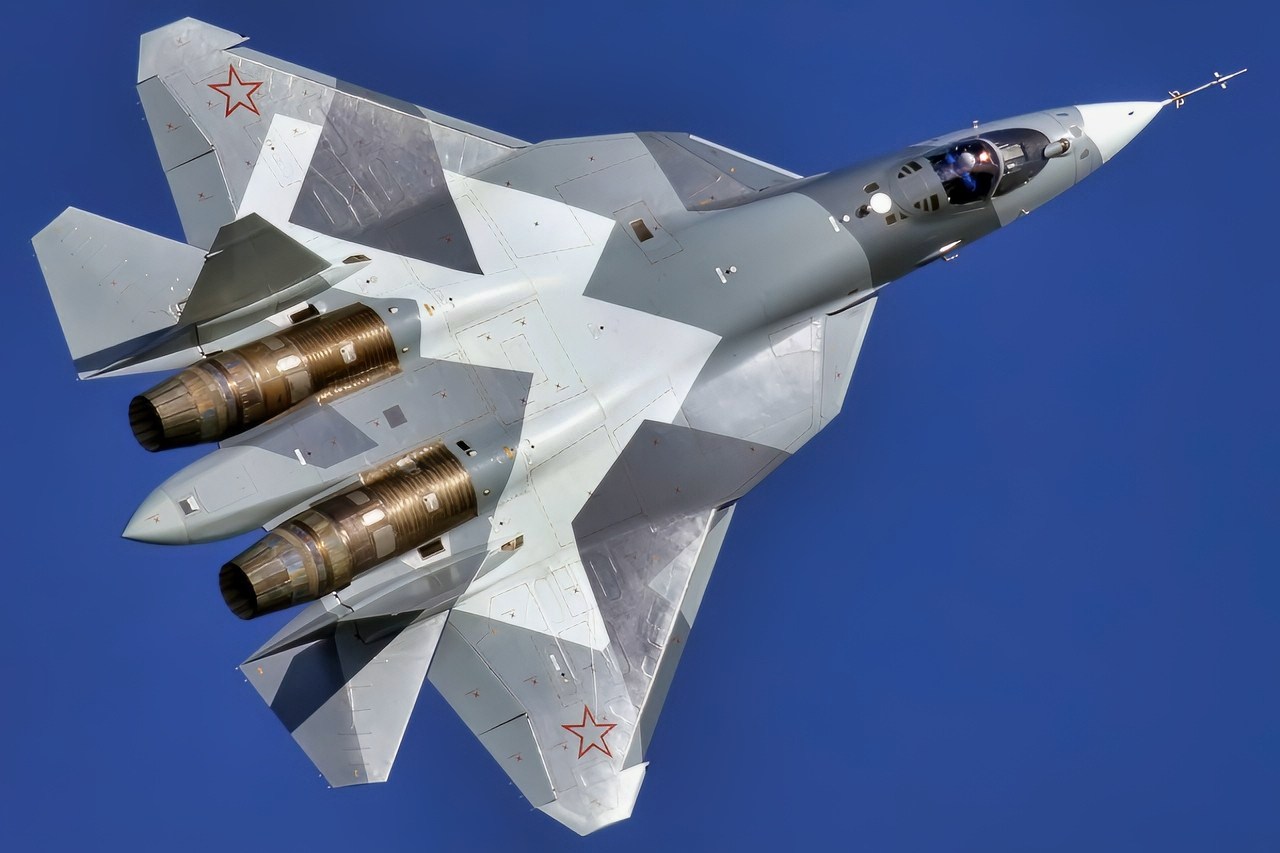
Key Points and Summary – Russia is spotlighting the Su-57’s new 177S/AL-51F1 “fifth-generation” engine after its Dubai debut.
-Early Su-57s flew with the 117S/AL-41F1, a deep modernization of the AL-31F—an interim solution, as in past Soviet programs.
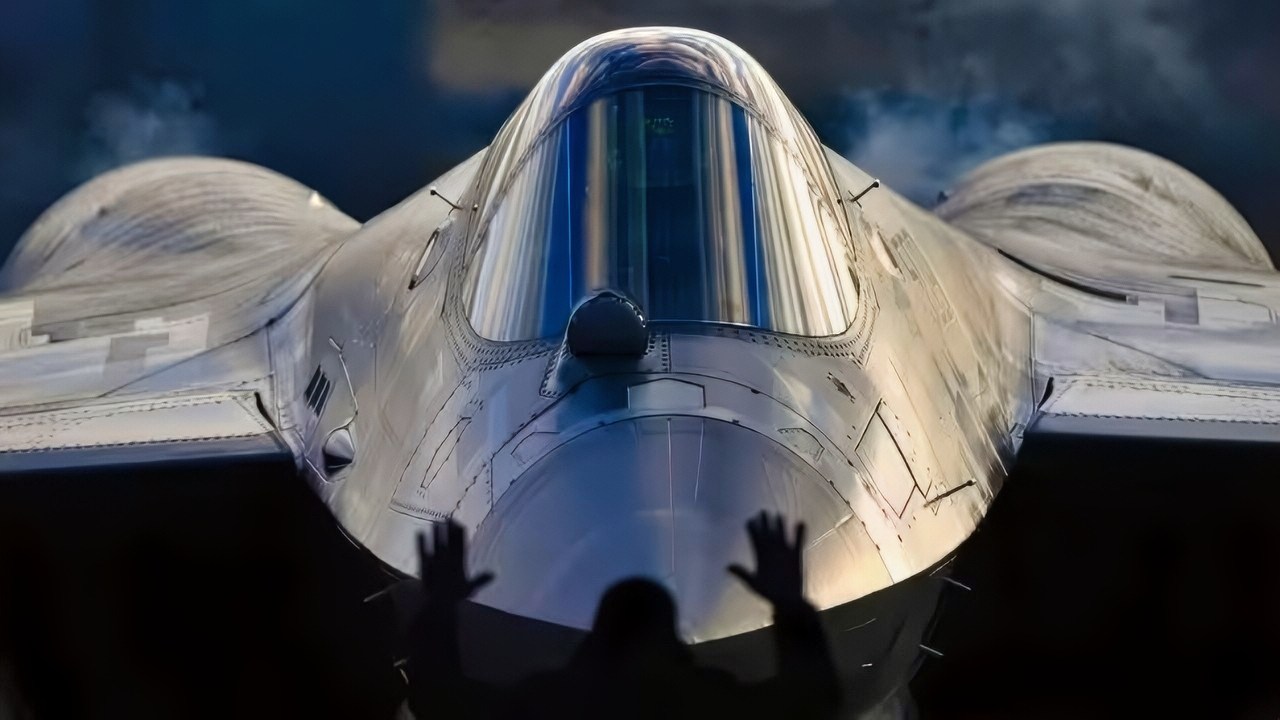
Su-57 Felon Fighter. Image Credit: X Screenshot.

Su-57 Felon Fighter from Russia. Image Credit: Creative Commons.
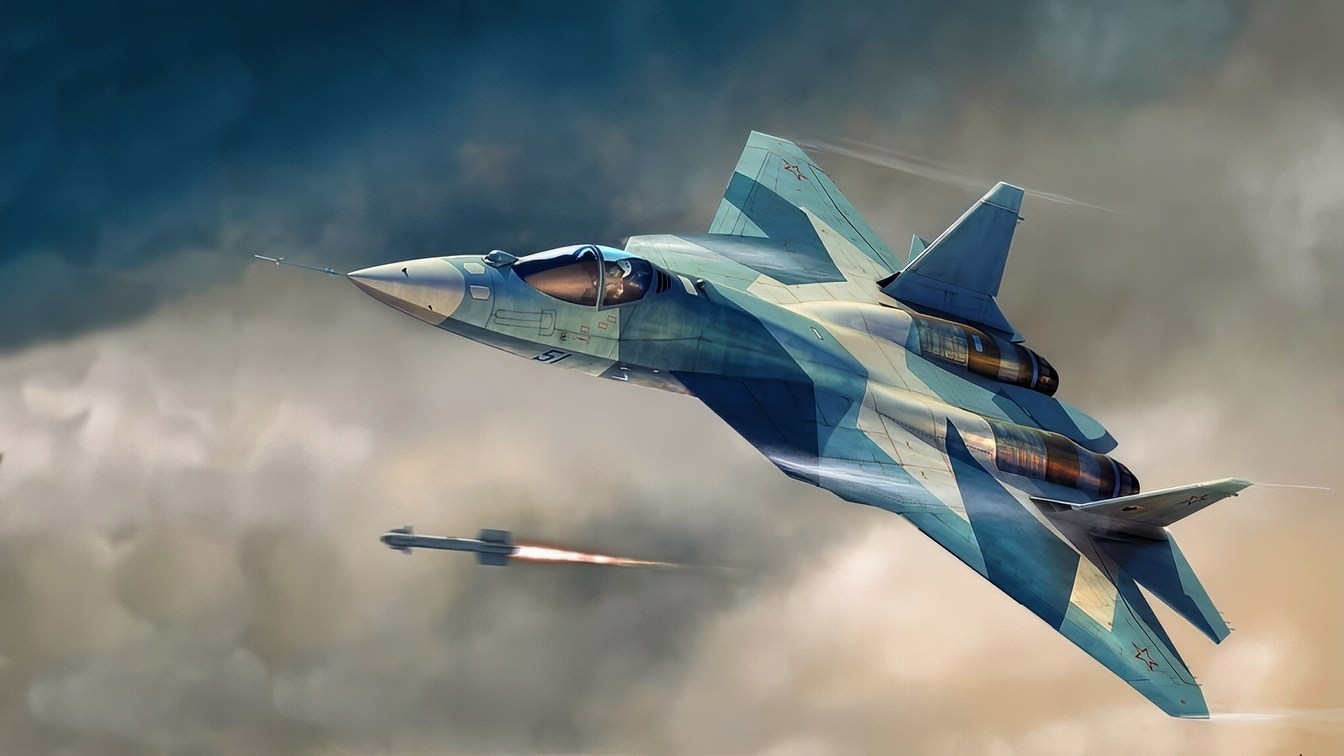
Su-57 Felon in the Sky. Image Credit: Creative Commons.
-The AL-51F1 first flew in a Su-57 testbed in 2017 after long delays. It is billed as more powerful and efficient, enabling supercruise and using flatter, sawtooth nozzles to reduce rear-aspect signature and heat.
-Advocates say this boosts range, endurance, responsiveness, and survivability while extending engine life by reducing afterburner use.
-If Su-57 buys stay modest, Russia may offer it as a retrofit for Su-35 and Su-30SM fleets.
Flat Nozzles, Lower Heat, Longer Range: Inside Russia’s New Su-57 Engine
Since it was revealed at last month’s Dubai Air Show, the new, 5th-generation 177S engine designed for Russia’s Sukhoi Su-57 fighter aircraft has attracted a great deal of attention.
This is not least due to it being advertised as a considerable performance increase over the 117S AL-41F1 engine installed initially in the first Su-57 aircraft.
The 117S engine was the powerplant used in the aircraft’s first T-50 prototypes, which were constructed and flown for public display at the Moscow MAKS air show in 2013.
The prototypes, which differed in some ways from the production-series aircraft, were also later flown at the Aero India air show and the Air Show China in Zhuhai, Guangdong Province.
Initially, the 117S engine was developed as the designers of the program called a “deep modernization” of the AL-31F engine, which was designed and built in the late 1980s for the original Su-27 and Su-30 aircraft.
The 117S, then later dubbed the AL-41F-series, was then installed in the Su-35 Super Flanker.
The use of the 117S in the Su-35 “was like other aircraft programs in the history of Soviet – and later Russian – combat aviation,” said a now-retired Russian fighter aircraft designer who spoke to National Security Journal.
“There have been a series of these kinds of ‘making due’ with a previous-generation engine until the engine the aircraft really needs is actually ready,” he explained.
For example, the first T-10-series prototype aircraft for the 1980s Su-27 were powered by a previous-generation AL-21 engine that originally powered the Su-24.
Using the Su-35 engine for the first production run models of the Su-57 to get the aircraft airborne and begin flight testing was “just business as usual,” said the Russian aircraft designer.
The 5th-Generation Engine
The 5th-generation 177S engine was also not ready to fly when the Su-57 prototype aircraft made its initial flight.
It would be several years before it was finally available for evaluation flights in a special Su-57 testbed model.
The engine was not available for flight test until 2017, which was 7 years after the Su-57 prototype T-50 aircraft first flew.

Su-57 Felon Artist Image> Image Credit: Screenshot.

Su-57 Felon Fighter Back in 2011. Image Credit: Creative Commons.
The engine then began low-rate production at the Ufa engine production facility, where the 177S engine acquired its now official designator of AL-51F1.
The designers of this program say it is a more powerful and efficient engine. It is equipped with a set of flat and stealthier exhaust nozzles. One of the most visible aspects of these nozzles is the “sawtooth” design that is specially configured in this manner to reduce the aircraft’s signature in the rear hemisphere.
This engine also enables the aircraft to achieve supercruise, meaning sustained supersonic flight without afterburners.
This reduces fuel consumption and significantly reduces the aircraft’s infrared emissions as well.
With this engine installed, both the AL-51F1 design team and Sukhoi representatives say, the Su-57 is now an actual fifth-generation fighter.
Performance Characteristics
Having this new-generation engine installed in the Su-57 yields numerous other performance benefits.
Among these are:
-The greater fuel efficiency v. the Al-41F1 reduces the specific fuel consumption of the engine is reduced to below 0.67 kg/kgf x h, which increases range, combat radius, and endurance.
-Lower heat signature minimizes infrared detection when under fire from IR-guided weapons and enhances survivability.
-Extended combat radius permits the aircraft to operate over greater distances without refuelling.
-More rapid response time permits timelier interception and target engagement.
-All-aspect stealth as the new engine not only offers a lower radar cross section but also cuts down on visibility and acoustic signature.
-Operational flexibility that enables quicker repositioning and response time and high-speed maneuvers.
-Air superiority at sustained supersonic speed gives an advantage in engagements.

Su-35 Fighter. Image Credit: Creative Commons.
-Service life of the engine is extended due to the reduction in wear and tear since it calls for far less use of the afterburner.
More than 15 years after the prototype aircraft first flew, the production-configuration versions now have the engine it required from the beginning to achieve its full potential in combat.
What happens next with the Su-57 will determine how many engines are produced. One suggestion is that if there are no large orders for the Su-57 in the future, the engines could be built anyway as retrofit options for older models, such as the Su-35 and Su-30SM.
About the Author: Reuben F. Johnson
Reuben F. Johnson has thirty-six years of experience analyzing and reporting on foreign weapons systems, defense technologies, and international arms export policy. Johnson is the Director of Research at the Casimir Pulaski Foundation. He is also a survivor of the Russian invasion of Ukraine in February 2022. He worked for years in the American defense industry as a foreign technology analyst and later as a consultant for the U.S. Department of Defense, the Departments of the Navy and Air Force, and the governments of the United Kingdom and Australia. In 2022-2023, he won two awards in a row for his defense reporting. He holds a bachelor’s degree from DePauw University and a master’s degree from Miami University in Ohio, specializing in Soviet and Russian studies. He lives in Warsaw.


