

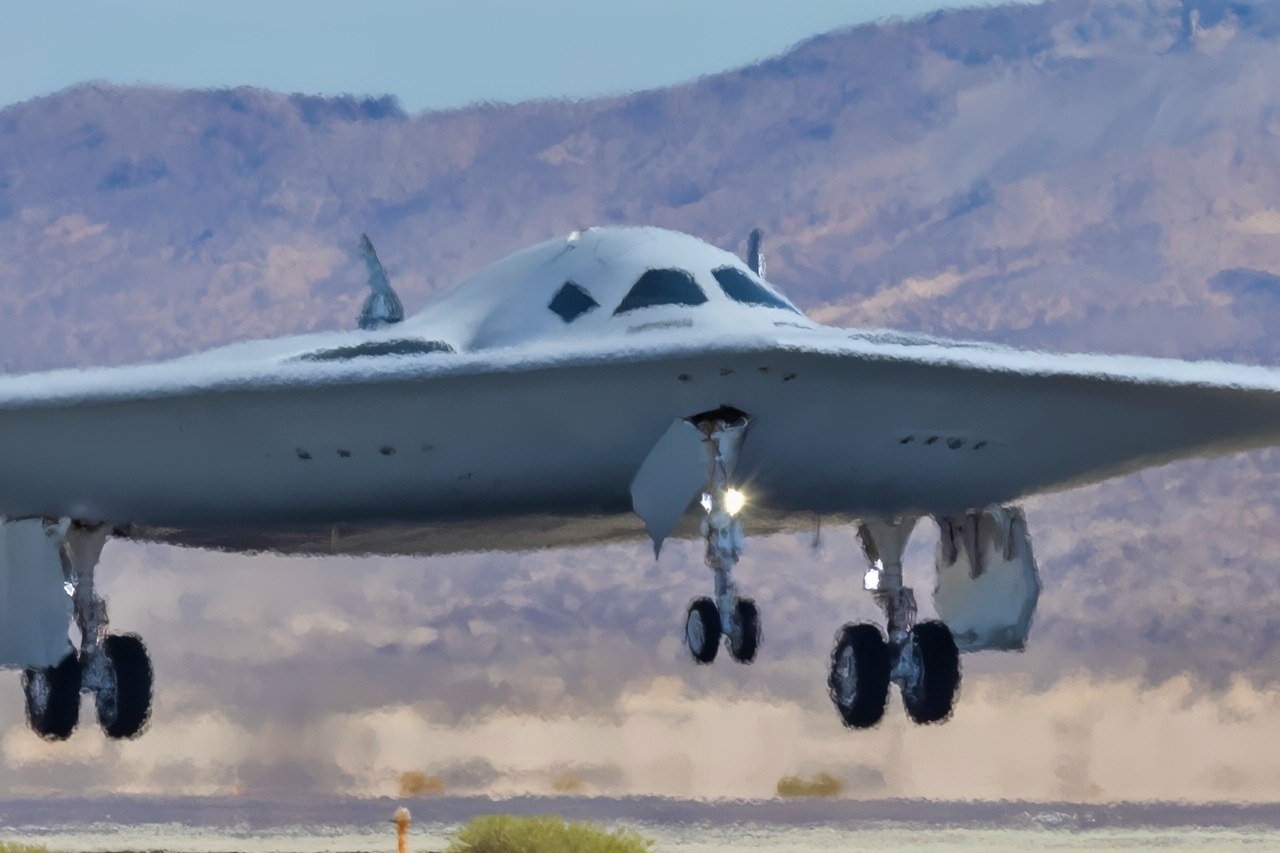
Key Points and Summary – America’s B-21 Raider is built for one job: penetrate the world’s toughest air defenses and strike deep targets in Russia or China.
-Its edge is not speed but low observability, multi-spectrum signature control, and a digital architecture meant to evolve as threats change.
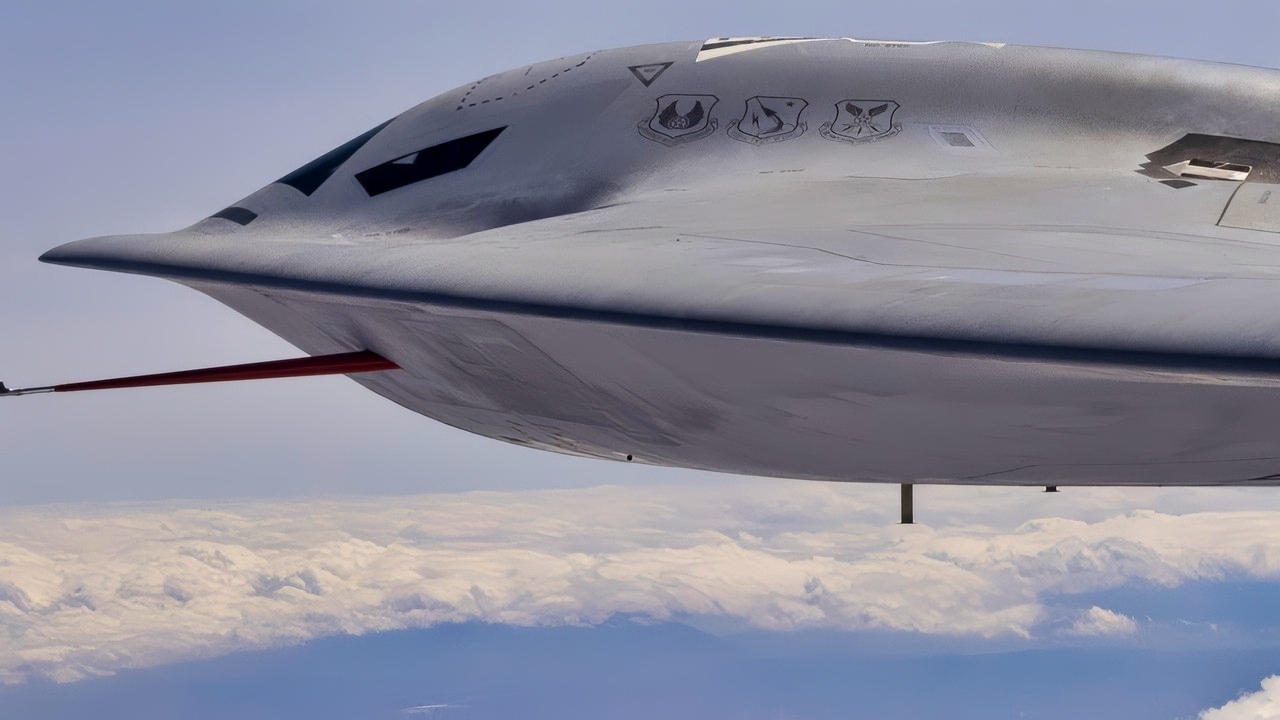
B-21 Raider. Image Credit: U.S. Air Force.
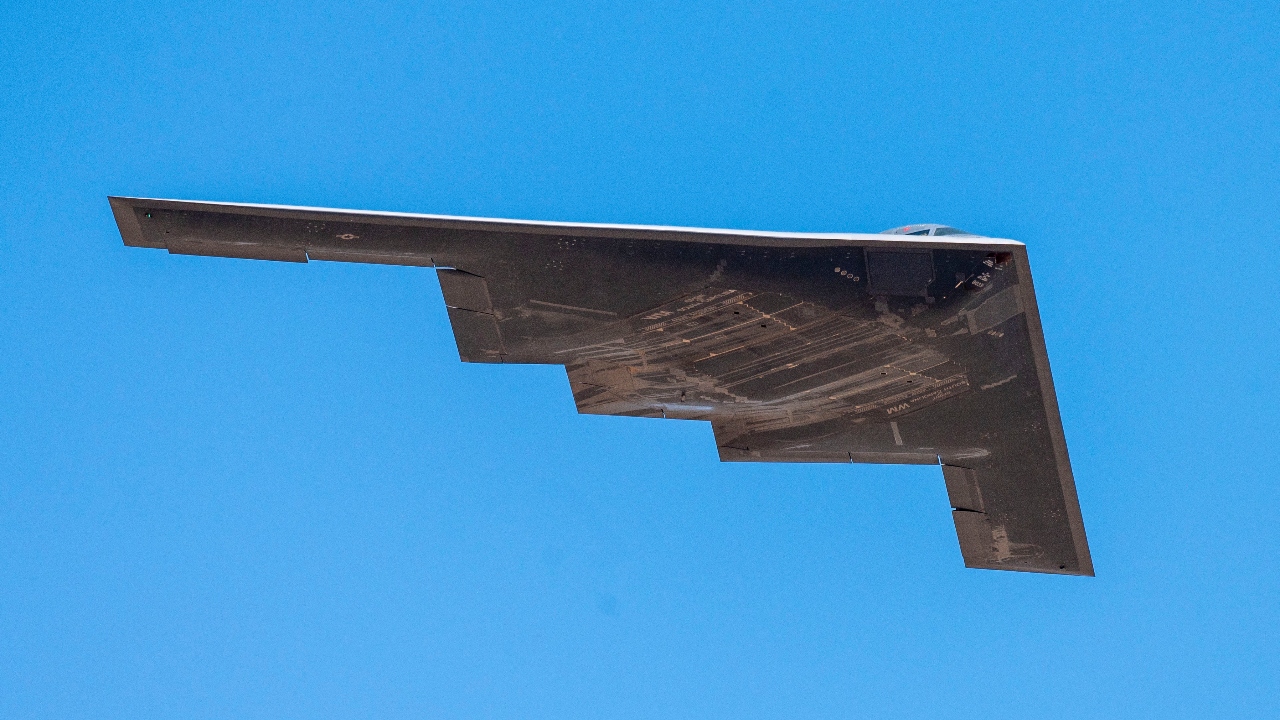
A B-2 Spirit makes a low pass flyover as part of the Warriors over the Wasatch airshow at Hill Air Force Base June 29, 2024. The 2024 Warriors over the Wasatch airshow was centered around the “Breaking Barriers Together” theme, celebrating one community. The B-2 Spirit, the predecessor to the new B-21 Raider, has been the U.S. Air Force’s premiere stealth bomber for more than 20 years. (U.S. Air Force photo by Senior Airman Jack Rodgers)
-Russia’s S-500 looks dangerous on paper but remains largely unproven and likely limited in numbers. China’s layered A2/AD sensor-and-missile web is the harder problem.
-The Raider’s answer is flexibility: standoff weapons when required, tailored penetrations that break the kill chain, and onboard sensing and electronic warfare to disrupt tracking.
-In this contest, adaptability is the real weapon.
Can the B-21 Raider Outsmart Russia’s S-500 and China’s A2/AD Wall?
The forthcoming B-21 Raider is understood to be the most advanced stealth aircraft ever built—that is, the hardest to detect.
But air defense systems are becoming increasingly sophisticated.
Russia fields the S-400 SAM system, with the S-500 currently in development.
China is building an integrated, multi-layered sensor network designed to deny access even to stealth platforms.
So the question becomes: is the B-21 equipped to operate invisibly even as defense systems catch up?
Introducing the B-21
Although still in the test-flight phase, the B-21 is highly acclaimed, with the Air Force signaling that they will procure 100 or more units. Billed as a next-generation long-range strategic stealth bomber, the B-2 will replace the B-1B, the B-2, and portions of the B-52 mission set.

A U.S. Air Force B-1B Lancer departs after conducting aerial refueling with a 28th Expeditionary Air Refueling Squadron KC-135 Stratotanker during a mission in the U.S. Central Command area of operations, Oct. 25, 2019. The B-1B flew directly from its home station of Ellsworth Air Force Base, S.D., demonstrating the U.S. Air Force’s ability to rapidly deploy strategic bombers anywhere in the world. (U.S. Air Force photo by Master Sgt. Russ Scalf)

The Oklahoma City Air Logistics Complex at Tinker Air Force Base, Oklahoma,
is the largest depot repair complex in the Air Force. The Complex’s depot
Artisans perform award-winning program depot maintenance and modifications
on B-1 Lancer aircraft, supporting the sustainment of combat-ready
airpower. (U.S. Air Force photo/Gina Anderson)
Built by Northrop Grumman, who also built the B-21’s spiritual predecessor, the B-2, the B-21 features stealth, multi-domain connectivity, and survivability against next-gen air defense systems.
The actual specifications have not been disclosed, but estimates can be offered.
The range will be extreme, giving the US an intercontinental option; with in-air refueling, the B-21 will likely be able to operate indefinitely, limited only by pilot endurance.
The speed will be subsonic; the platform is not built around speed but stealth.
The two-person crew will have a variety of weapons at their disposal, including nuclear gravity bombs, long-range standoff weapons, the JASSM-ER, and potentially, hypersonic weapons.
The design philosophy emphasizes a more petite, more maintainable build than the maintenance-intensive B-2; new materials, coatings, and manufacturing processes that significantly reduce the radar cross-section, making the platform extremely difficult to detect; and a modular open architecture that allows for rapid upgrades over the service life, intended to give the Air Force a platform that is relevant for generations.
Strategically, the B-21 serves to improve the existing strategic bomber fleet. The B-52 is old and non-stealthy, and it cannot survive in contested airspace.

A B-52H Stratofortress sit parked on the flight line at Minot Air Force Base, North Dakota, Aug. 8, 2022. The B-52 is capable of dropping or launching gravity bombs, cluster bombs, precision-guided missiles and joint direct attack munitions. (U.S. Air Force photo by Airman Alysa Knott)
The B-1B is maintenance-heavy and treaty-constrained.
The B-2 is one of the most expensive-to-operate aircraft ever flown—and there are only 19 of them. The US needs a penetrating platform capable of reaching targets inside China and Russia, surviving against advanced SAM networks, and defeating integrated air defense systems.
The B-21, in theory, will be that platform for the foreseeable future.
New Threats For New Stealth Bomber
But the threat landscape is evolving.
Russia’s S-500 SAM system is under development and is intended to counter stealth aircraft, ballistic missiles, and hypersonic glide vehicles.
The S-500 is advertised as able to detect low-RCS targets at higher altitudes over ranges of up to 600 km.
Yet the system’s real-world performance remains unproven. And Russia’s production capacity could limit the scale of deployment.
China’s emerging threat is more concerning, an integrated web of detection systems meant to strengthen the A2/AD bubble.
Specifically, China is implementing over-the-horizon radars, VHF/UHF long-wavelength radars, AI-enabled tracking systems, and of course, a network of SAMs including the HQ-9B, HQ-22, and HQ-19.
Together, these interwoven systems aim to create a multi-layered picture that can detect, target, and destroy stealth aircraft.
So, can the B-21 keep up with the evolving threats? It’s hard to say precisely; the threat landscape is apt to change over the course of the B-21’s lifecycle.
But despite the emergence of new threats, the B-21 is likely to retain value.
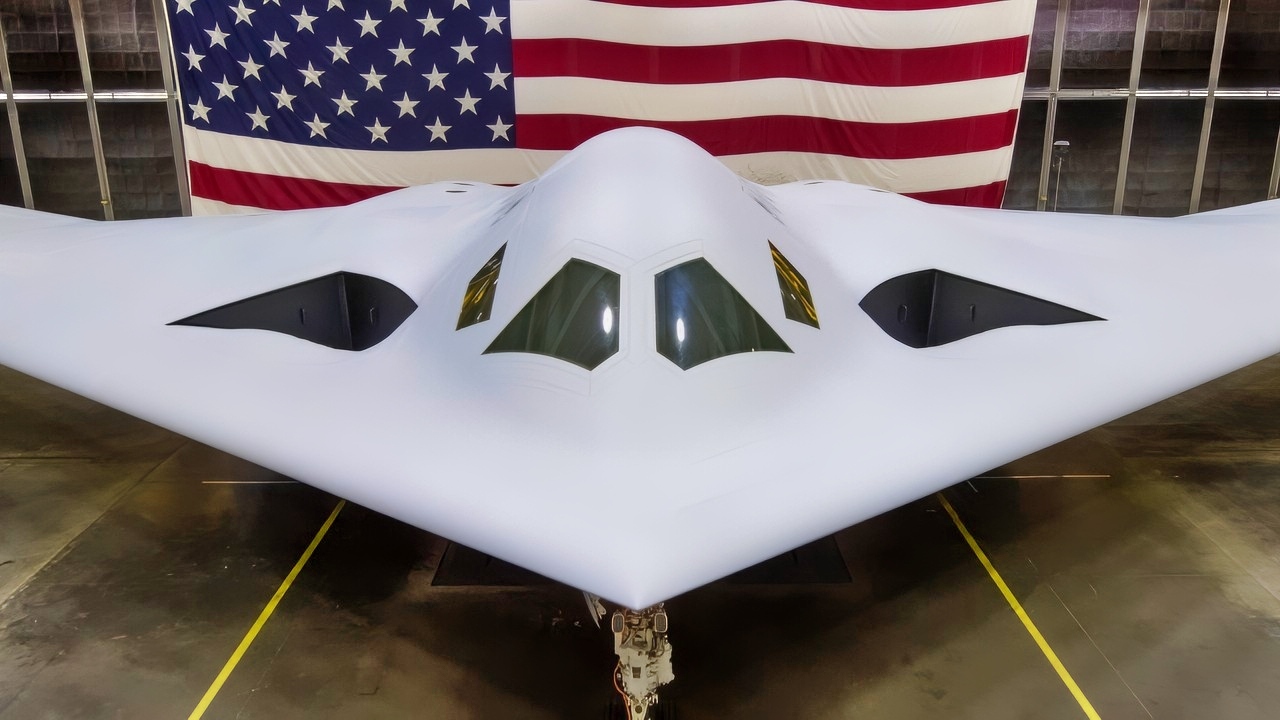
The B-21 Raider was unveiled to the public at a ceremony Dec. 2, 2022 in Palmdale, Calif. The B-21 will provide survivable, long-range, penetrating strike capabilities to deter aggression and strategic attacks against the United States, allies, and partners. (U.S. Air Force photo)
The B-21 won’t need to fly directly over enemy SAM systems; instead, the B-21 can strike from outside the defensive strike zone with long-range cruise missiles.
And the penetrating missions can be designed to hit weak points in the kill chain, where survivability is more likely.
The B-21 was also intended to reduce its signature across spectrums, i.e., radar, IR, visual, and acoustic. So, the B-21 will indeed be difficult to track.
And the B-21 will likely integrate sensor and electronic warfare systems, meaning it can more actively shield itself, rather than just rely on built-in low observability features. And of course, the systems designed to target the B-21 are themselves vulnerable—to the B-21, other attack aircraft, and long-range missiles. So, the B-21 and other American forces will be able to shape the battlefield, rather than just conform to defensive threats.
But of course, defensive systems will continue to evolve; it’s certainly possible that near-future defensive systems can consistently detect stealth aircraft like the B-21.
That evolutionary counterplay between stealth aircraft and air defense systems will be one of the defining threads of weapons development in the 21st century.
About the Author: Harrison Kass
Harrison Kass is an attorney and journalist covering national security, technology, and politics. Previously, he was a political staffer and candidate, and a US Air Force pilot selectee. He holds a JD from the University of Oregon and a master’s in global journalism and international relations from NYU.


LtJ
December 13, 2025 at 11:08 am
Those 2 words are ……….
Kills More
Jeff M
December 13, 2025 at 2:08 pm
Already obsolete. What about Russian and Chinese radars that can detect aircraft merely by the air disruption around them?
TheTruthBurns
December 13, 2025 at 5:02 pm
2 words – Too Late – Another Boondoggle – Wasted Money – Bad Joke – More Stupidity – Old Technology – Get It?
Raptor1
December 20, 2025 at 10:59 am
Jeff M… So a CLAIMED radar that can detect based on air disruption negates the newest bomber? By that logic, all airplanes have been obsolete since the first SAM was created… All tanks have been obsolete since the time of their creation because of anti-tqnk munitions. Ships?, now obsolete.
Come on, even a 5 year old can realize the absolute silliness of that notion. Did you even consider that there are ways to poke the eyes out of that radar, assuming it really DOES exist?