
There’s a question hanging over the Iran war, officially reaching its half-a-year anniversary this weekend, that nobody seems to know the answer to…
What Does Victory Look Like for the United States?

A U.S. Air Force B-1B Lancer assigned to the 345th Expeditionary Bomb Squadron, decends for landing at Ørland Air Base, Norway, during a Bomber Task Force Europe deployment, Aug. 9, 2025. The BTF mission highlights how we deliver effects rapidly across dynamic and contested environments through integrated training. (U.S. Air Force photo by Staff Sgt. Tambri Cason)
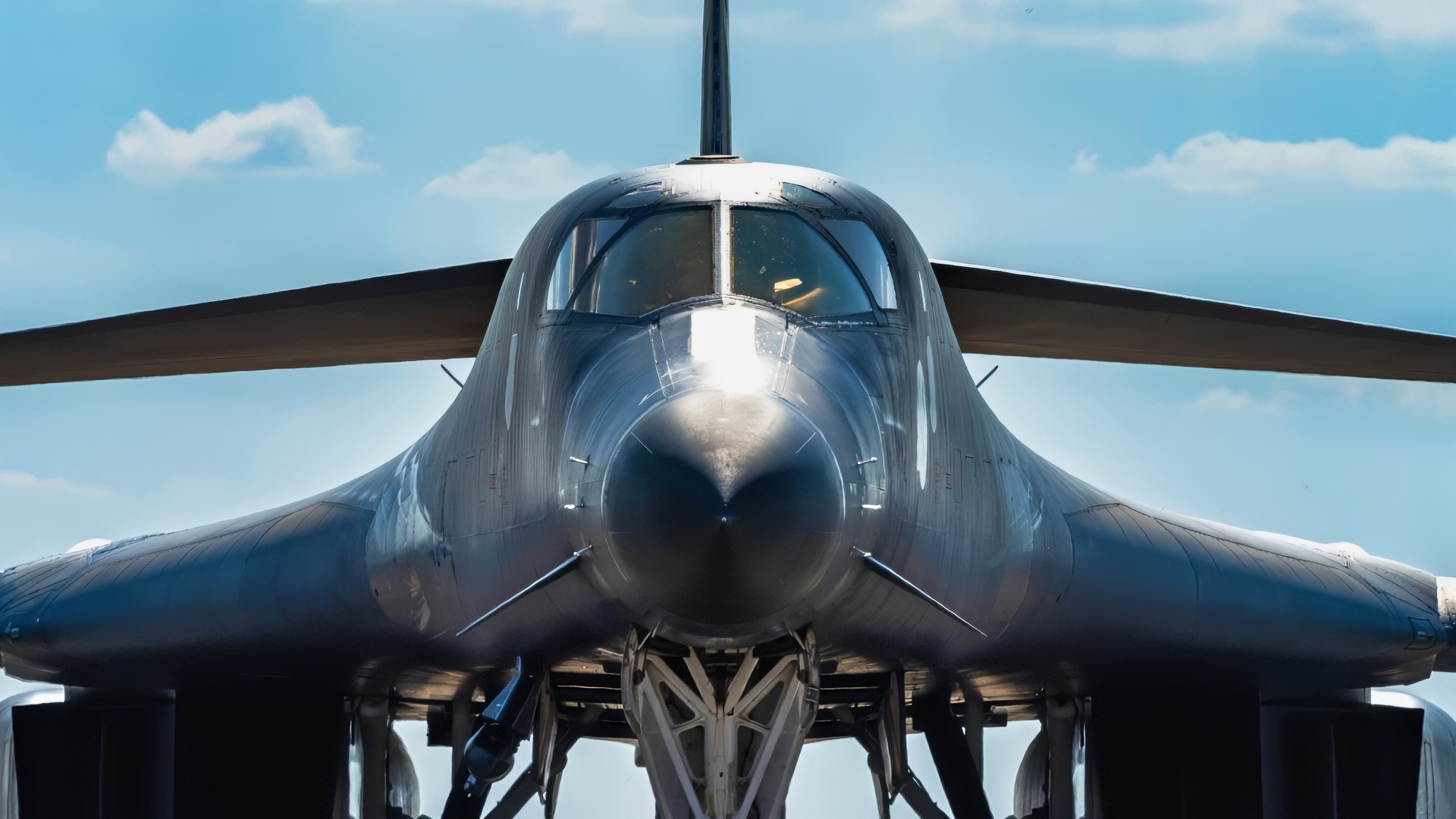
A U.S. Air Force B-1B Lancer assigned to the 345th Expeditionary Bomb Squadron is photographed after landing at Dyess Air Force Base, Texas, Aug. 22, 2025. Three bombers deployed for Bomber Task Force Europe with a total force integration team composed of roughly 30% active-duty and 70% reserve Airmen from the 7th Bomb Wing and 489th Bomb Group. (U.S. Air Force photo by Senior Airman Jade M. Caldwell)
Iran’s military capability has been virtually decimated, yet Tehran still says what does (or mainly, what doesn’t) go through the Strait of Hormuz.
The Supreme Leader is dead, and his replacement hasn’t been seen in months, yet the authoritarian regime still survives. The nuclear capability is crippled, yet observers still warn of a potential threat.
There are three possibilities of success for Donald Trump’s administration, all of which are located at completely different points of the spectrum.
Military Escalation
The most extreme option is to go all in militarily – or “finish the job,” as former vice president Mike Pence put it.
This would almost certainly make a deeply unpopular conflict universally detestable, especially if American lives are put at risk. Then again, is there any other alternative?
Over the course of the six-month war, military strikes have been the key feature for just five weeks of it – less than a fifth of the conflict’s total duration.
It was during this time that the U.S.-Israeli approach seemed strongest, as mass bombardment wiped out key infrastructure and military targets.
Key figures of the Iranian dictatorship were routinely assassinated, and there was a real sense that the regime might crumble.
Of course, that relied on a mass uprising; despite Trump’s encouragement for the Iranian people to take over the country once the bombing ceased, said uprising never came.
Therein lies the problem the Trump administration faces.
Despite near annihilation of its military, Iran fought on, and has continued to do so under the new economic campaign.
The “shock and awe” tactic that led to Ali Khamenei’s death is less effective against a leadership far more wary of a potential attack.
With the Iranian people unlikely to revolt – particularly during a bombing campaign – the military route effectively forces the U.S. into a boots-on-the-ground strategy.
That’s politically risky for the reasons already stated, and militarily risky given Iran’s sheer geographic size.
Negotiate
As strange as it may sound in 2026, Trump has been a businessman far longer than he’s been a politician. He’s no stranger to negotiation, nor the idea of making concessions to finalize an ultimately favorable deal.
The President’s hopes for Iran are undoubtedly ambitious, and even he must believe that the likelihood of them coming to fruition is diminishing.
Six months of war imply that the Iranians are not planning on coming to the negotiating table begging for mercy anytime soon.
That’s not a concern for Trump, who said this week that he was “not in a hurry” to find a permanent peace agreement.
If an end to the conflict suddenly becomes a priority, however, the President will be forced to make concessions. It will, after all, bring an end to the war, but Trump – faced with the midterms in just over two months – will know that hastily wrapping up a war his administration started will not automatically improve his political standing. It also comes across as weak, no matter how much political spin one tries to put on it.
The Status Quo
For now, the strategy seems simple: squeeze Iran economically until it is forced to compromise. The “economic D-Day” announcement, effectively placing sanctions on countries that trade with Iran, sparks fresh challenges for the regime.
Nations that have relations with both Tehran and Washington will be left choosing one side or the other, facing economic consequences if they choose the former.
On paper, the idea sounds plausible. But the Chinese, who import more than 80% of Iran’s oil, are already critical of Trump’s newest economic weapon.
As a testament to its resilience against military action, Iran has been undeterred by U.S. economic threats, and it’s unlikely a change of heart will occur while Tehran controls the Strait of Hormuz.
The current strategy may remain in place for some time, particularly given the lag effect of fresh economic sanctions.
It suits Trump, who can say the measures are working, even if Tehran says otherwise.
Under this approach, American bases and personnel remain untargeted, while it lets the President play a waiting game over who comes to the table first.
It’s impossible to know with any certainty, but it may be that we won’t know what victory looks like until a new president is in the White House in two-and-a-half years’ time.
About the Author: Shay Bottomley
Shay Bottomley is a British journalist. He has written for the Western Standard, Business Insider, Maidenhead Advertiser, Slough Express, Windsor Express, Berkshire Live and Southend Echo.