
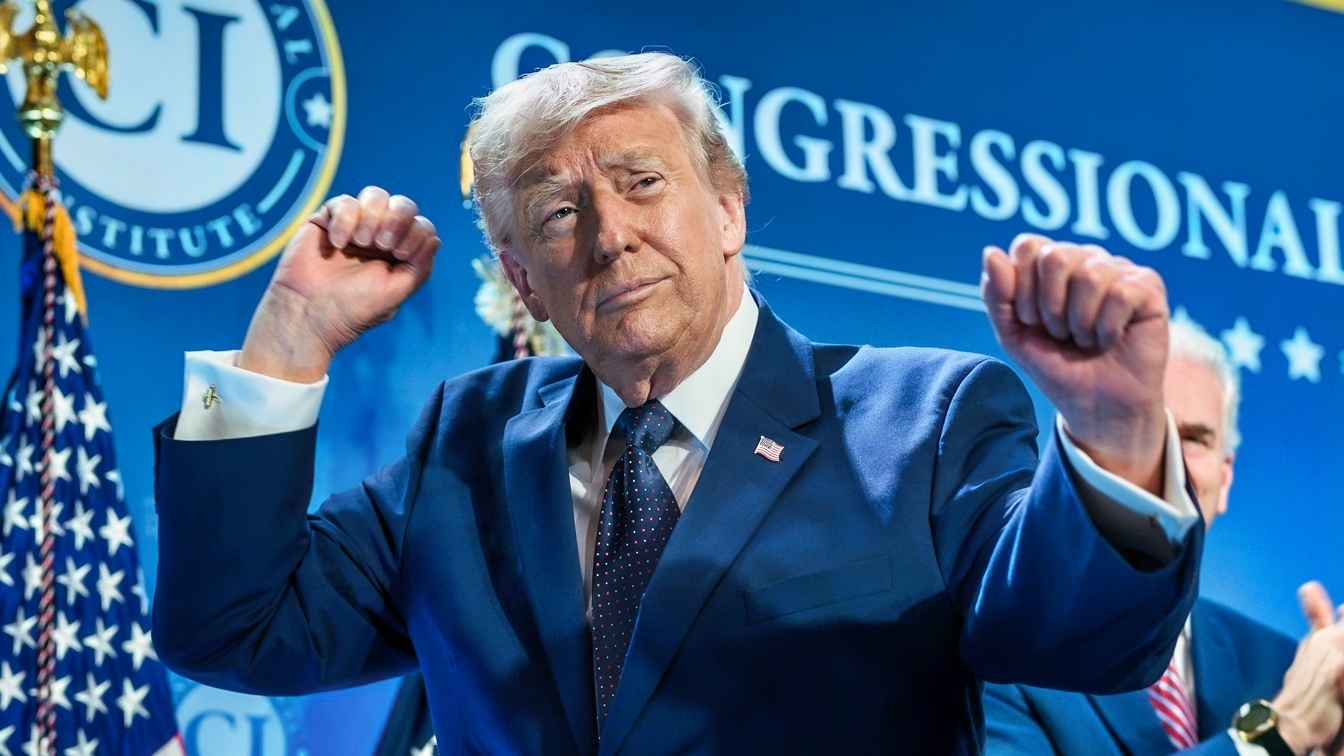
President Donald Trump doubled down on his warning that Iran could eventually use a nuclear weapon to strike American cities, insisting during a campaign rally speech in Texas on October 7 that the United States had no choice but to launch strikes against Iran.
The comments follow days of controversy over his earlier suggestion that Iran could attack Los Angeles or San Diego, with media outlets and Democratic politicians wrongly describing his words as a call for Iran to strike the U.S.
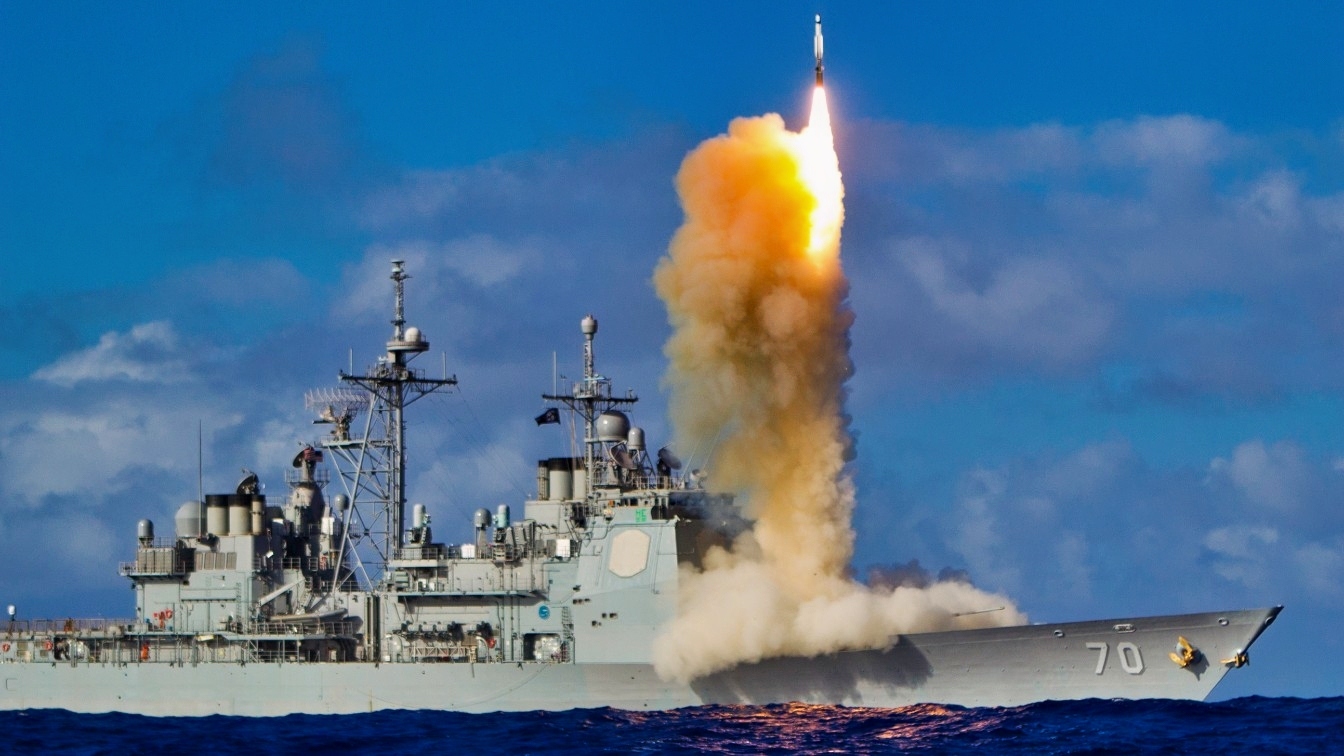
A Standard Missile-3 (SM-3) Block 1B interceptor missile is launched from the guided-missile cruiser USS Lake Erie (CG 70) during a Missile Defense Agency and U.S. Navy test in the mid-Pacific. The SM-3 Block 1B successfully intercepted a target missile that had been launched from the Pacific Missile Range Facility at Barking Sands in Kauai, Hawaii. Lake Erie detected and tracked the target with its on board AN/SPY-1 radar. The event was the third consecutive successful intercept test of the SM-3 Block IB missile. (U.S. Navy photo/Released)
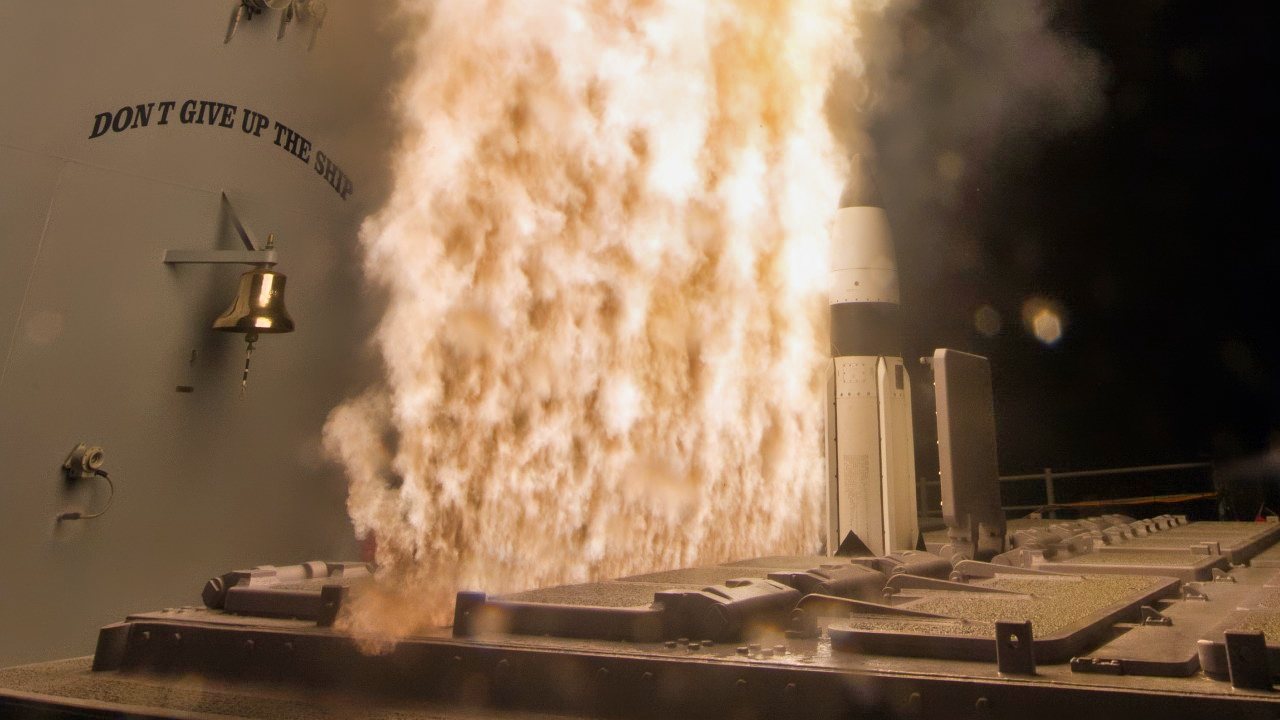
(Feb. 13, 2013) A Standard Missile-3 (SM-3) Block 1A interceptor is launched from the guided-missile cruiser USS Lake Erie (CG 70) during a Missile Defense Agency and U.S. Navy test in the Pacific Ocean. The SM-3 Block 1A successfully intercepted a target missile that had been launched from the Pacific Missile Range Facility, Barking Sands, Kauai, Hawaii. (U.S. Navy photo/Released)
The president’s claims were quickly dismissed as false in the press, with The Guardian citing longstanding U.S. intelligence assessments that Iran is not actively building a nuclear weapon.
There is a significant distinction, however, between Iran actively assembling a nuclear bomb and developing the capability to produce one relatively quickly – and it’s clear Iran is doing the latter.
International nuclear inspectors have, in fact, documented compelling evidence that Tehran was moving dangerously close to possessing the necessary material.
Trump Doubles Down
Speaking at the Freeman Coliseum in San Antonio on Wednesday, the president repeated his warning that Iran is looking to build a nuclear weapon.
He also defended his military campaign launched on February 28 and used Venezuela as an example of how the U.S. military can end conflicts quickly under his direction.
“We won Venezuela in one hour and 48 minutes. And we decimated the drug cartels, and drugs coming in by ocean and sea are down by 97%. And we’re trying to find the 3% that are still doing it because we consider them to be among the bravest people in the world. And just as I promised, I am ensuring that Iran will never have a nuclear weapon. Don’t worry,” the president said.
“We had no choice because we can’t let them have a nuclear weapon. And I’ll tell you what, oil, a little more. Maybe more than a little, but it… A lot of people thought it’d be three, four, five times that.
When I went in, I thought it could be much higher than that,” he continued.
Then, he returned to the controversy from earlier in this week.
“But you want to see trauma? You want to see problems?
And I said it the other day, let them hit a missile into San Diego or Los Angeles on the way. You want to see a horror show?
You want to see problems?” he said, adding, “Let them hit San Diego. Let them hit Los Angeles, and you’ll see some bad things happen.
You want to see a country that would be in free fall.
We won’t let that happen. We protect our cities.”
The comments came after he said on Monday, October 5, during a speech in Nebraska, that Iran, if left unchallenged, could strike the two U.S. cities.
Iran Enriches Uranium
When President Trump and Israeli Prime Minister Benjamin Netanyahu are challenged over their claims that Iran is building a nuclear weapon, the argument is usually that Iran has denied those claims consistently, and that there is no proof an actual bomb is in construction.
But those assessments ignore the full picture.
According to the International Atomic Energy Agency, Iran possessed approximately 440.9 kilograms of uranium enriched to 60% purity before the strikes began against Iranian facilities in June 2025.
That concentration is well above the 3-5% required for civilian nuclear power generation.
Nuclear weapons typically require uranium enriched to approximately 90%, but reaching 60% means that much of the enrichment work needed to produce weapons-grade material has already been completed.
Iran’s stockpile, therefore, was theoretically sufficient to produce fissile material for several nuclear weapons if further enriched.
Nobody, including the IAEA, has been able to establish that Iran was actively manufacturing nuclear weapons; however, the scale of its enrichment program raises a very obvious question: why did a country claiming its nuclear ambitions were entirely peaceful accumulate so much highly enriched uranium with very limited civilian applications?
Iran Refuses to Abandon Enrichment
Iran is committed to continuing enrichment of uranium, with officials repeatedly insisting it is the country’s “sovereign right” that will not be surrendered – even under military pressure.
On October 7, 2025, Foreign Minister Abbas Araghchi described on X how he told U.S. envoy Steve Witkoff in May that zero enrichment is not an acceptable condition for a deal.
He did, however, indicate that a deal is possible if Tehran is simply required to promise not to make a nuclear weapon — a promise that could easily be broken in the future if the regime is permitted to continue enriching.
“Zero nuclear weapons = we DO have a deal. Zero enrichment = we do NOT have a deal,” he noted.
Araghchi also doubled down on the usual defense, claiming that there was no intelligence that Iran was “within a month” of developing a nuclear weapon, describing it as an “imaginary threat.”
About the Author: Jack Buckby
Jack Buckby is a British researcher and analyst specializing in defense and national security, based in New York. His work focuses on military capability, procurement, and strategic competition, producing and editing analysis for policy and defense audiences. He brings extensive editorial experience, with a career output spanning over 1,000 articles at National Security Journal, and has previously authored books and papers on extremism and deradicalization.


