

Wars don’t end because one side says so. On Monday, President Donald Trump walked into the White House briefing room and told reporters the conflict with Iran is “effectively over.”
As The Guardian’s Andrew Roth reported, Trump downplayed concerns that Washington would ramp up its military campaign against Tehran now that the midterms are behind him.
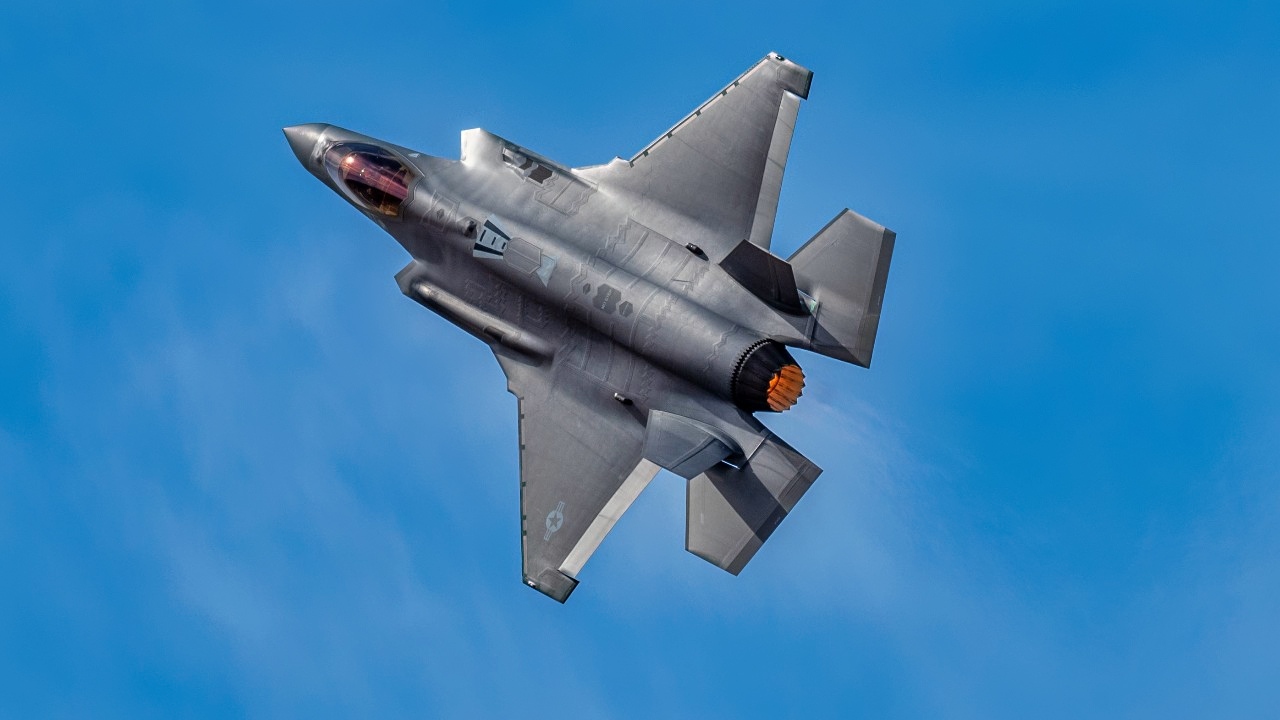
A U.S. Air Force F-35A Lightning II aircraft flies during the Heritage Flight Training Course at Davis-Monthan Air Force Base, Arizona, Feb. 28, 2025. The F-35 is designed to provide the pilot with unsurpassed situational awareness, positive target identification and precision strike in all weather conditions. (U.S. Air Force photo by Senior Airman Jasmyne Bridgers-Matos)
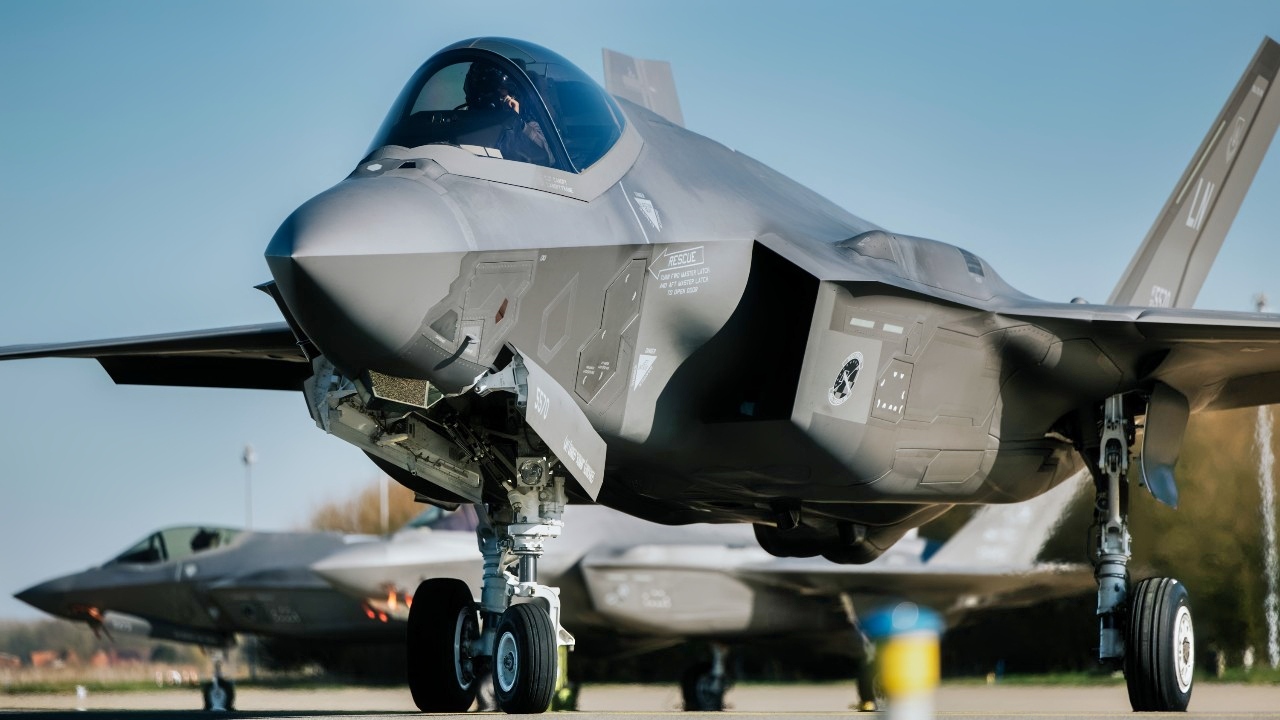
A U.S. Air Force F-35 Lightning II taxis during a cross-servicing event at NATO Allied Air Command’s Ramstein Flag 2025 exercise April 4, 2025. Successful cross-servicing at RAFL25 is an example of the importance of integrated logistics and maintenance training that enhances U.S. warfighting readiness by strengthening United States Air Forces in Europe – Air Forces Africa’s ability to deploy, sustain, and project fifth-generation capabilities across the European theater. (Royal Netherlands photo by Sgt. Maj. Jan Dijkstra)
He said Israel and the Gulf states are well protected, that further military action doesn’t seem very necessary at this point, and that the US remains “locked and loaded” if anything changes.
Secretary of State Marco Rubio spoke at the G7 conference in Paris and stated that “I have been told the economic campaign [against Iran] is working so well there’s no need for major combat operations.”
Trump’s remarks came after an Oval Office meeting with Qatar’s prime minister, Sheik Mohammed bin Abdulrahman Al Thani, who has been lobbying Trump alongside other Gulf leaders not to restart the fighting.
Trump said he sees momentum toward an end to the conflict and expects it to wrap up fairly soon. In a later Truth Social post, he called a resumption of US strikes “quite unlikely,” saying the Gulf powers want to keep the status quo.
That all sounds like good news. However, the same Guardian piece included a line worth underlining. Trump has repeatedly overstated where negotiations with Iran stand, declaring a final peace deal imminent dozens of times over a conflict now closing in on nine months.
And it doesn’t seem any closer to ending now than at any other time.
The Status Quo Is Still A War
Here’s what “effectively over” looks like on the ground.
The US naval blockade of Iranian ports is still in force, and Trump made clear it’s staying. “We have the greatest military blockade ever,” he said, according to the Associated Press, which also noted Trump gave no hint of drawing down the thousands of US troops in the region.
The blockade was imposed in April and resumed on July 14 after the spring ceasefire frayed.
Two days before Trump’s briefing, CENTCOM commander Adm. Brad Cooper stood up Task Force Iron Gate, a roughly 20-person cell in Tampa built to choke off Iran’s land borders and Caspian Sea routes for weapons, dual-use technology, and oil revenue.
CENTCOM says the maritime blockade has already kept more than $25 billion in Iranian crude off the market. The command hasn’t published how it calculated that figure. Trump himself described the sea-and-land combination as a “total lockdown.”
Then there’s the shooting. The night before the November 3 midterms, US aircraft hit Qeshm Island in the Strait of Hormuz. Days later, two more projectiles hit the island as part of a run of strikes on Iranian air defenses and launchers there.
The administration called these “minor strikes.” The Iranians manning those air defense sites probably would characterize those strikes differently.
And while US warships have set up an escort convoy of destroyers to escort more than 3,000 tankers through the Strait of Hormuz, ships are still being hit by either missiles or mines.
None of that signals that the conflict is over. It has settled into a siege.
The Midterms Changed The Math
So why the softer tone now?
The timing is hard to miss. Republicans lost both chambers of Congress on November 3, and voters went to the polls angry about a conflict that drove fuel prices up across the board.
Before the election, reporting suggested Trump was weighing an escalation once the votes were counted. After the election, he’s talking about the status quo.
Regardless of the politics and rhetoric, the more important question is whether anything has actually changed in Tehran.
So far, the answer appears to be no.
Iranian officials brushed off Trump’s remarks as a distraction.
Tehran’s list of demands, according to the AP, still includes lifting the blockade, lifting sanctions, unfreezing its assets, compensation for war damage, and an end to hostilities across the region, including Israel’s operations in Lebanon.
Washington isn’t going to sign off on most of that, and Israel certainly isn’t.
Meanwhile, the conflict is following Trump home. Rep. Thomas Massie of Kentucky moved Monday to force a vote on impeaching War Secretary Pete Hegseth, largely over how the fighting has been run.
“Effectively Over” Is The Question
To be fair, there’s a reasonable reading of what Trump said. Iran’s navy is largely gone. Its air force and missile production have taken a beating.
From a purely military standpoint, Iran’s ability to fight a conventional war against the United States has been gutted. Not that it was ever a threat conventionally. Asymmetrically is a different story. And the US still struggles in asymmetrical warfare scenarios.
When Trump was asked why he wouldn’t just declare the conflict finished, he pointed out that Iran still poses a threat to its neighbors. That’s an honest assessment, and it won’t change even if they sign a piece of paper.
However, there is a big difference between defeating a military and ending a war. One happens on a battlefield; however, this regime is still in place. The other happens at a negotiating table, and both sides have to show up.
Holding the status quo with a blockade, a new interdiction task force, and periodic strikes is a legitimate strategy. Right now it is a smarter one than another round of large-scale bombing. It just shouldn’t be sold as peace.
The sailors enforcing that blockade and the air defense crews in Bahrain and Kuwait aren’t living through a conflict that’s over. They’re living through one that’s on hold. The conflict is not effectively over. It probably isn’t even close.
About the Author: Steve Balestrieri
Steve Balestrieri is a National Security Columnist. He served as a US Army Special Forces NCO and Warrant Officer. In addition to writing on defense, he covers the NFL for PatsFans.com and is a member of the Pro Football Writers of America (PFWA). His work was regularly featured in many military publications.


