

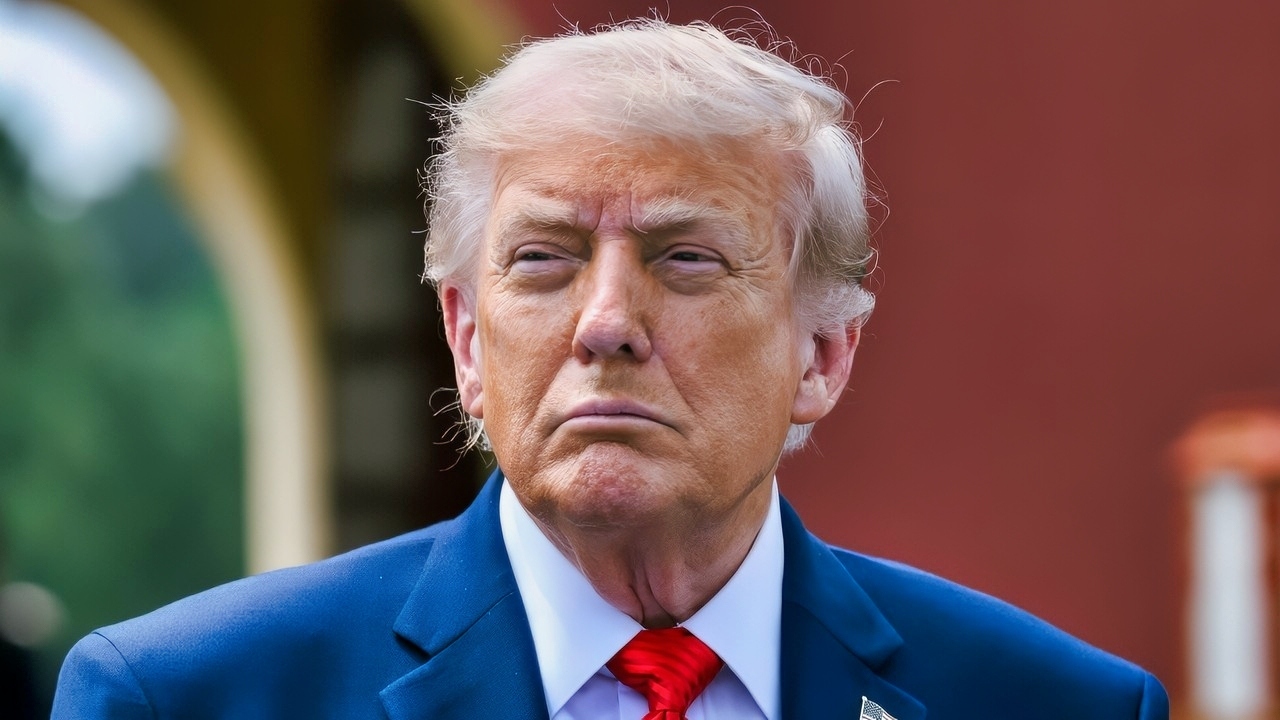
Back in September, during his address at the GOP’s midterm convention in Dallas, President Donald Trump made an audacious proposal: $5,000 checks for every American adult if Republicans win both houses of Congress in November.
“If the Republicans win, you win with us, and you get $5,000,” the president told the crowd at the Dallas convention. He called it the “Trump Dividend.”

President Donald Trump signs Executive Orders in the Oval Office, Thursday, April 24, 2025. (Official White House Photo by Abe McNatt)

Former President of the United States Donald Trump speaking with attendees at the 2022 Student Action Summit at the Tampa Convention Center in Tampa, Florida. By Gage Skidmore.
Later that day, Vice President JD Vance implied in an interview that the wealthiest Americans would not get the payments.
In the weeks that followed, Trump didn’t talk much about the proposal, and it hasn’t been a major part of most midterm election messaging. The administration made little effort to get the plan through Congress ahead of the midterms.
But over the weekend, Trump revived the proposal, per CNBC.
This week, the president also touted an existing program that gives about 20 million seniors $90 payments through Medicare, and another that has distributed $500 refund checks to about 900,000 enrollees in the Affordable Care Act.
Trump has also once again promised $5,000 payments to all adult U.S. citizens. The offer is again conditional on Republicans winning the midterm elections.
A History of Trump Checks
The federal government sent stimulus checks to most Americans twice during Trump’s first presidency: first $1,200, then $600. Congress authorized these payments, respectively, through the CARES Act and a later appropriations act. Both payments went out in 2020 in response to the pandemic, while President Joe Biden authorized a third stimulus payment in 2021 after replacing Trump as president.
One of those checks, as widely reported at the time, included Trump’s name, which has not traditionally happened when the government distributes checks.
In his second term, Trump has, on a couple of occasions, proposed new rounds of direct checks. During the “DOGE” reign in the opening weeks of Trump’s current term in early 2025, there was a proposal to give taxpayers $5,000 “DOGE Dividend” checks, but the idea never went far, likely because DOGE didn’t save nearly as much money as promised.
Trump has also promised “tariff dividend” checks at various times to return the savings from Trump’s tariffs to taxpayers. But this proposal never became reality, either.
Why It Probably Won’t Happen
Several reasons suggest Trump’s $5,000 check idea will never happen.
First, the proposal depends on Republicans winning control of Congress, and polling suggests Democrats will almost certainly take back the House, with their chances of capturing the Senate growing as well.
But even if the GOP somehow keeps control of Congress, they might not have the votes to pass the $5,000 proposal.
Some elected Republicans have expressed skepticism about the proposal, and while free-money proposals tend to be popular with voters, this one is not: a recent YouGov poll showed that 43 percent of voters support the proposal and 45 percent oppose it. Additionally, possibly because of Trump’s past promises, most voters—61 percent in that survey—do not expect the checks to ever materialize.
The Economic Argument
There’s also the strong argument that $5,000 checks make little economic sense right now.
The stimulus checks during the pandemic were economically defensible, when the economy desperately needed stimulus. Many economists, including those at the Federal Reserve, have argued that the payments overshot the mark and contributed to the subsequent period of inflation.
The economy is not currently in a state, like it was during the pandemic or after the 2008 economic crisis, where it needs massive stimulus.
Inflation continues today, and that massive injection of money would likely make the problem worse. In addition, most estimates put the cost of $5,000 checks for every U.S. adult at over $1 trillion, which would also explode the federal budget deficit.
Sen. Bill Cassidy (R-LA), after the initial September proposal, described the idea as “absolutely inflationary,” adding that the GOP would oppose it if a Democratic president proposed it.
Trump has argued that the checks would pay for themselves through growth, new investment, and crackdowns on government waste.
About the Author: Stephen Silver
Stephen Silver is an award-winning journalist, essayist, and film critic, and contributor to the Philadelphia Inquirer, the Jewish Telegraphic Agency, Broad Street Review, and Splice Today. The co-founder of the Philadelphia Film Critics Circle, Stephen lives in suburban Philadelphia with his wife and two sons. For over a decade, Stephen has written thousands of articles on politics, national security, technology, and the economy. Follow him on X (formerly Twitter) at @StephenSilver, and subscribe to his Substack newsletter.


