
President Donald Trump wants voters to know that the war with Iran was necessary and that the negative consequences of the war are a “small price to pay” to keep the United States safe.
Speaking at a campaign rally in Grand Island, Nebraska, on Monday, October 5, the president defended his record and said that the conflict was necessary to prevent Iran from acquiring a nuclear weapon that could threaten the United States.
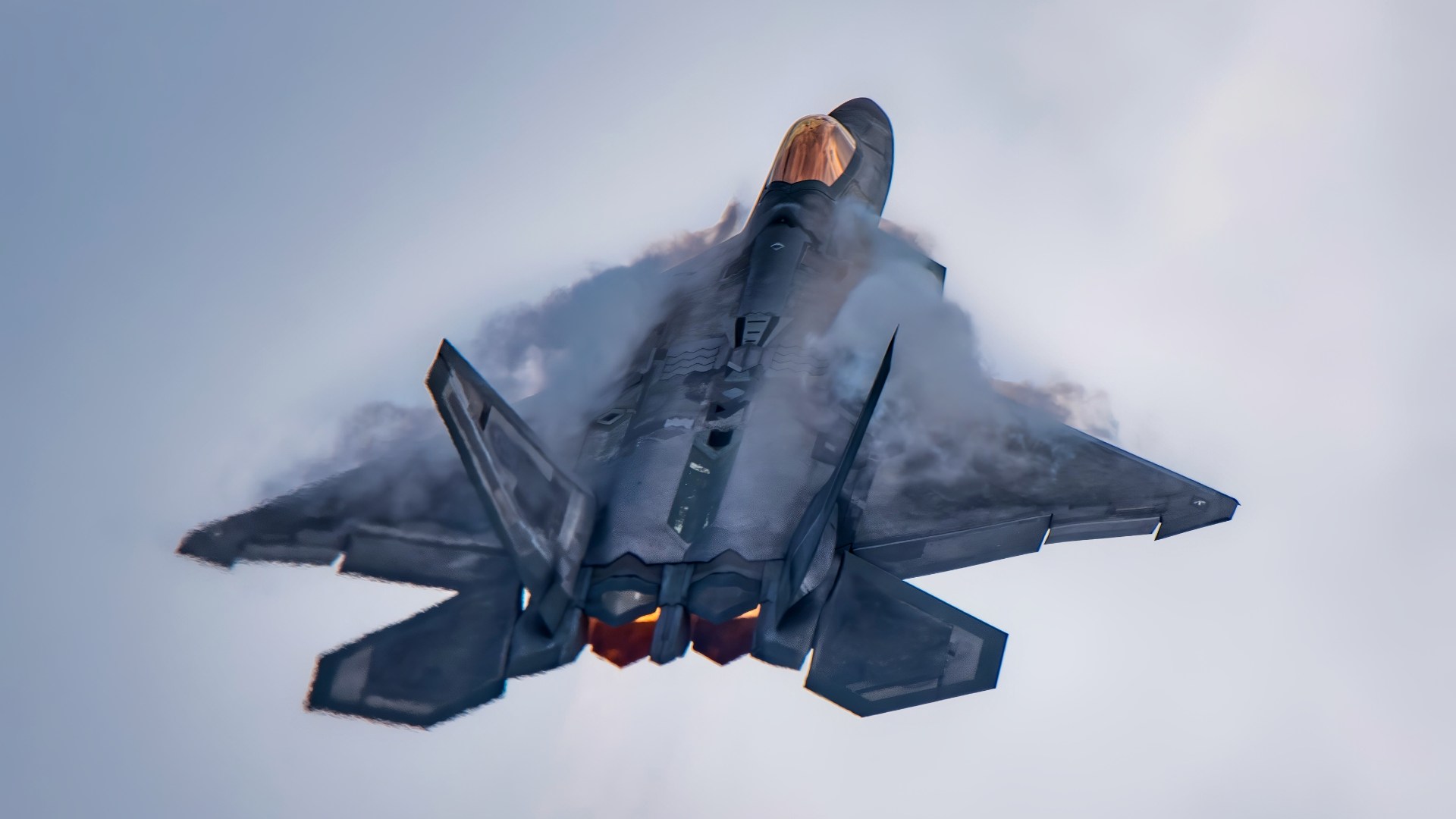
U.S. Air Force Lt. Col. Paul Lopez, F-22 Demo Team commander, flies through smoke during the Thunder over South Georgia Air Show at Moody Air Force Base, Ga., Nov. 2, 2019. Founded in 2007, the F-22 Raptor Demonstration Team showcases the unique capabilities of the world’s premier 5th-generation fighter aircraft. (U.S. Air Force photo by 2nd Lt. Sam Eckholm)

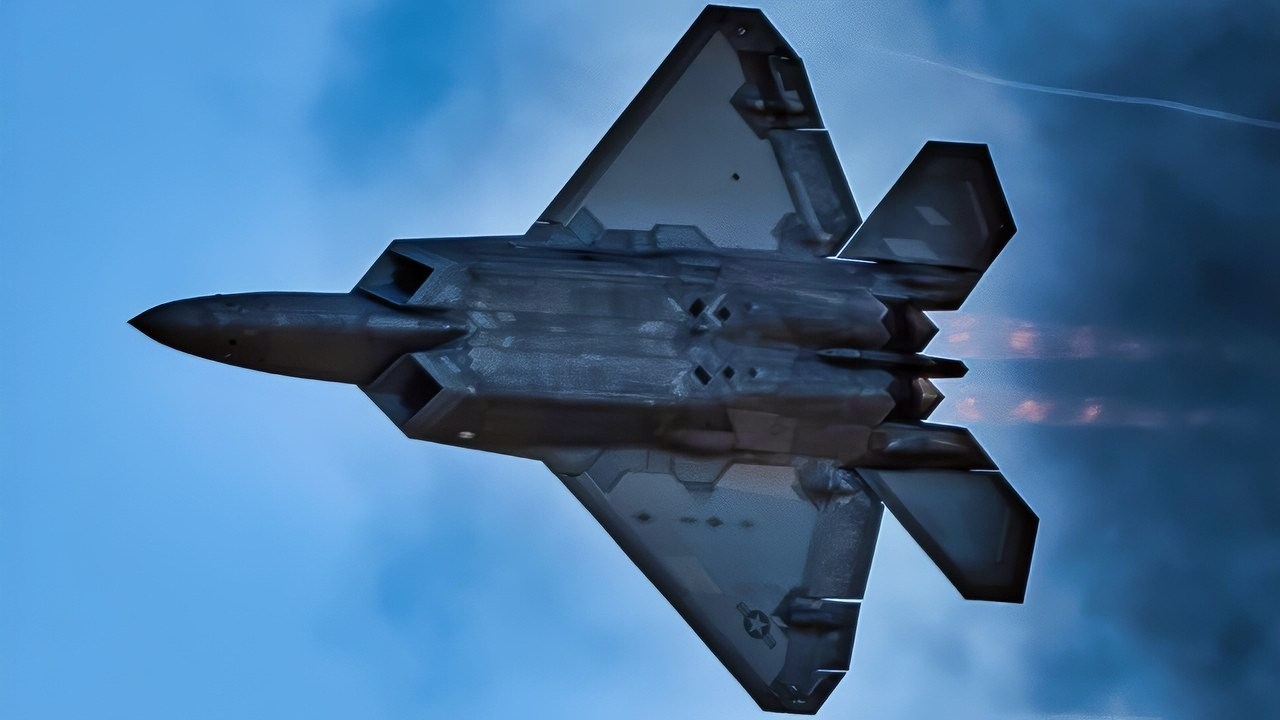
An Air Force F-22 Raptor executes a supersonic fly by over the flight deck of the aircraft carrier USS John C. Stennis. John C. Stennis is participating in Northern Edge 2009, a joint exercise focusing on detecting and tracking units at sea, in the air and on land.
“Remember, with the war, it’s just artificial. It’s a little bit high,” the president said, referring to rising gas prices. “It’s a small price to pay for keeping the world safe, keeping our country safe. They could take out a city. Let them take — let it — let them take out Los Angeles. Let them take out San Diego.”
The comments were the source of much public outrage from Democrats, who wrongly told reporters and followers on social media that the president was encouraging Iran to attack the United States.
The president also suggested that the war may finally be coming to an end — a claim that he has made on many occasions since earlier this year.
“That’s – this is a very small price to pay, and it’s going to be over with very soon,” Trump continued. “It’s essentially almost over with.”
Is the Price Worth It?
The comments come as the Trump administration faces rising pressure over the conflict’s economic consequences —particularly the dramatic increase in gasoline and diesel prices caused by disruptions to Middle Eastern oil exports and refining capacity.
AAA data shows the national average price for regular gasoline at roughly $4.37 per gallon on October 6, compared with about $3.13 one year earlier.
Diesel remained considerably more expensive at around $6.32 per gallon.
September was also a record-breaking month for gasoline prices, with the average price reaching $4.333 per gallon — the highest September average on record.
The administration has responded with a series of measures intended to soften the impact, including an executive order signed during the president’s visit to Nebraska that allows broader access to tax-exempt red-dyed diesel.
The order temporarily allows the sale of diesel typically reserved for agricultural and other off-road purposes.
But the problem is supply, not taxation, and the president won’t be able to solve the shortage by lowering taxes—and even if the war ends tomorrow, the shortage will persist for months, or even years, more.
The War Is Driving Energy Prices
Oil exports from Gulf states have recovered significantly since the war’s early days, but energy markets still face pressure from destroyed refining capacity in the Middle East, Ukraine, and Russia.
Vortexa data released this week showed that oil exports from Gulf producers excluding Iran averaged 19.2 million barrels per day in September, equivalent to more than 81% of pre-war levels.
Crude and condensate exports recovered even further, reaching approximately 91% of normal volumes.
But refined fuel supplies have not recovered nearly as quickly, with some Middle Eastern refiners forced to shut down operations after strikes or threats from Iran and its regional allies.
The U.S. Energy Information Administration raised its oil price forecasts again on Tuesday, October 6, predicting that Brent crude would average around $105 per barrel during the fourth quarter.
Constrained diesel supplies are a major concern, and the agency expects diesel prices to remain above $6 per gallon in October.
On Wednesday, October 7, Brent crude was again trading above $100.
Washington Still Wants Nuclear Concessions
President Trump could ease pressure on global markets by ending the war, but it wouldn’t solve the problem, and restoring refining capacity would still take time.
The Trump administration also believes that it can force nuclear concessions out of Iran by maintaining its naval blockade on Iranian ports and intensifying economic sanctions against the country.
And while Trump says that the war is nearly over, Washington and Tehran are still divided over the very issue that triggered the conflict to begin with
Vice President JD Vance said in an interview with Reuters published on Tuesday that Iran must substantially reduce its uranium enrichment capability before the conflict can come to an end, and questioned why Tehran requires uranium enriched to 60% in the first place if the regime’s nuclear ambitions were entirely peaceful.
Iran Threatens Further Escalation
Iran, meanwhile, is showing little sign that it considers the war almost over.
On Wednesday, an adviser to the Revolutionary Guard commander said Tehran would soon block what it calls “illegal routes” through the Strait of Hormuz and insisted Iran still maintains control of the waterway.
Reports have also suggested Iran is preparing for a broader escalation in the coming weeks.
About the Author: Jack Buckby
Jack Buckby is a British researcher and analyst specializing in defense and national security, based in New York. His work focuses on military capability, procurement, and strategic competition, and he produces and edits analysis for policy and defense audiences. He brings extensive editorial experience, with a career output spanning over 1,000 articles at National Security Journal, and has previously authored books and papers on extremism and deradicalization.


