


Key Points and Summary – Northrop’s F-20 Tigershark was a private-venture fighter in the 1980s designed to be a highly capable, affordable, and easy-to-maintain jet for U.S. allies.
-An evolution of the successful F-5, it was a “new-generation” light fighter. However, the program was ultimately doomed by a single U.S. policy shift.
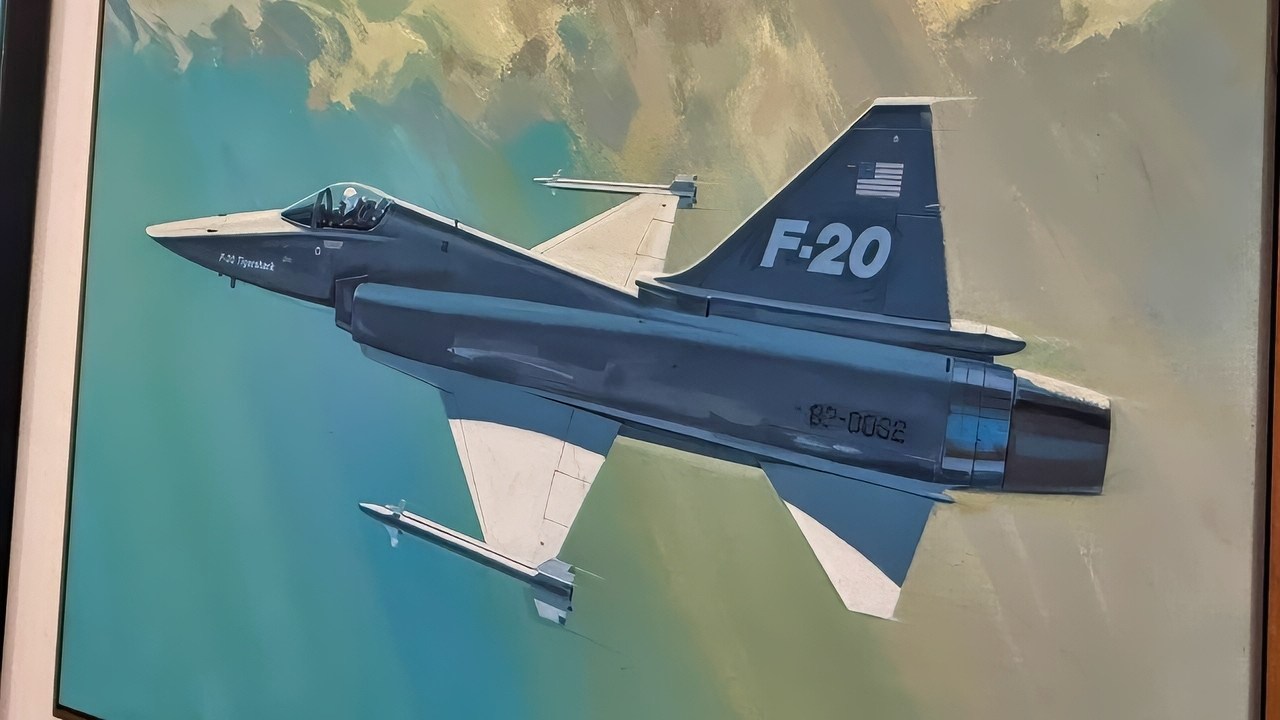
F-20 Tigershark Artwork. Image Credit: National Security Journal.
-The Reagan administration decided to allow allied nations to purchase the more advanced F-16, effectively killing the market for the “poor man’s F-16.”
-Despite being a sound and innovative design, the F-20 never secured a single order and was canceled in 1986.
The F-20 Tigershark Fighter Explained
WARSAW, POLAND – In the 1970s and into the 1980s, one of the most significant competitions in the world of combat aircraft was Northrop’s effort to export its new F-20 Tigershark light fighter.
The target market was those nations around the world that wanted to source their military hardware purchases from the US.
On the face of it, the Northrop design team had a solid argument.
Northrop based its decision to design and build the Tigershark on two basic arguments. One was that there was still a need for an aircraft that was affordable to procure, maintain, and support—and that could be offered to nations that needed a fighter in the older, original F-5’s “weight class.”
In the latter half of the 1970s, Northrop had marketed the F-5 to friendly foreign nations. Its substantial sales numbers in the overseas fighter market had been facilitated by an across-the-board US Government policy that promoted assisting allied developing nations in creating their own air defense capabilities.
The other was that there had been sufficient developments in the technologies central to the performance of a fighter aircraft that a “new-generation” F-5 made good sense for the existing customers of the original aircraft.
This was one of the reasons why the initial design for what became known as the F-20 was originally designated as “F-5G.”
The Competition
The equation changed entirely when the Reagan Administration took office.
The new policy made it possible for these so-called “F-5 countries” to procure the F-16.
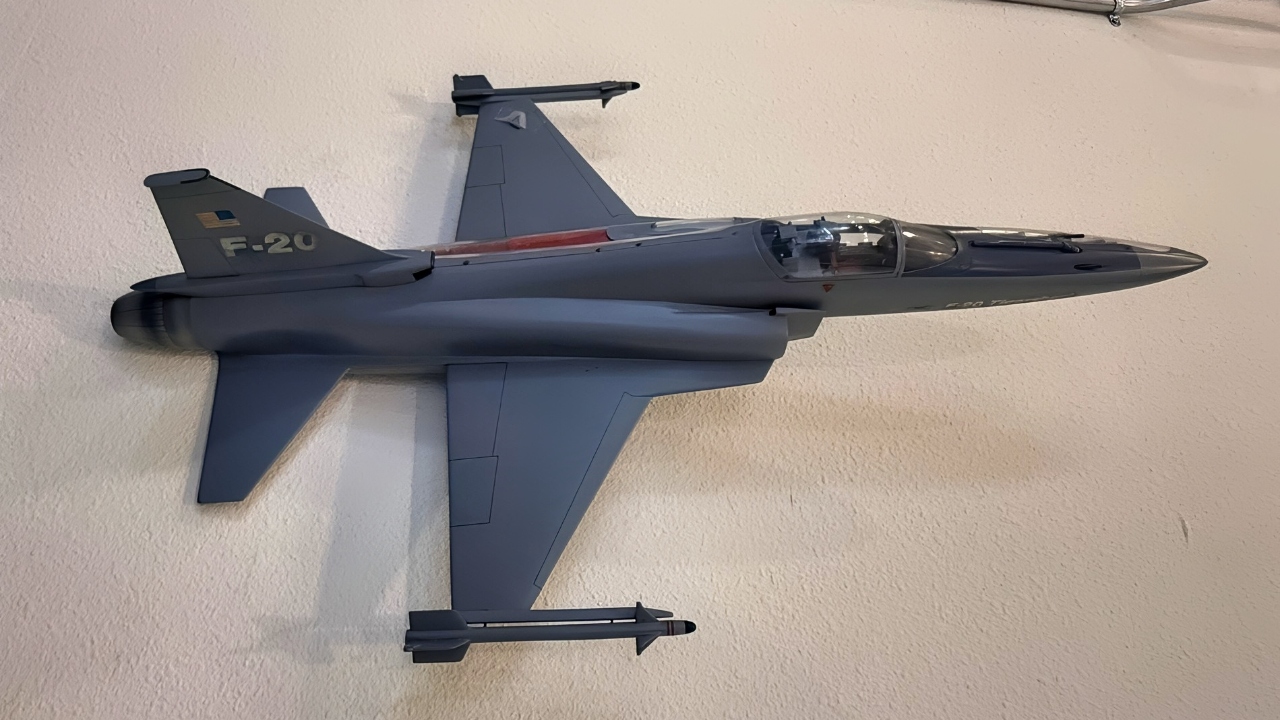
F-20 Tigershark Model at Western Museum of Flight outside of Los Angeles. Image Credit: Harry J. Kazianis/National Security Journal Image Taken on August 16, 2025.
Providing these nations with the chance to buy the real F-16 instead of what was being thought of as the “poor man’s F-16” more or less sealed the fate of the F-20.
Ultimately, the F-20 existed in only three completed prototype forms, and the line was never sold to any foreign party. Two of those three aircraft crashed during testing and demonstration flights, with both pilots lost as well.
The entire program was abandoned in 1986, while the F-16 became the Cold War-era light fighter gold standard; the F-20 could have been. The nations that had initially expressed interest in the F-20 aircraft—Bahrain, South Korea, and Pakistan—ultimately purchased F-16s.
The chief advantage of the F-20 is that it can perform a wide range of missions at a low cost per flight hour, delivering combat power reliably while maintaining a small logistical footprint. As one of the more recent assessments of the aircraft pointed out, the program itself failed. But the philosophy behind its design proved successful in other programs that came much later.
A perfect example of an aircraft being “ahead of its time.”
Program of Record
Modern-day aircraft being built and flown by air forces that share similar program objectives and guidelines include the Gripen E and the JF-17 Block 3. Interestingly enough, those two aircraft were not designed in the US.
In the case of the JAS 39 Gripen, it was Sweden, while the J-17 was developed at Chengdu Aerospace in the People’s Republic of China (PRC). An example of US industry coming up with an ingenious concept but not being smart enough to follow through on it.
MORE: America Needs 200 B-21 Raider Bombers
The closest the US ever came to capitalizing on the F-20’s design was an upgrade of its forerunner, the F-5; however, it was not a US company that developed the modernization package. The Thai-Israeli F-5TH was an extensive modernisation of the F-5E.
The aircraft was equipped with state-of-the-art avionics and advanced sensors. This version of the F-5 was regarded as one of the most capable fighters for the money ever fielded – and with performance better than most 4th-generation fighters considered superior designs.
Other analysts looking at the F-20 state that, at perhaps a higher level of abstraction, the concept behind the F-20 is not unlike what the original idea was for the F-35: Develop an aircraft that has flight performance less capable than the aircraft it was designed to replace, but is fitted with far more advanced on-board systems.
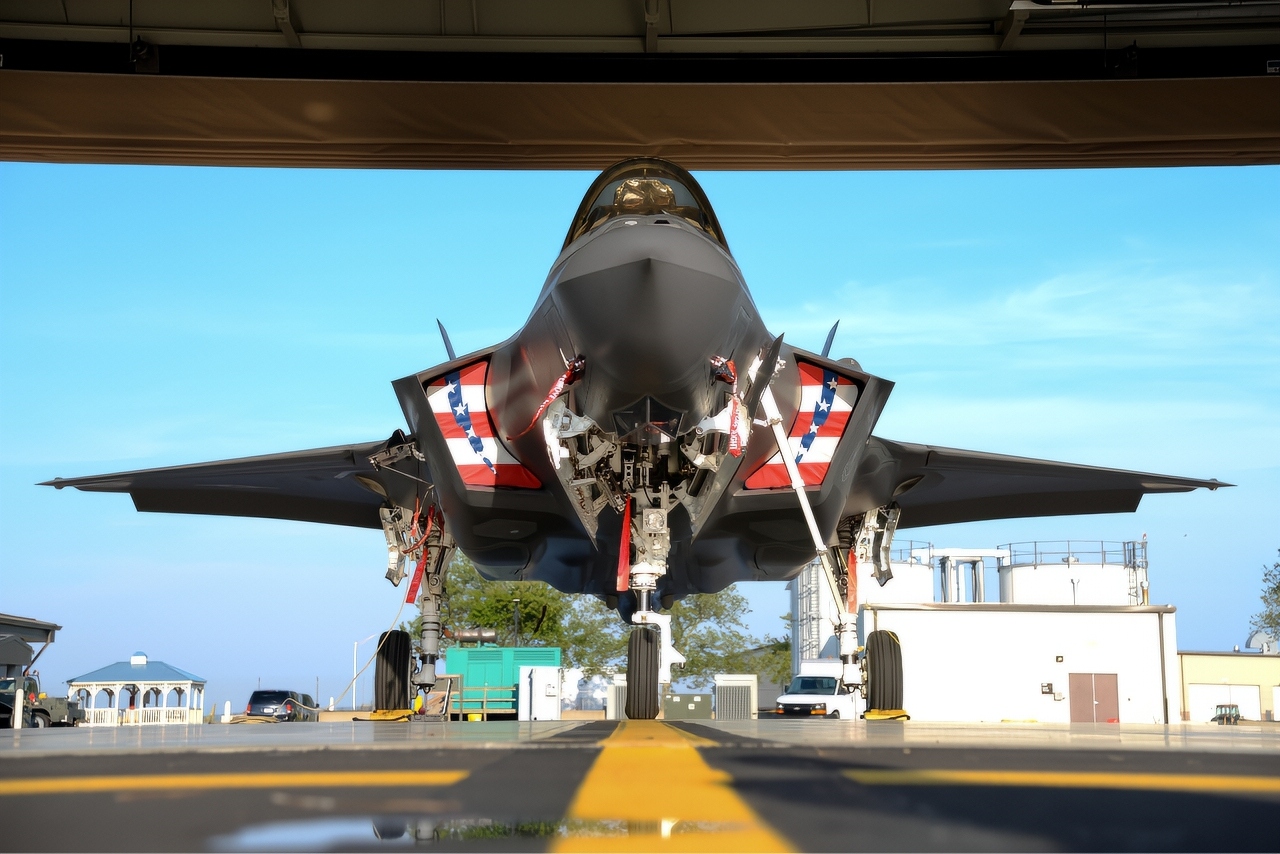
A U.S. Air Force F-35 Lightning II fighter jet from the 56th Fighter Wing, Luke Air Force Base, Arizona, displays it’s crew-designed red, white and blue inlet covers while parked in a military aircraft shelter at the Atlantic City International Airport in Egg Harbor Township, N.J. on May 26, 2016. Pilots and crew from the USAF F-35 Heritage Flight Team made a stop at the 177th Fighter Wing of the New Jersey Air National Guard on the way to their performance at the Jones Beach Airshow in Wantagh, New York on May 28 and 29. (U.S. Air National Guard photo by Master Sgt. Andrew J. Moseley/Released)
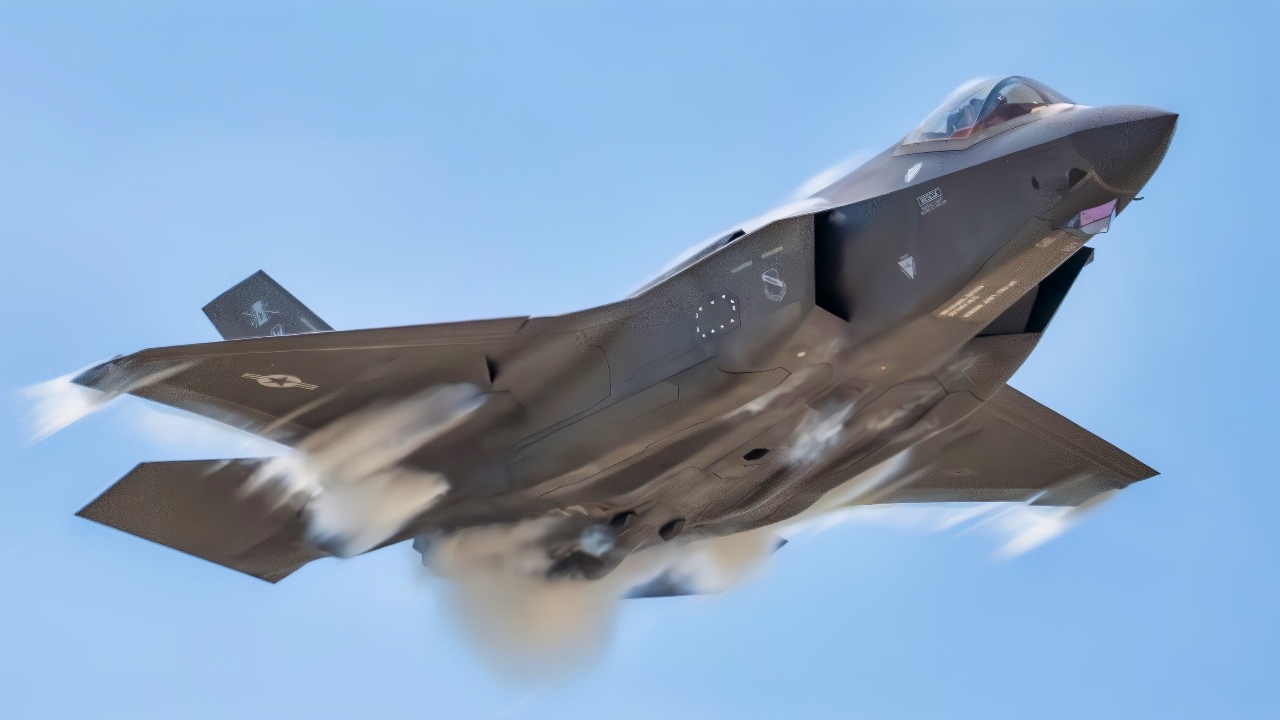
U.S. Air Force Maj. Kristin “BEO” Wolfe, F-35A Lightning II Demonstration Team pilot and commander, flies an F-35A Lightning II assigned to the 421st Fighter Generation Squadron during Naval Air Station Key West 2023 Southernmost Air Spectacular over Boca Chica Field in Key West, Florida, April 14, 2023. The F-35 demonstrated its capabilities during the airhshow, along with the U.S. Navy Blue Angels and other various performers. (U.S. Air Force photo by Senior Airman Kaitlyn Ergish)
The F-35 was also, like the F-20, intended to have lower operational costs, but with significantly improved combat performance. Unfortunately for its customers, the F-35 never lived up to the promise of being both low-cost to acquire and operate.
The F-20 is also one of a number of programs in the history of US weapon systems that failed, despite being a sound design that was effective at a reasonable price.
Its biggest shortcoming was that it was never a “program of record” with the US armed forces, which ultimately doomed its export prospects.
About the Author: Reuben F. Johnson
Reuben F. Johnson has thirty-six years of experience analyzing and reporting on foreign weapons systems, defense technologies, and international arms export policy. Johnson is the Director of Research at the Casimir Pulaski Foundation. He is also a survivor of the Russian invasion of Ukraine in February 2022. He worked for years in the American defense industry as a foreign technology analyst and later as a consultant for the US Department of Defense, the Departments of the Navy and Air Force, and the governments of the United Kingdom and Australia. In 2022-2023, he won two awards in a row for his defense reporting. He holds a bachelor’s degree from DePauw University and a master’s degree from Miami University in Ohio, specializing in Soviet and Russian studies. He lives in Warsaw.
More Military
‘Captain, We Have Been Hit’: A Tiny Nuclear Submarine ‘Sank’ $4.5 Billion Navy Aircraft Carrier
America’s F-35 Stealth Fighter Simply Summed Up In Just 1 Word
China’s New J-35 Stealth Fighter Simply Summed Up In Just 1 Word
The U.S. Navy Is Now ‘Cannibalizing’ Its Own Fighter Jets and Submarines
Operation Black Buck: How Avro Vulcan Bombers Broke Range Records in the Falklands War


Jim K
August 27, 2025 at 12:52 pm
Great article, too bad Northrop was unable to sell it. Their prime salesman was Chuck Yeager. One of the three prototypes was Yeager’s private airplane, which he used to fly to any country interested in the aircraft. Yeager logged a lot of miles in that airplane.
But even with his name behind it they still couldn’t sell any.
Wayne R Lundberg
August 27, 2025 at 1:26 pm
The F-5 used the last pure jet engines, J85.
It became the T-37 trainer which is now being replaced with the T-7.
Gab
August 28, 2025 at 9:47 am
If they need a modern day F20 tiger shark there are a lot of worthy successors like KAI’s FA 50, TAI’s Hurjet, and Boeing/SAAB T-7 if converted to a light fighter. All use the same F404 engine and are similar size to the F5. Also note that Korea and Turkey operated F5s in their history that’s why they need a suitable replacement for the F5.
You could even say that the Gripen is also an alternative if the kept the production costs low