

Key Points and Summary – Canada’s planned purchase of 88 F-35 stealth fighters remains in limbo, plagued by a massive 50% cost increase and a deeply strained relationship with the Trump administration.
-After reconsidering the deal and exploring European alternatives like the JAS 39 Gripen, Canadian defense officials appear to be leaning back towards the F-35.

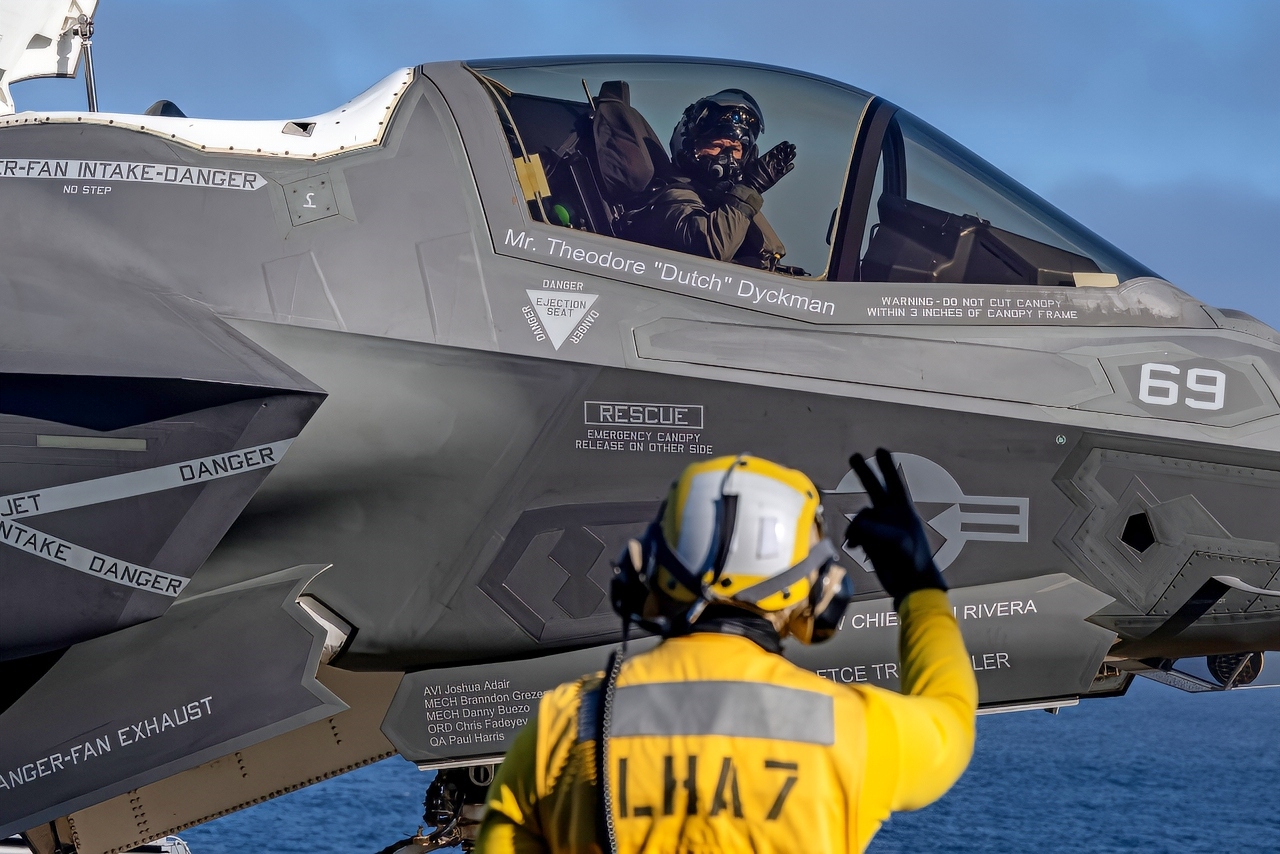
A pilot from the 34th Fighter Squadron conducts pre-flight preparations in the cockpit of an F-35A Lighting II on the tarmac at Santa Maria Airport, Calif., during Bamboo Eagle 24-3. During Bamboo Eagle, the 388th Fighter Wing is functioning as a force element at a “spoke location,” providing fifth-generation airpower to a larger force operating in the eastern Pacific region. The spoke locations are smaller than an airbase, a cluster of tents, a small footprint of equipment and personnel. (U.S. Air Force photo by Micah Garbarino)
-The logistical difficulties of a mixed fleet and the F-35’s superior capabilities and interoperability make it the best choice.
-The final decision may now hinge on transactional diplomacy, with Canada potentially approving the full purchase in exchange for relief from U.S. tariffs.
-The message Canada might send regarding the F-35 is looking increasingly likely to be that a deal will get done.
Canada May Approve the F-35 Deal Afterall
The F-35 Lightning II has as many as 19 international partners and buyers, making the fifth-generation fighter an essential part of U.S. “fighter plane diplomacy.”
The foreign military sales of the F-35 have given these countries a newfound military might.
These nations are proud of their stealth warbirds, and the valuable diplomatic inroads the United States has made with various governments can be partially attributed to F-35 sales.
Trump Has Misbehaved with the Canadians
However, President Donald Trump has crimped progress in this area, particularly in relations with Canada.
The American leader has referred to Canada as the “51st state.” He has slapped tariffs on the Great White North, and relations with the U.S. neighbor are worse than they have ever been.
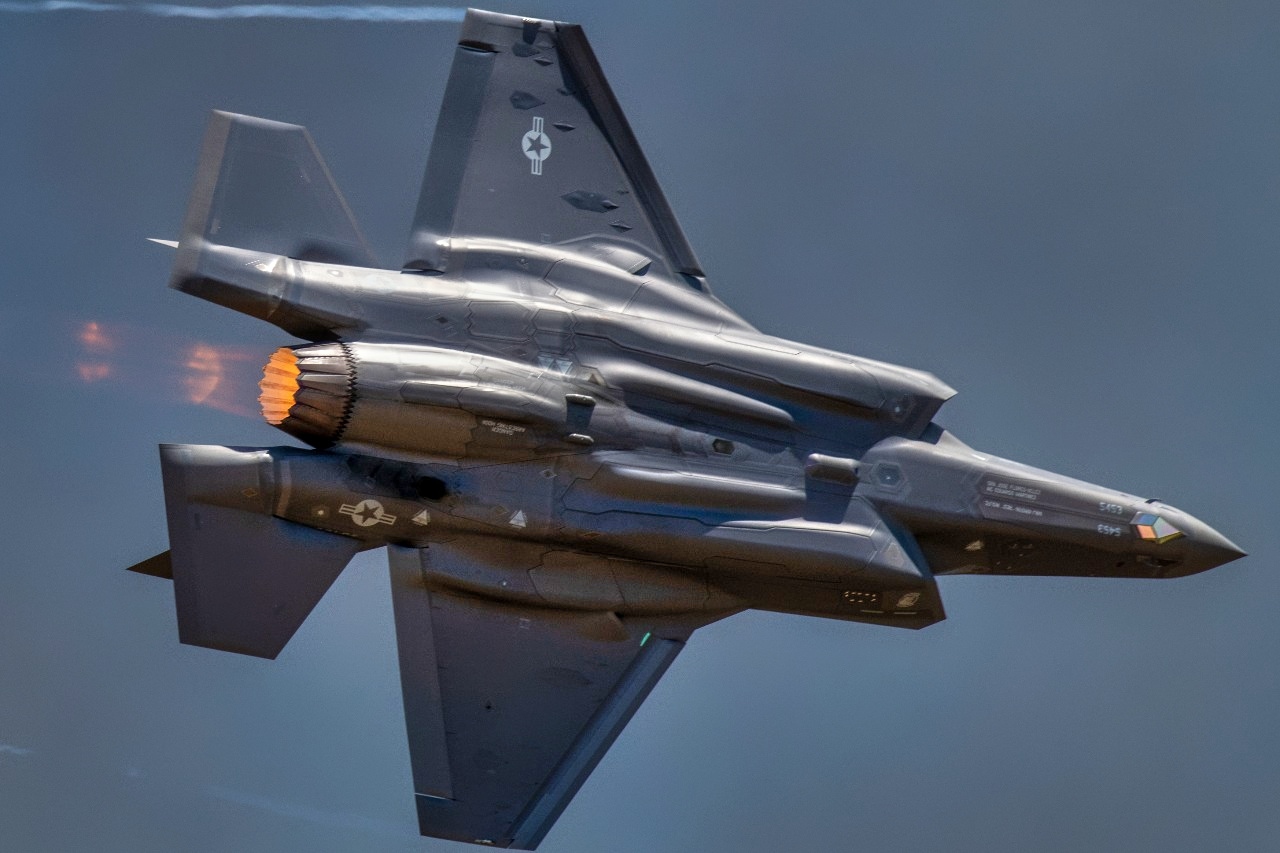
U.S. Air Force Maj. Kristen “Beo” Wolfe, F-35A Lightning II Demonstration Team Commander with the 388th Fighter Wing, flies over the crowd during the Warriors Over the Wasatch Air and Space Show on June 25, 2022 at Hill Air Force Base, Utah. (U.S. Air Force photo by Senior Airman Erica Webster)
Canada Is Circumspect About the F-35
This impasse has forced the Canadians to reconsider a landmark sale of 88 F-35s to Canada.
For the last several months, Ottawa has been playing footsie with the Americans, and F-35 manufacturer Lockheed Martin is concerned that the entire deal could be cancelled.
The Canadians have already paid for the first 16 Lightning IIs, but losing the rest could be a massive disappointment for the Americans.
The Deal Will Cost More Than Originally Thought
The F-35 is supposed to replace the aging CF-18 fighter jets. However, the Canadian military discovered this year that the F-35 acquisition would cost 50 percent more than initially expected – increasing to $27.7 billion – significantly exceeding the original estimate of $19 billion in 2022.
The Canadians have reconsidered the deal and even looked at buying Sweden’s JAS 39 Gripen or the Eurofighter Typhoon fighter instead.
However, it now appears that the Canadians have changed their mind again. Some defense officials wish to pursue the entire 88 F-35 purchase. While this is not a formal recommendation, the change of heart has breathed new life into the potential sale.
The Prime Minster Knows His Military Needs a Boost
However, Prime Minister Mark Carney remains undecided and is tight-lipped about the path forward.
The Canadian military is not what it once was. The Air Force could utilize a stealth fighter for enhanced air policing of its extensive territory.

U.S. Air Force Maj. Kristin “BEO” Wolfe, F-35A Lightning II Demonstration Team pilot and commander, flies an F-35 assigned to the 421st Fighter Generation Squadron at the Wings Over Houston Airshow, Tx., Oct. 15, 2023. Wings Over Houston showcases vintage World War II aircraft alongside the thrills of modern aviation, and has supported a variety of local and national charities during its 39-year history. (U.S. Air Force photo by Staff Sgt. Kaitlyn Ergish)
It is also a NATO member and could be called on to alert its air force should the alliance ever be entangled in battle with Russia. Eighty-eight F-35s would be more than enough to outfit the air force for several decades, and Carney would not have to worry so much about his military.
Homegrown Canadian Military Systems Are Difficult to Produce
Carney believes that the defense forces rely too much on the American defense industrial complex, and he wishes the Canadians could grow the number of military hardware systems that are produced indigenously.
However, the prime minister knows that without U.S. assistance, Canada is hamstrung.
The Canadian military also does not want to split the order between F-35s and JAS 39 Gripens or perhaps Eurofighter Typhoons.
MORE: America Needs 200 B-21 Raider Bombers
This would be difficult, as the Air Force would need to train its pilots on two or three different airplanes. The mix of fighters would require separate aviation infrastructure that would be time-consuming and expensive to build. There would also be maintenance requirements with ground crews needing different types of training and spare parts for two or even three sets of fighters.
Meanwhile, Carney’s country faces tariffs on steel, aluminum, and cars. There could be a deal with Trump to abate some of these levies in exchange for pulling the trigger on the entire F-35 order. We know that Trump loves transactional diplomacy and touts his skill at negotiating once his tariffs are in place.
The Canadians remain vague in public comments. “In all defense procurement decisions, our government will prioritize defending Canada and Canadian sovereignty, while supporting Canadian industry wherever possible. We are committed to procuring what the air force needs, while ensuring economic benefits for Canadians and the responsible use of taxpayer dollars,” according to a statement from Defense Minister David McGuinty in Reuters.

A U.S. Air Force F-35A Lightning II aircraft with the Wisconsin Air National Guard’s 115th Fighter Wing ascends into the clouds during exercise Northern Lightning Aug. 9, 2024, at Volk Field. Wisconsin. The F-35 works in parallel with 4th generation fighters, demonstrating the strength of combined airpower in the face of strategic competition. (U.S. Air National Guard photo by Staff Sgt. Constantine Bambakidis)
Those words don’t reveal much about the F-35. Despite the back and forth, Canada should ultimately consummate the deal with the Americans.
The F-35 is the best fighter available. Israel used its F-35I Adir to great success in its 12-day war against Iran. The airplane has demonstrated its radar-evasive capabilities and survivability in a multi-threat environment, making it a valuable Day One asset in warfare.
With the F-35, Canada would also gain interoperability with the Americans, which makes sense considering that, despite all the bad blood, the United States and Canada are still closely tied in terms of military partnership.
The deal comes down to Trump. He will have to conduct some personal diplomacy with Carney and pitch the F-35 as a significant transaction for both countries. We know that Canada needs a new fighter jet; it has already paid for one batch, and operating European airplanes alongside the F-35 has numerous downsides.
Lockheed Martin would be pleased since Spain has just announced that it will not purchase the F-35. The Fort Worth plant in Texas, which produces the Lightning II, is a significant contributor to high-paying jobs and economic growth. Plus, the F-35 has suppliers throughout the country that create advanced manufacturing employment.

An F-35A Lightning II, assigned to the 388th Fighter Wing, at Hill Air Force Base, UT, flies in formation with a Belgian Air Force F-16 Fighting Falcon on Sept 10, 2022, Kleine Brogel Air Base, Belgium. The F-35 Demo Team consists of approximately 15 total Airmen to include the pilot and commander, pilot safety officers, superintendent, team chief, maintenance Airmen, aircrew flight equipment specialists, and public affairs personnel. (U.S. Air Force photo by Staff Sgt. Thomas Barley).
Canada is close to approving the entire F-35 sale. Trump and Carney will have to discuss the details, and it may come down to the American president lowering tariffs against Canada to finalize the Lightning purchase agreement.
Having two or three different fighters would be impractical and difficult for the Canadian Air Force. The Great White North would be better served with the F-35, and the prime minister may finally agree.
About the Author: Brent M. Eastwood
Brent M. Eastwood, PhD is the author of Don’t Turn Your Back On the World: a Conservative Foreign Policy and Humans, Machines, and Data: Future Trends in Warfare plus two other books. Brent was the founder and CEO of a tech firm that predicted world events using artificial intelligence. He served as a legislative fellow for US Senator Tim Scott and advised the senator on defense and foreign policy issues. He has taught at American University, George Washington University, and George Mason University. Brent is a former US Army Infantry officer. He can be followed on X @BMEastwood.
More Military
B-52J vs. B-21 Raider: The Air Force Might Have a Bomber Problem
F-35 Who? The ‘Super’ Eurofighter Typhoon Is On the Way
The B-21 Raider Will Transform the U.S. Military
SR-72 Darkstar Might Be Coming Soon…
The B-2A Spirit Stealth Bomber Has a Message for Russia and China


Stephan Larose
August 27, 2025 at 12:49 am
It HAS to be produced domestically. We can’t be dependent on the US for our defense. F35 is completely inappropriate for Canada. We need two engine craft with long ranges. F35 has a very short range and is single engine. It’s also a first strike weapon, not a defensive weapon. If you want sovereignty and an air force you can rely on, it MUST be built here. Stop pretending it isn’t possible. It’ll create lots of jobs and make us far more secure.
Marc Lemieux
August 27, 2025 at 1:14 am
What did you think would happen following your irrational President’s comments that he wishes to take over our country and make it the 51st state?
After all these years of development, the F-35 still has ever-recurring teething problems, but worse of all, it can be rendered inoperable or useless by your administration though the use of an off switch!
As such, which country is going to spend billions of dollars for the F-35, when there are far more affordable and reliable, yet still capable fighters such as the Saab Gripen, available from our European friends, whom we can trust?
I guess being an isolationist country now has its drawbacks, doesn’t it?
RMZ
August 27, 2025 at 2:26 am
We cannot afford to have fighters that rely upon mission packages from an increasingly unreliable ally.
Ray S Moodie
August 27, 2025 at 2:58 am
If they say 27B you can bet it will be closer to 40. DND procurement has never failed us yet 😏. There should be a Canadian product supplemented by drones. Drone ports can easily be established and would be more cost effective solution.
James Perreault
August 27, 2025 at 3:14 am
This is absolute nonsense. The Saab fighter is engineered for lower operational costs, a more affordable purchase price, and reliable performance in all weather conditions. It’s not an overpriced “garage queen” like the F-35.
The benefits of choosing Saab include Canadian jobs, domestic support, and a reduced dependence on a so-called “dictator” who deploys armed forces for personal political retaliation—someone who has never served, has been convicted 34 times, and faces numerous other pending charges.
Canada doesn’t need stealth; we need quantity—more pilots in cockpits and aircraft that can operate from rough runways in harsh Canadian winters. The choice is obvious, and it’s certainly not the overhyped PR machine that is the F-35.
Cannuck
August 27, 2025 at 10:29 am
Always love to hear an american with no cluse tell us Canadians how we feel about them.
With the cost overruns and missed flight operational hours, the F35 is an overpriced dud. The Gripen is superior in every way that we need. And the stealth argument is moot since that is not required in assertion of sovereignty and defending our airspace.
Winter
August 27, 2025 at 1:26 pm
Agreed with everyone else, not to mention the single engine design is not suited to cold weather Canadian skies, and an f35 just crashed due to frozen hydraulics.
JOEL CARLSON
August 27, 2025 at 4:49 pm
Unreliable. What a a bunch of hippocrits. Take billions over the years, then cry like a spoiled child.
JOEL CARLSON
August 27, 2025 at 4:51 pm
You don’t have the capabilities to produce a 3rd, 4th, 5th, or 6th generation fighter. You want to stop trading? BYE. AND THE RET OF YOU,THE FOOD SUPPLY JUST GOT SHUT DOWN. GOOD LUCK SURVIVING THE PESTICIDES YOUR FELLOW COUNTRIES USE.
Raymond Beaudry
August 28, 2025 at 4:36 am
Given the recurring issue, cost, and the state of Canada / USA relations, I would propose abandoning the F-35 deal and going with Saab. The 16 planes committed can be sold to another nation operating the F-35. I realize this may not be acceptable to some or many people. Still, it is an out-of-date plane with questionable reliability and serviceability, an example being the recent British F-35 fiasco in India with F-35.
Fred Scribner
August 29, 2025 at 11:52 am
Didn’t an F-22 just get shot down in war games by a Gripen E demonstrating that America’s stealth technology can be defeated and taking away the one advantage the F-35 had? No despite what Canadian Air Force generals want I believe the government will go for the platform that suits Canadian needs the best and in this case it’s clearly the Swedish jet.
Jamie Friesen
August 30, 2025 at 11:38 am
The F-35 is poorly suited to Canadian needs, as it is single engine and is now having issues operating in the Arctic (evidenced by an F-35 crash in Alaska).
To Trump and the US military-industrial complex, we should still buy the aircraft, but in much reduced numbers, between 40 and 50. But this should be our last purchase of major US military systems. We can use it for missions where interoperability is necessary, and wait until either GCAP or FCAS, 6th gen European fighters are ready in 10 to 15 years, then order about 100 of those.