


Key Points and Summary – The “F-35D” is not an official aircraft but a catch-all name for various proposed upgrades.
-Past concepts included a canceled short-takeoff variant and another with a more powerful alternate engine.
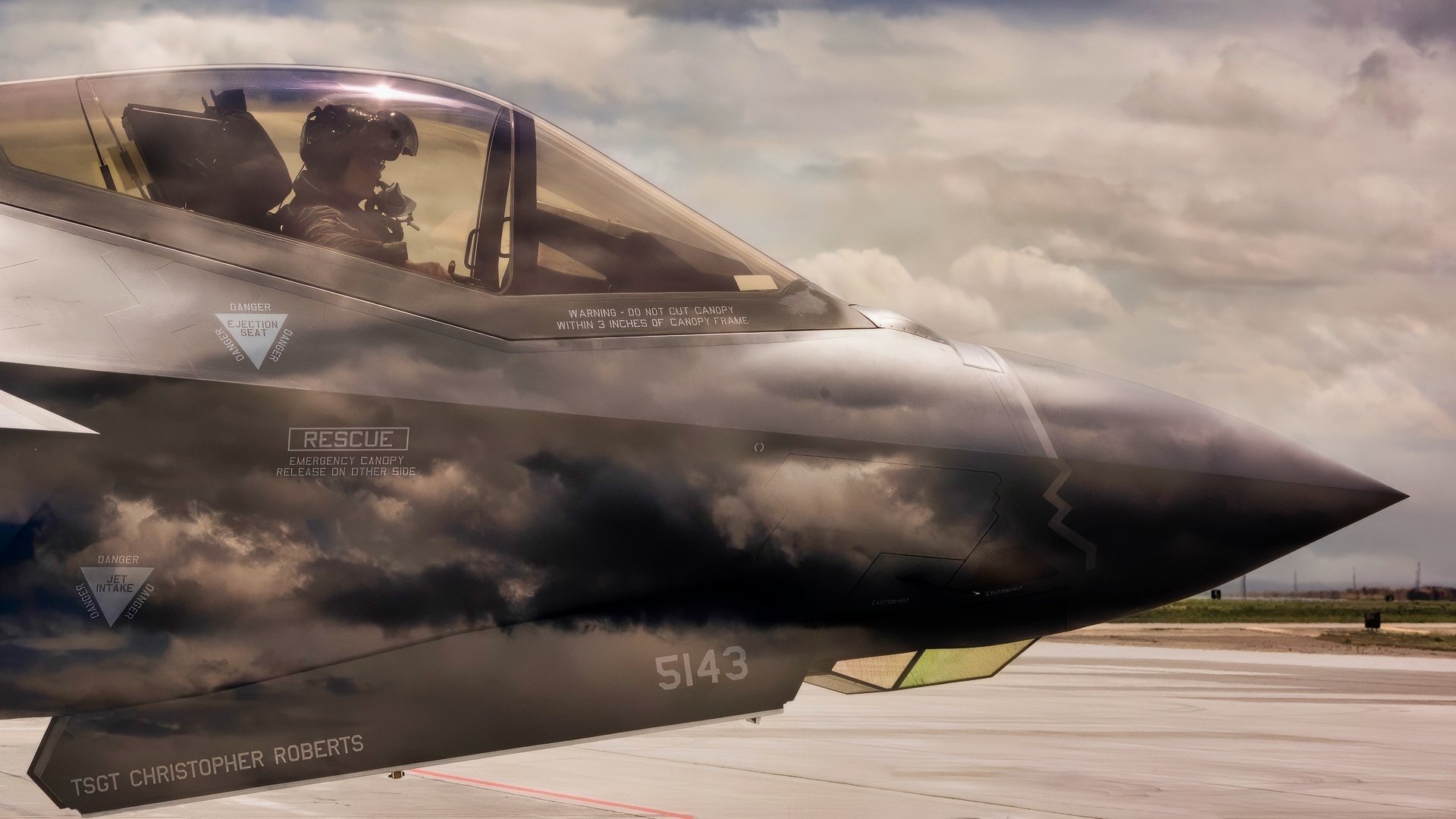
An F-35 Lightning II pilot from Hill Air Force Base, Utah, waits to taxi onto the runway June 20, 2019, at Mountain Home Air Force Base, Idaho. This double exposure photo was achieved in camera by combining two perspectives, a photo of the F-35 and photo of the sky, to create a singular image. (U.S. Air Force photo illustration by Airman 1st Class Andrew Kobialka)
-Today, the “F-35D” is most associated with Lockheed Martin’s “Ferrari F-35” proposal.
-This ambitious plan would infuse the current jet with technology from its unsuccessful 6th-gen NGAD bid, offering enhanced stealth and new sensors with the promise of achieving 80% of a 6th-gen fighter’s capability for 50% of the cost.
-However, its high potential price tag makes its future uncertain.
The F-35D: Could It Happen? Meet the Ferrari F-35 Super
There is always a sense that any major program needs to evolve and improve over time.
This is how most fighter aircraft start when they enter service: with a suffix that is “A/B,” which later becomes “C/D,” and sometimes even an “E/F” series if it remains in production long enough to undergo those phases of modernization.
Since the F-35 was built in several variants to begin with – a land-based F-35A, a vertical and short take-off (VSTOL) F-35B, and a carrier-capable F-35C – there have been numerous suggestions over the years to improve the aircraft’s performance as a weapons platform.
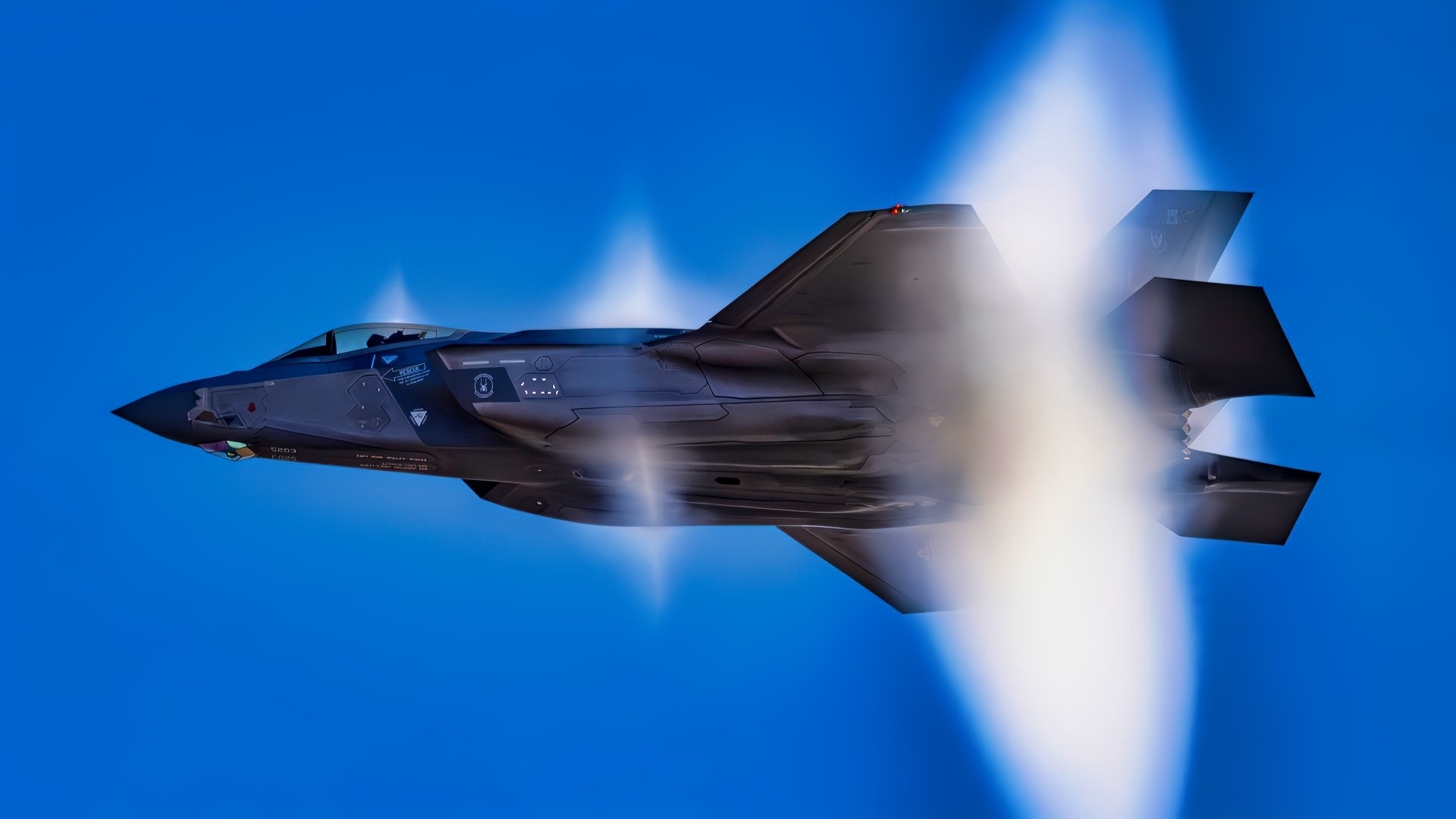
U.S. Air Force Maj. Melanie “Mach” Kluesner, pilot for the F-35A Lightning II Demonstration Team, executes precision aerial maneuvers during a practice airshow at Hill Air Force Base, Utah, Dec. 5, 2024. The practice session helps ensure the team maintains peak performance and readiness during the off-season. (U.S. Air Force photo by Senior Airman Nicholas Rupiper)
One unofficial designator that has been bandied about is that a better and more advanced version might be called “F-35D.”
Just what is it about the F-35D aircraft—if there was such an animal—that makes it different from the original three variants?
There are a myriad of answers, depending on the time in history when that question was asked.
After the aircraft’s design was selected in 2001, and when it first flew in 2006, variants were designated.
Performance, while largely meeting the mission requirement, was considered to be in the “room for improvement” category by some.
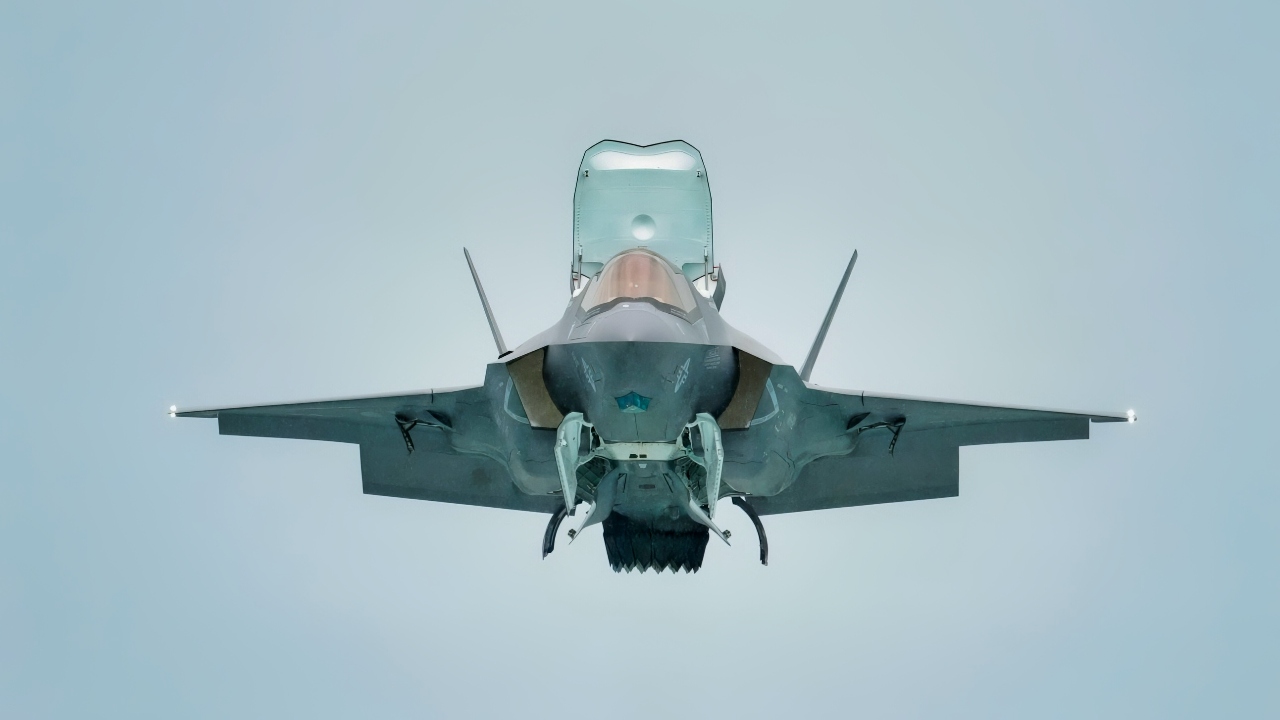
A U.S. Marine Corps F-35B Lightning II assigned to the Marine Fighter Attack Squadron 242, Marine Aircraft Group (MAG) 12, Marine Corps Air Station, Iwakuni, conducts an aerial demonstration during the Singapore Airshow 2022 at Changi Exhibition Center, Republic of Singapore, Feb. 16, 2021. Through participation in regional events like the Singapore Airshow, the U.S. demonstrates its commitment to the security of the Indo-Pacific, promotes interoperability, displays the flexible combat capabilities of the U.S. Military, creates lasting relationships with international audiences, and strengthens partnerships throughout the Indo-Pacific region. (U.S. Air Force photo by Master Sgt. Richard P. Ebensberger).
This has given rise to different proposals over the years for new variants based on F-35’s adaptability for other missions.
F-35D Variants
One of the earliest concepts, proposed in 2007, was a design considered by the US Air Force (USAF).
This modified variant would have had a short-takeoff and landing (STOL) capability.
The USAF had expressed interest in procuring over 200 of this variant for the close air support (CAS) mission. Still, it was canceled due to increased development costs and reduced commonality with the F-35B.
Years later, another F-35D aircraft concept was proposed for the “penetrating counter air” mission. It would have featured a redesigned, larger wing, giving it increased fuel capacity.
One of the more interesting options that was considered for this version of the aircraft was a new engine
. This was the F136 Alternate Engine for the F-35, a combat engine with over 40,000 lb. of thrust, developed by a partnership between GE Aerospace and Rolls-Royce plc.
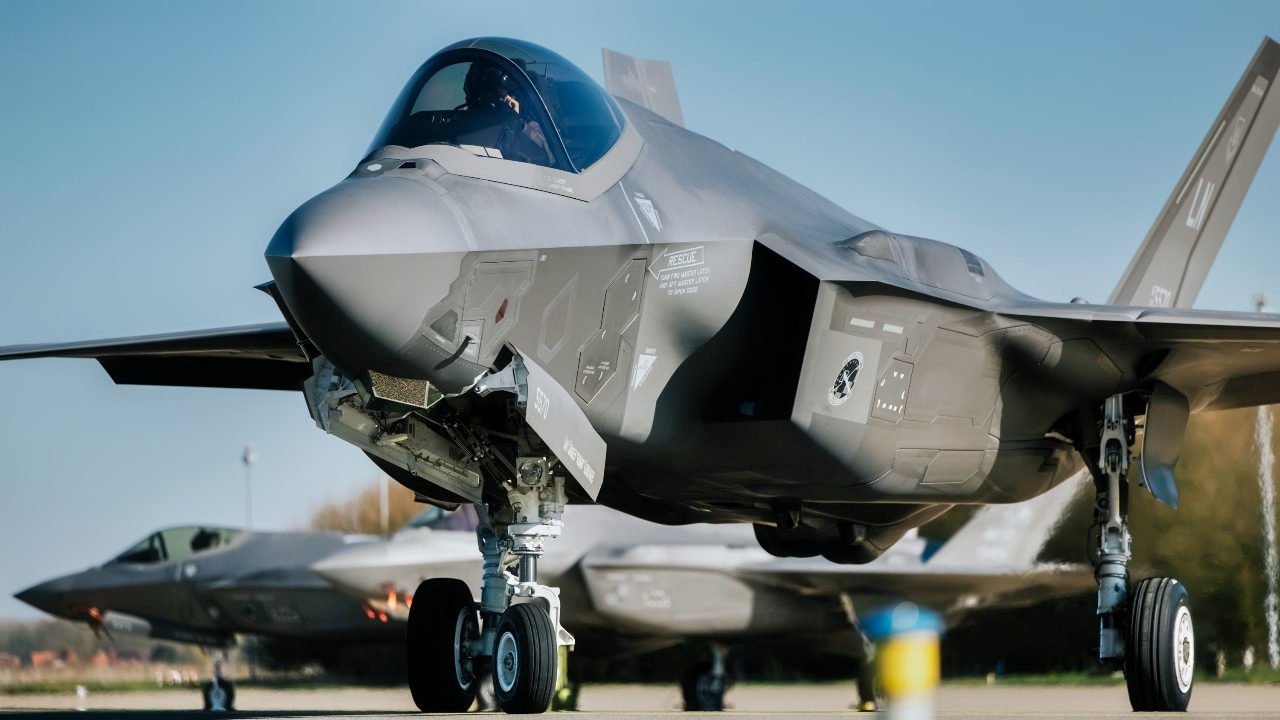
A U.S. Air Force F-35 Lightning II taxis during a cross-servicing event at NATO Allied Air Command’s Ramstein Flag 2025 exercise April 4, 2025. Successful cross-servicing at RAFL25 is an example of the importance of integrated logistics and maintenance training that enhances U.S. warfighting readiness by strengthening United States Air Forces in Europe – Air Forces Africa’s ability to deploy, sustain, and project fifth-generation capabilities across the European theater. (Royal Netherlands photo by Sgt. Maj. Jan Dijkstra)
The engine itself was derived from the GE37/YF120 prototype propulsion system design that had powered the initial YF-22 and YF-23 prototypes.
This proposed “new and improved” F-35 was ultimately canceled due to the cost of developing it. Also, the new engine would have significantly reduced commonality with other variants.
Currently, the “F-35D” designator is used to describe proposed future upgrades to the existing F-35 configuration.
The resulting aircraft is usually defined as a 5th-generation design that incorporates “5th-generation-plus” technologies.
Among other improvements, this version of the aircraft would be equipped with a new integrated core processor, a panoramic cockpit display, and improvements in sensors and weapon systems.
One of these proposed sensors is an emerging technology that the Lockheed Martin (LM) CEO has described as “passive infrared radar.” An infrared search and track system that is a manifestation of this technology has been seen on the wings of the F-22 in recent tests.
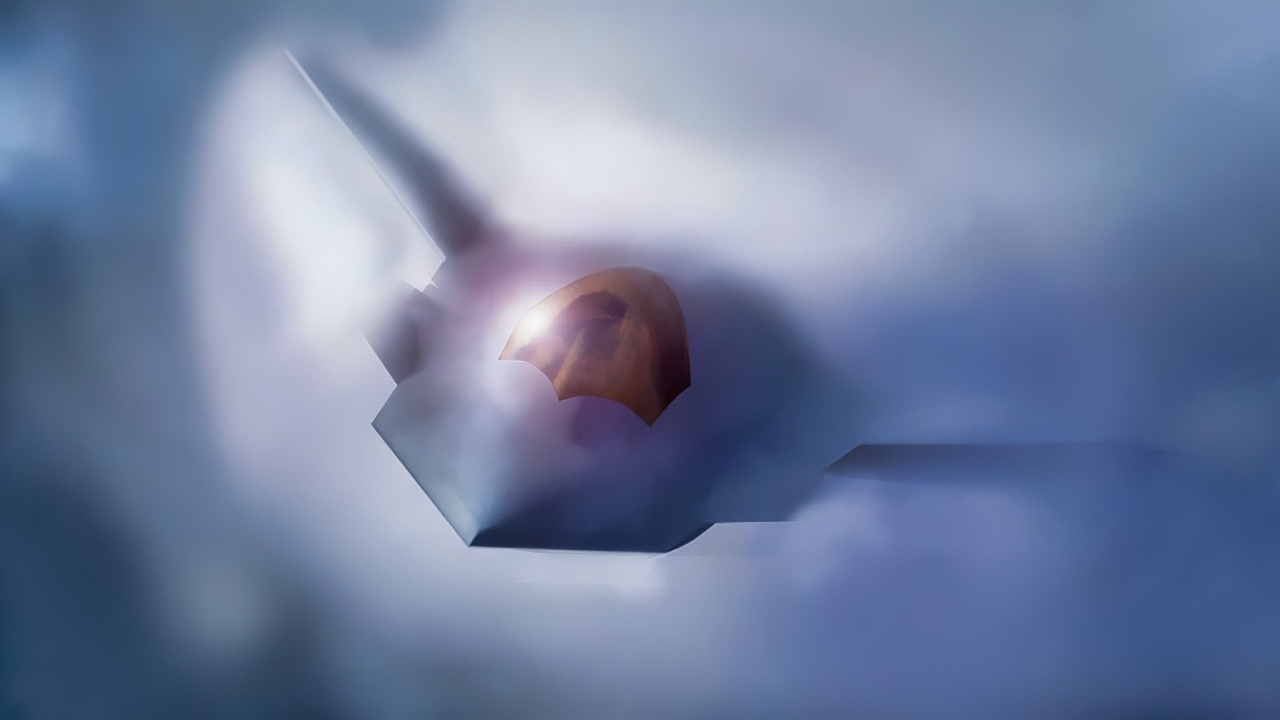
Shown is a graphical artist rendering of the Next Generation Air Dominance (NGAD) Platform. The rendering highlights the Air Force’s sixth generation fighter, the F-47. The NGAD Platform will bring lethal, next-generation technologies to ensure air superiority for the Joint Force in any conflict. (U.S. Air Force graphic)
This aircraft is being discussed for incorporating the same formula often used in defense marketing—”80 percent of the other guy’s product but at 50 percent of the cost”.
In this case, the “other guy’s” aircraft that LM is referring to is the Boeing F-47, the design recently awarded under the USAF Next Generation Air Dominance (NGAD) contract.
The Ferrari F-35 Option
About that version of the aircraft, the F-35D label is sometimes used to designate what has been recently dubbed the “Ferrari” version of the fighter.
This new version is proposed to be redesigned with features that include a stealthier airframe and new-generation engines, as described by Air & Space Forces Magazine shortly after this version of the F-35 was proposed.
“We have 70,000 engineers and scientists in the company working on exciting stuff all the time,” the LM CEO James Taiclet said at the time of the announcement of the intention to develop this version of the F-35.
“The US government and the F-35 program itself are already funding some of the 5th-gen-plus solution set.” Classification regimes prohibited the LM chief from revealing any details about what could be done to the F-35 design to achieve this capability.

Shown is a graphical artist rendering of the Next Generation Air Dominance (NGAD) Platform. The rendering highlights the Air Force’s sixth generation fighter, the F-47. The NGAD Platform will bring lethal, next-generation technologies to ensure air superiority for the Joint Force in any conflict. (U.S. Air Force graphic)
However, he added, the improvements to the aircraft involve “key techniques, I’ll say, and approaches that [the] fighter pilot needs to have to be competitive and win.”
At the time, Taiclet was asked if these new capabilities would be LM internal or government-funded.
He responded that some of them would be paid from “our government-funded investment in R&D, the competitive process … funded for both Lockheed Martin and Boeing [for NGAD] over a period of years by the government. And, you know, we made independent investments along the way, too, in both” the F-35 and NGAD.

(ILLUSTRATION) — An artist illustration shows a flight of unmanned weapons carriers escorted by a sixth generation air dominance fighter during a combat mission over an undisclosed location. Mike Tsukamoto/staff; Airman 1st Class Erin Baxte.
The projected per-unit cost for this aircraft may determine whether this version ever sees the light of day.
It has been suggested that this would be about US $150 million per unit, potentially reaching a price point beyond what international partner nations and foreign military sales (FMS) customers would find bearable.
About the Author: Reuben F. Johnson
Reuben F. Johnson has thirty-six years of experience analyzing and reporting on foreign weapons systems, defense technologies, and international arms export policy. Johnson is the Director of the Asia Research Centre at the Casimir Pulaski Foundation. He is also a survivor of the Russian invasion of Ukraine in February 2022. He worked for years in the American defense industry as a foreign technology analyst and later as a consultant for the U.S. Department of Defense, the Departments of the Navy and Air Force, and the governments of the United Kingdom and Australia. In 2022-2023, he won two awards in a row for his defense reporting. He holds a bachelor’s degree from DePauw University and a master’s degree from Miami University in Ohio, specializing in Soviet and Russian studies. He lives in Warsaw.
More Military
Army MV-75 Has a “Digital Backbone” to Stand Up to China in the Pacific
The F-35 Stealth Fighter Great Leap Forward Has Arrived
New Challenger 3 NATO Tank Is Built for Just 1 Mission It Can’t Fulfill
Sunk 10,000 Feet Down: A U.S. Navy Nuclear Submarine Was Lost, And No One Knows Why


