
Key Points and Summary – While most nations have retired the nearly 70-year-old F-5 fighter, it remains a key component of Iran’s aging air force.
-Plagued by sanctions and a struggling domestic industry, Tehran’s attempts to modernize the platform into the “indigenous” Kowsar fighter have been beset by delays and funding shortfalls.
-As other countries like Taiwan phase out their F-5s for modern jets, Iran is left relying on a patchwork of upgrades and improvisation to keep the vulnerable, outdated aircraft in the sky, forcing a strategic dependence on its missile and drone forces instead.
Iran’s Aging F-5 Fighters Are the Best They Can Get
The Northrop F-5 may no longer serve the U.S. Navy in frontline combat roles – but even as the platform approaches its 70th anniversary since manufacturing began, upgraded variants like the F-5E can still be found all over the world – though most of them have been retired.
The F-5 platform, however, remains a key component of Iran’s aging air fleet.
In 2008, the Islamic Republic of Iran Air Force (IRIAF) enlisted the support of the Iran Aircraft Manufacturing Industrial Company to modernize and upgrade its fleet of 63 F-5E and F-5F fighter jets. The first three F-5F Tiger II trainers were delivered in 2020.
Since then, Iran has produced and operates four Kowsar aircraft – modernized F-5 variants touted as “100 percent indigenously made” by Iran. By and large, Iran has been incapable of modernizing the jets in sufficiently high numbers to maintain a reliable and effective fleet.
Having bought 141 F-5E and 28 F-5Fs in the 1970s as part of U.S. Peace Rush programs, the F-5 became a key component of the Iranian air force – but those numbers have gradually dwindled. Between 2001 and 2007, Iran worked with China to modernize jets, but it was later abandoned as a result of United Nations arms embargoes.
Plans to modernize 47 F-5Es and 16 F-5Fs also proved problematic; the so-called “indigenously made” jets faced multiple manufacturing delays and disruptions, from fatal accidents involving Sarir ejection seats to funding shortfalls.
Today, Iran still fields a large fleet of F-5s – though it is aged and vulnerable. Historically, Iran has relied on patchwork upgrades, support from China, and domestic improvisation to keep its F-5s in the air.
But despite its vulnerabilities and the fact that these jets simply cannot compare to modern platforms developed by Iran’s adversaries, they form the backbone of Iran’s tactical fighter fleet.
In July, 2025, a ceremony was held at the Hualien Air Base in Taiwan to mark the official retirement of its air force’s F-5 jets. The aircraft was in use in Taiwan for 50 years, but was replaced by a combination of modernized F-16 Fighting Falcons and the Indigenous Defense Fighter (IDF) F-CK-1 Ching Kuo. T
The F-5E and F-5F entered into service in Taiwan in the 1970s and previously formed the backbone of Taiwan’s fighter force. While they were formally retired only recently, they were withdrawn from combat roles during the 2000s.
But besides a few dozen F-14 Tomcats and fewer than 20 Soviet MiG-29s, the F-5 remains the backbone of Iran’s light fighter fleet, which explains why Iran relies so heavily on a combination of missiles and drones.
Iran is one of the largest missile producers in the Middle East – but the prospect of pre-2015 sanctions being reimplemented by the end of this month suggests it could soon fall behind in arms manufacturing, too.
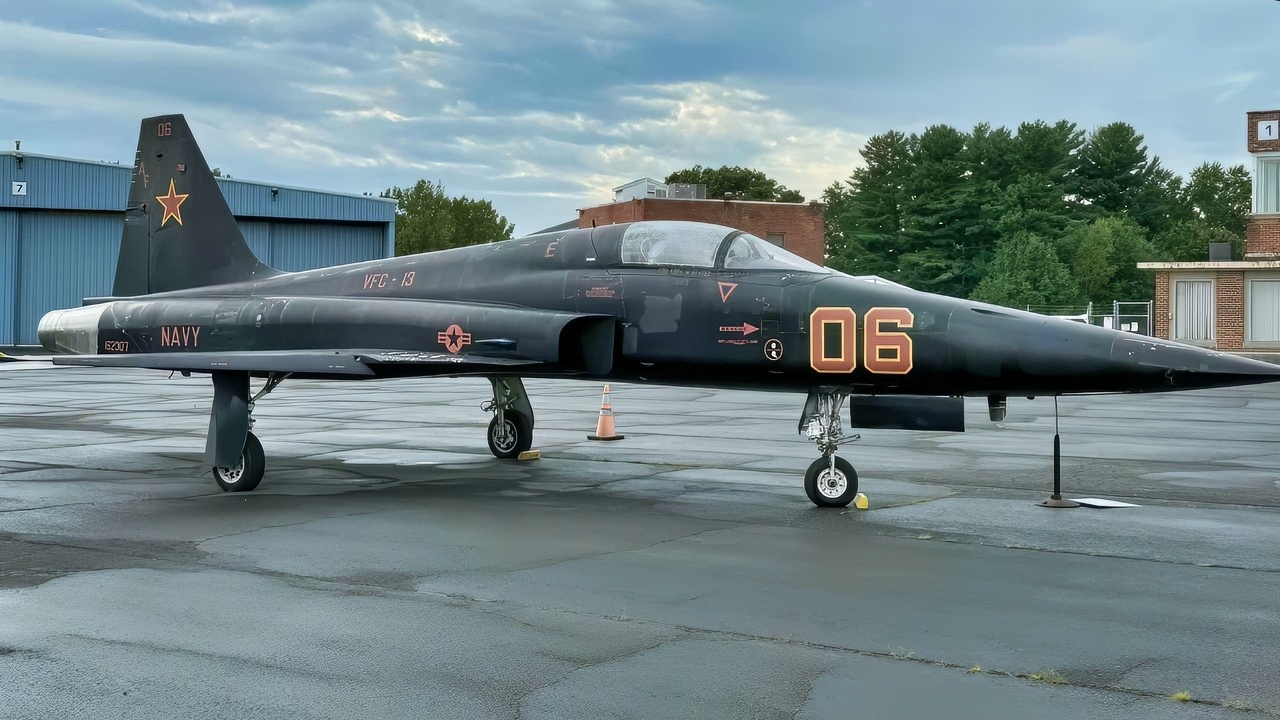
I Visited a Real F-5 Fighter
The U.S. Navy and Marine Corps, meanwhile, operate fewer than 50 F-5s, mostly in adversary training roles.
One example of the F-5E can be found at the Empire State Aerosciences Museum in Glenville, New York. In fact, I was there this weekend and took the picture above.
About the Author:
Jack Buckby is a British author, counter-extremism researcher, and journalist based in New York who writes frequently for National Security Journal. Reporting on the U.K., Europe, and the U.S., he works to analyze and understand left-wing and right-wing radicalization, and reports on Western governments’ approaches to the pressing issues of today. His books and research papers explore these themes and propose pragmatic solutions to our increasingly polarized society. His latest book is The Truth Teller: RFK Jr. and the Case for a Post-Partisan Presidency.
More Military
The B-1B Lancer: Best Bomber Ever?
Russia’s Ballistic Missile Fleet Could Destroy the United States
Russia’s Typhoon-Class Submarine Was the Size of An Aircraft Carrier


