


Summary and Key Points: The Soviet MiG-23 Flogger was Moscow’s first swing-wing fighter, built in the late 1960s to rival the American F-4 Phantom.
-Despite Mach 2-plus speed and over 5,000 built, it proved hard to fly, costly to maintain, and a poor dogfighter.
-Its combat record was disastrous: Syrian MiG-23s fell to Israeli F-15s and F-16s, Iraqi MiG-23s to Iranian F-14s, Libyan MiG-23s to U.S. Navy Tomcats — so bad the Soviets retired it before the MiG-21 it was built to replace.
The MiG-23 Fighter Explained
The Soviet military developed its first swing-wing fighter in the late 1960s as an answer to the American F-4 Phantom.

F-4G Wild Weasel in Museum. Image Credit: National Security Journal/All Rights Reserved.
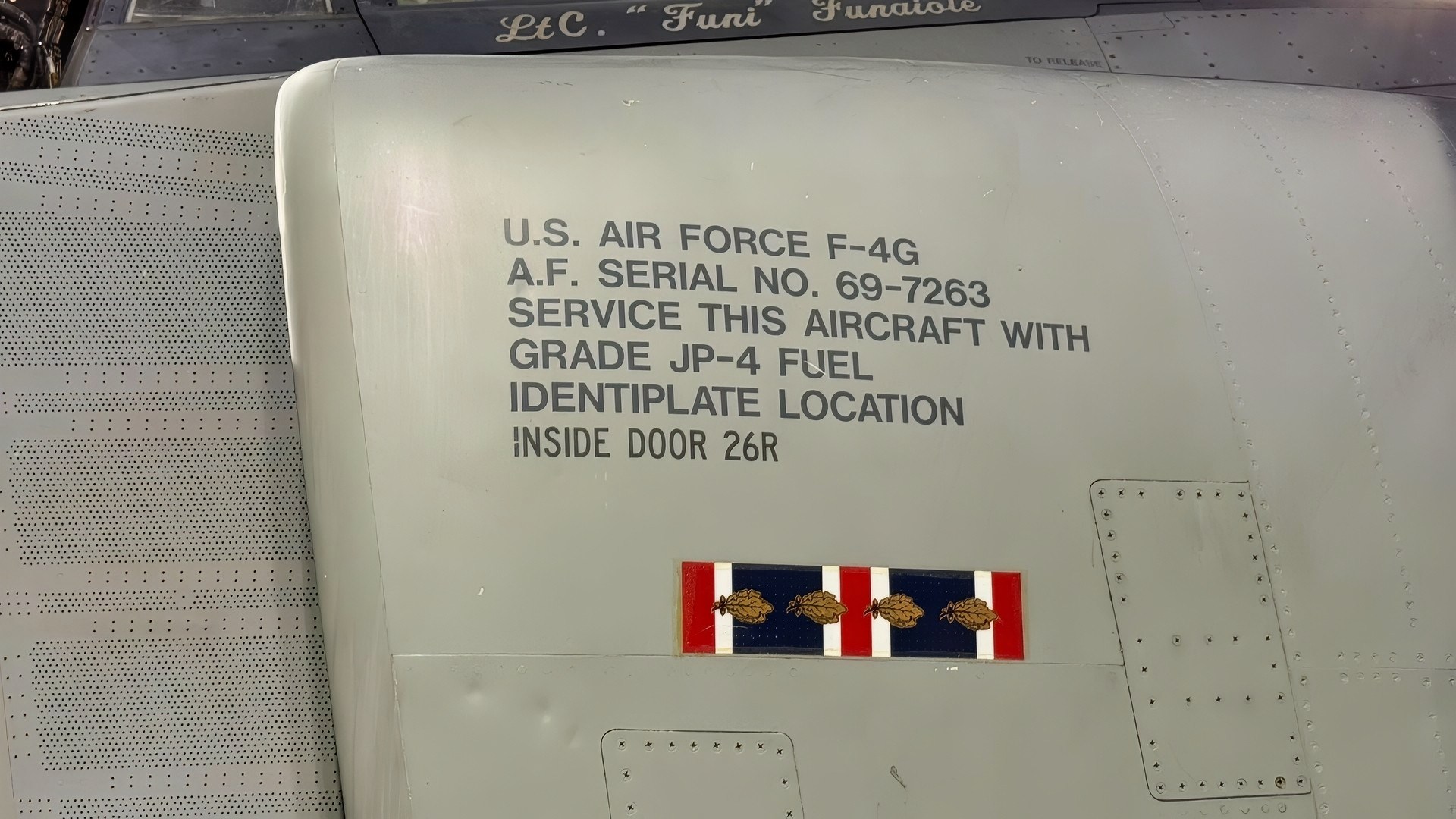
F-4G Side of Plane. Image Credit: National Security Journal.
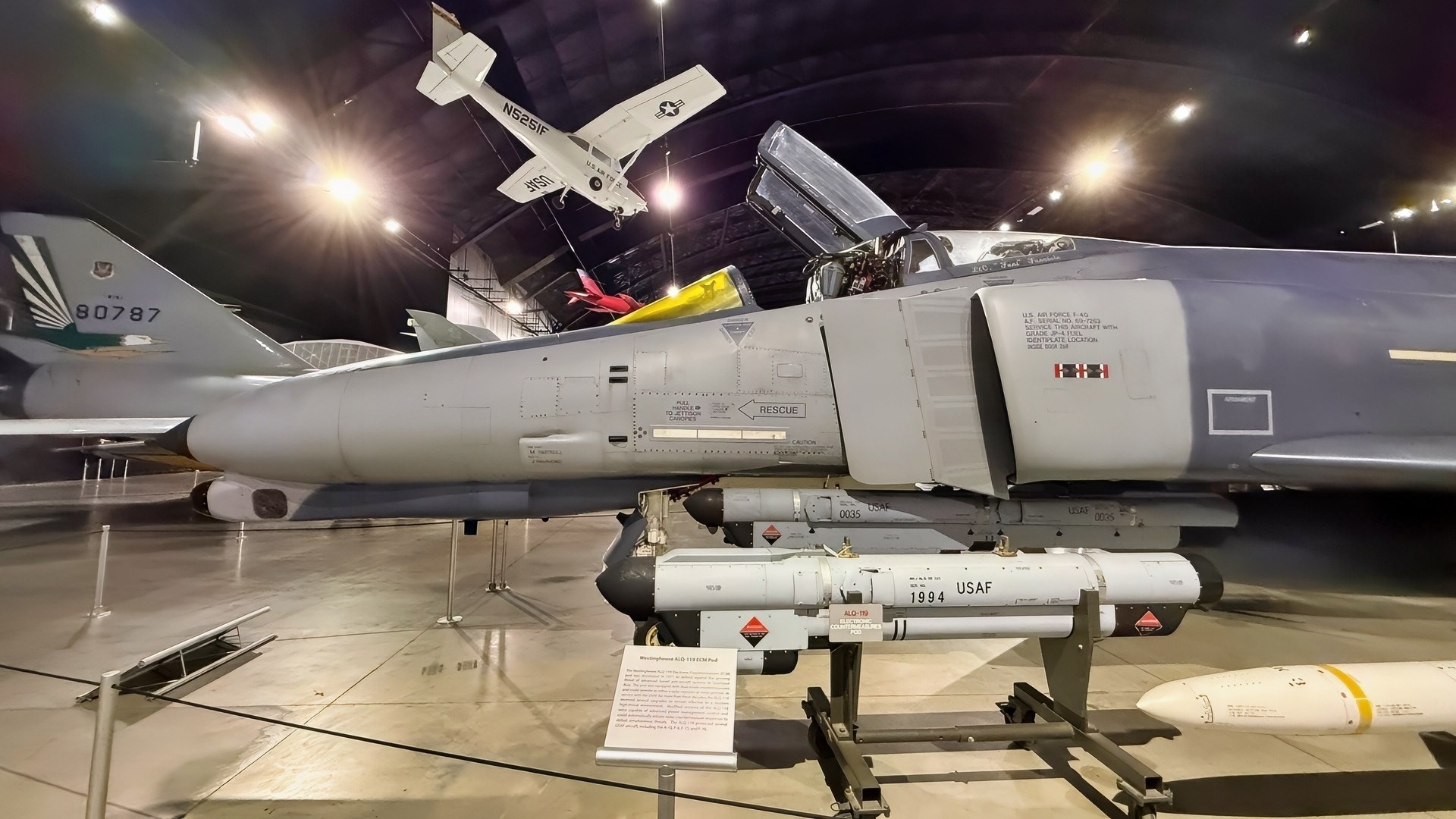
F-4G Wild Weasel. Photo Credit: Harry J. Kazianis, National Security Journal.
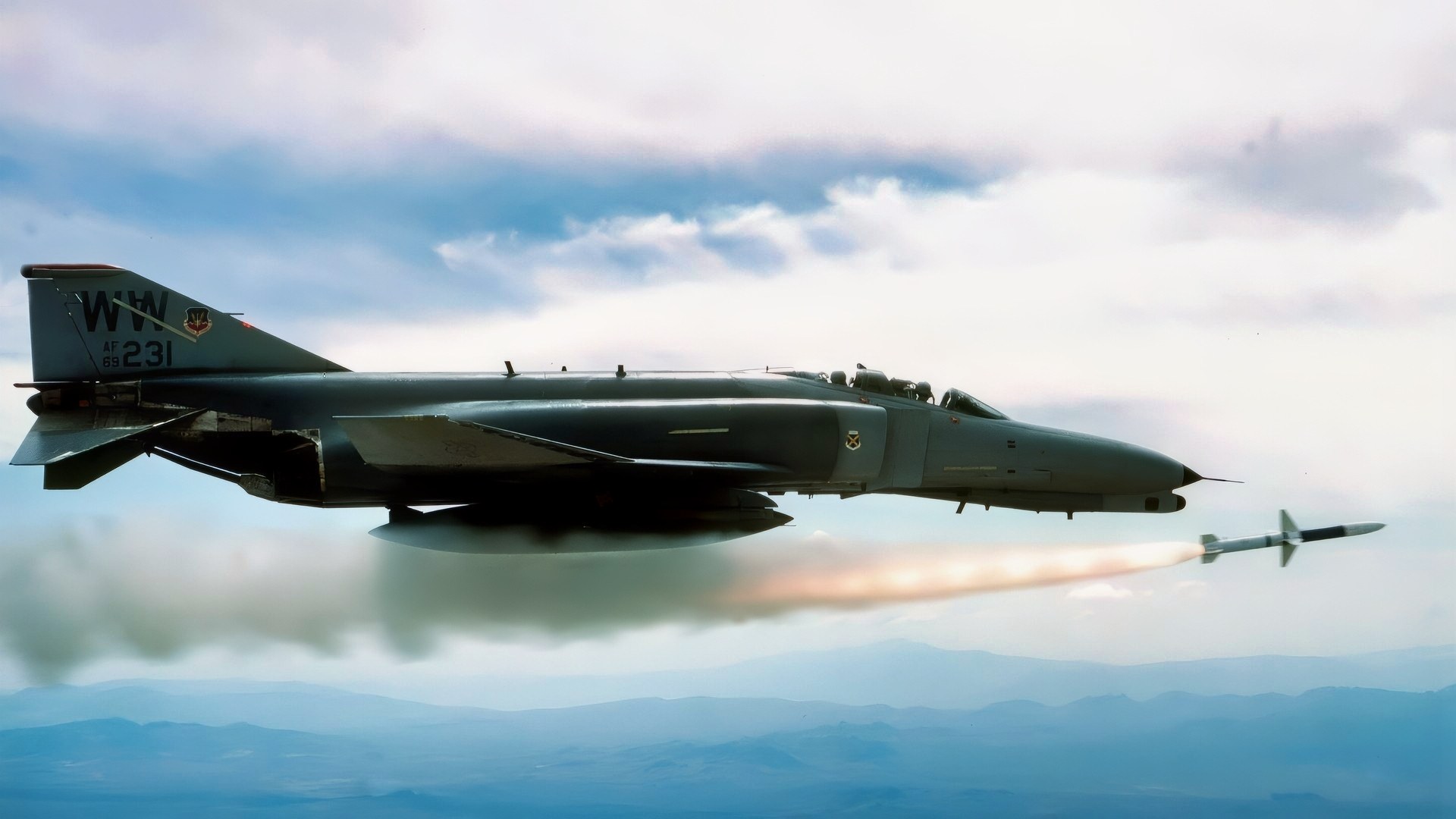
F-4G. Image Credit: Creative Commons.
The Soviet Mikoyan MiG-23 “Flogger” was designed to succeed the widely used MiG-21. The new MiG offered greater payload, range, and beyond-visual-range interception capabilities.
It featured advanced radar and a variable-sweep wing geometry that resembled the F-111 Aardvark.
The Flogger also had toughened landing gear that allowed the aircraft to operate from short runways in remote geographies. The pilot could select the wing sweep for low-speed take-off and landing or pull the wings in tight for supersonic flight.
Despite several new and intriguing features, the Flogger was ultimately a failure. Nevertheless, the Soviets produced more than 5,000 units of the aircraft.
The MiG-23MS variant was designed for foreign export and was much less capable than the domestic Soviet versions. It was equipped with a less sophisticated radar housed in a smaller radome. First delivered in 1973, NATO tabbed it the “Flogger-E.”
Meet The MiG-23 Flogger
The MiG-23 was the first Soviet fighter to field a look-down/shoot-down radar – the RP-23 Sapfir – and one of the first to be armed with beyond-visual-range missiles.
Production started in 1969, and by the time it was over, the Flogger was the most produced variable-sweep-wing aircraft in history. The MiG-23 remains in limited service with some export customers.
The Flogger did have excellent speed. Powered by a Tumansky R-29-300 turbojet with approximately 27,500 lbs of thrust, the MiG-23 could reach a speed of at least Mach 2.1, with some estimates as high as Mach 2.4, or 1,553 miles per hour.
The Flogger had one twin-barreled 23mm GSh-23L cannon. It could carry six air-to-air missiles, which were a mixture of infrared-homing close-range, AA-2 “Atoll” or AA-8 “Aphid” munitions, as well as medium-range AA-7 “Apex” missiles.
The wing-sweep settings were 16, 45, and 72 degrees; the pilot could adjust the angles while in flight.
Issues With The MiG-23 Flogger
The MiG-23 was reportedly difficult to fly and expensive to maintain, and its engines had a short service life. This contributed to the decision among Warsaw Pact nations to continue operating the older MiG-21 alongside its descendant.
Aviation analysts and NATO intelligence were never overly impressed with the MiG-23, which developed a relatively poor reputation over time. NATO considered the Flogger a serviceable or rather utilitarian aircraft. It was never the dogfighter the Soviets designed it to be.
The MiG-23’s war record was not great – or even good. Peter Suciu, a senior military editor, quoted Mark Episkopos, who said it best.
“There is no ambiguity here: the MiG-23 boasts a long, well-documented, and deeply embarrassing service record. The full extent of its failures is too great to recount in detail, but here are a few highlights.
“Over a dozen Syrian MiG-23 jet fighters were shot down by Israeli F-15s and F-16s throughout the Arab-Israeli Wars. Iraqi MiG-23 jet fighters also fared even more poorly against Iran during the Iran-Iraq War, reportedly suffering upwards of fifty losses against Iranian F-14s, F-5s, and F-4s.
“ Libyan MiG-23s were routinely outperformed by Egyptian MiG-21 jet fighters during the Libyan-Egyptian War, and two of these fighters were destroyed by two U.S. F-14 Tomcats during the 1989 Tobruk skirmish.”
As one user on one of the many aviation sites said, “the MiG-23 flies like a bullet, and turns like one.” Its record was so bad that it was slated for retirement before the MiG-21, the aircraft it was supposed to replace.
Tactics Change, and the MiG-23 Performs Better
The Soviets and their Warsaw Pact allies quickly learned that a dogfight was the last thing a Flogger pilot would choose to undertake if he wanted to live. However, aviators adjusted their tactics to exploit the Flogger’s speed, and conditions improved.
As a hit-and-run interceptor, it performed well, but that was not what it was designed for.
About the Author:
Steve Balestrieri is a National Security Columnist. He served as a US Army Special Forces NCO and Warrant Officer. In addition to writing on defense, he covers the NFL for PatsFans.com and is a member of the Pro Football Writers of America (PFWA). His work was regularly featured in many military publications.


