

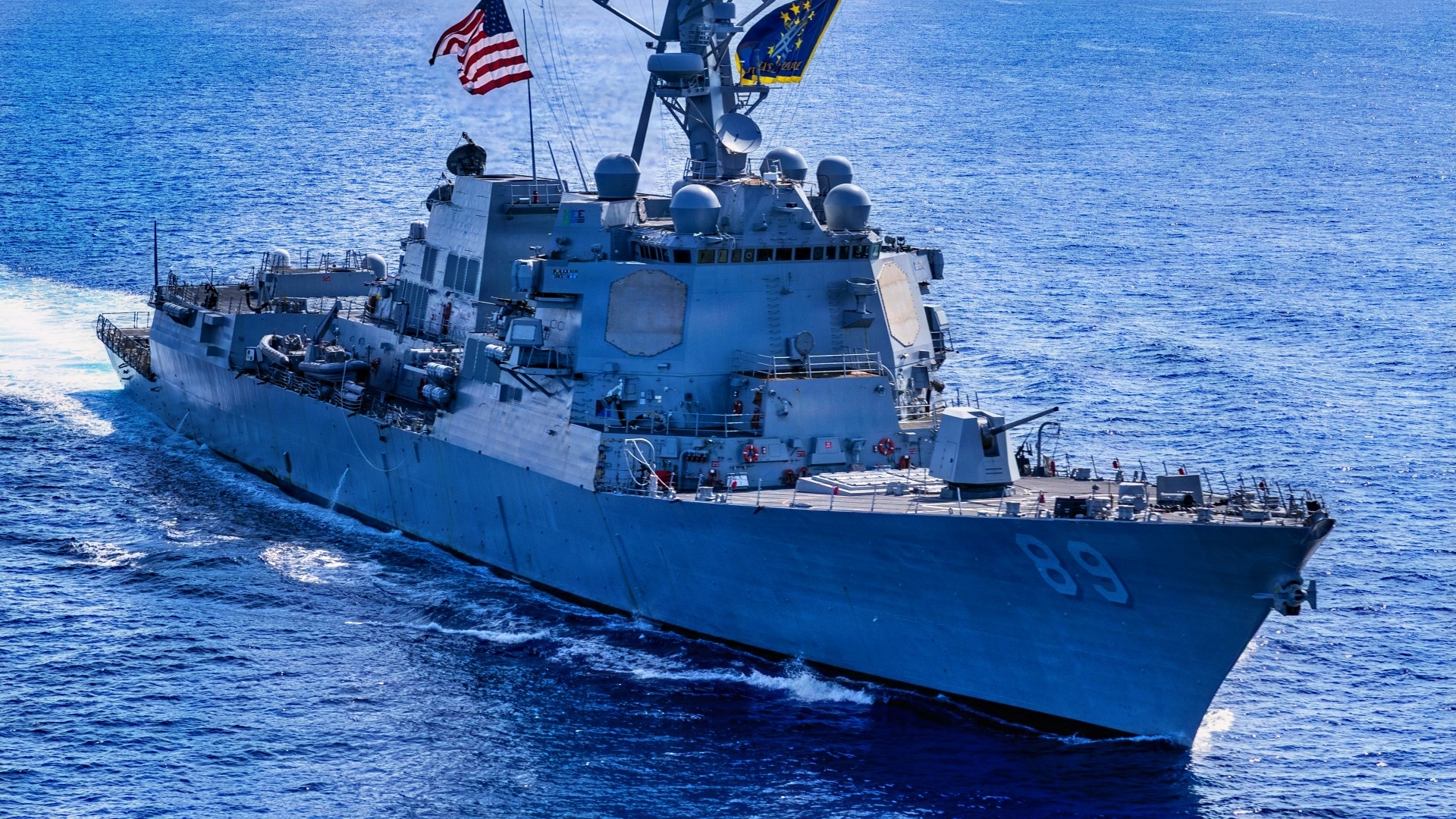
The ongoing standoff at the Strait of Hormuz has led to concerns about volatile oil prices, an ongoing war with no easy end, and a possible humiliation for the United States on the world stage.
Now, experts are warning of one other potential calamity: A possible “superspreader event” on the ships that are idle in the region.
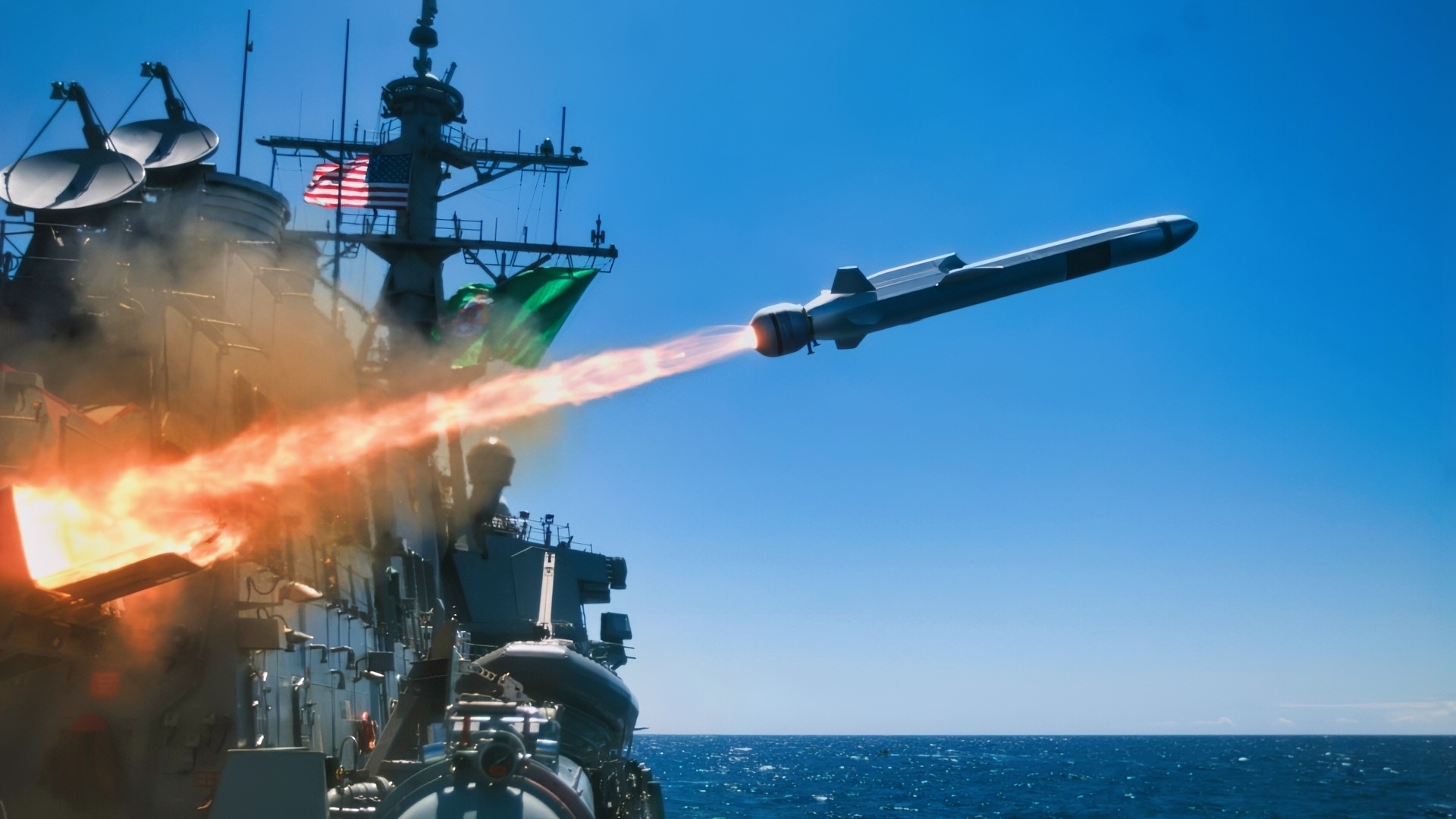
The Arleigh Burke-class guided-missile destroyer USS Fitzgerald (DDG 62), while participating in Exercise Rim of the Pacific (RIMPAC) 2024, fires the first naval strike missile from a U.S. destroyer July 18. Twenty-nine nations, 40 surface ships, three submarines, 14 national land forces, more than 150 aircraft, and 25,000 personnel are participating in RIMPAC in and around the Hawaiian Islands, June 27 to Aug. 1. The world’s largest international maritime exercise, RIMPAC provides a unique training opportunity while fostering and sustaining cooperative relationships among participants critical to ensuring the safety of sea lanes and security on the world’s oceans. RIMPAC 2024 is the 29th exercise in the series that began in 1971. (U.S. Navy photo by Mass Communication Specialist 2nd Class Jordan Jennings)
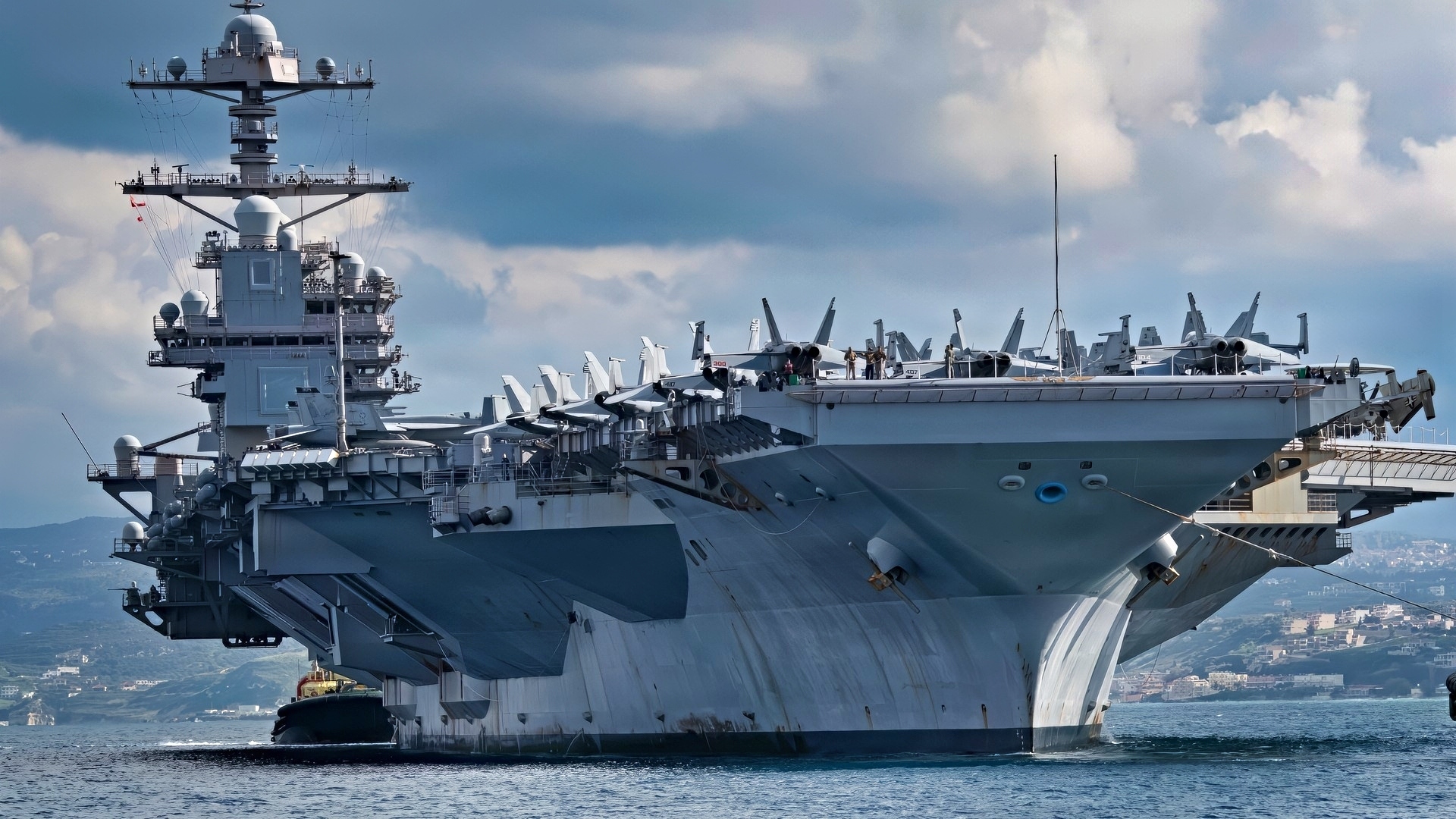
NAVAL SUPPORT ACTIVITY SOUDA BAY, Greece (Feb. 23, 2026) The world’s largest aircraft carrier, Ford-class aircraft carrier USS Gerald R. Ford (CVN 78) arrives at the NATO Marathi Pier Complex in Souda Bay, Crete, Greece, during a scheduled port visit on Feb. 23, 2026. NSA Souda Bay is an operational ashore installation that enables and supports U.S., Allied, Coalition, and partner nation forces to preserve security and stability in the European, African, and Central Command areas of responsibility. (U.S. Navy photo by Mass Communication Specialist 3rd Class Hannah Donahue)
The concern was raised in a new scientific study, published on July 22 but publicized this week, that’s titled “Closure of the Strait of Hormuz may trigger a bioinvasion super-spreader event.”
There are currently more than 1,500 ships that are idle in the Persian Gulf, and hundreds more waiting in the Gulf of Oman. Those ships tend to be crowded close together.
Attack of the Marine Organisms
Per ABC News, the large number of ships sitting idle for extended periods could lead to marine organisms attaching to the vessels, which would then end up in other ecosystems around the world once the ships depart the region.
When ships sit idle for long periods, as has been the case during the standoff, they develop “biofouling,” in which biofilm grows on them.
And the study’s author, Mario Tamburri of the University of Maryland’s Center for Environmental Science, told ABC News that it can be impossible to eliminate such species. Tamburri is listed first among the study’s about 20 authors.
Such organisms, Tamburri told ABC, can lead to “millions of dollars’ worth of damage and impact — commercial operations like aquaculture and fisheries — and change the environment.”
And while ships are treated with “anti-fouling” paint, such coating can lose effectiveness over time, leading to what the study author calls “extensive growth.” This happened during the pandemic, when many ships around the world were idle for longer than usual.
All this raises the possibility of “a large-scale, marine bioinvasion ‘super-spreader’ event as regular maritime trade in the region resumes,” the abstract of the study says.
Why this situation in particular?
According to ABC News, the organisms in that part of the world are especially “hardy” and “robust,” and have adapted to survive in the tough conditions there, whether it’s high salinity or warm temperatures.
“If you can survive high temperatures, high salinities, you can probably survive long ship voyages,” Tamburri told ABC. The ships may have already released “millions of larvae” in the months since the standoff began, The Guardian reported.
The author went on to describe the current conditions in the Strait of Hormuz, whether it’s the heat, the long idle times, and accumulation, as “probably a worst-case scenario.”
That’s because those organisms, including barnacles, mussels and algae, have been reproducing, all while sitting in a “warm soup of nutrient-rich water.”
The Washington Post also reported on the study and noted that this issue has been on the radar for years.
This goes as far back as World War II, when ships from New Zealand that had been held in British ports were blamed for the spread of Australasian barnacle to Western Europe.
In 2023, the International Maritime Organization (IMO) passed a resolution requiring ships that had been idle for 18 to 30 days to take immediate action to reduce biofouling.
What Can Be Done?
What are the solutions to this problem to head off a major calamity?
According to an ABC News report, most ports offer “in-water cleaning services” for ships, in which divers scrape off biofouling.
The authors of the paper recommend a further measure: that divers use a “vacuum-like device” so the organisms don’t end up back in the water and later attach to another ship.
The authors also recommend that more regulations be put in place to turn away ships that are “heavily fouled.”
The study, in its “Recommendations” section, also calls for ships to “forecast vessel routes and first ports of call” when leaving the region and to implement “early detection and rapid response at high-risk ports.” In addition, the authors call for biosecurity warnings to be widely issued to port authorities, shipping operators, and others along shipping routes.
The most important factor in avoiding disaster, the authors conclude, is “the speed, coordination, and effectiveness of the responses that follow.”
About the Author: Stephen Silver
Stephen Silver is an award-winning journalist, essayist, and film critic, and contributor to the Philadelphia Inquirer, the Jewish Telegraphic Agency, Broad Street Review, and Splice Today. The co-founder of the Philadelphia Film Critics Circle, Stephen lives in suburban Philadelphia with his wife and two sons. For over a decade, Stephen has authored thousands of articles that focus on politics, national security, technology, and the economy. Follow him on X (formerly Twitter) at @StephenSilver, and subscribe to his Substack newsletter.


