

The Iran War Has Not Hit China Hardest. It Is Making Beijing’s Domestic Problems More Expensive: A South China Morning Post report published on August 3 argues that the Iran war has imposed a smaller economic shock on China than on many other major economies.
Economist Mao Zhenhua said the conflict could still alter Beijing’s policy calculations by forcing officials to give more attention to weaknesses already inside the Chinese economy.
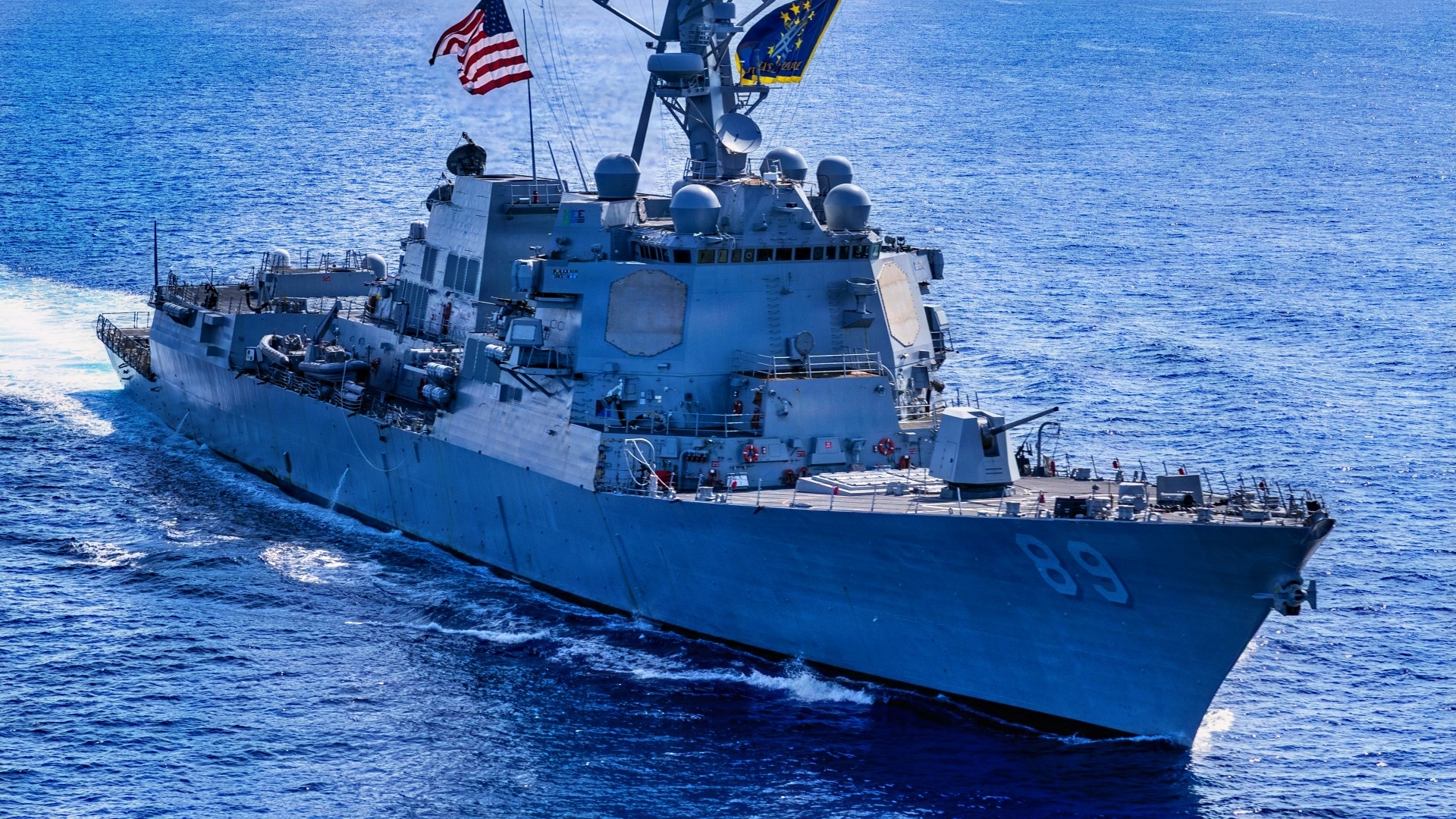
U.S. Navy Arleigh Burke-class guided-missile destroyer USS Mustin (DDG 89) steams in the Indian Ocean, July 2, 2026. Mustin is forward-deployed and assigned to Destroyer Squadron (DESRON) 15, the Navy’s largest DESRON and U.S. 7th Fleet’s principal surface force. U.S. 7th Fleet, the Navy’s largest forward-deployed numbered fleet, routinely interacts and operates with allies and partners in preserving a free and open Indo-Pacific. (U.S. Navy photo by Mass Communication Specialist 2nd Class Timothy Dimal)
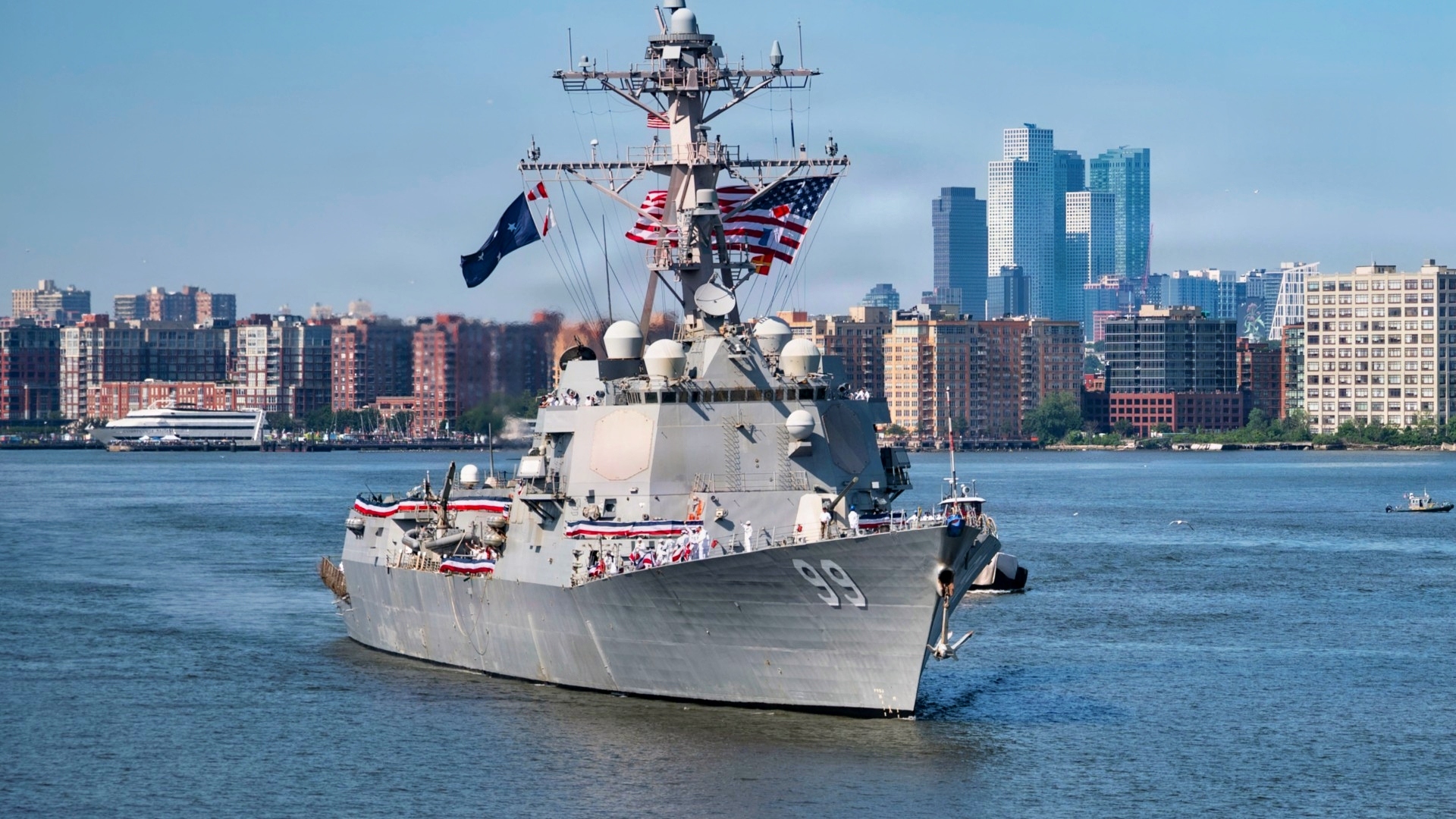
Arleigh Burke-class guided-missile destroyer USS Farragut (DDG 99) arrives at Pier 88 during the International Naval Review (INR) 250 Parade of Sail in New York, July 4, 2026. The Parade of Sail marks the opening of INR 250, a multinational maritime celebration commemorating the 250th anniversaries of the U.S. Navy, Marine Corps, and the nation, honoring the sea services’ enduring commitment to defending the United States and strengthening partnerships with allied and partner nations. For 250 years, our Navy and Marine Corps stood the watch—constant, unabated in mission, faithfully preventing crisis and resolute in defending America’s independence. INR 250 honors the Navy, Marine Corps, and Coast Guard’s enduring role on, under, and above the seas. (U.S. Navy photo by Mass Communication Specialist 2nd Class Janiel Adames)
The timing strengthens his argument; that’s for sure.
China’s economy grew 4.3 percent in the second quarter, down from 5 percent during the first three months of 2026 and below the lower end of the government’s annual target.
Manufacturing and exports remained stronger than household spending, investment, and the property sector.
China entered the war with an unusually large energy cushion. The U.S. Energy Information Administration estimates that Beijing accumulated nearly 1.4 billion barrels of strategic and commercially held crude by the end of 2025 after adding an average of 1.1 million barrels per day during the year.
The protection is not free, of course.
China raised retail price caps on gasoline and diesel again on August 1, with the increases reaching 685 yuan and 655 yuan per metric ton. Official factory activity also contracted in July as new orders weakened and production costs remained elevated.
China’s Oil Reserve Blunted the First Shock
China’s stockpiling strategy explains why the initial shock remained manageable. Beijing spent 2025 buying oil at low prices, then used those inventories as a national buffer when traffic through the Strait of Hormuz collapsed.
Electric vehicles, rail transport, domestic coal, and pipeline supplies from Russia added flexibility. The crisis also showed why China treats energy security as economic statecraft, not only a naval problem.
Beijing also cut purchases rather than chase every expensive cargo.
EIA data show crude imports averaged 8.1 million barrels per day in the second quarter, 32 percent below the first quarter and far beneath the 2025 record.
The sharp reduction helped restrain world prices, but it also reduced refinery activity and exposed how much demand China had to remove to protect its balance sheet.
That cushion does not eliminate China’s geographic exposure. EIA data show China accounted for 48 percent of the import volumes moving through Hormuz in the first half of 2025.
Beijing has alternative suppliers and overland pipelines, but neither Russia nor domestic production replaces Gulf crude at the scale required to keep China’s refineries operating normally indefinitely.
The War Is Amplifying China’s Existing Demand Problem
Higher energy costs arrived when Chinese companies already faced weak pricing power.
Producer prices rose 4.1 percent in June, their fastest annual increase in almost four years, while consumer inflation slowed to 1 percent. Reuters reported that manufacturers were struggling to pass higher costs to buyers because domestic demand remained soft.
July made the imbalance harder to ignore. The official manufacturing purchasing managers’ index fell to 49.2 from 50.3, while the non-manufacturing index dropped to 49, its weakest level since December 2022.
China’s technology and equipment sectors continued expanding, but consumer-goods producers and energy-intensive industries contracted.
The Iran war, therefore, matters less as the original cause of China’s slowdown than as an amplifier. It raises transport and production costs, weakens customers in Europe and Asia, and makes households more cautious.
The disruption also reinforces Beijing’s concern about strategic chokepoints while the property slump, local-government debt, and weak consumption continue to restrict growth at home.
Beijing Is Still Choosing Incremental Support
The Communist Party’s Politburo acknowledged the pressure on July 30. Its official statement promised a stronger counter-cyclical policy, faster fiscal action, and additional support for domestic demand.
It also emphasized infrastructure, artificial intelligence, equipment upgrades, and consumer trade-in programs rather than a large household-centered rescue package.
That approach protects industrial capacity and gives local governments projects to fund. It does less to repair household confidence after years of falling property values and uncertain employment.
China’s energy preparations reduced the immediate danger of a supply emergency, but oil inventories do not generate consumer income or resolve the debt and property constraints inside the growth model.
Mao’s warning points to the choice Beijing has tried to postpone: whether to continue leaning on production and public investment or to shift more resources toward household demand.
The July 30 Politburo statement promised “pragmatic and effective incremental policies,” but by August 3, no large new stimulus package or direct national income-support program had been announced.
About the Author: Harry J. Kazianis
Harry J. Kazianis (@Grecianformula) was the former Senior Director of National Security Affairs at the Center for the National Interest (CFTNI), a foreign policy think tank founded by Richard Nixon based in Washington, DC. Harry has over a decade of experience in think tanks and national security publishing. His ideas have been published in the NY Times, The Washington Post, The Wall Street Journal, CNN, and many other outlets worldwide. He has held positions at CSIS, the Heritage Foundation, the University of Nottingham, and several other institutions related to national security research and studies. He is the former Executive Editor of the National Interest and the Diplomat. He holds a Master’s degree focusing on international affairs from Harvard University.


