
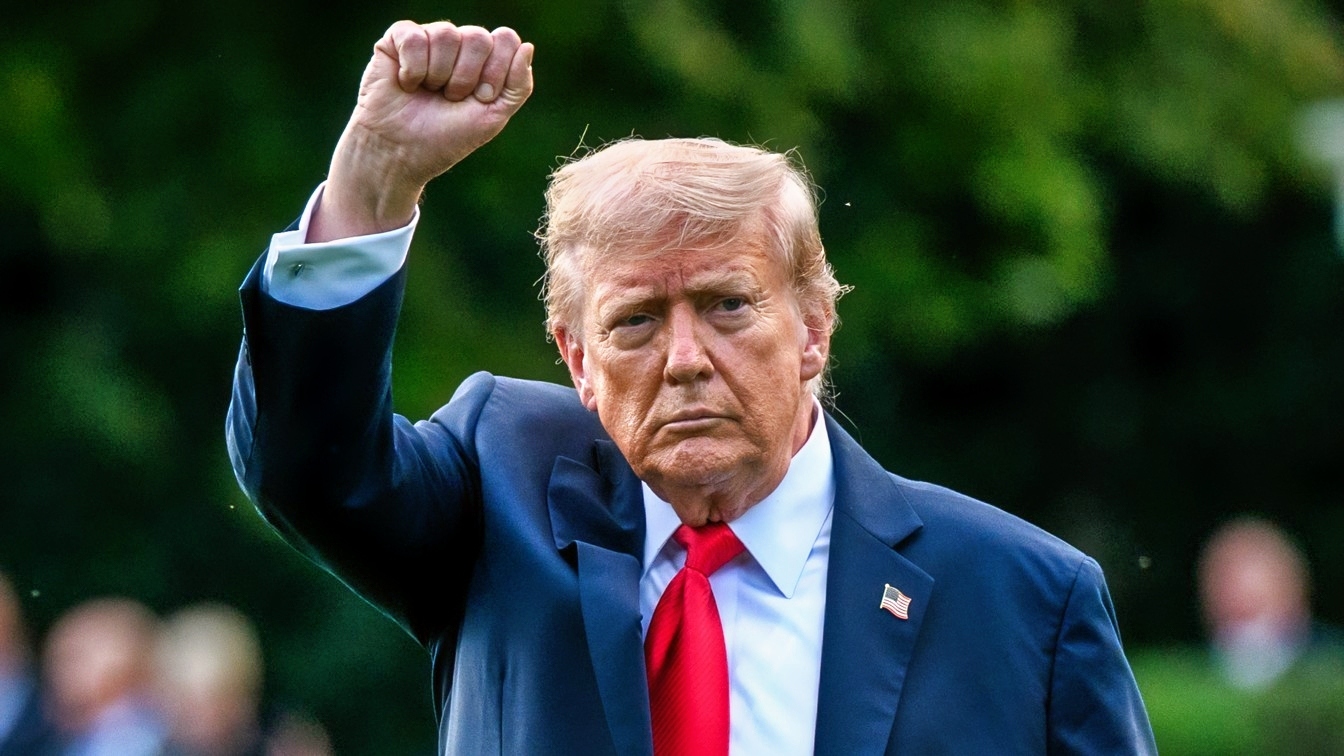
For nearly six months now, U.S. President Donald Trump has been trying to force Iran to capitulate through sheer military power – but now, with Tehran refusing Washington’s terms and threatening to prevent any oil from leaving the Persian Gulf, the White House is betting that economic pressure can achieve what thousands of strikes so far have not.
Washington this week announced its plans to make the economic cost of continuing the war unbearable for Tehran while also threatening countries that keep the Iranian economy alive.

U.S. Airmen from the 393d Bomber Generation Squadron inspect and secure protective covering on the B-2 Spirit stealth bomber at Whiteman Air Force Base, Mo., July 25, 2024. Crew chiefs directly support the B-2 by inspecting and maintaining it daily to ensure its mission ready at a moment’s notice. (U.S. Air Force photo by Airman 1st Class Bryce Moore)
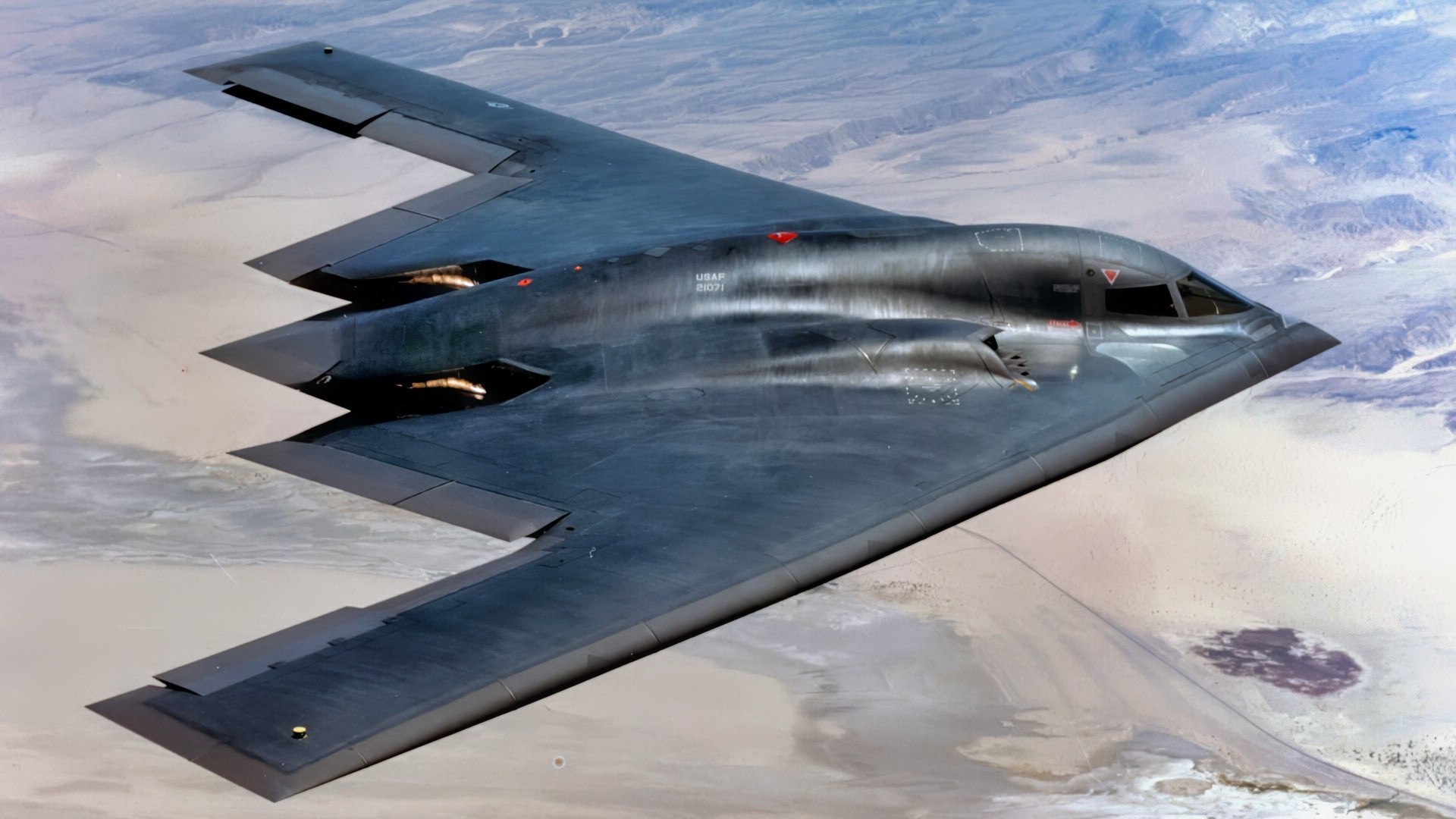
FILE PHOTO — The B-2 Spirit is a multi-role bomber capable of delivering both conventional and nuclear munitions. A dramatic leap forward in technology, the bomber represents a major milestone in the U.S. bomber modernization program. The B-2 brings massive firepower to bear, in a short time, anywhere on the globe through previously impenetrable defenses. (U.S. Air Force photo)
But that strategy carries considerable risks, because Iran can retaliate economically by further disrupting Gulf energy exports, leaving the Trump administration to decide whether it is really prepared to punish major trading partners like China.
And inside Iran, there are clear disagreements over whether the country should negotiate or prepare for a generations-long conflict.
What Did the Strikes Actually Achieve?
The U.S. and Israeli military campaign began on February 28 and inflicted enormous damage on Iran, with its military facilities, missile infrastructure, air defenses, ports, and nuclear sites all having been targeted.
Then, the U.S. naval blockade dramatically restricted Iranian trade and continues to prevent the country from generating vast amounts of revenue.
But that military damage and economic pressure has so far not produced the outcome Washington wanted, as the regime in Tehran appears to have become more hardline and committed to rebuilding and expanding its nuclear program.
The government remains in power, its armed forces still retain the ability to threaten U.S. forces and regional shipping, and Tehran is still able to exercise some influence over traffic moving through the Strait of Hormuz – even as the U.S. expands its convoy operations through a southern Omani route.
And, famously, the 60-day “memorandum of understanding” deal ultimately fell through after Iranian forces continued strikes on commercial vessels moving through the Strait of Hormuz.
Washington has, therefore, demonstrated that it can destroy Iranian infrastructure, and Vice President JD Vance has repeatedly touted U.S. forces’ success in destroying the country’s conventional Air Force and US Navy.
But those assets had limited value for Iran in the first place, and so far the U.S. has not shown it can compel Iran’s leaders to accept its terms.
Trump Turns to Economic Warfare
Trump is now betting that expanding economic warfare will finish the job, with U.S. Treasury Secretary Scott Bessent announcing on Monday, August 24, a dramatic new measure that promises to further isolate Tehran from the global economy.
Under “Operation Economic Outcast,” the Trump administration has sanctioned roughly 60 Iran-linked individuals, companies, and vessels, and is looking to expand the use of secondary sanctions to include shipping and aviation, technology, gold, and digital assets.
Any country or company that continues to do business with Tehran has been warned that they could also lose access to the U.S. financial system.
Importantly, though, such an extreme measure would ultimately hurt the United States and not just Tehran.
China Calls Trump’s Bluff
For the plan to work, those companies and countries must bet that President Trump is willing to incur that kind of economic damage.
So far, major players are calling Trump’s bluff, with China insisting it will not comply with Washington’s demands and will only do what serves its own interests.
On Tuesday, August 25, Beijing made that position even clearer when Foreign Ministry spokesman Lin Jian responded to a question about whether China would change its relationship with Iran to comply with Washington’s demands.
“Cooperation between China and Iran has always been conducted within the framework of international law and should not be interfered with or disrupted,” Lin said.
“China has already stated many times that it firmly opposes illegal unilateral sanctions … China will take all necessary measures to firmly safeguard its own rights and interests,” he continued.
He also rejected the premise behind Trump’s strategy and argued that economic warfare will not solve the problem with Iran and warned that the measures would cause harm to the global economy and financial system.
The comments clearly refuse to comply with Washington’s demands and pose a major problem for the White House because Beijing buys more than 80% of Iran’s shipped oil and is the country’s largest trading partner.
The Trump administration must, therefore, decide whether to follow through on its threats against Chinese companies and financial institutions if Beijing continues trading with Iran.
So far, though, Washington has avoided that confrontation and likely hopes that the smaller sanctions, which have included more than a dozen Chinese and Hong Kong companies, will be as far as the measures need to go. Major Chinese banks and refineries have not yet been targeted.
But Iran is still not complying. And if Iran can’t ship oil to China anyway, the measures may ultimately prove worthless.
So, will it work? Time will tell, but polls show most Americans think we have at least another year of conflict ahead of us.
About the Author: Jack Buckby
Jack Buckby is a British researcher and analyst specializing in defense and national security, based in New York. His work focuses on military capability, procurement, and strategic competition, producing and editing analysis for policy and defense audiences. He brings extensive editorial experience, with a career output spanning over 1,000 articles at 19FortyFive and National Security Journal, and has previously authored books and papers on extremism and deradicalization.


