


Key Points and Summary – Chinese researchers claim a major leap in radar-absorbent materials that could sharply boost the stealth of future PLA aircraft.
-One new coating, NCO-2, uses carbonized loofah fibers loaded with nickel-cobalt oxide to create a 4 mm layer that reportedly absorbs over 99.99% of Ku-band radar, cutting radar cross-section from fighter-size to nearly drone-size levels.
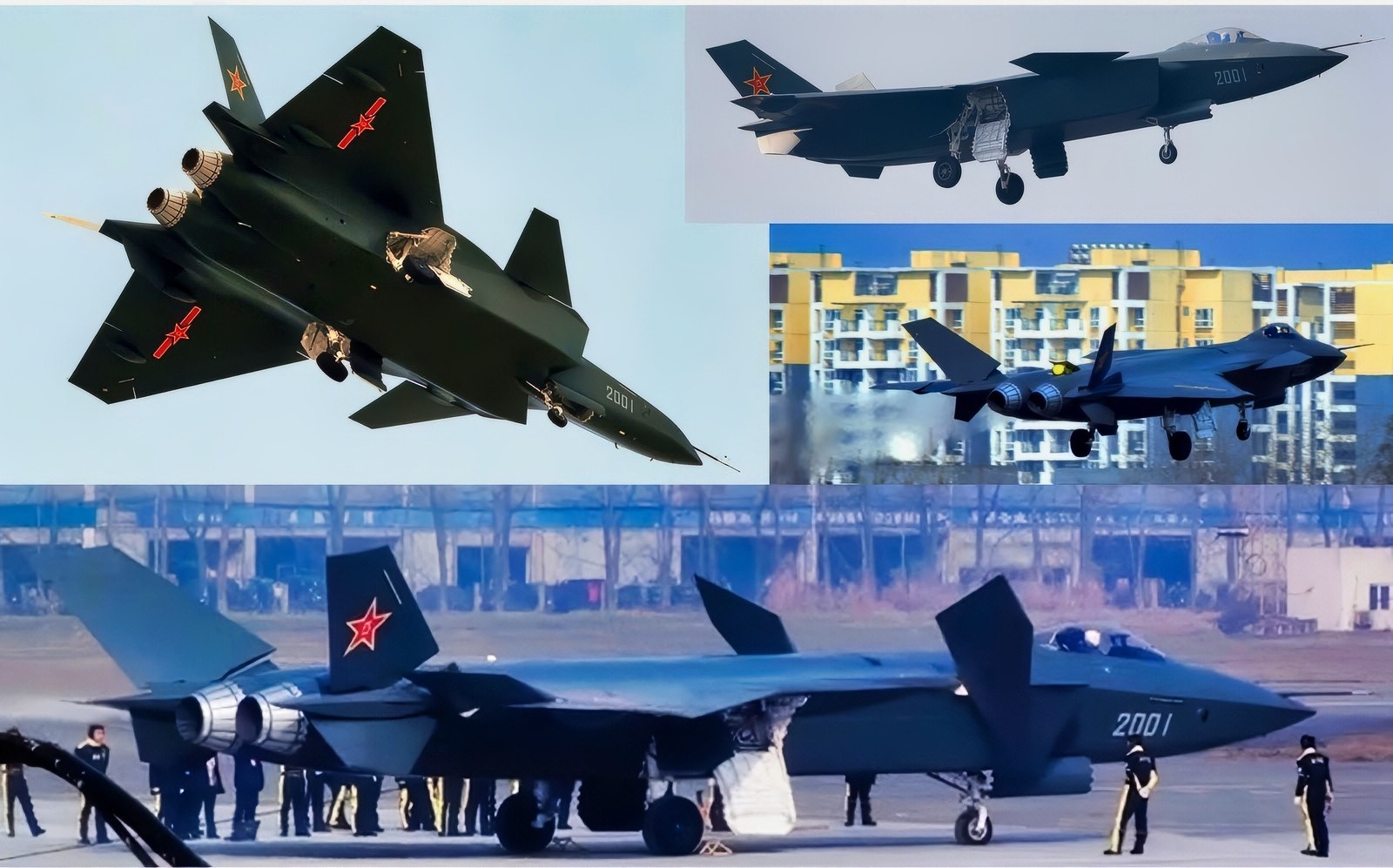
J-20 Fighter Maiden Flight. Image Credit: X Screenshot.
-A second innovation is a graphene-on-silica “metasurface” just 0.1 mm thick that survives 1,000°C and high-speed airflow while maintaining strong multi-band absorption.
-Together they promise thinner, tougher, hotter-running stealth skins—but scaling production, managing costs, and countering new Western radar tactics remain serious hurdles.
China’s Stealth Fighter Could Soon Get a New Upgrade That Changes the Game
China’s J-20 Mighty Dragon, J-35, J-35A, and J-36 fighters certainly attract a lot of headlines. And soon, they might be getting a massive upgrade.
In October 2026, Chinese researchers announced that the country had made a breakthrough in radar-absorbent coatings.
According to a research paper published in Advanced Materials, scientists successfully created an ultra-thin, highly durable material that blocks radar waves even at high temperatures.
This new material, if widely produced, could significantly improve the stealth profile of China’s air fleet without the high maintenance requirements of traditional radar-absorbent materials.
While we don’t know how this would transfer over to the J-20 or J-35A, Beijing has to be excited, if reporting out there is accurate.
What’s Inside China’s Newest Stealth Coatings
The first material, known as NCO-2, is created by carbonizing natural loofah fibers and embedding them with nickel-cobalt oxide nanoparticles.
This approach results in a porous, three-dimensional network that is only about four millimeters thick yet capable of absorbing more than 99.99 percent of incident electromagnetic waves in the Ku-band, a frequency range critical for radar detection from satellites and ground stations.
By reducing radar signal reflection by up to 700 times, this coating can shrink an aircraft’s radar cross-section from 50 square meters to less than one square meter, making it nearly invisible to conventional radar systems, according to Chinese claims.
The second innovation involves a graphene-based metasurface (a meta surface, for those who don’t know, is an artificially designed two-dimensional material that controls the behavior of electromagnetic waves) integrated into a silica fiber membrane.
This ultra-thin material, measuring just 0.1 millimeters, is patterned with a laser to create a tunable surface impedance that efficiently absorbs radar waves across multiple frequency bands.
What makes this coating particularly remarkable is its ability to withstand temperatures up to 1,000 degrees Celsius, a property that makes it suitable for high-speed and potentially hypersonic aircraft.
Graphene’s exceptional thermal conductivity, combined with silica’s heat resistance, ensures that the material remains stable under extreme aerodynamic and thermal conditions, even at airflow speeds of 200 meters per second.
More Heat Resistant and More Durable
The loofah-derived composite leverages its porous architecture to trap radar waves through multiple internal reflections, prolonging their interaction with the material and enhancing absorption.
It combines magnetic losses from nickel-cobalt oxide nanoparticles with dielectric and conductive losses from carbonized loofah fibers, converting radar energy into heat.
Impedance matching with air further minimizes reflections, ensuring that incoming radar signals are absorbed rather than reflected.
The graphene metasurface operates differently but with equal sophistication. Its laser-patterned structure allows precise control over surface impedance, enabling efficient absorption across a wide frequency range. Radar energy is converted into heat and dissipated rapidly thanks to graphene’s high thermal conductivity. This design not only reduces radar reflection to levels as low as -42 decibels but also adds negligible weight to the aircraft, an essential factor for performance at high speeds.
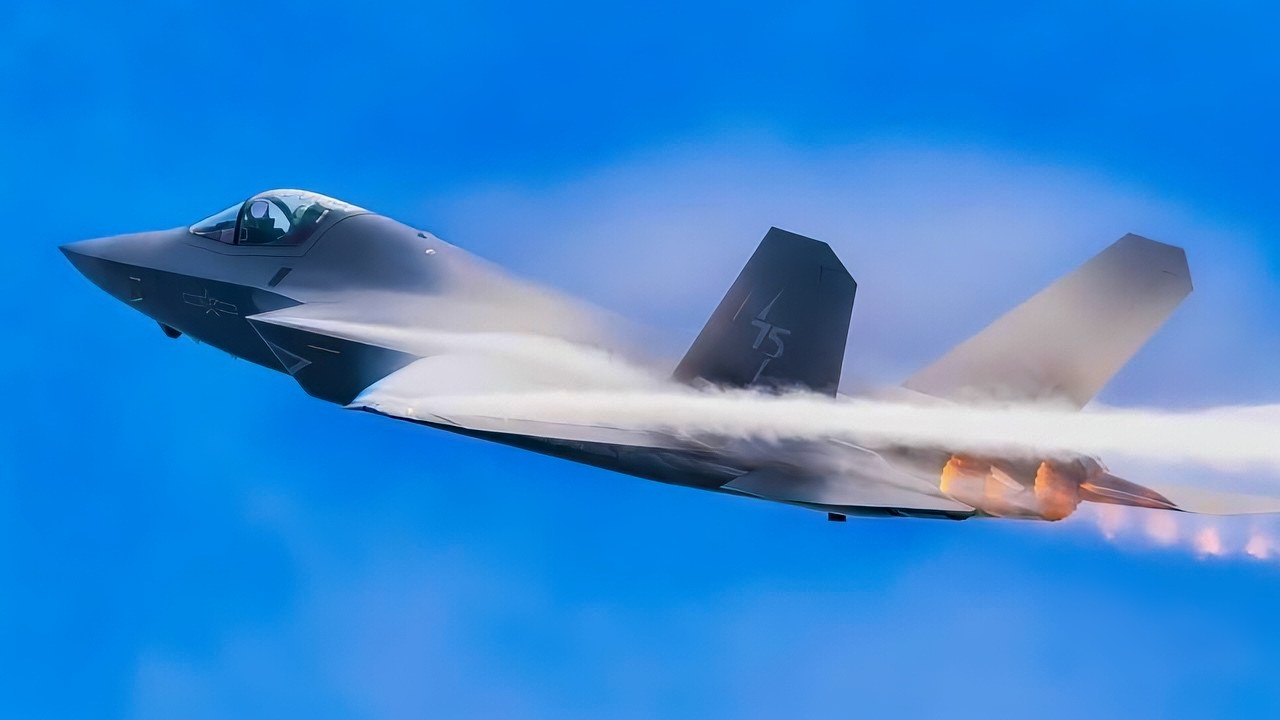
J-35A Fighter in the Clouds. Image Credit: Chinese Weibo.
Advantages Compared to Traditional Stealth Coatings
Compared to traditional radar-absorbing materials, these new coatings offer several advantages. Conventional stealth coatings often require thicknesses of several centimeters to achieve similar absorption, adding weight and drag that compromise aircraft performance.
In contrast, China’s loofah-based material is only four millimeters thick, and the graphene metasurface is virtually paper-thin. The materials are also incredibly heat-resistant.
Traditional coatings degrade under the intense thermal loads experienced by supersonic aircraft, whereas the graphene-based material remains stable at temperatures that would destroy conventional RAM paints.
Furthermore, these coatings provide multi-band performance, addressing the growing threat of anti-stealth radars that operate outside the X-band. The loofah composite excels in the Ku-band, while the graphene metasurface can be tuned for broader frequency ranges, including L-band and P-band.
These new materials are also more flexible and durable than other coatings in use.
The graphene coating behaves like a cloth, resisting aerodynamic stress and thermal cycling, while the loofah composite is lightweight yet structurally robust thanks to its carbon scaffold.
Sustainability adds another layer of appeal, as the loofah-based material uses biomass-derived carbon, offering a cost-effective and environmentally friendly alternative to exotic composites.
China is Stepping up its Stealth Game: J-20 and J-35A Upgrades Coming?
The application of the new materials is blatantly apparent.
The PLAAF has just upgraded its stealth fleet, if this is all accurate. By dramatically reducing radar cross-sections, these coatings could render aircraft nearly invisible to space-based radar systems.
This capability would redefine aerial stealth in an era of global surveillance.

J-35A Fighter at Le Bourget Air Show. Image Credit: Author/National Security Journal.
They are likely candidates for integration into China’s next-generation fighters and hypersonic platforms, and their applications could extend beyond aviation to stealth naval vessels, satellite payload protection, and electromagnetic shielding for high-temperature electronics.
China has certainly been improving the quality of its RAM coatings over the last decade, but many challenges remain before these materials can be mass-produced.
Scaling up production for large aircraft surfaces is complex, particularly for the graphene metasurface, which requires precise laser patterning.
Cost considerations and maintenance complexity are significant problems for all stealth aircraft, and who knows what the price tag could be for these new materials?
Additionally, the U.S. may respond by developing radar systems that operate outside the optimized absorption bands or by deploying multi-static radar networks to counter these stealth measures.
Competition has a way of stirring innovation, as they say.
You bet the U.S. military will be watching China’s J-20 and J-35A fighters for changes in the next few months for sure.
About the Author: Isaac Seitz
Isaac Seitz, a Defense Columnist, graduated from Patrick Henry College’s Strategic Intelligence and National Security program. He has also studied Russian at Middlebury Language Schools and has worked as an intelligence Analyst in the private sector.


