

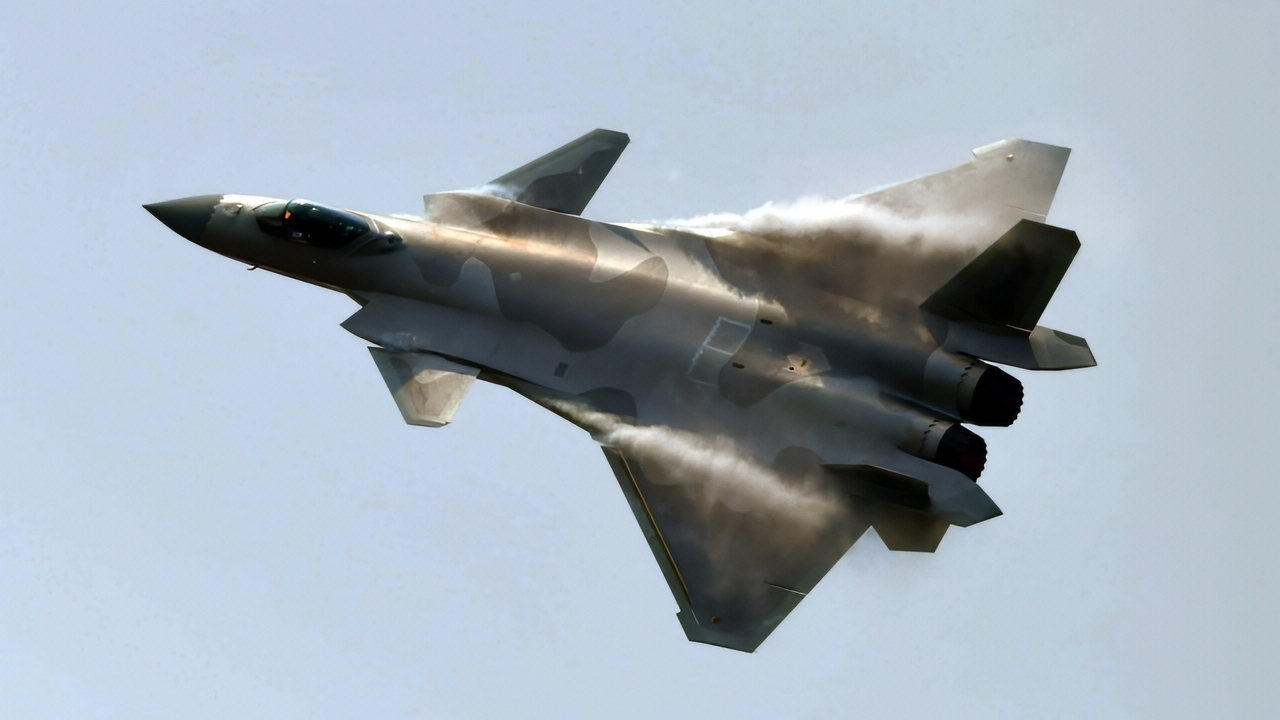
Article Summary – China’s J-20 program is shifting from prototype prestige to raw mass.
-The new two-seat J-20S hints at a doctrine built around teaming stealth fighters with loyal wingman drones, with the back-seater acting as mission commander for networked formations.
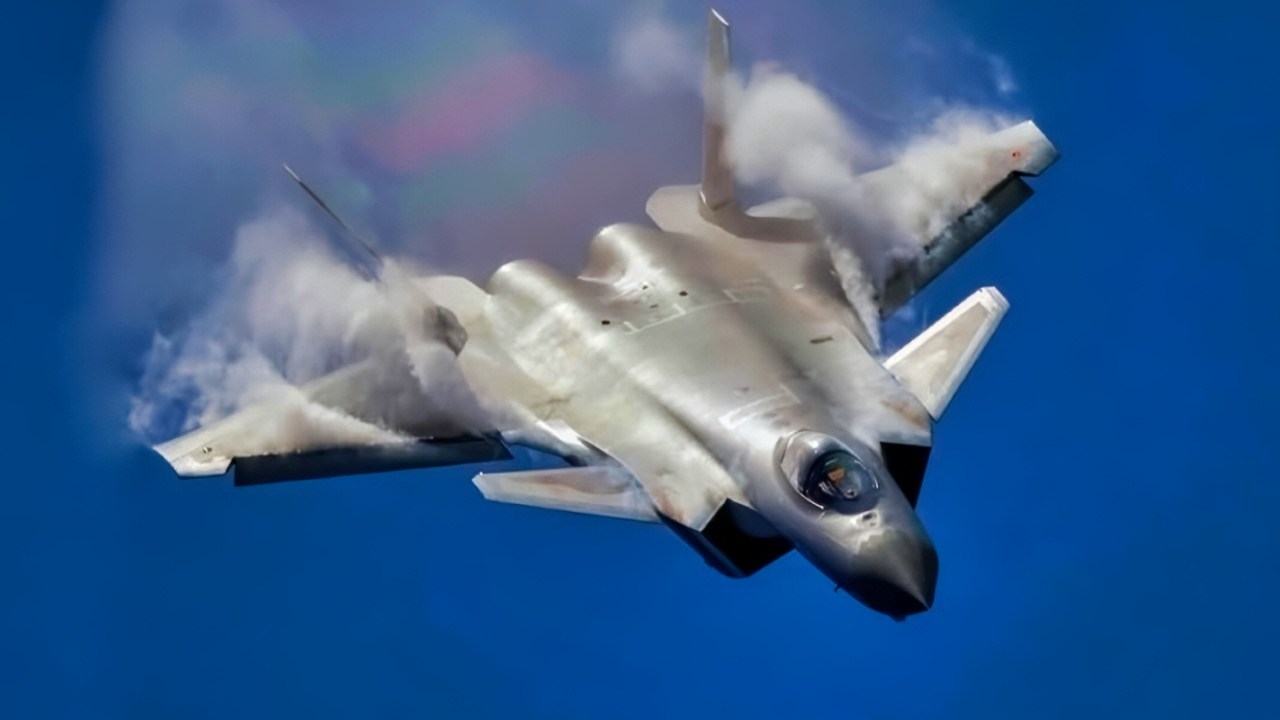
J-20S Fighter Chinese Internet Image.
-At the same time, Beijing is rapidly expanding its fifth-generation fleet, with estimates of 300 J-20s and production rates that may far outpace U.S. output.
-Persistent engine issues appear to be easing as China consolidates its aerospace base.
-Questions remain about pilot quality and integration, but the strategic signal is clear: China is building for a high-end fight, at scale.
China Is Building J-20s Faster Than America Can Respond. Now What?
Though much ink has been spilled about individual Chinese combat aircraft and the rapid progress Beijing has made in fifth-generation fighter technology, the conversation has shifted to how much mass China could bring to a fight in the Indo-Pacific.
China’s J-20S fighter is not a new aircraft, but it is the world’s first two-seater stealth fighter jet, and it gives a hint of the capabilities it would have over its single-seat predecessor. With a lengthened airframe to accommodate a second seat behind the pilot, the J-20S indicates an emphasis on operations alongside China’s burgeoning fleet of unmanned but armed aircraft. Here’s what we know.
Two is Better than One?
“Having one more pilot means having one more mission commander. In the era of fifth-generation fighter jet, the addition of a pilot to the J-20S is like a number ten player in soccer, who could both score points on his own and command the members of the warplane formation in combat,” an individual knowledgeable about the J-20 explained to the Global Times.
Typically, a second seat in the cockpit has been reserved for a Weapon Systems Officer, who is responsible for detecting adversary aircraft on radar and engaging them with the jet’s weapons. Today’s newer crop of aircraft, however, smudges the stark distinction between pilot and WSO, with both individuals able to take over the other’s duties in a pinch.
“In the past, the function of the back seat of a two-seat fighter jet was used to train new pilots or for the second pilot to operate airborne weapons, allowing the front seat pilot to focus on flight missions. However, the addition of a second pilot to the J-20S may not have been for these tasks,” the Global Times added, quoting another individual.
Loyal Wingmen and Production Numbers
The J-20 is significantly larger than either the F-35 stealth fighter or its air superiority relative, the F-22 Raptor. The J-20’s larger size, even in its base, single-seat variant, affords the jet a great deal of internal volume for weapons or fuel, raising the prospect of a jet with more extended range and higher payload capacity than its American counterparts.
But in the future, the J-20, as well as other aircraft, may find themselves not alone, and not necessarily in formation with other manned aircraft, but flying alongside Loyal Wingmen-type unmanned drones.
These drones may be optionally armed and represent an area of aviation where the Chinese are making significant strides.
Beijing is also making rapid progress in expanding its aircraft fleet.
A report from the Mitchell Institute for Aerospace Studies, a leading US aerospace think tank, presented China’s production capacity in stark terms. “China has an estimated 2,225 fighters in its inventory,” the Mitchell Institute report said, “of which 1,311 are 4th-generation and 320 are 5th-generation aircraft.”
“With a production rate reportedly increasing to 120 J-20s a year, the PLAAF’s acquisition of 5th-generation jets almost triples that of the USAF. There is little data available regarding readiness, but assuming 70 percent of their fleet is combat-coded and has the same 70 percent MC rate that was assumed for the allies is reasonable. That equates to the PLAAF having roughly 799 MC fighters available to employ at any given time.”
Indeed, the fleet of J-20 aircraft, across all variants, is growing steadily.
In September, China marked the production of the 300th J-20 fighter. The United States, in contrast, counts 180 Raptors and the US Air Force 246 F-35As.
Zoom Zoom
China is zooming ahead, seemingly solving one perennial production bottleneck: jet engine technology.
Though the country has had several military aviation engines at various stages of development for years, perfecting the power plants of combat aircraft has proven elusive.
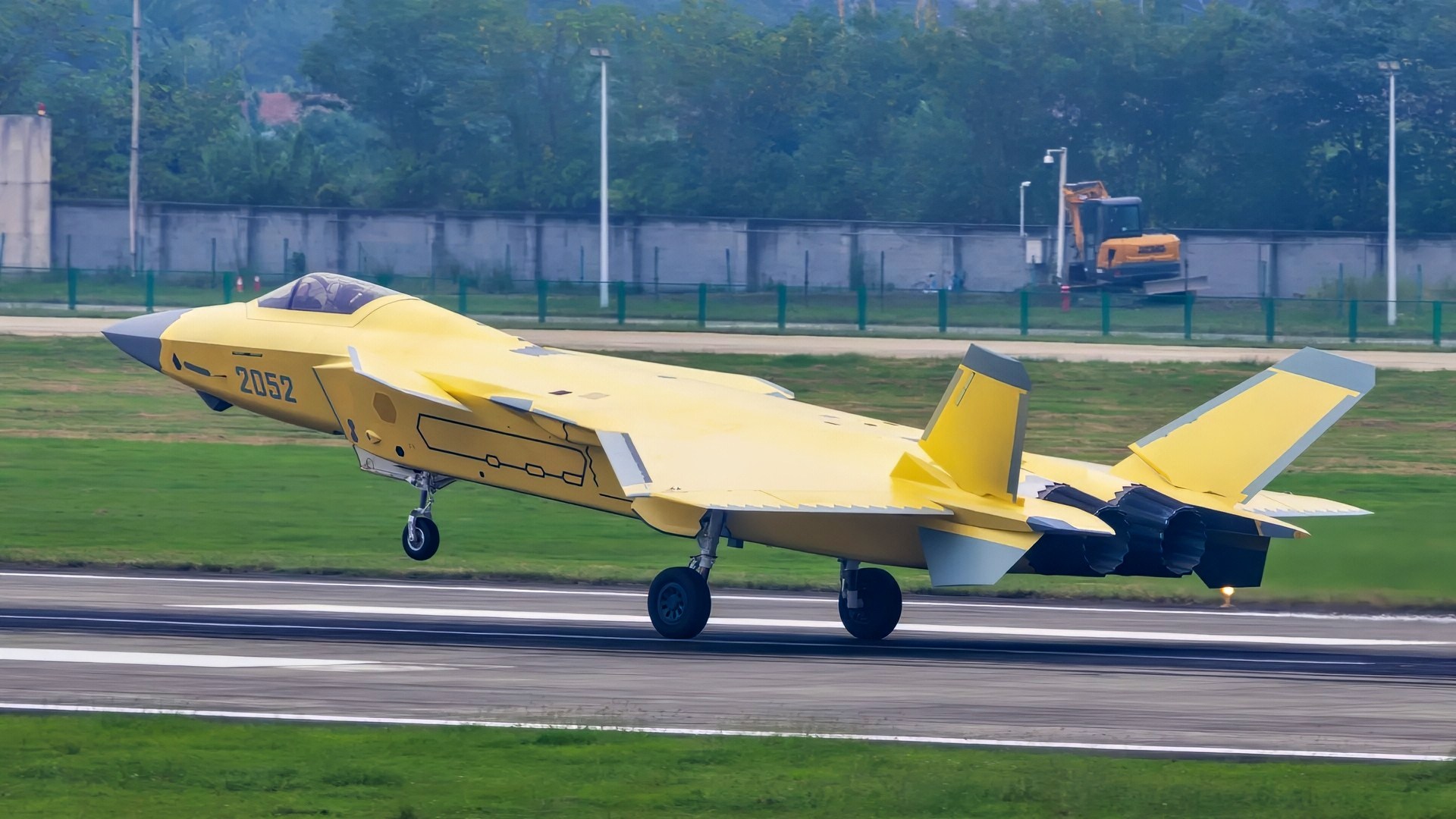
J-20A Fighter in Yellow. Image Credit: X Screenshot.
China has relied heavily on Russian-supplied Soviet-era engines, building them under license domestically and, in some cases, reverse-engineering Russian jets and jet engines to build wholly homegrown variants.
But China is making progress on its own domestic engines — perhaps enough progress to wean itself off of Russian technology.
Domestically built engines in China have typically suffered from reliability shortcomings.
High-performance jet engines depend on reliable components — turbine blades, compressor components, ball bearings, etc. — and the high-performance alloys needed to make those engine subsystems.
The consolidation of Chinese aerospace manufacturing at home and the intense focus on building domestic capabilities are seemingly yielding results.
J-20: What Happens Now?
Production numbers and tempo are not necessarily reflections of operational quality, and significant questions remain about the J-20’s specific capabilities. Other questions remain, including pilot training and experience, as well as how China’s budding crop of stealth aircraft integrates with other aircraft and ground command systems.
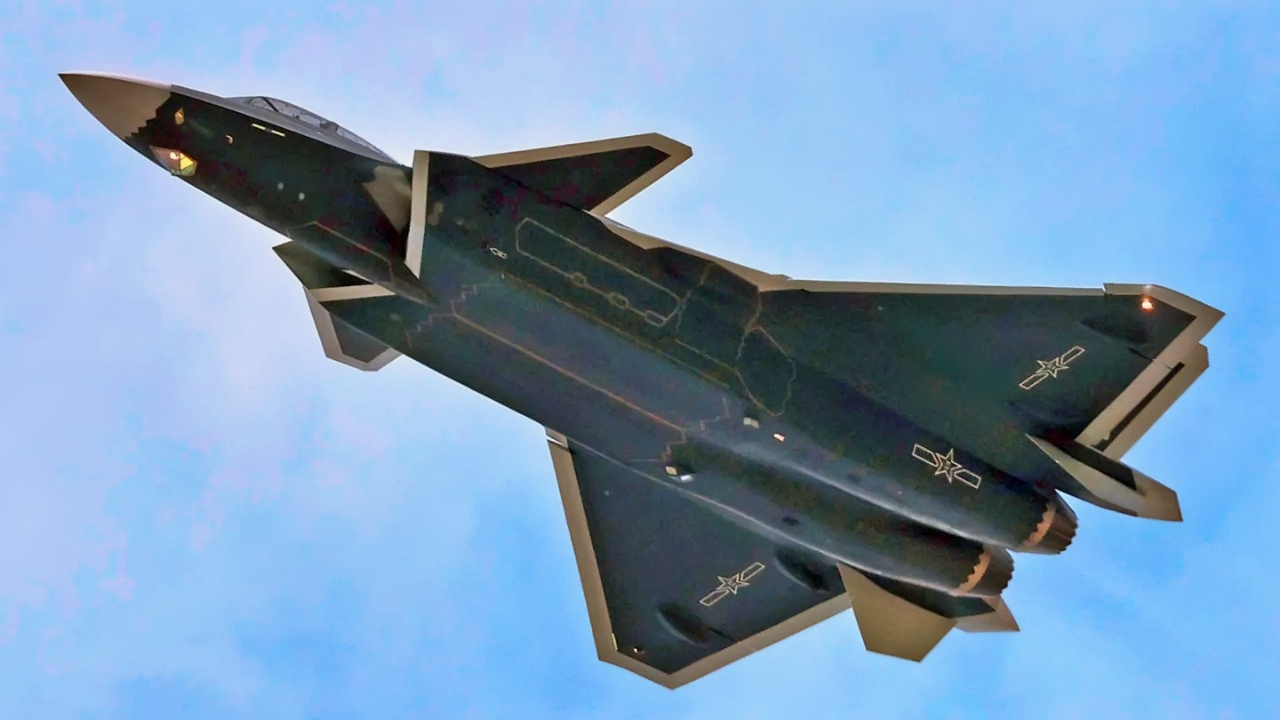
J-20S Fighter from X Screenshot. Image Credit: X.

China J-20S Fighter. Image Credit: Creative Commons.
But, in purely strategic terms, China’s growing output of stealth fighters does send a firm message, one that is decidedly less opaque: rather than experimenting with fifth-generation aircraft, China is instead building out its stealth fleets and moving away from non-stealthy, fourth-generation aircraft.
And that shift forces a reassessment not of Chinese technology or any individual platform, but of how much mass China could bring to a fight in the Indo-Pacific.
About the Author: Caleb Larson
Caleb Larson is an American multiformat journalist based in Berlin, Germany. His work covers the intersection of conflict and society, focusing on American foreign policy and European security. He has reported from Germany, Russia, and the United States. Most recently, he covered the war in Ukraine, reporting extensively on the war’s shifting battle lines from Donbas and writing on the war’s civilian and humanitarian toll. Previously, he worked as a Defense Reporter for POLITICO Europe. You can follow his latest work on X.
More Military
The U.S. Military Is In ‘Crisis’
Canada’s F-35 Stealth Fighter Mistake Is Just Around the Corner
The Mach 2.23 F-4G Wild Weasel Has a Message for the U.S. Air Force


