


Key Points and Summary – For a decade, Canada has struggled to replace its aging C/F-18 fleet. What about the F/A-18 Super Hornet?
-On paper, Boeing’s F/A-18E/F Super Hornet looked like the logical choice: familiar, lower-risk, and easier to integrate.

An F/A-18F Super Hornet Strike Fighter Squadron 103 is parked on the flight deck of the aircraft carrier USS Dwight D. Eisenhower (CVN 69) as the ship operates in the Arabian Sea on Dec. 5, 2006. The Eisenhower is in the Arabian Sea in support of maritime security operations.
-In reality, politics killed it—first when Boeing’s 2017 trade case against Bombardier made any Super Hornet deal toxic in Ottawa, and later when Canada’s formal fighter competition elevated fifth-generation requirements, Arctic defense, and NORAD missions that only the F-35 could truly meet.
-Industrial benefits tied to the global F-35 program and long-term upgrade potential sealed the outcome. After years of drama and delay, Canada is finally all-in on the F-35.
Why Canada Dumped the Super Hornet and Finally Bet Big on the F-35
For the past decade, Canada has tried to modernize its Air Force. It needs to replace its aging fleet of C/F-18 Hornets, which have become more and more expensive to maintain. Much ink has been spilled over Canada’s controversial attempts to acquire the F-35—but why not purchase the F/A-18E/F Super Hornet?
After all, the aircraft is essentially an upgraded version of the C/F-18.
The answer is that Canada did indeed try to purchase Super Hornets, but the effort got bogged down in political squabbles. Future attempts to market the aircraft were then overshadowed by the F-35, which offered so much more than the Super Hornet could.
Boeing’s First F/A-18 Pitch
Canada planned to acquire F/A-18s back in 2017. The buy was intended to bridge the gap until Canada could complete an open competition for a permanent fleet. However, the plan unraveled in spectacular fashion in 2017 after Boeing filed a trade complaint against Bombardier, alleging the latter dumped its C Series airliners below cost. The U.S. Department of Commerce responded with proposed tariffs approaching 300 percent, triggering a political backlash in Canada.
Prime Minister Justin Trudeau declared that Canada would not do business with a company that was “busy trying to sue us,” and the government formally canceled the Super Hornet purchase.
Instead, Ottawa turned to an alternative solution: buying used F/A-18A/B Hornets from the Royal Australian Air Force. Agreements were signed in November 2018, the first jets arrived in February 2019, and deliveries concluded in April 2021.
Although this substitution covered the near-term gap, it underscored that a new-build Super Hornet stopgap was politically untenable in the wake of the Boeing–Bombardier dispute. Operational challenges with the Australian aircraft, including slow integration and limited capability upgrades, reinforced the sense that Canada needed a more modern solution.
The Super Hornet gets Rejected Again
Canada then launched the Future Fighter Capability Project to acquire 88 aircraft through a formal competition. The government stated that proposals would be evaluated on capability, cost, and economic benefits under its Industrial and Technological Benefits policy.
Boeing again tried to pitch the F/A-18 to Canada, probably hoping the previous incident had been forgotten. On Dec. 1, 2021, Ottawa again announced that the Super Hornet had been eliminated from the competition, leaving only Saab’s Gripen E and Lockheed Martin’s F-35A as contenders.
The government did not say why the F/A-18 had been eliminated, and it was confusing. The Super Hornet seemed like a logical replacement for the C/F-18, given that Canada already had expertise maintaining and flying these aircraft.
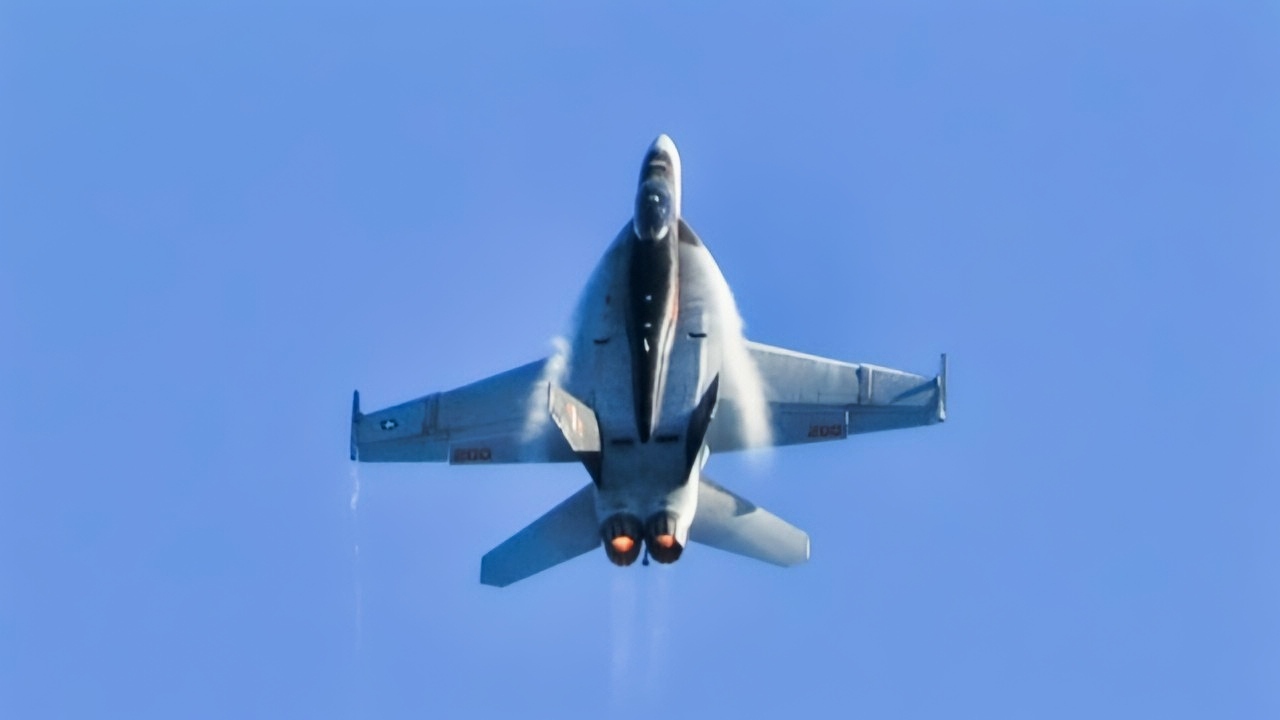
A U.S. Navy F/A-18E Super Hornet aircraft assigned to Strike Fighter Squadron (VFA) 147 performs maneuvers above the aircraft carrier USS Nimitz (CVN 68) during the departure of Carrier Air Wing (CVW) 11 Dec. 10, 2013, in the Pacific Ocean. CVW-11 fixed wing aircraft flew off the Nimitz to return home after being deployed to the U.S. 5th, 6th and 7th Fleet areas of responsibility. (U.S. Navy photo by Mass Communication Specialist Seaman Apprentice Kelly M. Agee/Released)
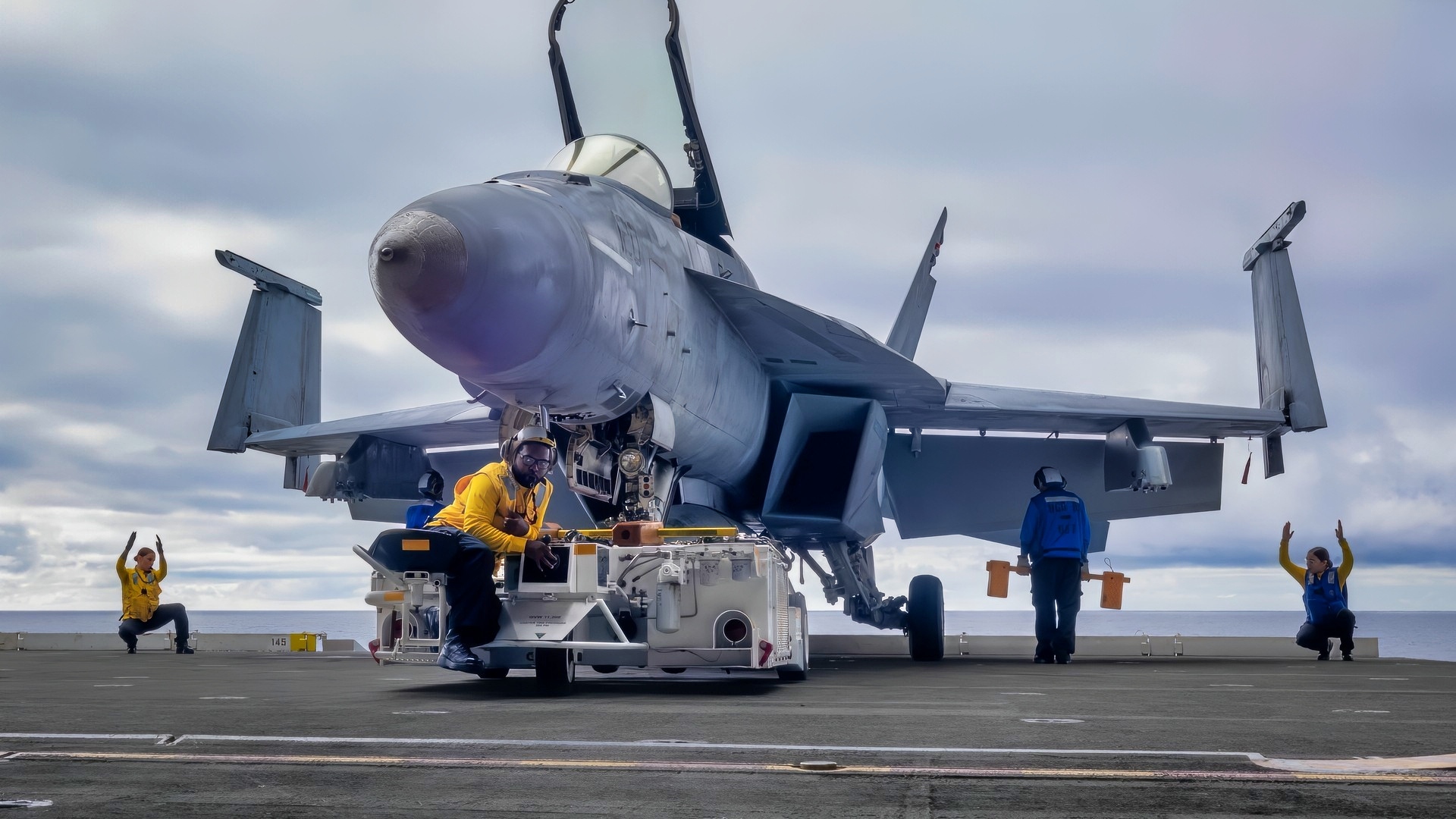
ATLANTIC OCEAN (Aug. 13, 2025) Sailors transport an F/A-18E Super Hornet attached to the “Gladiators” of Strike Fighter Squadron (VFA) 106 onto an aircraft elevator aboard the Nimitz-class aircraft carrier USS George H.W. Bush (CVN 77). George H.W. Bush is underway conducting carrier qualifications and routine operations in the Atlantic Ocean. (U.S. Navy photo by Mass Communication Specialist Seaman Apprentice Kayleigh Tucker)
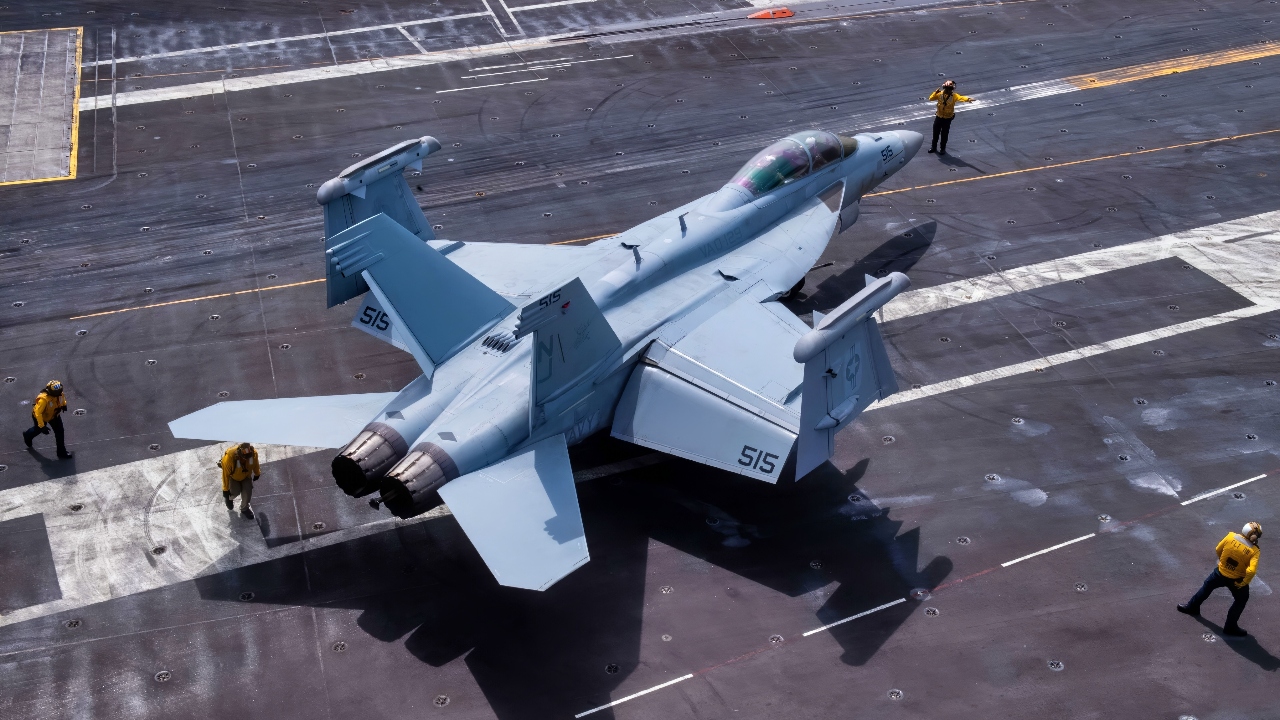
PACIFIC OCEAN (Aug. 11, 2025) – U.S. Navy Sailors direct an E/A-18G Growler, assigned to the “Vikings” of Electronic Attack Squadron (VAQ) 129, on the flight deck of the Nimitz-class aircraft carrier USS Theodore Roosevelt (CVN 71), Aug. 11, 2025. Theodore Roosevelt, flagship of Carrier Strike Group (CSG) 9, is underway conducting exercises to bolster strike group readiness and capability in the U.S. 3rd Fleet area of operations. (U.S. Navy photo by Mass Communication Specialist Seaman Apprentice Cesar Nungaray)
However, Canada’s evolving defense posture—particularly its NORAD modernization plan—highlighted the need to counter advanced aerospace threats in the Arctic and northern approaches. These scenarios demanded stealth, sensor fusion, and secure networked operations, areas in which fifth-generation platforms such as the F-35 offered decisive advantages over 4.5-generation aircraft such as the Super Hornet.
All in on the F-35 (No F/A-18)
By January 2023, Canada confirmed its selection of the F-35A. The aircraft best met operational requirements and represented the most significant investment in the Royal Canadian Air Force in decades. The fleet is expected to serve past 2060, which magnified the importance of future survivability and upgrade potential. Publicly leaked scoring later showed the F-35 achieving roughly 95 percent across rated categories, dramatically outperforming the Gripen E. Although Super Hornet scores were not disclosed, Canada was looking for a more comprehensive transformation of its Air Force, not a modernized version of an aircraft it already had.
Economic and industrial considerations also played a role. Canada’s ITB framework required bidders to deliver a value proposition across domestic work, R&D, and sustainment. Boeing offered robust packages, but Canada’s industrial strategy at the time aligned with the global F-35 enterprise, including plans for a domestic maintenance, repair, and overhaul depot in Mirabel, Quebec.
This linkage promised long-term jobs and integration into a worldwide sustainment network, advantages that a Canadian Super Hornet ecosystem could not match.
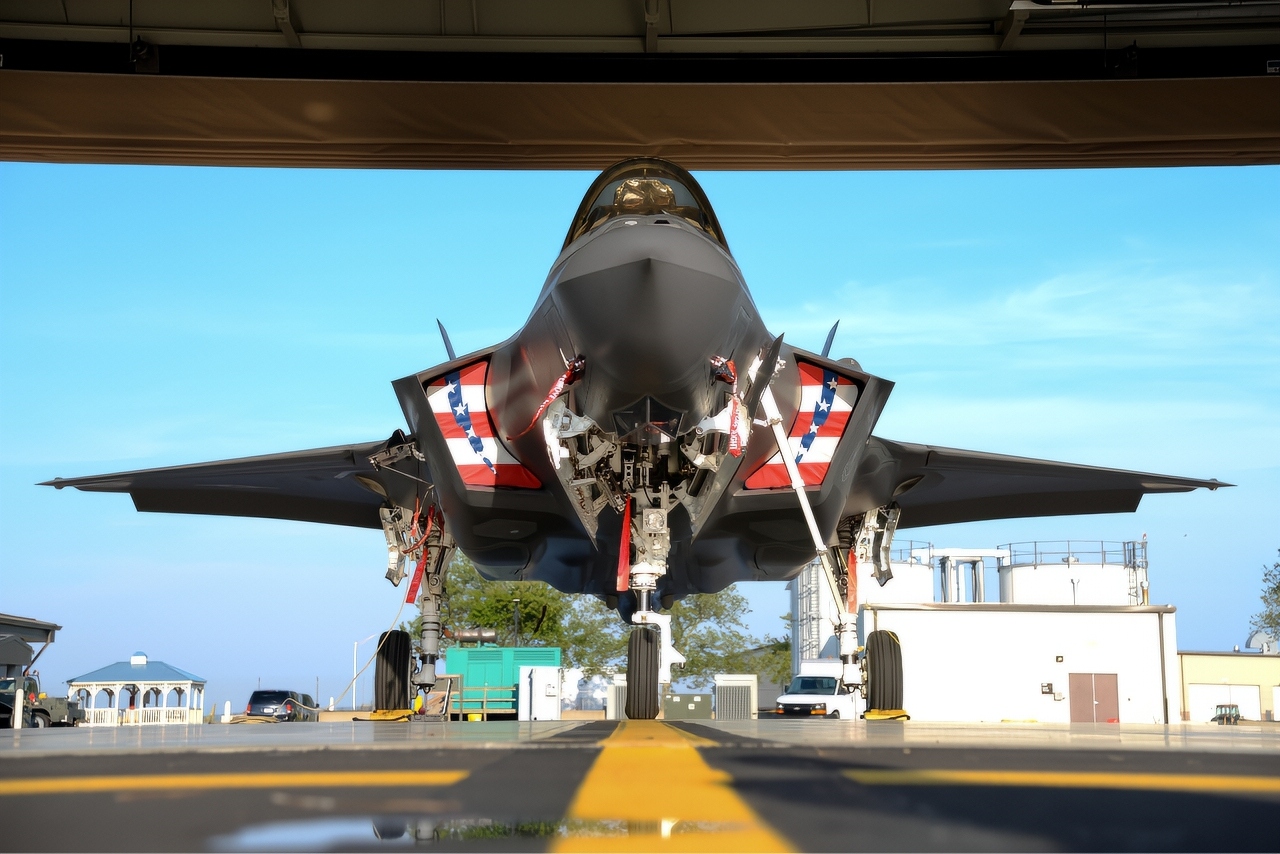
A U.S. Air Force F-35 Lightning II fighter jet from the 56th Fighter Wing, Luke Air Force Base, Arizona, displays it’s crew-designed red, white and blue inlet covers while parked in a military aircraft shelter at the Atlantic City International Airport in Egg Harbor Township, N.J. on May 26, 2016. Pilots and crew from the USAF F-35 Heritage Flight Team made a stop at the 177th Fighter Wing of the New Jersey Air National Guard on the way to their performance at the Jones Beach Airshow in Wantagh, New York on May 28 and 29. (U.S. Air National Guard photo by Master Sgt. Andrew J. Moseley/Released)
Although the auditor general later flagged rising costs and infrastructure delays for the F-35 program, Ottawa maintained these risks were acceptable, given the operational benefits and strategic alignment the aircraft offered.
The F-35 Plan Almost Backfires
Canada’s pivot to the F-35 did not last long. Despite full recommendations from the military, the government of Canada hesitated on the deal after political provocations by U.S. President Donald Trump.
Despite advocating full-heartedly for the fighter, Canada wanted out of the deal, citing cost-concerns, and strategic autonomy—but just like with Boeing in 2017, the controversy was political. It seems now that Canada will continue with the F-35 deal.
Canada rejected the Super Hornet for two main reasons. The interim purchase collapsed because Boeing’s trade actions against Bombardier made a deal politically impossible, forcing Ottawa to seek out used Australian Hornets instead.
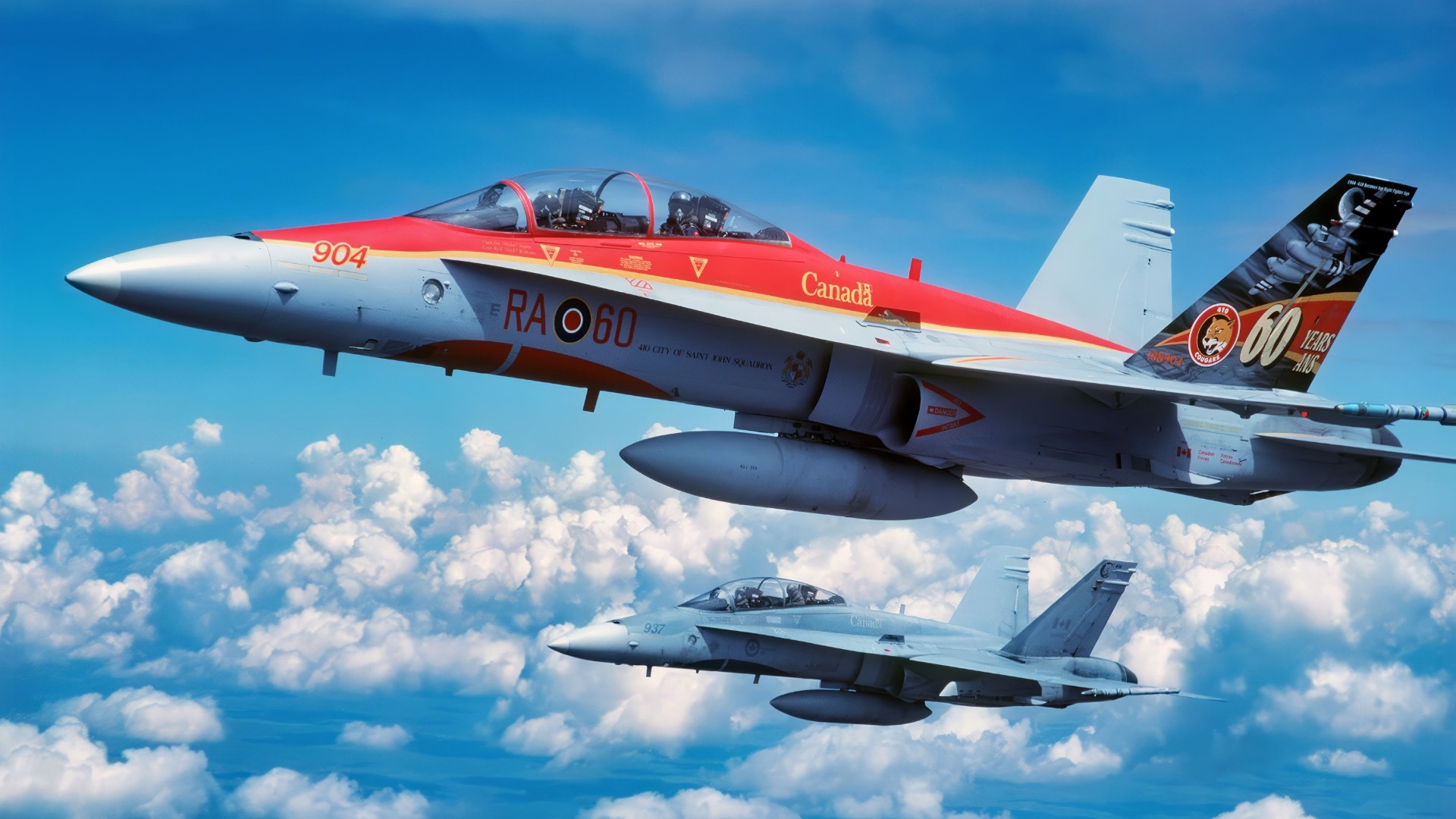
Two Canadian Forces, 410 Squadron CF-188B Multi-Role Fighters, one painted in special anniversary colors, flying over the Utah Test and Training Range (UTTR) for planned engagements during the Tiger Meet of the Americas. The Inaugural Tiger Meet of the Americas brought together flying units from throughout North America that have a Tiger or large cat as their unit symbol. The Tiger Meet of the Americas closely mirrors the North Atlantic Treaty Organization (NATO)/Europe Tiger Meet in its goal of fostering camaraderie, teamwork and tactics familiarization.
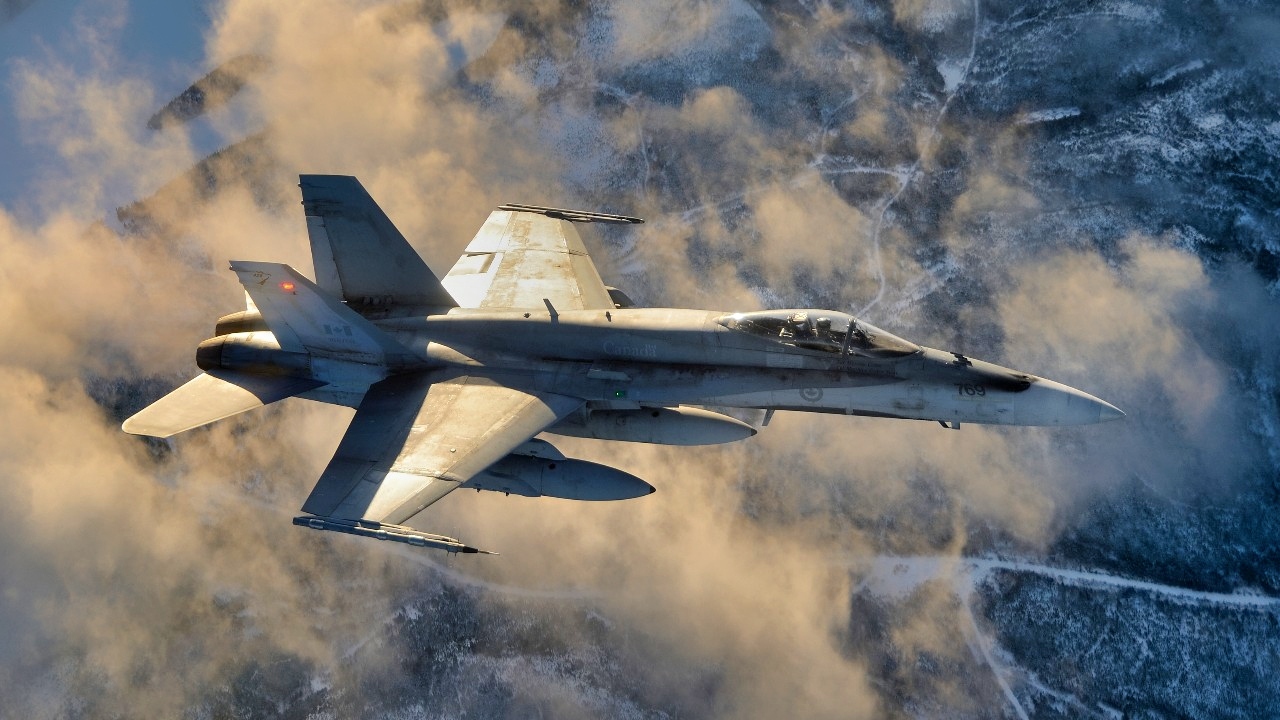
Canada Air Force CF-18. Image Credit: Creative Commons.
Later, in the full-replacement competition, the Super Hornet was eliminated because Canada prioritized fifth-generation capability, Arctic and NORAD mission requirements, and long-term industrial integration—all areas in which the F-35 offered clear advantages.
Despite all the drama that the aircraft has caused, the F-35 will likely cement itself as Canada’s next-generation fighter and serve well into the 2040s.
About the Author: Isaac Seitz
Isaac Seitz, a Defense Columnist, graduated from Patrick Henry College’s Strategic Intelligence and National Security program. He has also studied Russian at Middlebury Language Schools and has worked as an intelligence Analyst in the private sector.


