

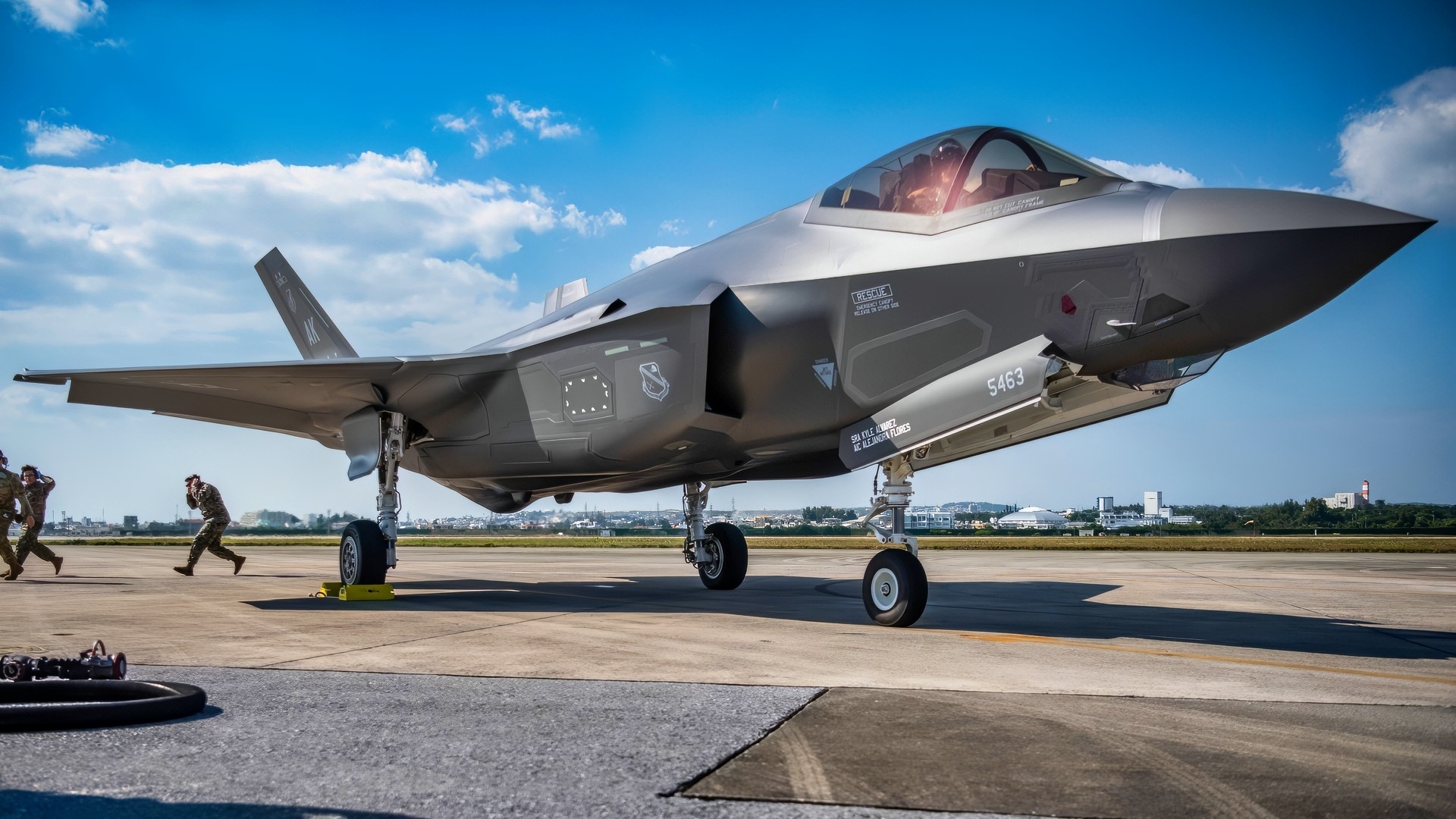
Key Points and Summary – U.S. Ambassador Pete Hoekstra has blasted Ottawa’s decision to reopen its fighter competition, saying Canada is free to choose—but that serial delays over the F-35 are “irritating.”
-Canada has already committed to 16 F-35s, yet the Carney government is again weighing alternatives, including Saab’s Gripen E. A leaked 2021 assessment, however, showed the F-35 decisively outscoring Gripen in every category, from mission performance to upgrade potential.

U.S. Air Force Maj. Melanie “Mach” Kluesner, pilot of the F-35A Demonstration Team, performs aerial maneuvers at the Sun ‘n Fun Airshow in Lakeland, Florida, April 1, 2025. The team travels across the country to demonstrate the unmatched capabilities of the F-35A Lightning II and highlight the skill of U.S. Air Force pilots. (U.S. Air Force photo by Senior Airman Nicholas Rupiper)
-Switching to or mixing in Gripens would add major training and sustainment burdens for the RCAF. With aging CF-18s and rising threats, Canada’s prolonged indecision now carries real operational and strategic costs.
Why Can’t Canada Decide on the F-35 or JAS 39 Gripen?
U.S. Ambassador to Canada Pete Hoekstra told Canadian media he is “irritated” by Ottawa’s ongoing reevaluation of the American F-35 stealth fighter as a replacement for the country’s fleet of CF-18 Hornets.
Speaking to the National Post, Hoekstra expressed his frustration rather bluntly: “Canada can do what it wants on the F-35, OK?
“Does it irritate me, personally, that we’re revisiting this issue again? Yeah, it’d be nice to put this one to bed and just move forward,” Ambassador Hoekstra added, emphasizing that American and Canadian firms have teamed up on F-35 parts production for years.
“It would be nice if Canada made a commitment,” the ambassador said. “But if they want to go through another review, they can go through another review.”
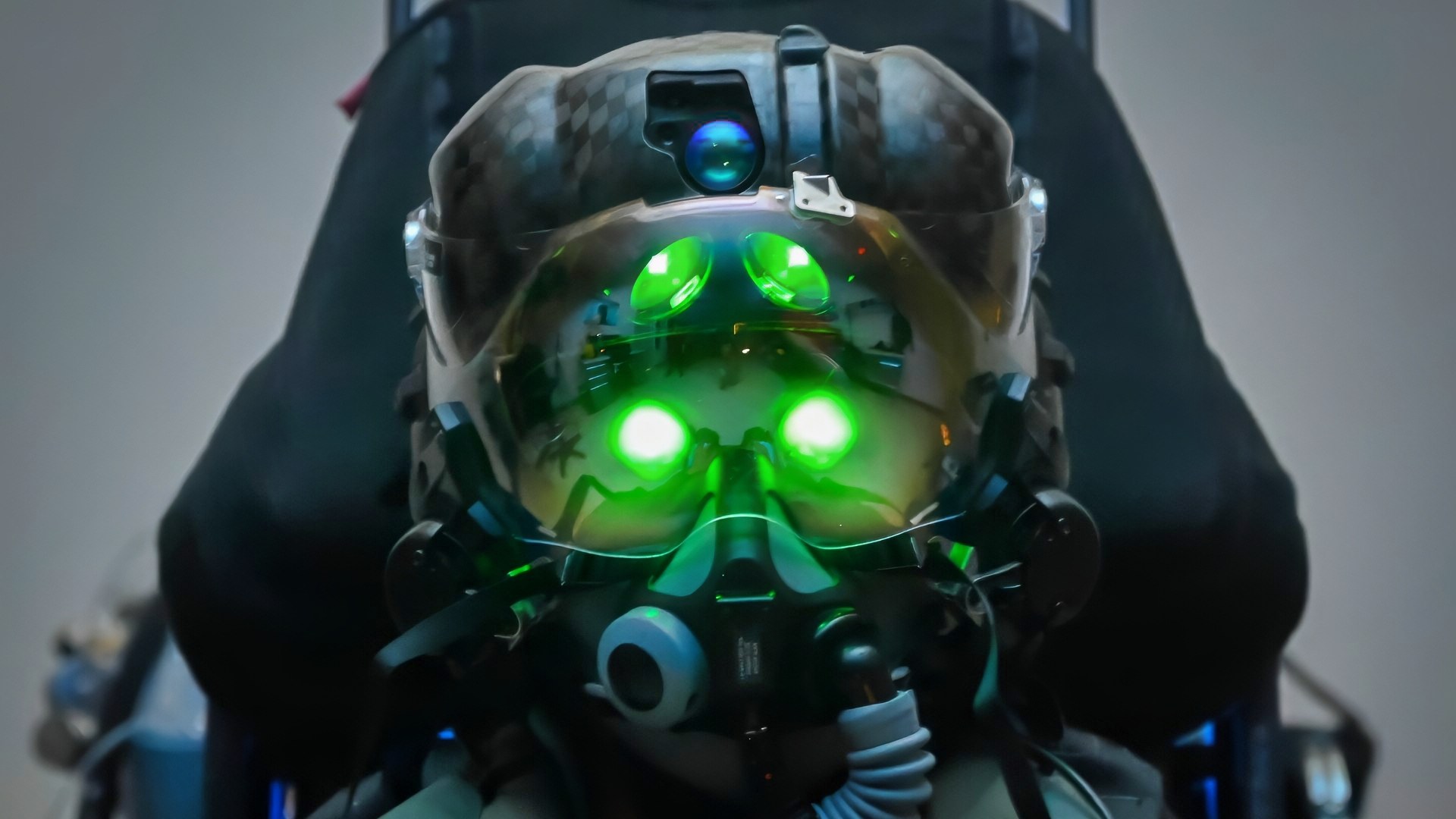
Capt. Ryosuke Sugimoto, a Japanese Air Self-Defense Force F-35 Lightning II pilot, sits in an ejection seat wearing his new pilot gear after completing the 1,000th fitting in the pilot fit facility at Eglin Air Force Base, Florida, May 22, 2024. This milestone fitting underscores the strong international partnership and commitment to pilot readiness and safety. (U.S. Air Force photo by 1st Lt. Jymil Licorish)
Alienated by U.S. President Donald Trump’s belligerent rhetoric toward one of the United States’ oldest allies, Canada may seek to limit its exposure to America by exploring alternatives to the F-35 stealth fighter.
Other long-established allies are making similar moves. Earlier this year, Spain announced it would no longer consider purchasing the F-35 and would instead look at other alternatives. Portugal, too, has decided to look for European alternatives to the F-35, citing mercurial and often hostile U.S. leadership in the White House.
Switzerland has adjusted its F-35 plans, too. Originally, Bern was slated to purchase 36 F-35As from the United States for 6 billion Swiss Francs, or nearly $7.6 billion, according to a 2021 agreement. But the current administration said that figure was a misunderstanding, and that 36 F-35As would cost more. Instead, Switzerland will purchase as many F-35As as possible for the previously-agreed-upon sum, and any shortfall in aircraft could be made up by purchasing other types.
Canada has already committed to purchasing its first tranche of 16 F-35 stealth jets.
And though some senior leaders in Canada have affirmed that the country would look for other, non-American alternatives to the stealth jet, operating a mixed fleet of aircraft would create logistical and sustainment issues for the Royal Canadian Air Force (RCAF).
The RCAF would need to establish distinct training pipelines for pilot qualification, as flight certifications for the F-35 would not transfer directly to other aircraft. The service would also have to establish separate training regimes for aircraft mechanics and maintainers. This self-imposed logistical complexity would considerably reduce the RCAF’s operational efficiency.
Despite this, the Swedes are keen to pitch the Gripen E built by Saab, a Swedish aerospace and defense firm. Though the Swedish fighter was the runner-up in the Canadian competition that ultimately selected the F-35, Ottawa is reportedly considering the Swedish jet.

JAS 39 Gripen Flying in Formation.
But a recently leaked document casts intense doubt on the Gripen.
Part of a 2021 evaluation of the Gripen E and the F-35 that was leaked to the Canadian press found that the F-35 outperformed the smaller Swedish fighter in every single evaluation category—and in many of the areas of evaluation, it was not close.
The F-35 outperformed the Gripen E in mission performance, upgradability, sustainability, technical criteria, and capability delivery, securing an average 95 percent score across categories. The Gripen E, on the other hand, racked up a paltry 33 percent of possible points, scoring lowest in mission performance and upgradability. But the Swedes are seemingly undeterred.
Saab CEO Micael Johansson claimed during an interview that if a local Gripen E manufacturing hub were built in Canada, it would create 9,000 to 10,000 local jobs to sustain and maintain the Swedish jet. Johansson appeared on Canadian television to argue his firm’s case.
“We can start delivering across to Canada if they select a dual slate in three years time,” Johansson said. He added that once a Saab factory in Canada is finished, Gripen Es could roll off the production line in “roughly, between, three and five years depending on the setup.”
The proposed plan appears to follow a similar strategy to the one Saab used in Brazil, the latest member of the Gripen E community. There, Saab built a factory in Gavião Peixoto. However, it is estimated that the factory employs hundreds, rather than thousands of employees—a far cry from the 10,000 touted by Johansson.
F-35 vs. JAS 39 Gripen Gets Heated
Questions about job creation aside, one of the fundamental aspects of the debate concerns the ages of the jets.
The original Gripen design came of age during the waning years of the Cold War and flew for the first time in the late 1980s.
In contrast, the first F-35 prototype flight occurred in the early 2000s. But despite just 10 or so years separating the two aircraft’s maiden flights, their designs are rooted in entirely different technologies.
The Gripen is considered a fourth-generation fighter. It lacks dedicated radar-mitigating features in its design.
Optimized instead for high maneuverability and easy servicing—a necessity for Sweden’s conscript-centric military system—the Gripen is increasingly outclassed by today’s fifth-generation stealth fighters, as well as the growing crop of advanced sixth-generation aircraft.
But Saab is seemingly undeterred, going so far as to say the world is “obsessed” with stealth.
Instead of focusing on stealth capabilities, the company says it instead zeroed in on the Gripen’s electronic warfare capabilities, which Saab wants customers to believe is more important than stealth.
Whether that can be enough to convince Canada remains to be seen.
About the Author: Caleb Larson
Caleb Larson is an American multiformat journalist based in Berlin, Germany. His work covers the intersection of conflict and society, focusing on American foreign policy and European security. He has reported from Germany, Russia, and the United States. Most recently, he covered the war in Ukraine, reporting extensively on the war’s shifting battle lines from Donbas and writing on the war’s civilian and humanitarian toll. Previously, he worked as a Defense Reporter for POLITICO Europe. You can follow his latest work on X.


Shit-te-cah
December 14, 2025 at 12:13 am
Canada is in no hurry to get into a war with anybody, not even the eskimoes, or immigrants from Punjab.
So, no need at all to get hold of latest hotshot fighter jets.
To patrol the vast expanses of Canada, better get hold of turboprop aircraft, aircraft that can stay in the sky for half a day or longer.
Who Ottawa wanna fight tonight. Nobody.
John
December 14, 2025 at 10:22 am
Your article does not constitute an analysis of Canadian interests, but rather a rationalization of American political pressure exerted on an ally. You present Washington’s “irritation” as a strategic argument, turning an asymmetric relationship into a decision-making norm. Canadian debate is framed as a failure, autonomy as inefficiency, and any reassessment as a nuisance. The technical comparisons you invoke are based on criteria defined by and for U.S. doctrine, without ever questioning their relevance to Canadian sovereignty, real operational requirements, or Canada’s long-term technological dependence. This is not a strategic assessment, but an argument for alignment.
Even more revealing is the way Canada is implicitly portrayed: not as a sovereign state capable of defining its own defense priorities, but as a subordinate partner whose role is to ratify decisions already made elsewhere. The fact that thinking, debating, and reassessing are presented as “harmful” speaks volumes about the conception of alliance being defended here—one in which obedience is mistaken for rationality. At this level of strategic condescension, one is justified in wondering whether, with allies like these, enemies are even necessary.
Tim
December 14, 2025 at 3:13 pm
Trump has threatened to invade Canada, turning it into the 51st state, and threatened to put kill switches into the F35s so they can brick the technology. SAAB has offered to let us create domestic infrastructure for the Gripens. This allows us to become a world leader in aerospace again.
How is this even a debate?
Jay Stride
December 17, 2025 at 2:45 pm
Per an Ottawa Citizen article of Dec 15, 2025 the comparison was between the Gripen A and a fully functional Block 4 F-35. Based on GAO reports and comments made by Chris Bogdan (former JPO commander) it is likely that F-35 will never rlget anywhere near the capability promised by Lockheed Martin back in 2006.