

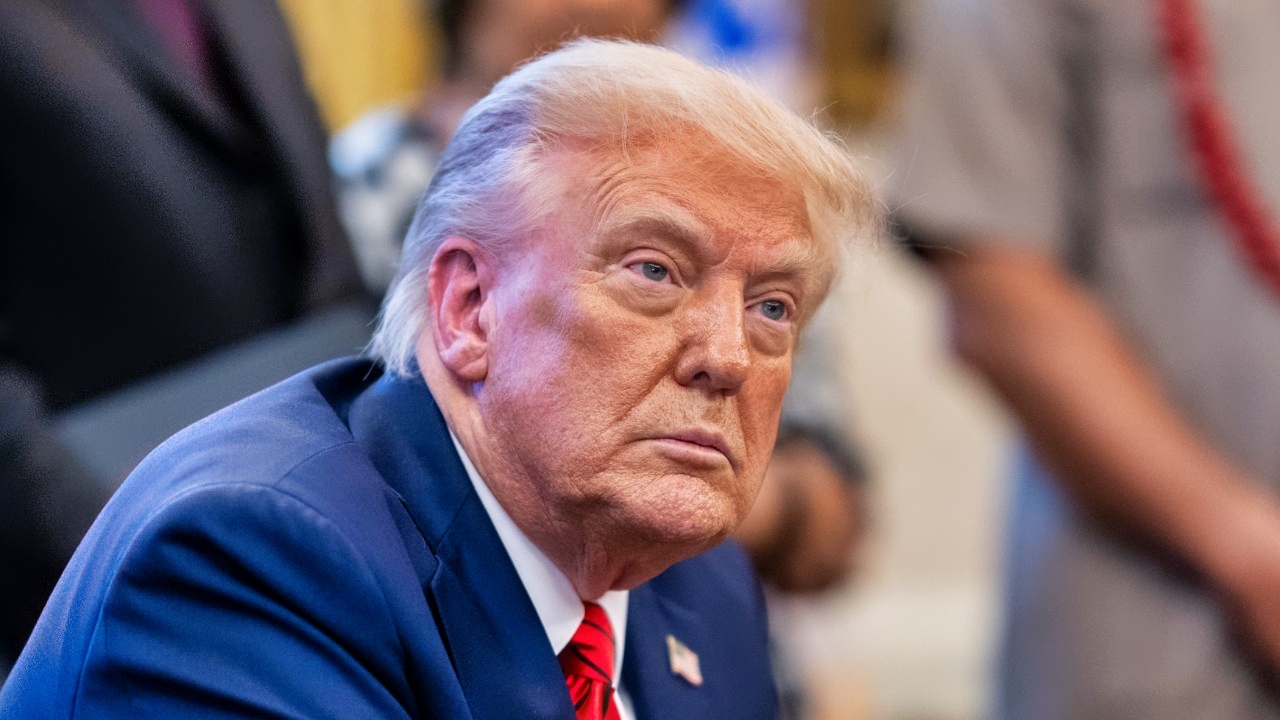
U.S. President Donald Trump, now in his second term, has spent a significant amount of time targeting centers of power that he perceives as opposing him, including the media, major law firms, and universities.
All of these are things that are extremely atypical for a presidential administration to do.
When it comes to elite universities, Trump has targeted several of them, threatening to withdraw federal funding for research and other functions if they don’t agree to certain conditions, including eliminating diversity, equity, and inclusion (DEI) programs.
Columbia had agreed to some demands after $400 million in funding was pulled.
Harvard University, however, has taken a different approach in publicly standing up to Trump’s threats.
Trump Takes on Harvard University
The Trump Administration sent a letter to Harvard’s president, Dr. Alan M. Garber, on April 11, with a set of demands, including “Governance and leadership reforms,” “Merit-Based Hiring Reform,” “Merit-Based Admissions Reform,” International Admissions Reform,” “ Viewpoint Diversity in Admissions and Hiring,” “Reforming Programs with Egregious Records of Antisemitism or Other Bias,” and “discontinuation of DEI.”
The implication is that if Harvard complies with these demands, it will not lose the existing government grants.
And, to make matters worse, there is now even debate if the letter was authorized to be sent in the first place.
Harvard Responds
While some universities have been loath to clash with the Trump Administration, Harvard reacted by standing up to the threats.
“Harvard remains open to dialogue about what the university has done, and is planning to do, to improve the experience of every member of its community. But Harvard is not prepared to agree to demands that go beyond the lawful authority of this or any administration,” a letter from three lawyers for Harvard, dated April 14, said.
As a result, Trump has threatened Harvard’s tax-exempt status and called for the university to apologize for rejecting the initial demands.
It Might Have Backfired: A Donation Bonanza
While the administration has threatened to pull $2.2 billion in funding from Harvard, the university has seen a fascinating effect: Donors have been stepping up their giving, with small donors especially stepping up to do what they can to make up for what’s been lost.
Per Harvard’s student newspaper, the Crimson, $1.14 million was collected in under 48 hours, which is a tiny fraction of what was lost from the funding, but still a significant amount of money that most universities couldn’t possibly hope to match.
“The more Trump punishes Harvard financially,” one novelist and Harvard alum said, “the more I will donate. I’m not a wealthy guy.”
Harvard has an endowment of over $50 billion, which puts it in a better position to withstand the pressure from the Administration than most of the nation’s other top universities.
However, per a CNN analysis, universities don’t usually dig into their endowments during tough times. Endowments don’t work like bank accounts; the money in them isn’t in the form of liquid cash, with 80 percent of the endowment earmarked for specific things, such as “financial aid, scholarships, faculty chairs, academic programs or other projects.”
Ivy League Politics
The politics of the Ivy League can be bizarre. While Trump and his vice president, J.D. Vance, like to portray themselves as tribunes of the working class, going to battle with elites, Trump is an alum of an Ivy League university, the University of Pennsylvania, while Vance graduated from Yale Law School.
By contrast, neither Joe Biden nor Kamala Harris holds a degree from any Ivy League university, although Biden set up a think tank at Penn called the Penn Biden Center.
Penn, Trump’s alma mater, has a not-particularly-great relationship with the president, with both Trump and the university distancing themselves from each other, since the start of his rise in national politics.
Penn’s student newspaper noted last year that while Trump frequently touted his Penn education in his first two campaigns, even referring to its business school, Wharton, as the “Wharton School of Finance” in a presidential debate.
But by his 2024 campaign, Trump was barely mentioning Penn, most often referring to a conspiracy theory involving supposed Chinese influence on the Penn Biden Center.
About the Author: Stephen Silver
Stephen Silver is an award-winning journalist, essayist and film critic, and contributor to the Philadelphia Inquirer, the Jewish Telegraphic Agency, Broad Street Review and Splice Today. The co-founder of the Philadelphia Film Critics Circle, Stephen lives in suburban Philadelphia with his wife and two sons. For over a decade, Stephen has authored thousands of articles that focus on politics, technology, and the economy. Follow him on X (formerly Twitter) at @StephenSilver, and subscribe to his Substack newsletter


Pingback: Harvard Might Not Be Able to 'Sue Their Way Out' of Trump Trouble - National Security Journal