

Just across from Kherson, on the other side of the Dnipro River, lies Oleshky, a Ukrainian city Russia has occupied since 2022.
Though Oleshky’s prewar population was about 25,000, only about 6,000 are believed to still live there.
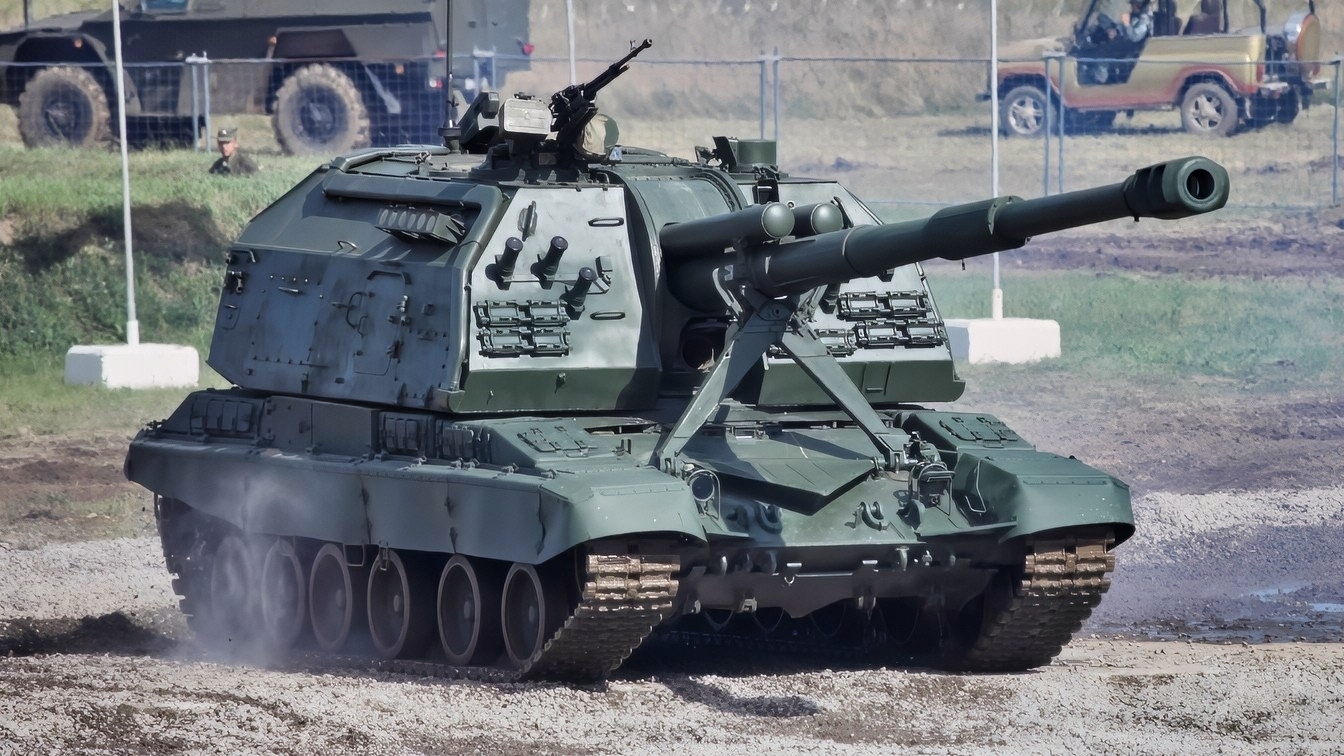
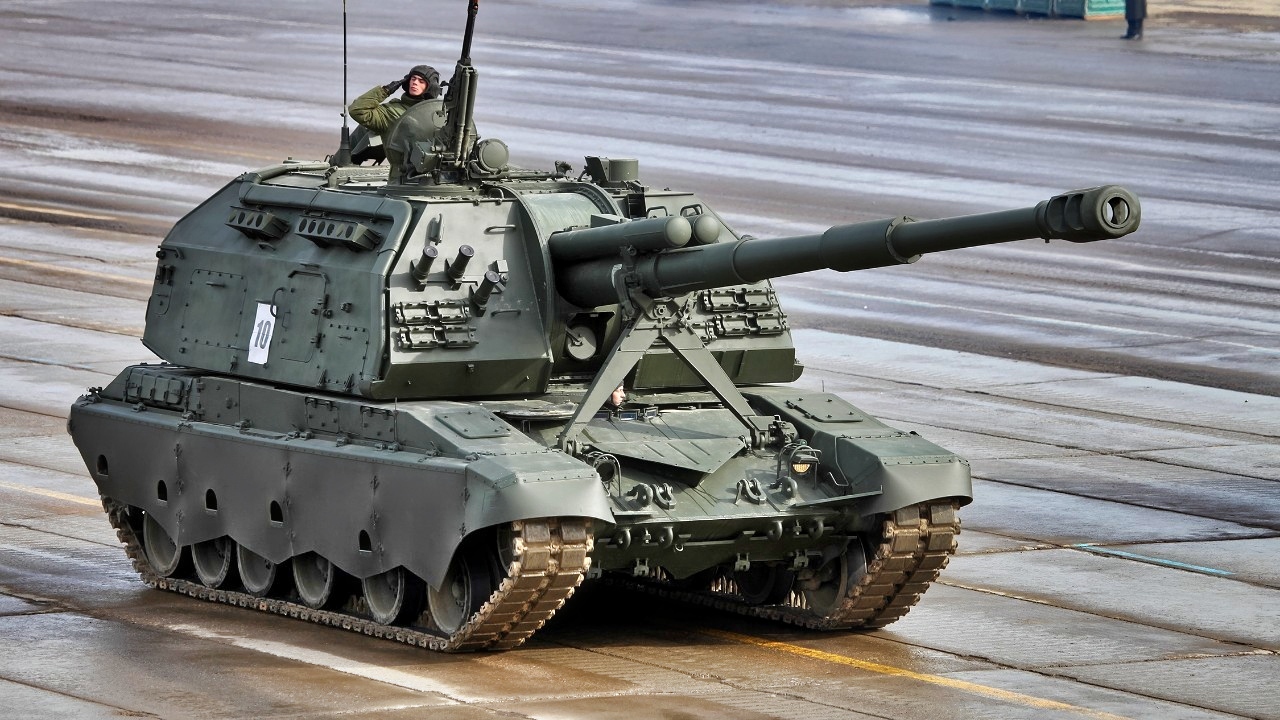
MSTA-S Russian Artillery. Image Credit: Creative Commons.

MSTA-S Russian Army. Image Credit: Creative Commons.
Those who remain face an acute shortage of basic necessities: food, clean water, and electricity.
They have a surplus of the things in Ukraine that are the antithesis of life: land mines, shelling, drone attacks — and Russian occupation.
Russian checkpoints dot the city, and the flow of people and supplies is tamped down tightly by the occupation force.
The city’s few residents are facing starvation.
Ukrainian forces have tried to resupply residents who can’t leave, using heavy-lift drones to fly in food and medical supplies by the ton.
Not all aid reaches its civilian destination, however, and Russian forces have confiscated at least some of the aid that was intended for Ukrainian residents of Oleshky.
One of the deliveries saw four tons of aid delivered via air, though Russian forces shoot down some deliveries before they can land or confiscate the aid before it can be snapped up by civilians.
According to Oleksandr Prokudin, the governor of Ukraine’s Kherson region, Russia holds about 2,000 people hostage, a tally which is believed to include around 50 children.
During the Ukrainian counteroffensive, Ukrainian troops managed to wrest control of the city back from Russia, driving the occupying force east out of the city and across the river.
On the far bank, at Oleshky, Russian troops dug in, layering the riverbank with land mines and zeroing in on positions to target with drones and artillery.
Although Ukrainian forces have attempted multiple crossings of the river, the counteroffensive culminated at Kherson, and Russian troops have been embedded in the fabric of the town’s life for several years.
Russia’s Deception Campaign
Posting to X, formerly Twitter, Ukraine’s Minister of Foreign Affairs, Andrii Sybiha, raised the curtain on Russia’s plan for the city. “According to our intelligence, Russia is preparing to stage dozens of videos in occupied Oleshky, forcing local residents to say on camera that they are happy, well-fed, and grateful to the Russian occupiers,” he wrote. “Russian cynicism knows no limits. First, they occupy a town, cut off civilians’ escape routes, and block humanitarian aid. Then they force local residents to act in staged propaganda videos.”
“This is the latest step in a weeks-long, disgusting Russian propaganda campaign that denies any problems in Oleshky and claims there is no humanitarian catastrophe there,” he added.
Although Russia has since acknowledged problems with water and electricity access in Oleshky and surrounding areas, it has blamed Ukraine for the situation.
A Dire Situation Months in the Making
According to a United Nations report, the last grocery store in Oleshky shuttered its doors in January this year because it had no wares left to sell.
Those who remained in the city sustained themselves on preserved food, small garden patches, and limited deliveries of food and supplies organized by private individuals—but inaccessible to those who could not reach distribution areas.
Before the Ukrainian heavy-lift push to resupply the town, little to no aid had been delivered on a large scale since the spring.
International Condemnations but Little Concrete Action
The European Commission also commented on the unfolding humanitarian catastrophe. “What is happening in Oleshky, Ukraine, is appalling. Civilians are trapped under siege by Russian forces without access to food, medicine, clean water and basic care,” the European Civil Protection and Humanitarian Aid Operations wrote. “This is unacceptable.”
“Russia, as occupying power, has clear obligations under international humanitarian law: civilians must be protected, and humanitarian assistance must be facilitated.”
But barring a shift on the battlefield—in essence, Ukrainian forces liberating the city—the situation is unlikely to improve.
With Ukraine’s bitterly cold winter months no longer on the horizon but on the country’s doorstep, the situation appears poised to worsen significantly.
Those who stand to lose the most, those living in Oleshky, are also least able to change it.
“Civilians trapped in parts of the occupied Khersonska region are surviving in hellish conditions,” Human Rights Watch said. “Many have managed to escape, but among those who remain are more who want to flee, if evacuation were not such a life-threatening gamble.”
About the Author: Caleb Larson
Caleb Larson is an American multiformat journalist based in Berlin, Germany. His work covers the intersection of conflict and society, focusing on American foreign policy and European security. He has reported from Germany, Russia, and the United States. Most recently, he covered the war in Ukraine, reporting extensively on the shifting battle lines in Donbas and the war’s civilian and humanitarian toll. Previously, he worked as a Defense Reporter for POLITICO Europe. You can follow his latest work on X.


