
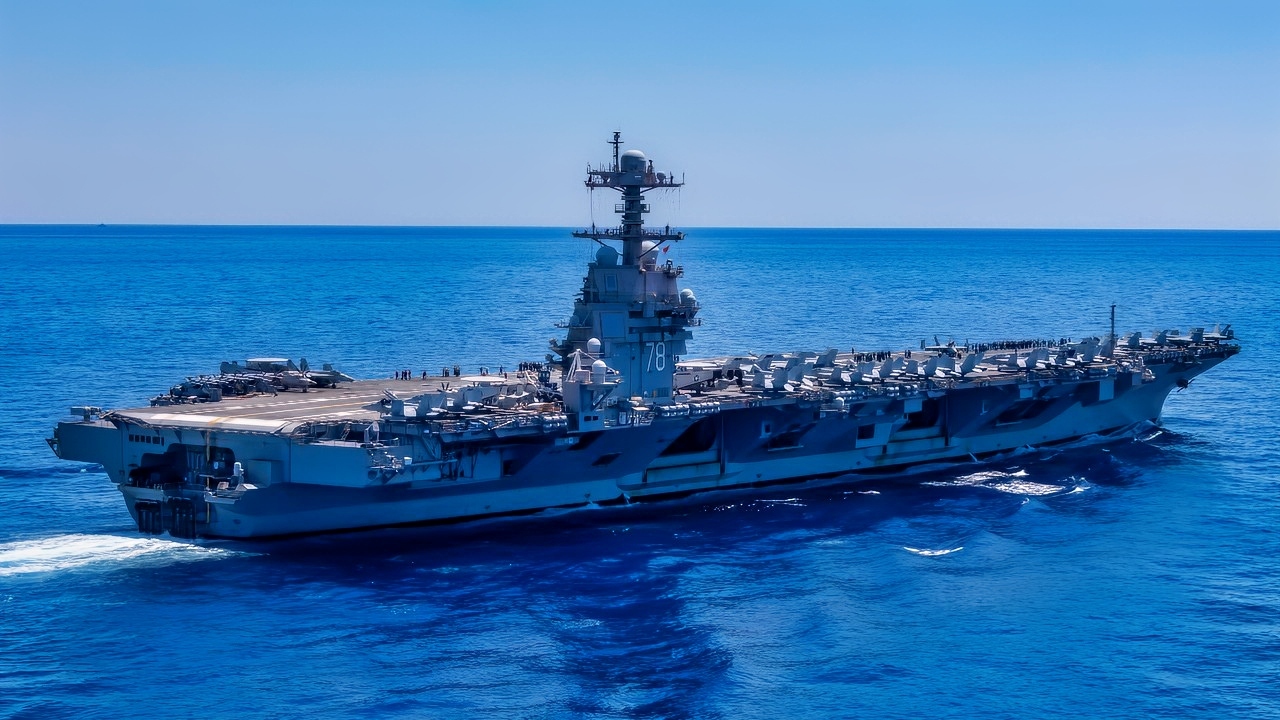
Summary and Key Points: Iran just threatened to ‘completely’ close the Strait of Hormuz — the narrow waterway that carries a fifth of the world’s oil.
-If it follows through, the damage won’t stay in the Gulf: analysts warn of the worst oil crisis in history, record U.S. gas prices, and inflation in every grocery aisle.
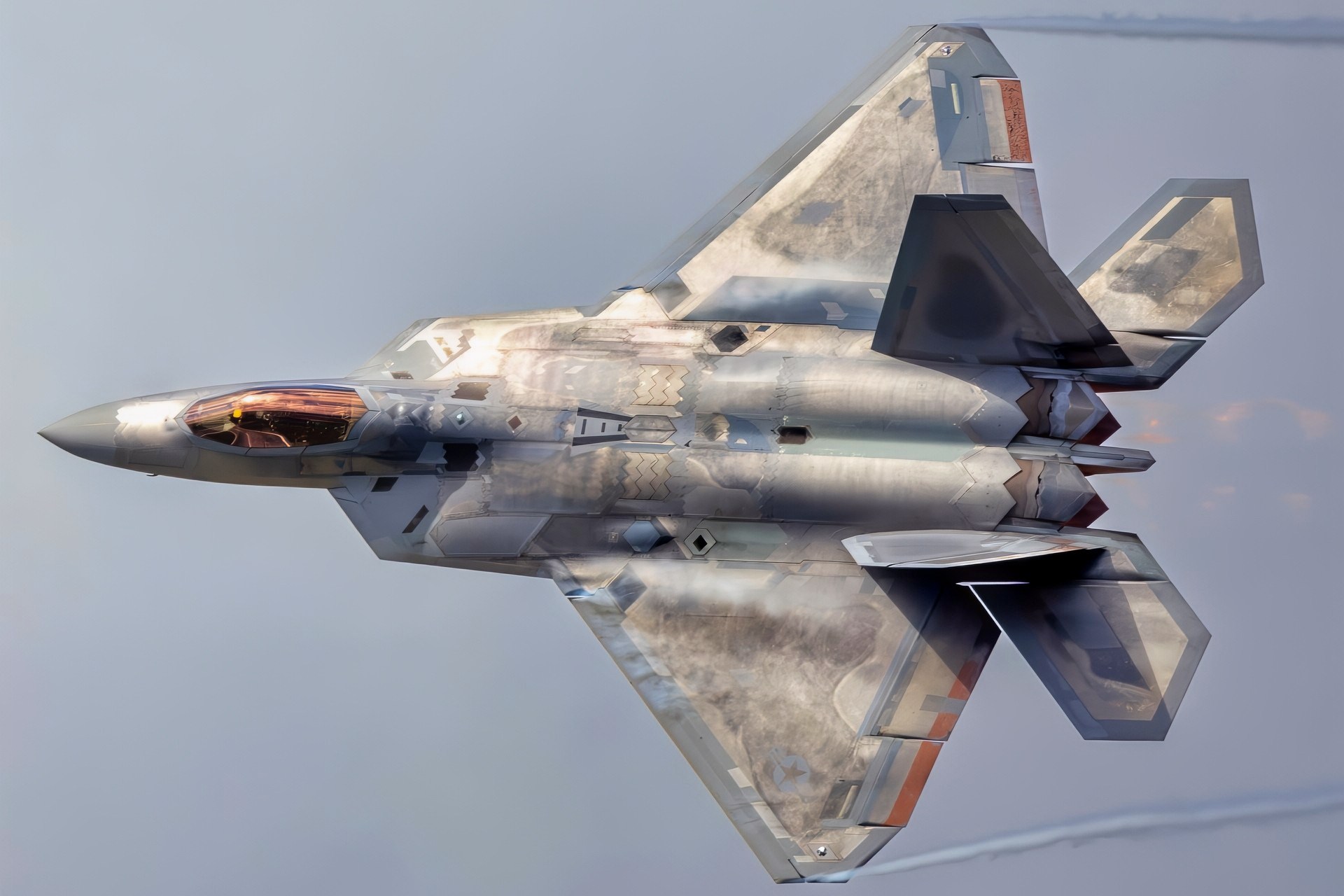
An F-22 Raptor performs an aerial demonstration at Naval Air Station Oceana, Virginia, Sept. 21, 2025. Designed for both air superiority and ground attack missions, the F-22 demonstrates the flexibility and power of fifth-generation fighter technology. (U.S. Air Force photo by Staff Sgt. Lauren Cobin)
-And here’s the part that should worry Washington most — Iran doesn’t need a navy to do it. A handful of mines, or even a rumor of them, is enough.
The Strait of Hormuz Crisis Goes from Bad to Worse
This week, Iran threatened to “completely” block the Strait of Hormuz after it was revealed that indirect negotiations would end. Since then, U.S. President Donald Trump has insisted that talks are continuing and said a deal remains possible, but the incident proves that opening the Strait of Hormuz is not guaranteed – and even if negotiations eventually succeed, Iran has already proven that it has the ability to threaten global commerce even without a full Navy.
So, what happens if the Strait of Hormuz remains closed, and if the regime in Tehran chooses to follow through on its threat of “completely” blocking it?
Why Hormuz Matters So Much
The Strait of Hormuz is one of the most important economic arteries on the planet. Before the Iran War began, roughly 20 million barrels of oil passed through the strait every day, representing around 20% of global petroleum consumption. Roughly a quarter of all seaborne oil would pass through the waterway.
But the geography of the Strait makes it extremely vulnerable – and that’s why Iran has not had a hard time causing so much disruption. At its narrowest point, Hormuz is only 29 nautical miles wide, and shipping traffic is concentrated into even narrower channels within it.
There are alternative pipelines and export routes, but they cannot come close to replacing the volume that normally moves through the Strait.
Iran refusing a deal with the United States and continuing to mine the Strait would be a disaster for the global economy, and every day that passes without a deal being made, more economic damage is being done. A permanent closure would be even worse.
F-22 Raptor High in the Sky. Image Credit: Creative Commons.
How Iran Could Keep Hormuz Closed
A common misconception is that, because President Trump has repeatedly proclaimed that U.S. forces have “obliterated” the Iranian Navy, controlling Hormuz is easy. But that’s far from the truth. The challenge would not, after all, be sinking American warships – but simply making commercial shipping too dangerous and expensive to operate normally. Iran has already done this by mining the strait with small vessels and introducing uncertainty that drives shipping insurance rates through the roof.
Iranian forces have also used a combination of drones, anti-ship missiles, and swarms of small fast boats to intimidate passing commercial vessels. None of these systems can individually match the might of the U.S. Navy, but together, they create enough risk that ships cannot safely pass.
Mining operations are particularly concerning, too. Even just a small number of naval mines can force shipping companies and insurers to completely halt operations while mine-clearing efforts take place – and all it takes is a rumor of mining activity for commercial traffic to come to a grinding halt.
And then there’s the matter of mine clearance, which is time-consuming, costly, dangerous, and needs to be repeated every single time there is a rumor that mines have been laid.
What Happens If the Closure Becomes Permanent?
The economic consequences of a permanent closure would be dire. In April, the head of the International Energy Agency (IEA) warned that the world was facing the worst oil crisis in history.
“We are facing the biggest energy security threat in history,” Fatih Birol told CNBC. “As of today, we’ve lost 13 million barrels per day of oil…and there are major disruptions in vital commodities.” He also said that permanent closure would cause the “largest energy crisis we have ever faced.”
Already, some assessments have suggested that shipments through the Strait of Hormuz have declined by as much as 95% since the war in Iran started. In April, J.P. Morgan warned that oil prices could surpass $150 if disruptions persist into mid-May – and it is already early June. Other analysts warn that prices could even rise above $200. Prices like that would mean gas prices of roughly $7 or more in the United States, breaking records set during the Biden administration.
Higher oil prices would also likely push airline ticket prices higher, increase shipping and freight costs, and raise food prices due to rising transport costs. Over time, inflation would be felt everywhere.
Alternative Sources Of Fuel
During his April CNBC interview, the IEA’s Fatih Birol predicted that an ongoing closure of the Strait would push global governments to focus more heavily on developing alternative energy sources – but those sources would include nuclear.
“I expect, first of all, nuclear power will get a boost,” he said, adding that renewables like solar, wind, and others will “grow very strongly.”
Birol even suggested that “alternative fossil fuels” could make a comeback – most likely, coal.
“In some countries, I expect the coal may also see a push and go back up, especially in some big countries in Asia.”
A permanent closure could, therefore, transform the global energy economy – but it won’t be an immediate fix, and prices will continue to rise until all demand can be fully satisfied.
About the Author: Jack Buckby
Jack Buckby is a British researcher and analyst specializing in defense and national security, based in New York. His work focuses on military capability, procurement, and strategic competition, producing and editing analysis for policy and defense audiences. He brings extensive editorial experience, with a career output spanning over 1,000 articles at 19FortyFive and National Security Journal, and has previously authored books and papers on extremism and deradicalization.


