

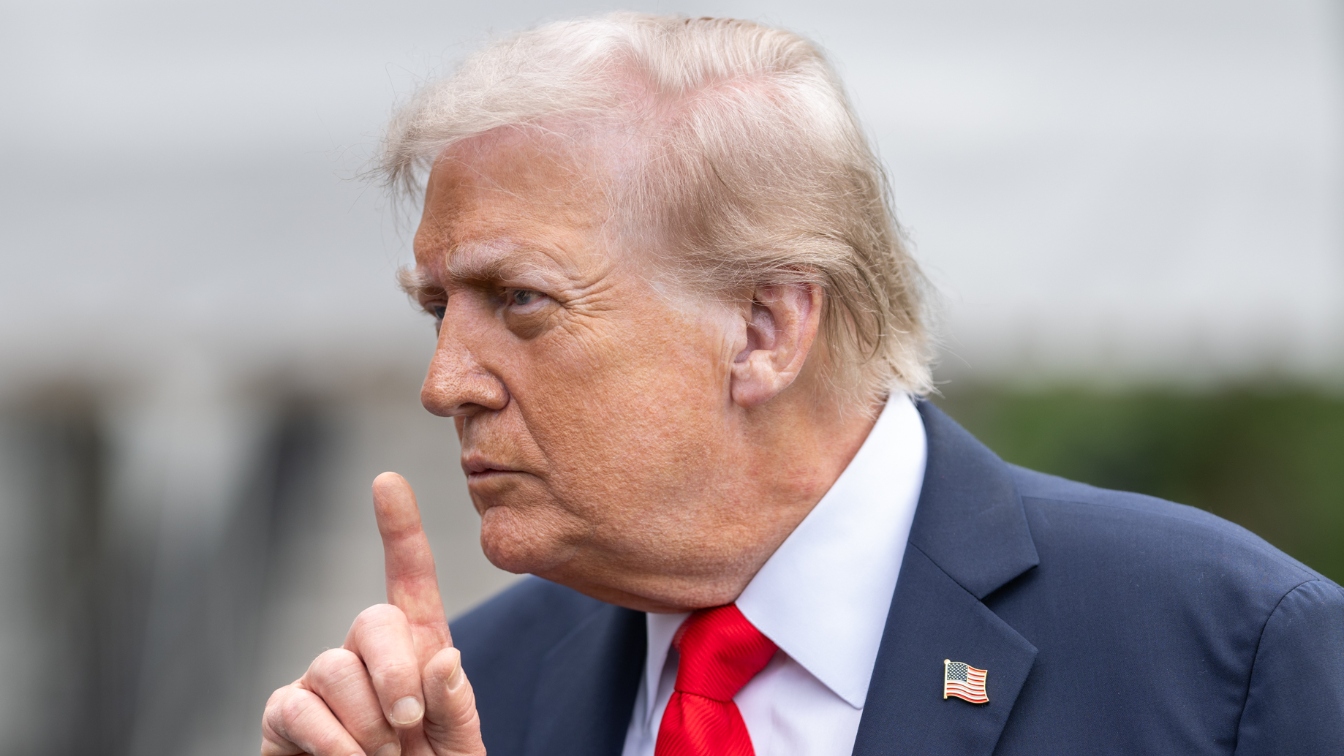
Rubio Wants the World’s Oil to Route Around Iran. The Bypasses Move Nine Million Barrels. The Strait Moved Twenty: Secretary of State Marco Rubio, in a Fox News interview that aired Saturday, August 1, described the Iran war as the start of a permanent geopolitical shift in how energy leaves the Middle East, with the region’s producers building routes that no longer pass through the Strait of Hormuz.
His remarks ignited fierce debate among energy economists, and the fastest reality check is four months old: in April, Iran struck a pumping station on Saudi Arabia’s flagship bypass pipeline and cut its throughput by 700,000 barrels per day.

President Donald J. Trump signs executive orders, Friday, May 9, 2025, in the Oval Office. (Official White House Photo by Molly Riley)
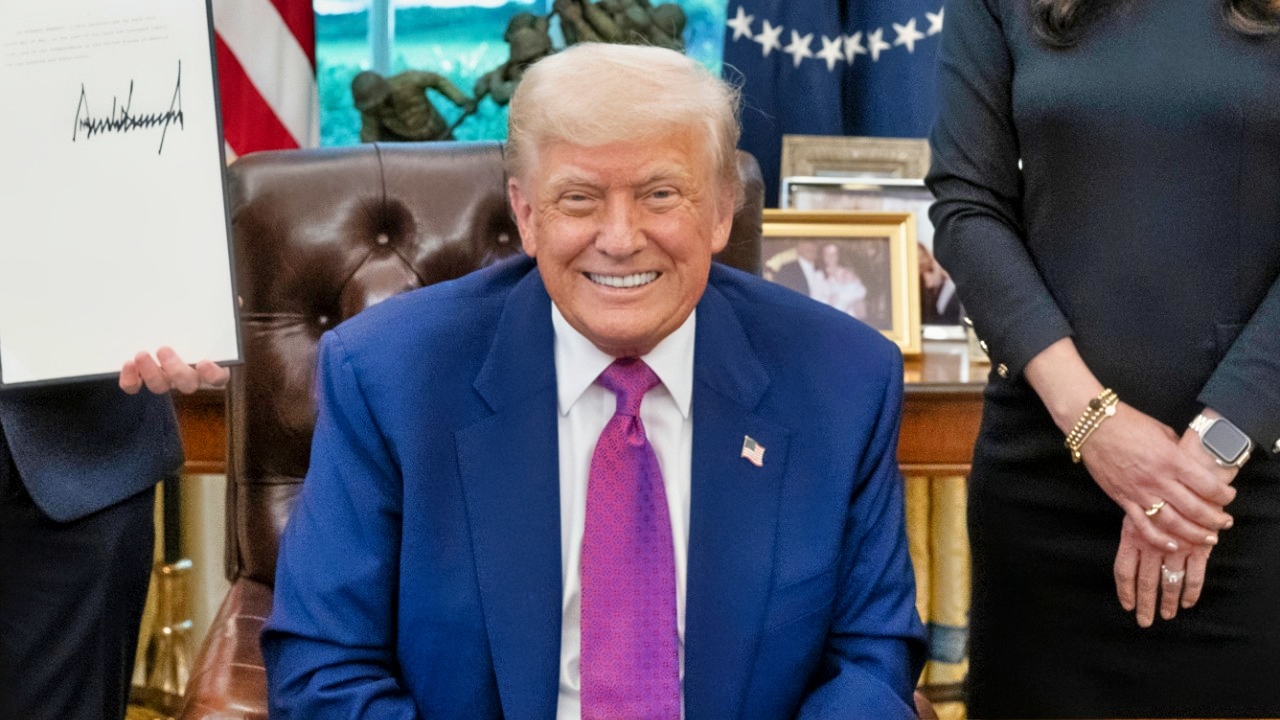
President Donald J. Trump holds a bill signing with members of Congress, Friday, May 9, 2025, in the Oval Office. (Official White House Photo by Molly Riley)
The routes meant to escape the war sit inside it.
The ambition is real, and so is the construction.
The question is whether pipes laid over years outrun a conflict measured in weeks, and whether they change the one number that matters.
The Arithmetic Nobody Repeals
Before the war, the 24-mile strait carried roughly 20 million barrels of oil per day, about a fifth of global consumption, plus a fifth of the world’s liquefied natural gas, most of it Qatari.
The strait has been effectively shut since late February, and total regional flows have fallen from 20.7 million barrels per day to 14.6 million, sustained by the overland lines.
Their ceiling is the problem.
Saudi Arabia’s East-West Pipeline, repaired after the April strike, is pumping about seven million barrels daily to the Red Sea port of Yanbu, and the UAE’s line to Fujairah adds another 1.8 million barrels.
Al Jazeera’s own accounting puts the combined capacity of all alternative pipelines at a maximum of nearly 9 million barrels, and estimates of genuinely spare bypass capacity range from the EIA’s 2.6 million to the IEA’s 3.5 to 5.5 million. Kuwait, Qatar, and Iraq have no meaningful lines at all.
Even Iran built itself a bypass at Jask on the Gulf of Oman, rated at 300,000 barrels daily and barely used before the war.
The Race Between Pipes and Missiles
The build-anyway case deserves its hearing.
The UAE announced in late May that a new bypass pipeline stood nearly half complete, with an expansion targeted for 2027, and U.S. Energy Secretary Chris Wright argues Hormuz’s leverage shrinks permanently: “This is a card you can play once,” he said of Iran’s blockade. Gulf officials describe a trust gap with Tehran that outlasts any ceasefire.
The darker implication comes from the analysts: CSC Commodities’ Sasha Foss notes that “before they are completed is the point of maximum leverage for Iran,” which turns every month of construction into an argument for Iranian escalation now.
Rystad’s Jennifer Li calls the pipelines a geopolitical hedge rather than a replacement, and Rapidan’s Bob McNally compresses the whole problem into five words: “The problem isn’t the waterway.”
Every Exit Leads Into Range
McNally’s point is the map’s. Oil rerouted to Yanbu sails south through the Bab al-Mandeb Strait, where Houthi forces attacked a Saudi tanker in late July, and nine tankers have turned back; analysts warn a dual closure of both straits would put a quarter of the world’s oil and gas supply at risk. Fujairah sits outside Hormuz but inside the range of Iranian missiles and drones.
The pipelines themselves, as the analysts interviewed by Al Jazeera stress, are static, high-value targets that Iran has demonstrated it will hit at a distance.
And the hardest fact has no engineering answer: liquefied natural gas cannot be piped around anything.
The liquefaction plants, loading terminals, and tanker fleet that move a fifth of the world’s gas are located only in the strait, which is why economists warn that a full blockage would send Europe and Asia into open competition for every spare cargo on earth.
You Can’t ‘Solve’ the Strait of Hormuz Problem
Read honestly: the bypass push buys margin, not escape—more spare capacity, more storage, shorter crises, a thinner Iranian veto. It seems you can throw a lot of money at the Strait of Hormuz problem, but geography wins the day.
More: Trump Is ‘Trapped’ in the Strait of Hormuz
About the Author: Harry J. Kazianis
Harry J. Kazianis (@Grecianformula) was the former Senior Director of National Security Affairs at the Center for the National Interest (CFTNI), a foreign policy think tank founded by Richard Nixon based in Washington, DC. Harry has over a decade of experience in think tanks and national security publishing. His ideas have been published in the NY Times, The Washington Post, The Wall Street Journal, CNN, and many other outlets worldwide. He has held positions at CSIS, the Heritage Foundation, the University of Nottingham, and several other institutions related to national security research and studies. He is the former Executive Editor of the National Interest and the Diplomat. He holds a Master’s degree focusing on international affairs from Harvard University.


