

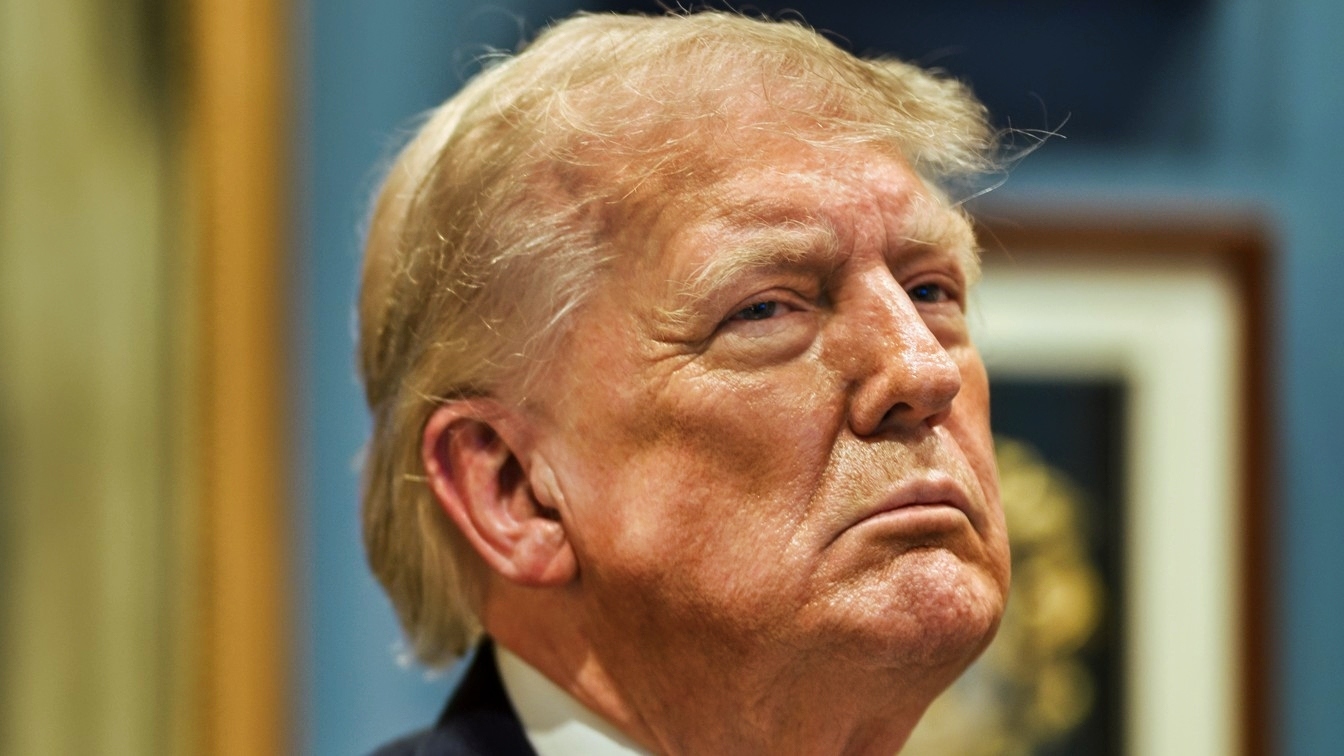
Tehran’s Gamble: Keep Hormuz Closed Until the World Chooses Between Iranian Control and an Oil Depression: President Donald J. Trump announced late on August 1 that he canceled the planned attack on Iran because “the perimeters of a deal” had been agreed, terms he says include the immediate and total reopening of the Strait of Hormuz.
Sunday brought the other half of the story. Iran’s semi-official Mehr agency, citing military officials, dismissed the claim as simply a new lie, Iranian media framed the canceled attack as an American retreat, and Politico reported that Iran’s demands leave the president few good options.

President Donald Trump is joined by Secretary of Commerce Howard Lutnick, Vice President JD Vance, British Ambassador Peter Mandelson, U.S. Trade Representative Jamieson Greer, and Secretary of Agriculture Brooke Rollins, while announcing a trade agreement with the U.K., Thursday, May 8, 2025, in the Oval Office. (Official White House Photo by Molly Riley)
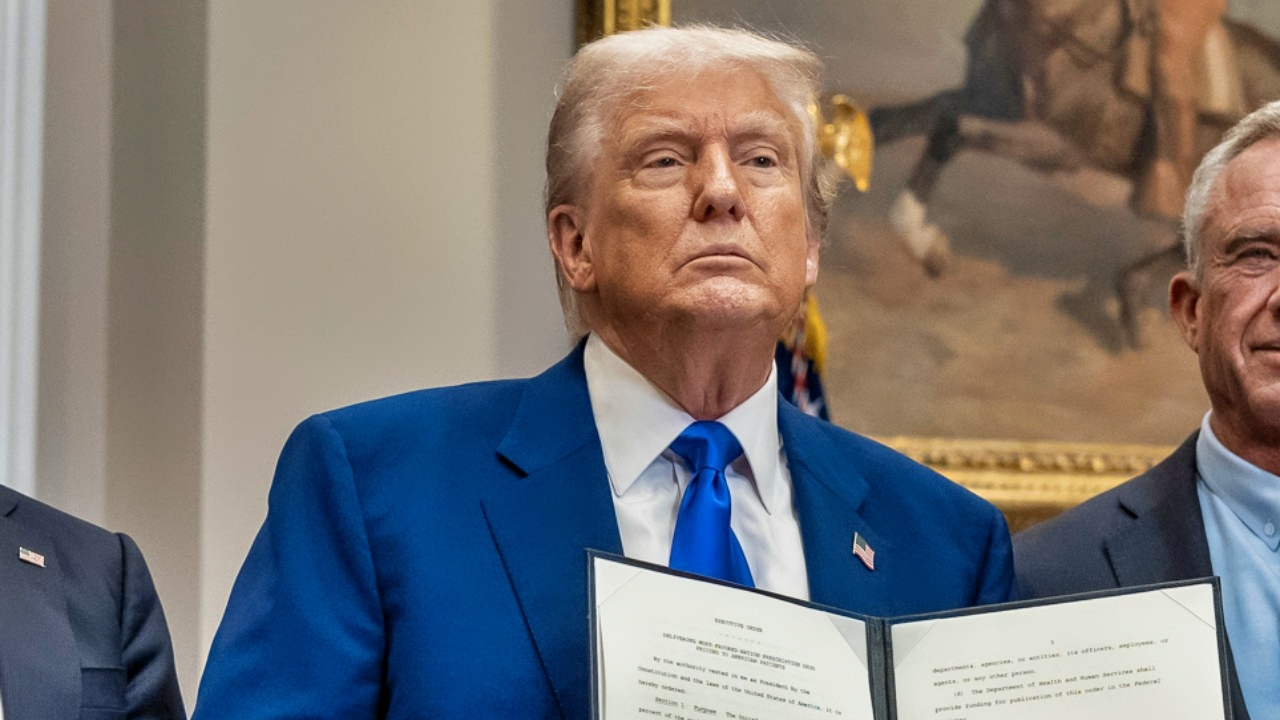
President Donald Trump signs an executive order on Delivering Most-Favored-Nation Prescription Drug Pricing to American Patient at a press conference with Health and Human Services Secretary Robert F. Kennedy Jr., Monday, May 12, 2025, in the Roosevelt Room. (Official White House Photo by Joyce N. Boghosian).
Behind the whiplash sits a harder reading of Tehran’s behavior, and it runs through the world’s oil inventories rather than its diplomacy.
Iran appears to be betting that it can hold the strait longer than the world can hold its reserves, and that when the barrels run low, de facto Iranian control of Hormuz becomes the price of avoiding a global depression.
What Tehran Keeps Saying With Actions
The record of refusal is consistent. Iran’s formal response to Washington’s peace plan in March asserted the country’s “natural and legal right” over the strait.
Five months and thousands of sorties later, Tehran rejected frozen-funds relief in late July and warned of a formal transit ban. Foreign Policy summarized the demand structure as massive financial relief plus sovereignty over the strait.
By July 31, CNN reported that American officials fear regime figures are “more committed than ever” to wielding the waterway, directly against the president’s claims that Iran is begging for a deal.
The ultimatum record reads like a graveyard: the 48-hour demand in March to fully open the strait, rebuffed by parliament’s speaker within a day; the ten-days-to-deal warning; April’s power-plant threats; a June memorandum that held for a week; the July 25 pause that produced no talks. The strait stayed shut through every deadline.
The Price Iran Pays, and Why It Pays It
The costs to Tehran are not in dispute. Its navy and air force have been shattered by Washington’s telling; its government reports 46 dead and more than 400 wounded since fighting resumed, and its refineries and bridges burn on American target lists.
The asymmetry is the point. With Iranian exports already strangled by the American blockade of its ports, the marginal cost of keeping Hormuz closed has collapsed: Iran earns nothing from an open strait it is barred from using. The regime is spending pain it was going to absorb regardless, and converting it into leverage.
The Clock on the Other Side
The West’s answer to the blockade was inventory. On March 11, the International Energy Agency announced its largest-ever release: 400 million barrels from 32 countries, 172 million of them American, structured as a bridge of roughly 120 days at 3.3 million barrels per day.
Brookings warned in May that this was a time-limited buffer, and that any follow-on releases would draw from already-reduced national stockpiles.
The American numbers tell the story plainly: the Strategic Petroleum Reserve fell last week to its lowest since 1983, and the Government Accountability Office warned in May that more than a quarter of what remains is “not available for drawdown” because the infrastructure itself needs repair.
Physical tightness, the phase energy analysts said would follow the buffer’s exhaustion, is the current phase.
What De Facto Control Already Looks Like
Iranian control of the strait is not a hypothetical endpoint; a version of it is already in operation. Tankers transit a Tehran-designated corridor with Revolutionary Guard permission, pay what Iran calls service fees, and reverse course on radio warnings. Marine insurers treat the Gulf as functionally closed. Washington’s own flirtations with tolls and a joint venture concede the premise that the waterway now has two gatekeepers.
The Arithmetic Tehran Watches
The counter-case is real. The canceled bombing campaign remains on the table, energy strikes stay on the table, and regimes have miscalculated their own endurance before.
But one side’s clock in this war is political, and the other’s is measured in barrels. The IEA sized the world’s emergency release for 120 days. Day 120 was July 9. The strait has now been closed longer than the buffer built to outlast it, and Tehran has been counting alongside everyone else.
About the Author: Harry J. Kazianis
Harry J. Kazianis (@Grecianformula) was the former Senior Director of National Security Affairs at the Center for the National Interest (CFTNI), a foreign policy think tank founded by Richard Nixon based in Washington, DC. Harry has over a decade of experience in think tanks and national security publishing. His ideas have been published in the NY Times, The Washington Post, The Wall Street Journal, CNN, and many other outlets worldwide. He has held positions at CSIS, the Heritage Foundation, the University of Nottingham, and several other institutions related to national security research and studies. He is the former Executive Editor of the National Interest and the Diplomat. He holds a Master’s degree focusing on international affairs from Harvard University.


