

The polls close tonight. The conflict in Iran doesn’t close with them. On the eve of the midterms, the US hit Qeshm Island in the Strait of Hormuz. American officials described the strikes as limited and defensive, a response to IRGC gunners firing surface-to-air missiles at a US aircraft.
Iran’s state news agency IRNA reported several explosions across the island. It was the first real kinetic action in a conflict that has been stuck in a grinding stalemate for months.
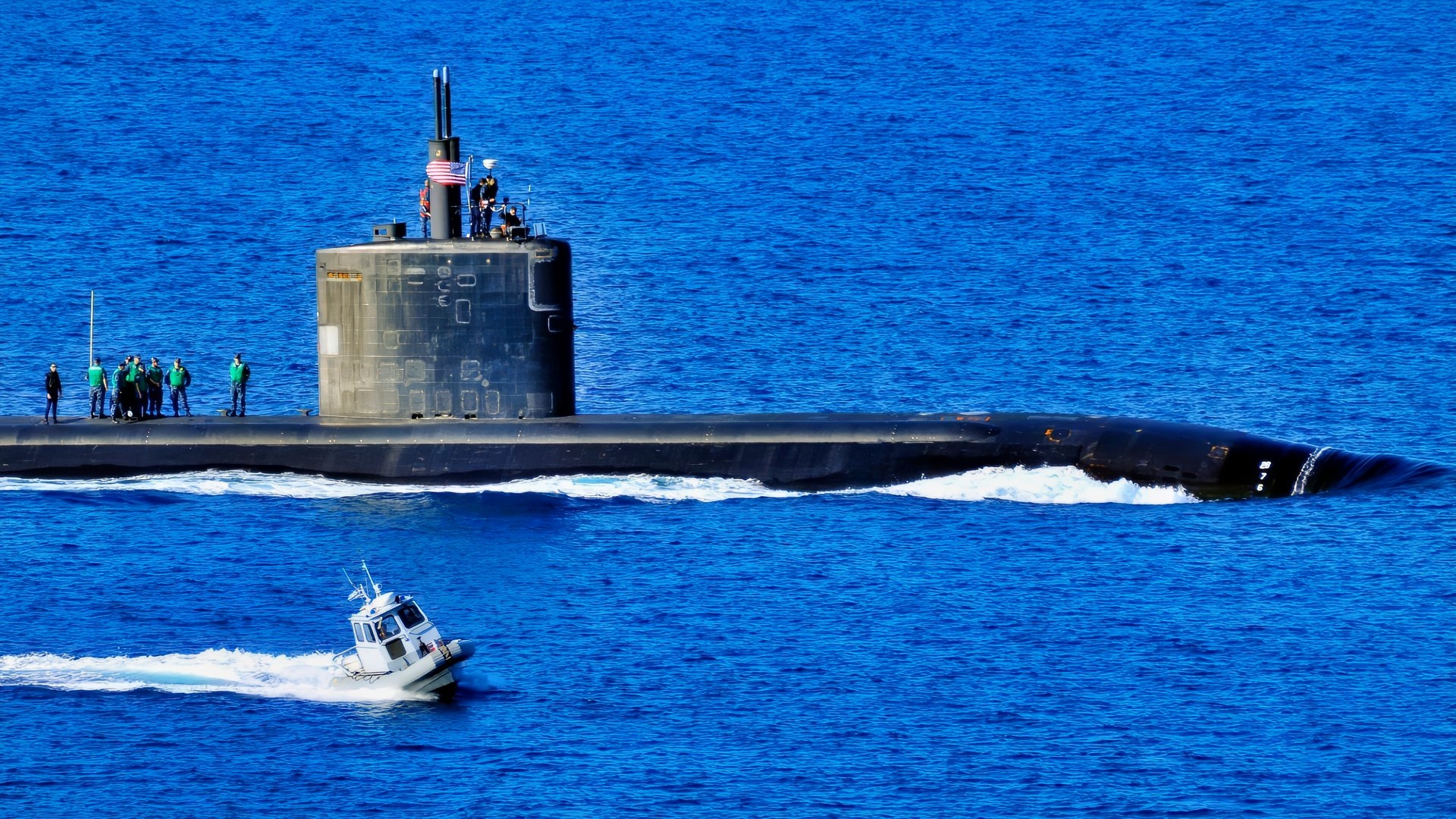
A harbor security boat escorts the attack submarine USS Annapolis (SSN 760) as the ship departs Souda Bay, Crete, following a port visit on March 20, 2010. DoD photo by Paul Farley, U.S. Navy. (Released)

The aircraft carrier USS Gerald R. Ford (CVN 78) completes the first scheduled explosive event of Full Ship Shock Trials while underway in the Atlantic Ocean, June 18, 2021. The U.S. Navy conducts shock trials of new ship designs using live explosives to confirm that our warships can continue to meet demanding mission requirements under harsh conditions they might encounter in battle. (U.S. Navy photo by Mass Communication Specialist 3rd Class Riley B. McDowell)
Then the president told Axios he was in no hurry to restart the fighting. Washington is continuing to send mixed signals, and everyone from Tehran to Doha to Jerusalem is trying to read tea leaves.
The US edition of The Independent laid out three scenarios for where this goes once the votes are counted: a negotiated peace deal, a renewed bombing campaign, or something far darker. Having spent a career watching policymakers convince themselves the next strike will break the enemy’s will.
The Peace Deal Is The Only Real Exit
Talks are happening, and they’re more serious than the rhetoric suggests. Qatar is leading the mediation. According to Axios, the Qataris are trying to get Tehran to let UN inspectors back into its bombed nuclear sites in exchange for some sanctions relief from Washington.
The Saudis have reportedly asked the White House to slow down and give negotiators more time.
Iranian Foreign Minister Abbas Araghchi says consultations have intensified. He also warned that any US military action will draw a heavier response than before. Tehran’s offer would reopen the Strait of Hormuz to commercial shipping and commit Iran to further nuclear talks, and Iran claims it could implement the whole thing within two days.
However, Iran’s core conditions haven’t budged, and the administration has insisted on nuclear concessions before any economic relief. That’s the gap. Vice President JD Vance has reportedly reached out to hardliners in Tehran, and Trump says he approved it. Iran’s IRGC, which is the real power in the country, has no desire to offer anything substantial.
The pressure for a deal is as domestic as it is diplomatic. Inflation is climbing, and gas prices are at record highs. Even Eric Brewer of the Nuclear Threat Initiative, who thinks Trump is leaning toward more strikes, told The Hill the president understands he’ll eventually need some kind of agreement to end this.
This is the only scenario where the conflict actually ends.
More Bombing Is The Path Of Least Resistance
The second option is a return to the kind of campaign that opened this fighting on Feb. 28. Time reported that Defense Secretary Pete Hegseth discussed renewed strikes with Benjamin Netanyahu in Israel last month.
The target list includes energy infrastructure, nuclear facilities, and Iran’s missile and drone stocks. CENTCOM has multiple strike packages ready to go, and Netanyahu is reportedly pushing Trump to hit Iran right after the midterms.
Sen. Chris Murphy says he’s been briefed on the plan. He called it “insane,” warned it won’t achieve its objectives, and said it will kick off a new cycle of escalation.
Eight months of on-again, off-again strikes haven’t pried any significant concessions out of Tehran. Hitting oil terminals and power plants won’t suddenly convince the regime to give up enrichment and hand back control of Hormuz.
Iran is already planning for it. The Jerusalem Post reports that Tehran is preparing to go after the soft underbelly of the US and its allies: energy facilities, big slow ships, and other economic targets. That spillover hits our Gulf partners first, and the global energy market right behind them.
Bombing is the easy option. It works only if you keep the pressure up. This cycle of starting and stopping doesn’t weaken the regime; it gives them respite to replenish and reorganize their defenses.
The Nuclear Option Is The Wildest And Least Believable Claim On The Table
This is where it gets strange and completely off the rails. On Monday, Tucker Carlson claimed the administration may be days away from a nuclear strike on Pickaxe Mountain, under pressure from Netanyahu. His only backing was an unnamed source. He offered no evidence.
Pickaxe Mountain itself is a real problem. It sits about 2 km from Natanz and 140 miles south of Tehran and hosts two deeply buried tunnel complexes. As Al Jazeera noted, it was left alone during the June 2025 strikes on Fordow, Natanz and Isfahan and has gone largely untouched in this war. Trump has been threatening it since mid-July.
The White House has floated the 22,000-pound GBU-43/B MOAB for the job. However, the MOAB is an air-burst weapon built to clear surface targets. It doesn’t punch through granite.
That’s what the 30,000-pound GBU-57 Massive Ordnance Penetrator is for, and the Jerusalem Post’s sources doubt even the MOP can reach the deepest tunnels. Some military analysts told The Hill that air strikes could close some entrances but can’t destroy the site.
Carlson’s logic is that conventional weapons can’t get there, so a nuke is the only option. That’s not going to happen. The president isn’t going to order a nuclear strike on anyone without notifying Congress. And that isn’t going to happen.
Collapsing adits and sealing entrances buys time. Ground options exist too. The US pulled off a ground operation inside Iran earlier this year to rescue downed pilots, and Israel raided and destroyed an underground missile facility at Masyaf in Syria in 2024.
That kind of raid can get ugly and is risky. It’s also a lot less ugly than the first combat use of a nuclear weapon since Nagasaki.
The Post also reports Iran has no significant active nuclear operations at Pickaxe right now. That undercuts the urgency. To repeat, the US is not going to nuke Pickaxe Mountain.
So Which Road Does Washington Take?
Trump has said the war will end soon, one way or the other, through negotiation or escalation. Tehran is betting on the first. The Iranians believe a bad night for Republicans will push the president toward concessions to get out of a war that keeps eating into his approval numbers.
But Trump’s statement that the US is not in any hurry also reflects the Iranian economy. While US prices have risen, Iran’s economy is close to collapse, with inflation reaching 88.7 to 90.0 percent in late 2026, driven by a collapsing local currency, U.S. sanctions, the naval blockade, and ongoing regional conflict.
Food prices have surged 127 to 130 percent year-on-year, with staples like cooking oil, eggs, and rice seeing extreme hikes (up to 200 to 300 percent, depending on the item).
The Iranian rial has plummeted to historic lows, trading at roughly 2.6 to 2.7 million rials per U.S. dollar.
We will probably see some of both. A short, sharp round of strikes to show resolve, followed by a deal that both sides can sell at home as a win. That’s how these things usually go. None of it is pretty.
The polls close tonight, and Tehran is banking on a Democratic clean sweep to get what it wants. The conflict is still waiting to be counted.
About the Author: Steve Balestrieri
Steve Balestrieri is a National Security Columnist. He served as a US Army Special Forces NCO and Warrant Officer. In addition to writing on defense, he covers the NFL for PatsFans.com and is a member of the Pro Football Writers of America (PFWA). His work was regularly featured in many military publications.


