


Key Points and Summary – India’s Arjun main battle tank was meant to showcase indigenous prowess.
-Instead, decades of overreach, underfunding, and weak industrial capacity produced an overweight, unreliable vehicle that never met Army needs.
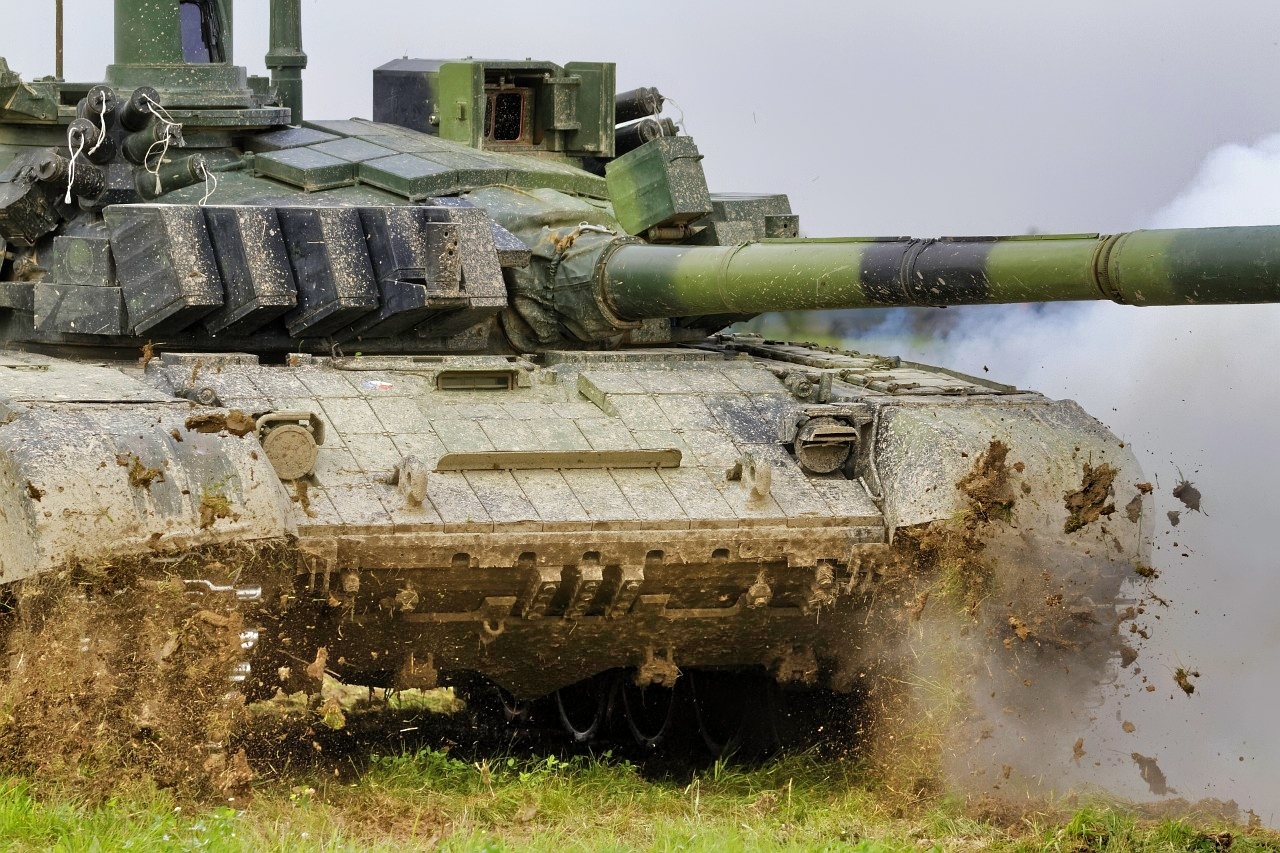
T-72 Tank. Image Credit: Creative Commons.
-Early prototypes suffered from brittle armor, bad ergonomics, overheating engines, and no modern fire control, forcing New Delhi to lean harder on imported T-72s and T-90s.
-Only with German and later Israeli help did the Arjun Mk 2 begin to look viable, and even that variant is delayed by engine bottlenecks.
-With barely 141 tanks in service and most not combat-ready, Arjun remains a cautionary tale in defense indigenization.
Arjun vs Reality: How India’s ‘Homegrown’ Tank Program Went Off the Rails
The Arjun is the first domestically designed and produced tank in India’s history (though it was not entirely designed by India). The program has been mired in delays, however, with early versions of the tank possessing some major flaws.
It was not until 2010 that the Arjun, with the help of Israel, underwent an acceptable redesign. It is currently undergoing further trials and testing.
India’s Journey for a Homegrown Tank
The initial development and testing of the Arjun was anything but impressive. The first issue was overconfidence. After soundly defeating Pakistan in 1971, the Indian military believed it could do the same to any enemy.
This confidence had the downside of promoting stagnation and complacency, which dramatically slowed the tank’s development. The Indian government was close to broke in the 1970s, which meant funding for the program was barely existent.
With the Americans arming Pakistan with modern aircraft capable of delivering nuclear weapons, the Indians turned to the Soviets for military equipment, which led to the T-72 being selected as India’s future main battle tank. The timing on this deal, however, was poor, as the Soviets would soon invade Afghanistan and draw the condemnation of the whole world.
But with Pakistan and America deepening their alliance, India had no choice but to rely on the Soviets for arms. This relationship put the Arjun on the backburner.

T-72 Russian Tank. Image Credit: Creative Commons.
Development of the Arjun
Setting geopolitics aside, India’s industry was simply not ready to produce an MBT from the ground up. Attempts were made to domestically produce a 1500-horsepower engine, but they ended in disaster. Poor craftsmanship led to brittle armor, improperly cast engine cylinders, and faulty suspensions.
To help the Arjun project, the Indians enlisted the help of KrausMaffei, the designers of the Leopard 2. This may explain why the first publicly unveiled Arjun tanks resembled the Leopard 2 so closely.
Finally, in the 1980s, the first six prototypes were delivered for testing. They featured composite armor, 1400-hp MTU 838 Ka-501 diesel engines made by Germany, and German-made automatic transmissions.
The German-made powerplant gave the tank a top speed of around 72 kilometers per hour on roads. The armament was a domestically made, manually loaded 120-mm rifled cannon barrel that used two-piece ammunition. Between 1984 and 1987, India produced 10 prototypes, six of which were handed over to the Army for testing.
While the tank seemed impressive, initial testing revealed several significant flaws.
Ambition Meets Reality
Putting it bluntly, the early Arjun prototypes were a complete disaster. The turret was poorly designed and placed: If the driver were sitting in an unbuttoned position, traversing the turret would hit him on the head, causing serious injury.
When the turret was facing forward, the driver did not have enough space to escape from the driver’s hatch in an emergency. The tank lacked any sort of fire control systems (keep in mind the M1 Abrams and Leopard 2 were already in service at this point), which greatly affected the accuracy of the tank.
The tank’s weight exceeded the Army’s weight limit (40 tons) by 20 tons, and its larger size meant it could not be supported by India’s existing transportation infrastructure, nor could it cross many bridges. Additionally, the engines were prone to overheating and mechanical failure.
Despite the tanks’ abysmal condition, India proudly stated that it intended to acquire 2,000 Arjun tanks. In 2009, the tank once again took part in tests and exercises, with similar results. All the problems that had supposedly been fixed re-emerged.
The engine fared so poorly that India suspected they were sabotaged (much to the outrage of the Germans who produced them). With this in mind, it is no wonder India purchased so many T-90S tanks from a cash-strapped Russia— the Arjun had been a complete waste of everyone’s time and money.
Arjun Take 2
After 35 years of development, the Arjun was a total failure. Some trials were held against the Russian T-90, during which the Arjun supposedly outperformed its competitor in many areas, but regardless, everyone hated the tank. So, what did India do?
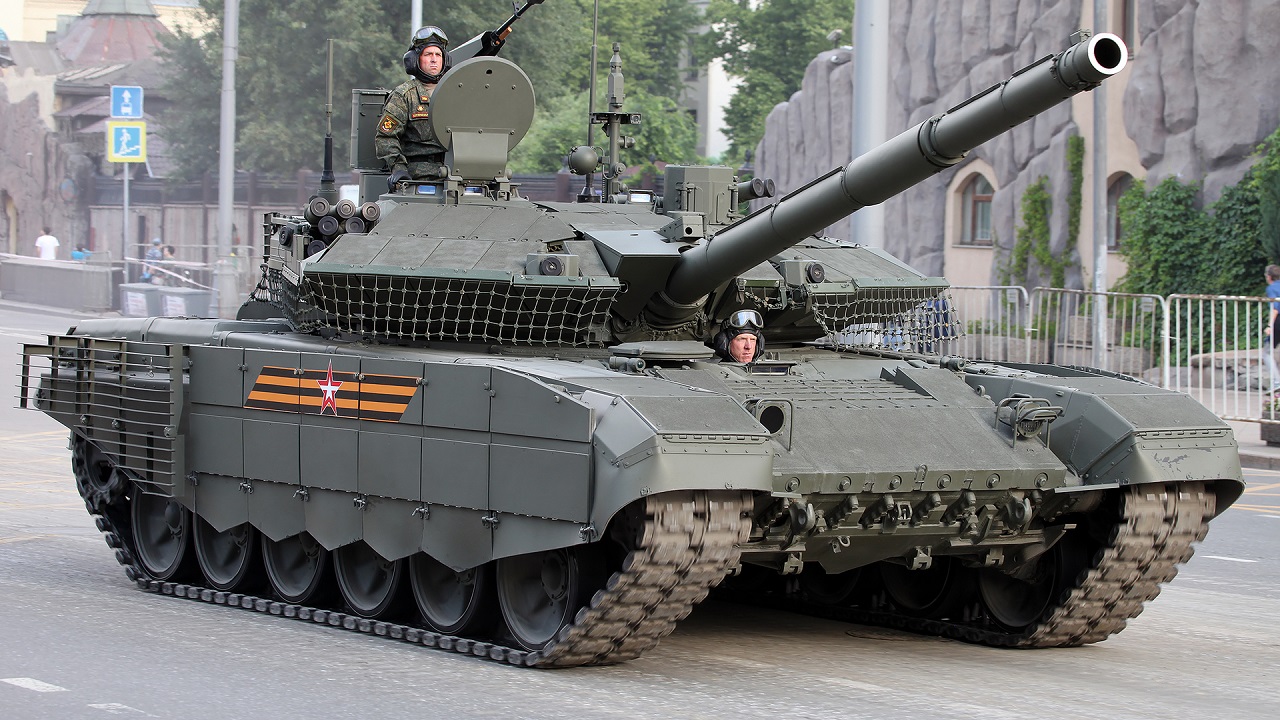
T-90M. Image Credit: Creative Commons.
They started development on an Arjun Mk 2. This time however, India enlisted the help of the Israelis, who essentially designed the tank for them. The tank was co-developed by Elbit Systems (the designers of the Merkava family). This new variant of the Arjun features better fire control and electronics, improved armor, better suspension, safer and more accessible ammunition racks, and many other improvements. The new and improved tank is expected to be operational by 2025–26, though it has been delayed because of engine bottlenecks.
Another variant of the tank, the Arjun Mk 1.5, was also unveiled. Currently the Indian Army has around 141 tanks in stock, about 90 percent of which are not combat-capable thanks to mechanical issues of one sort or another.
Despite this, either by misguided pride or sheer determination, India continues to fund its Arjun tank program, even as its replacement, the Future Ready Combat Vehicle, undergoes development.
Overall, the Arjun has been a complete embarrassment of a program, with its only successes coming from assistance from German or Israeli designers. It underperforms pretty much every tank on the market and has suffered from reliability issues and production bottlenecks throughout its entire history. Only time will tell if the Indians have learned the appropriate lessons from the program.
About the Author: Isaac Seitz
Isaac Seitz, a Defense Columnist, graduated from Patrick Henry College’s Strategic Intelligence and National Security program. He has also studied Russian at Middlebury Language Schools and has worked as an intelligence Analyst in the private sector.
More Military
The U.S. Military Is In ‘Crisis’
Canada’s F-35 Stealth Fighter Mistake Is Just Around the Corner
The Mach 2.23 F-4G Wild Weasel Has a Message for the U.S. Air Force


