

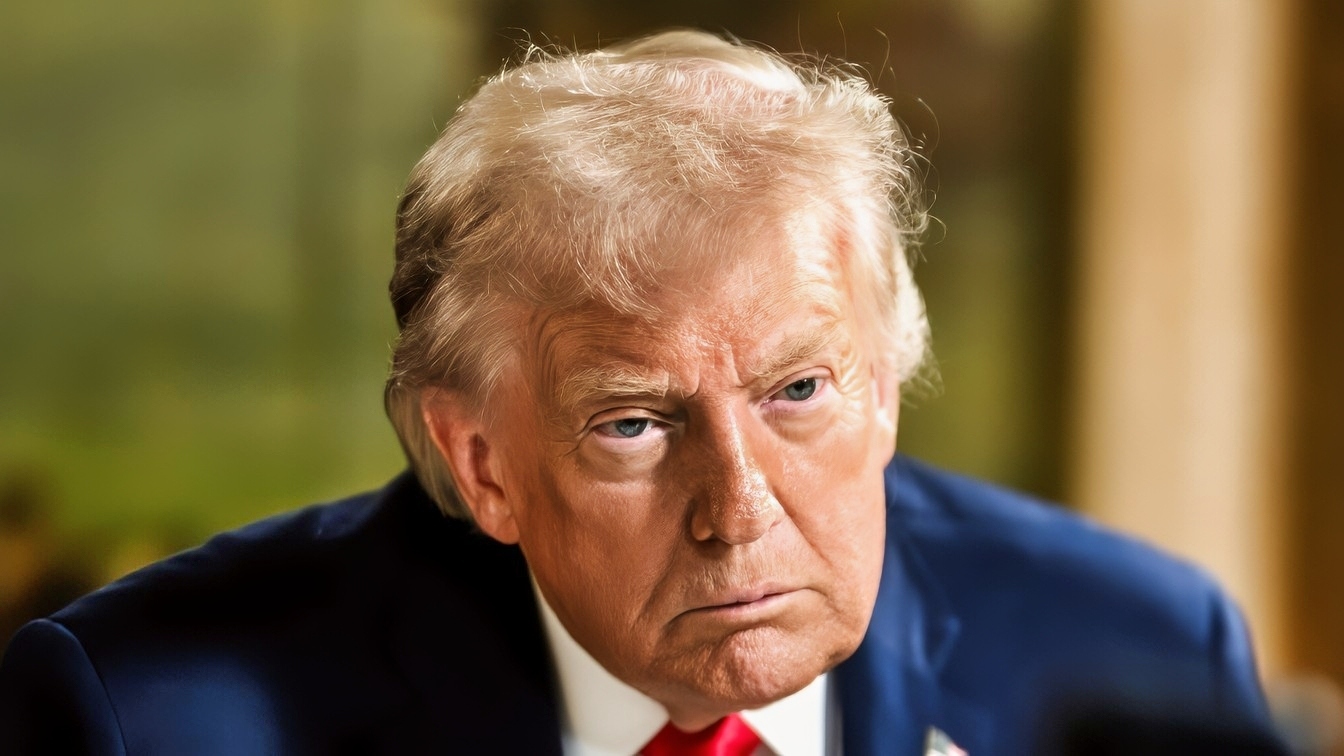
Iran has been ramping up its threats against the U.S. and commercial shipping near the Strait of Hormuz, as yet another tanker has been struck around the vital waterway.
The IRGC has repeatedly threatened civilian ships to avoid non-Iran-approved maritime routes, lest they suffer the consequences.
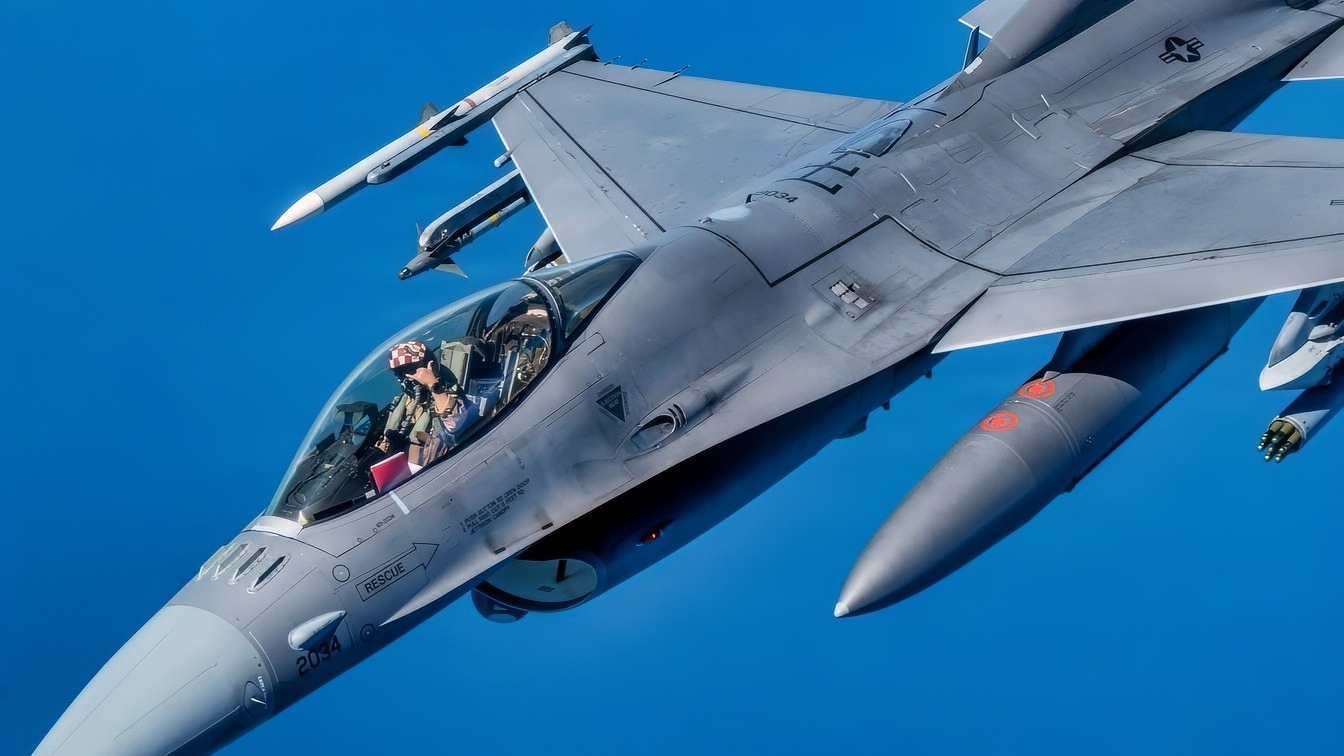
A U.S. Air Force F-16 Fighting Falcon aircraft flies in the U.S. Central Command area of responsibility Oct. 7, 2026. (U.S. Air Force photo by Tech. Sgt. Tiffany A. Emery)
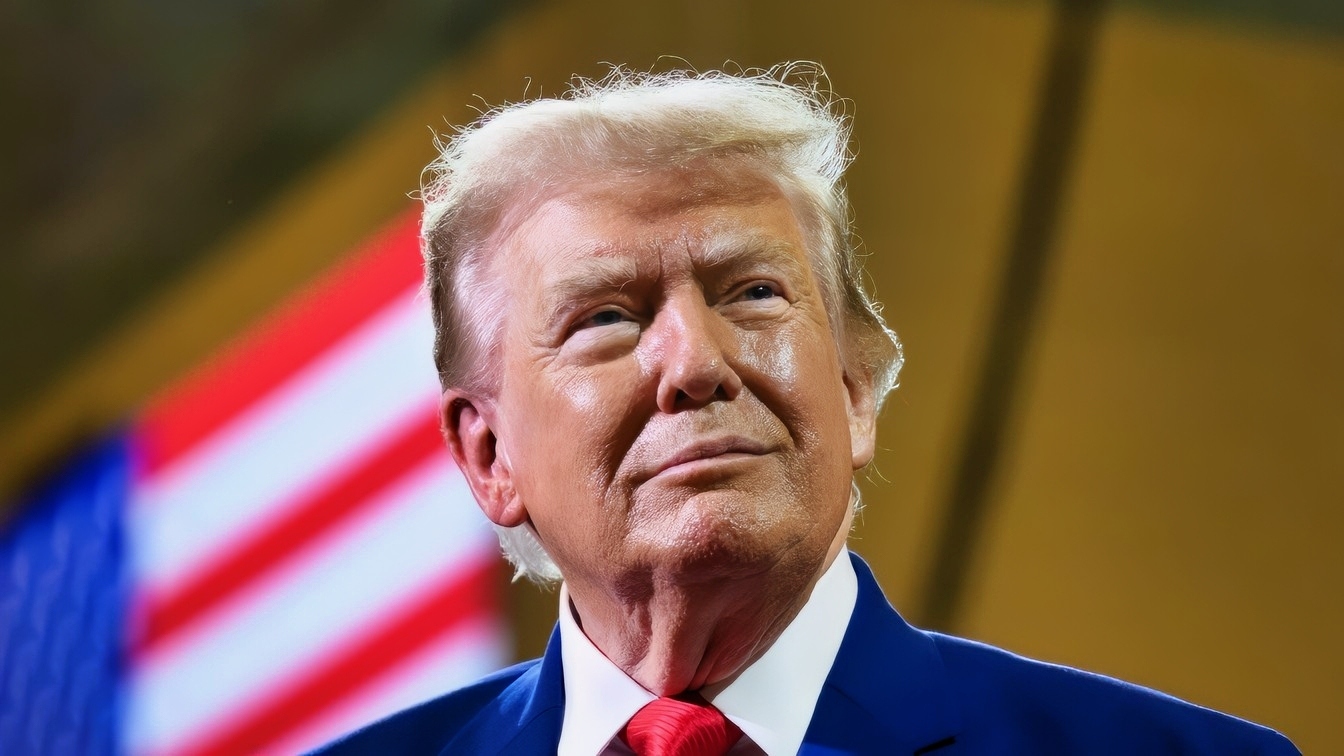
President Donald J. Trump delivers remarks on Trump Accounts, Wednesday, July 22, 2026, at Wheeler High School in Marietta, Georgia. (Official White House Photo by Molly Riley)
At the same time, the U.S. has been increasing its forces in the region as the USS Theodore Roosevelt (CVN-71) finally reaches the Middle East, bringing U.S. naval forces up to three carrier strike groups.
Despite President Trump’s recent statements, both Washington and Tehran may be preparing for a renewed hot phase in the war.
Iran Ramps Up its Threats
Another tanker was struck near the Strait of Hormuz, according to the UK Maritime Trade Operations (UKMTO) center. The maritime tracking agency has reported four separate attacks in the region.
The Iranian Navy likewise reported that four tankers had been struck by naval mines and caught fire around the Strait in the past 24 hours. According to Iran, the tankers were navigating in a “restricted area east of the Strait of Hormuz” with their transponders turned off.
UKMTO has not yet confirmed all four incidents. While most of Iran’s conventional navy has been destroyed, the Iranian navy still operates a fleet of small speedboats and patrol craft, which it uses to mine the Strait and harass civilian vessels.
The IRGC Navy has warned shipping companies not to use the American-backed southern route in the Strait, lest they face a “minefield of fire” and become “prey to the flames.”
Iran has also reportedly stepped up its efforts to target senior officials within the Trump administration. According to U.S. intelligence reports, Iran is considering plans to target officials with a dirty bomb or a chemical weapon in Washington, D.C. Sources told CNN that the intelligence reports are likely not an indicator of an immediate attack, but rather a sign that Iran is weighing possible avenues of escalation.
White House spokesperson Lauren Bis said in a statement that the U.S. is “monitoring any potential threats, but at this time there are no credible threats to the homeland.” The intelligence reports follow previous Iranian threats, which prompted Treasury Secretary Scott Bessent to relocate to a military base housing unit last week.
Escalation on the Horizon?
Meanwhile, the aircraft carrier Theodore Roosevelt has finally reached the Middle East, joining the USS George H.W. Bush (CVN-77), the USS George Washington (CVN-73), and the amphibious assault ship USS Boxer (LHD-4).
Previously, Roosevelt operated in the South China Sea and participated in joint naval exercises with Japan.
It is not yet clear whether Roosevelt will relieve one of the other two carriers in the area or whether the U.S. intends to maintain three carrier strike groups in the Middle East.

A U.S. Navy MH-60S Seahawk helicopter with Helicopter Sea Combat Squadron (HSC) 9 transfers ammunition between aircraft carriers USS George H.W. Bush (CVN 77), foreground, and USS Harry S. Truman (CVN 75) in the Atlantic Ocean Feb. 17, 2011. (U.S. Navy photo by Mass Communication Specialist 3rd Class Leonard Adams/Released)

Aug. 8, 2017 – The Arleigh Burke-class guided-missile destroyer USS Donald Cook (DDG 75) maneuvers between the Ticonderoga-class guided-missile cruiser USS Philippine Sea (CG 58), left, and the Nimitz-class aircraft carrier USS George H. W. Bush (CVN 77), right, for a photo exercise during exercise Saxon Warrior 2017, Aug. 8. Saxon Warrior is a United States and United Kingdom co-hosted carrier strike group exercise that demonstrates allied interoperability and capability to respond to crises and deter potential threats. (U.S. Navy photo by Mass Communication Specialist 1st Class Theron J. Godbold /Released)
George H.W. Bush has been in the Middle East since March, shortly after the war first began, and could potentially remain in the Arabian Sea until March 2027.
Many suspected that the U.S. could launch additional strikes against Iran once Roosevelt entered CENTCOM’s area of command.
So far, Trump has maintained that U.S. military strikes against Iran are ultimately unnecessary.
Last week, after meeting with Qatari Prime Minister Sheik Mohammed bin Abdulrahman Al Thani, the President said the war could end “fairly soon,” adding that the conflict was, at least militarily, “effectively over.” However, Trump has also said that the U.S. has not completely won the war. “We won,” he said during a Veterans Day address. “Now the question is when we want to end. We must have a total victory, not a 93% victory. It’s going to be total.”
According to some reports, Israel has been encouraging Trump to renew his attacks against Iran. Iran has meanwhile launched several drone attacks against U.S. radar installations in Bahrain in response to American small-scale attacks on Qeshm Island.
Underestimating Iran’s Will to Resist
For the past several months, the U.S. has been taking a hands-off approach to the war, instead opting to use economic blockades to strangle the regime.
While this has weakened Iran’s economy, it has not forced Tehran to capitulate as the U.S. hoped. Furthermore, Iran’s continued attacks on civilian ships in the Strait of Hormuz have surprised Washington, which figured that the military and economic pressure would cripple its offensive capabilities.
According to Ian Bremmer, the president and founder of Eurasia Group, Iran is likely to continue its attacks against tankers until the U.S. accepts its demands. “The presumption is that eventually Iran can’t handle the economic pressure and will accept better terms,” Bremmer said, adding that this view is likely a “misread of the Iranian leadership and their capacity to resist.”
Considering the pause in the past few months, it is easy to forget that Iran is fighting what it sees as an existential war for its survival.
To that end, the regime will take extreme measures to ensure its survival, even if it means damaging its own economy. Since the war began, officials in the U.S. and Israel have been very open about their intentions to force regime change in Iran.
Not only have these goals failed so far, but they have cemented a belief in Iran that the U.S. is an inherently untrustworthy partner that is actively looking for any way to undermine the regime, thus making negotiations more difficult.
About the Author: Isaac Seitz
Isaac Seitz, a Defense Columnist, graduated from Patrick Henry College’s Strategic Intelligence and National Security program. He has also studied Russian at Middlebury Language Schools and has worked as an intelligence Analyst in the private sector.


