

Key Points and Summary – Following the “Operation Midnight Hammer” strikes on Iran’s nuclear sites, the Pentagon has revised its damage assessment, now estimating that Tehran’s program has been set back by up to two years.
-This updated timeline, while better than the “few months” suggested by a previous intelligence leak, still means Iran could reconstitute its program before President Trump leaves office.
-When asked if he would strike Iran again, Trump’s blunt response was “Sure.”
-This sets a precedent for potential follow-on strikes, similar to how the US attacked Iraq’s WMD facilities in 1991, a decade after Israel’s initial 1981 raid on the Osirak reactor.
A Nightmare for Iran: Trump Says “Sure,” He’d Bomb Their Nuke Sites Again
Aahh, the oh-so-controversial Operation Midnight Hammer. What to make of it?
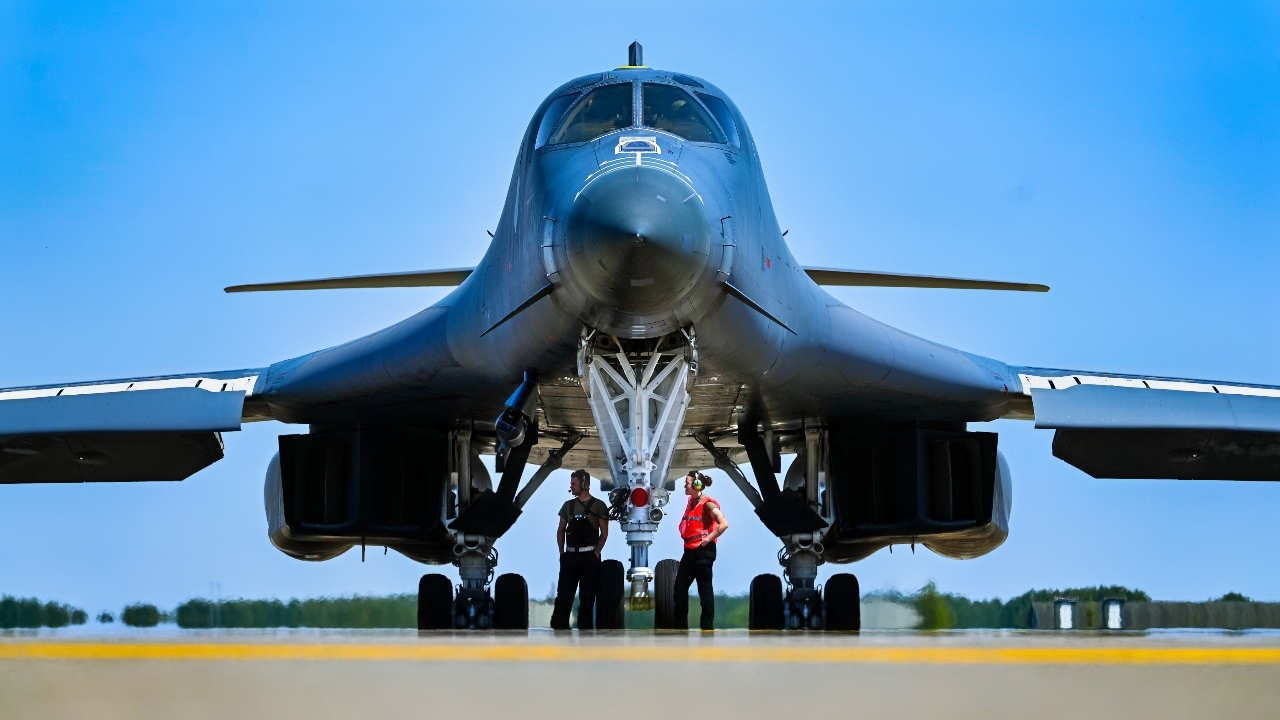
The strikes against Iran’s nuclear facilities at Fordow, Isfahan, and Natanz were carried out by B-2A Spirit stealth bombers, backed up by submarine-launched Tomahawk cruise missiles.
The total combined payload of the GBU-57 bunker buster bombs and the Tomahawks amounted to 420,000 lbs. of precision munitions impacting those nuke sets. But how effective were they?
President Donald Trump remains supremely confident in the efficacy of the operation, proudly asserting that “The US strikes on Iran’s nuclear sites were a perfect operation…It was very severe. There was obliteration.” Mr. Trump’s Secretary of Defense (SECDEF) Pete Hegseth and Chairman of the Joint Chiefs of Staff (CJCS) Gen. Dan “Raizin’” Caine, share their Commander-in-Chief’s confidence.
Meanwhile, International Atomic Energy Agency (IAEA) chief Rafael Grossi is a good deal less glowing in his assessment of Operation Midnight Hammer, saying that the US strikes fell short of causing total damage to Iran’s nuclear program and that Tehran could restart enriching uranium “in a matter of months.” For its part, the Iranian government is claiming that the strikes didn’t accomplish much, but of course, these claims need to be taken with a grain of salt, as that could very well be mere bluster and propaganda.
Now, the latest Pentagon report (as these words are typed on 3 July 2025), according to Fox News reporter Caitlin McFall, is that the strikes “have degraded Tehran’s atomic program by up to two years.” Now, two years is certainly better than a mere matter of months, but that two-year lag time would still fall within the remaining time on Mr. Trump’s current presidential term of office.
That raises the question: Would, could, or should the US launch another attack in two years?
The Short Answer
That short answer is an unqualified “Yes,” or to more directly quote President Trump, “Sure.”
That was the POTUS’s blunt one-word response to a reporter who asked him (during the NATO summit in the Netherlands on 25 June) whether he would strike Iran again if it were to rebuild its nuclear facilities.
For a more comprehensive answer, we need to examine whether there is a prior historical precedent for follow-up strikes against an adversary’s nuclear program spread out over a multi-year span.
Indeed there is: the weapons of mass destruction (WMD) program of former Iraqi strongman Saddam Hussein (who, ironically enough, fought his own war against Iran from 1980 to 1988).
Historical Precedent Part I: Operation Babylon aka Operation Opera (1981)
Appropriately and coincidentally enough, history has a way; it was Israel that carried out the first strike against Saddam’s nuclear program.
That was Operation Opera, aka Operation Babylon, which took place on 7 June 1981.
The specific target was the Osirak nuclear reactor, 12 miles southeast of Baghdad, which, according to Israeli military intelligence reports, would have become operational between July and November of 1981.
That timeframe instilled in the Israeli Prime Minister Menachem Begin a strong sense of urgency to act sooner rather than later.
Thus, it came to pass that eight Israeli Air Force (IAF F-16As) — each carrying two unguided Mk-84 (BLU-117) 2,000-pound delay-action bombs — escorted by six F-15A Eagles providing top cover, answered their Prime Minister’s call. Long story short, the mission succeeded: 14 of the 16 IAF bombs impacted inside the dome and obliterated the reactor, killing 10 Iraqi soldiers and one French engineer.
The IAF strike force returned home completely unscathed, and their mission made history in more ways than one: in addition to severely degrading the nuclear weapons program of the “Butcher of Baghdad,” it also signified the first usage of the US-made F-16 Fighting Falcon in a major air-to-ground combat op.
Historical Precedent Part II: Operation Desert Storm (1991)
It wouldn’t be a mere two years, but rather an entire decade, before additional strikes were carried out against Iraqi nuclear facilities, and, in another example of foreshadowing of Operation Midnight Hammer, this time it was America’s turn to conduct the hit job.
The primary objective of the Persian Gulf War aka Operation Desert Storm, which began on 17 January 1991, was to end Saddam’s brutal occupation of Kuwait. However, as noted by Dr. Herman R. Glister in a Spring 1996 report for Airpower Journal, “During the first two days, some of these forces executed the most thoroughly planned and complex air operations of the war…Air strikes also hit Iraq’s electric power system and its nuclear, biological, and chemical (NBC) capability…Key production targets in Iraq included electric power facilities, oil facilities, and nuclear facilities.”
As then-SECDEF (later VPOTUS) Dick Chaney acknowledged, the Osirak operation 10 years prior had “made our job much easier in Desert Storm.” Likewise, if we do indeed end up needing to re-strike Iran nuke facilities two years from now, it’s a fair bet that the job will be much easier thanks to the bunker-busting, earth-shattering effects Operation Midnight Hammer.
About the Author: Christian D. Orr, Defense Expert
Christian D. Orr is a Senior Defense Editor. He is a former Air Force Security Forces officer, Federal law enforcement officer, and private military contractor (with assignments worked in Iraq, the United Arab Emirates, Kosovo, Japan, Germany, and the Pentagon). Chris holds a B.A. in International Relations from the University of Southern California (USC) and an M.A. in Intelligence Studies (concentration in Terrorism Studies) from American Military University (AMU).
Iran War
B-2 Bomber: How America Would Strike Iran


