


The M551 Sheridan was one of the U.S. Army’s most ambitious tanks: light enough to parachute onto a battlefield, able to swim rivers, and armed with a 152mm gun that fired both shells and the Shillelagh guided missile. Rushed into Vietnam in 1969, it proved fast and mobile, with HEAT rounds that shredded bunkers. But its thin aluminum hull was vulnerable to mines and RPGs, and its gun was unreliable. Retired in 1996, it was America’s last light tank.
Meet the M551 Sheridan
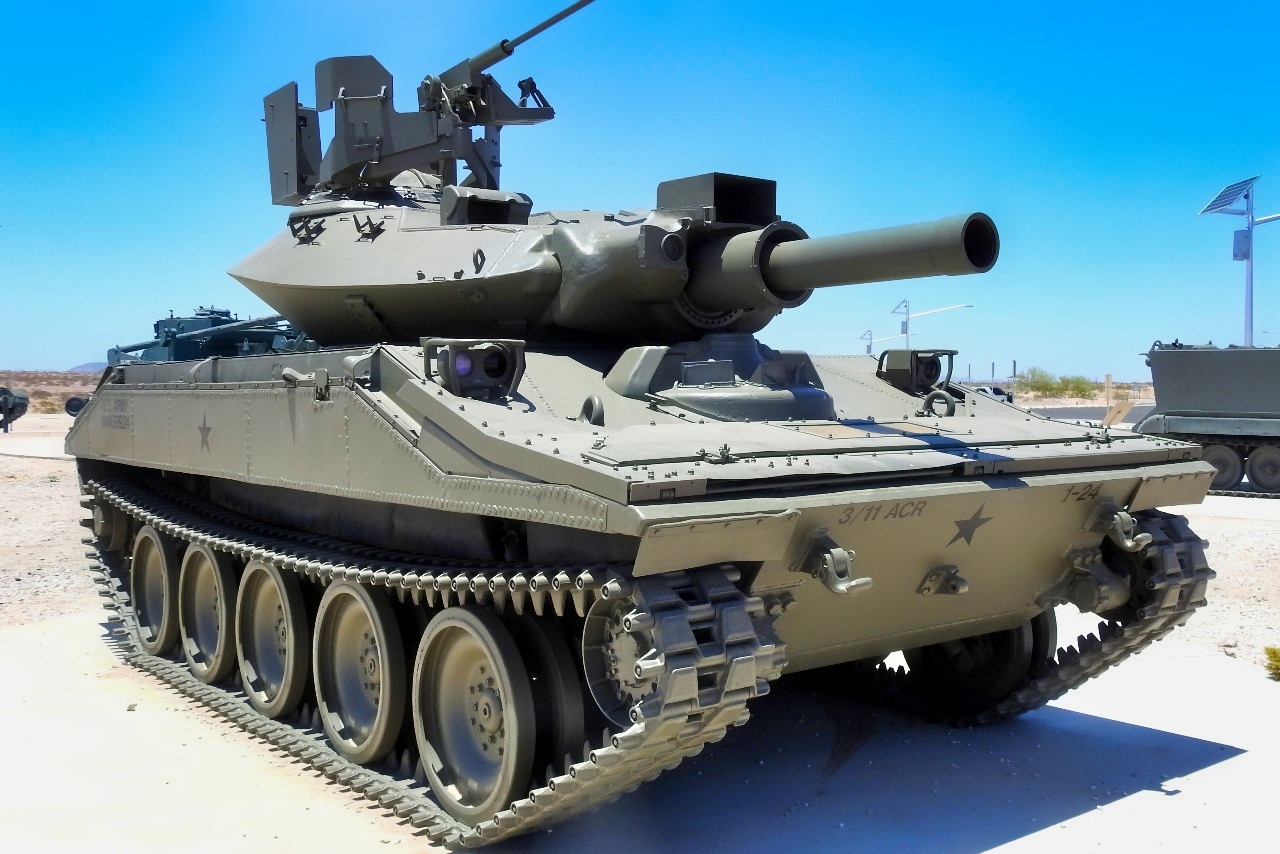
M551 Sheridan Light Tank. Image Credit: Creative Commons.

M551 Sheridan U.S. Army. Image Credit: Creative Commons.
The M551 Sheridan was built to replace the aging M41 Walker Bulldog as the US Army’s newest light tank. Designed to operate with airborne forces, the Sheridan was lightweight and highly mobile. In 1969, the tank was rushed into combat during the Vietnam War, where it saw extensive action. The fighting in Vietnam highlighted many of the tank’s strengths but also revealed vulnerabilities that ultimately led to its retirement.
The Sheridan in Vietnam
The Sheridan was rushed into service prematurely during the Vietnam War in 1969 at the urging of General Creighton Abrams. A total of 2,000 Sheridans were sent to Vietnam throughout the course of the war. Because enemy armor was rare, Sheridans often replaced lost M48 Patton tanks in armored units. In Vietnam, the Sheridan was used primarily for reconnaissance and support roles. It’s extremely lightweight and has the ability to traverse difficult terrain, and its powerful main gun makes it a valuable asset in jungle warfare.
The 152mm gun proved to be a valuable asset. Its HEAT rounds performed excellently against hardened targets such as pillboxes and bunkers. Its speed and maneuverability were far better than the M48’s, making it ideal for traversing the uneven jungles of Vietnam. For the most part, the Sheridan was mechanically reliable, rarely ever breaking down or losing a track. This ensured that the M551 rarely ever needed maintenance and could remain on the battlefield for longer periods of time.
However, Sheridan’s performance in Vietnam revealed several critical flaws. The 152 mm gun/launcher proved to be unreliable, with frequent malfunctions and maintenance issues. The complex nature of the Shillelagh missile system also posed challenges, as it required significant training and maintenance to operate effectively. Since enemy tanks were uncommon in the war, most Sheridans deployed were not even equipped with the missile guidance system. Additionally, the Sheridans’ thin armor made them vulnerable to enemy fire, particularly from rocket-propelled grenades (RPGs) and mines.
Despite these issues, the Sheridan did provide valuable fire support and mobility in Vietnam. Its air-droppable capability enabled rapid deployment to provide valuable support to infantry units in remote areas. Its armor, despite its light weight, offered better protection than the M113 APC, making the Sheridan a preferable alternative to most APCs at the time. However, the Sheridans’ overall combat effectiveness in Vietnam was limited by mechanical and survivability issues.
Lessons Learned from Vietnam
While the M551 Sheridan had many features that made a useful asset on the battlefield, it faced many challenges which prevented it from living a longer service life. The aluminum hull, while lightweight, offered limited protection against even contemporary anti-tank weapons. This vulnerability was a major concern during its deployment in Vietnam, where it was susceptible to mines and RPG attacks.
The M81E1 gun/launcher system, although an interesting idea, was plagued by reliability issues in reality. The combustible cartridge cases used for the 152mm rounds were prone to misfires and other malfunctions, making it a coin toss as to whether the system would work as intended. Additionally, the Shillelagh missile system, while effective in theory, was complex and difficult to maintain in the field. While its gun did provide significant firepower, the reliability issues were never solved.
The Army made efforts to address these issues through various improvement programs. Modifications were made to improve the reliability of the gun/launcher system, and attempts were made to replace it with a more conventional weapon. Despite these efforts, the Sheridans’ shortcomings remained a persistent problem.
Development and Design of the M551 Sheridan
The development of the M551 Sheridan began in the 1950s when the U.S. Army sought to develop a new light tank that could be air-dropped and provide substantial firepower. The Ad Hoc Group on Armament for Future Tanks or Similar Combat Vehicles (ARCOVE) was established in 1957 to explore the potential of equipping tanks with guided missiles. This led to the development of the XM551, which would later become the M551 Sheridan.
The Sheridan was designed to be lightweight and amphibious, capable of being transported by aircraft and swimming across water obstacles. Its hull was constructed from aluminum alloy to reduce weight, while the turret was made of steel. The vehicle was powered by a General Motors 6V53T six-cylinder turbocharged diesel engine, producing 300 horsepower and enabling a top speed of 43 mph on roads.
One of the most distinctive features of the Sheridan was its main armament: the M81E1 152mm gun/launcher. This weapon could fire both conventional ammunition and the MGM-51 Shillelagh guided anti-tank missile. The use of combustible cartridge cases for gun rounds was another innovative aspect, though it later proved problematic.
The US Army’s Last Light Tank and the M10 Booker
The M551 Sheridan was eventually retired from active service in 1996, without a direct replacement. The Army had planned to replace it with the M8 Armored Gun System, but this program was canceled late in its development. A modest fleet of Sheridans remained in service with the 82nd Airborne Division and the National Guard until their retirement.
Overall, the M551 Sheridan was an alright vehicle. While it had some interesting designs, the Sheridan was plagued with issues that prevented it from making too much of an impact on future designs.

A live fire demonstration of the Army’s newest and most modernized combat vehicle, the M10 Booker, marks the conclusion of the M10 Booker Dedication Ceremony at Aberdeen Proving Ground, in Aberdeen, Md., April 18, 2024. (U.S. Army photo by Christopher Kaufmann)

A live fire demonstration of the Army’s newest and most modernized combat vehicle, the M10 Booker, marks the conclusion of the M10 Booker Dedication Ceremony at Aberdeen Proving Ground, in Aberdeen, Md., April 18, 2024. (U.S. Army photo by Cpl. Jonathon Downs)
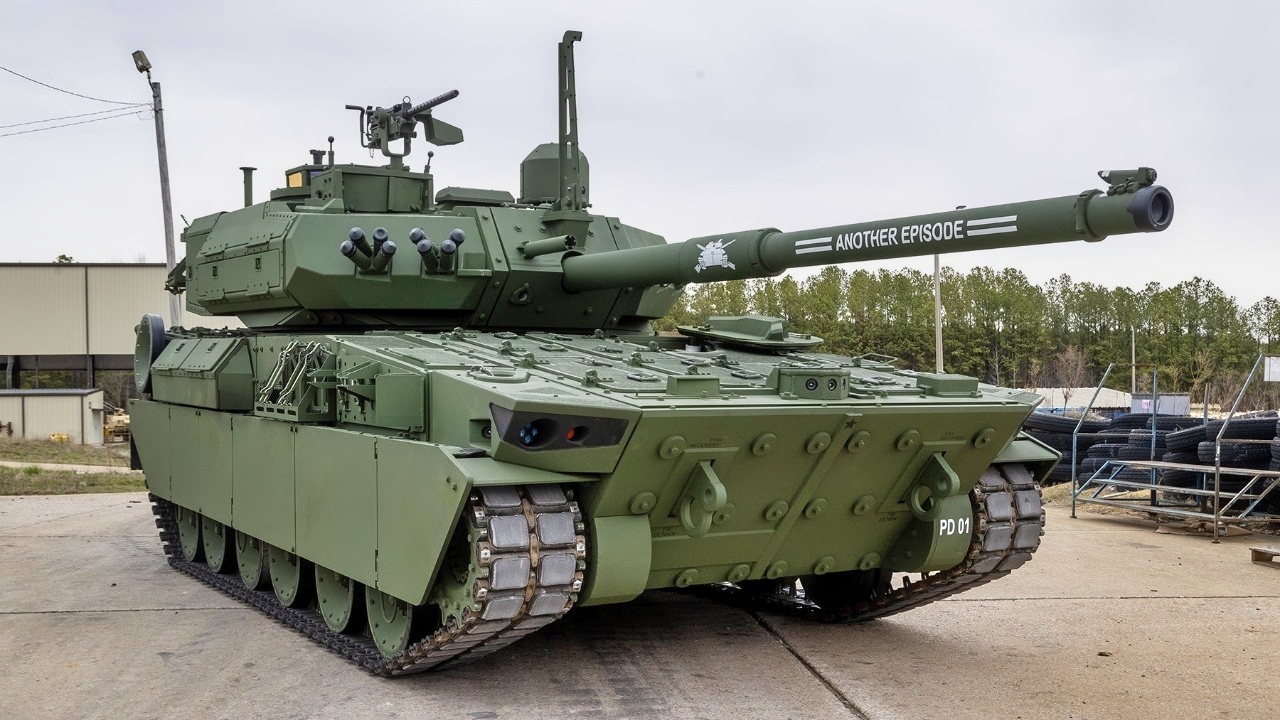
PD1 – Delivery of First Production Vehicle M10 Booker Combat Vehicle. Image Credit: U.S. Army.

The M10 Booker Combat Vehicle proudly displays its namesake on the gun tube during the Army Birthday Festival at the National Museum of the U.S. Army, June 10, 2023. The M10 Booker Combat Vehicle is named after two American service members: Pvt. Robert D. Booker, who posthumously received the Medal of Honor for actions in World War II, and Staff Sgt. Stevon A. Booker, who posthumously received the Distinguished Service Cross for actions during Operation Iraqi Freedom. Their stories and actions articulate the Army’s need for the M10 Booker Combat Vehicle, an infantry assault vehicle that will provide protection and lethality to destroy threats like the ones that took the lives of these two Soldiers. (U.S. Army photo by Bernardo Fuller)
The U.S. Army did try to develop a new M10 Booker Light Tank. However, it was quickly canceled after coming in way over the weight limit.
About the Author: Isaac Seitz
Isaac Seitz, a Defense Columnist, graduated from Patrick Henry College’s Strategic Intelligence and National Security program. He has also studied Russian at Middlebury Language Schools and has worked as an intelligence Analyst in the private sector.


