

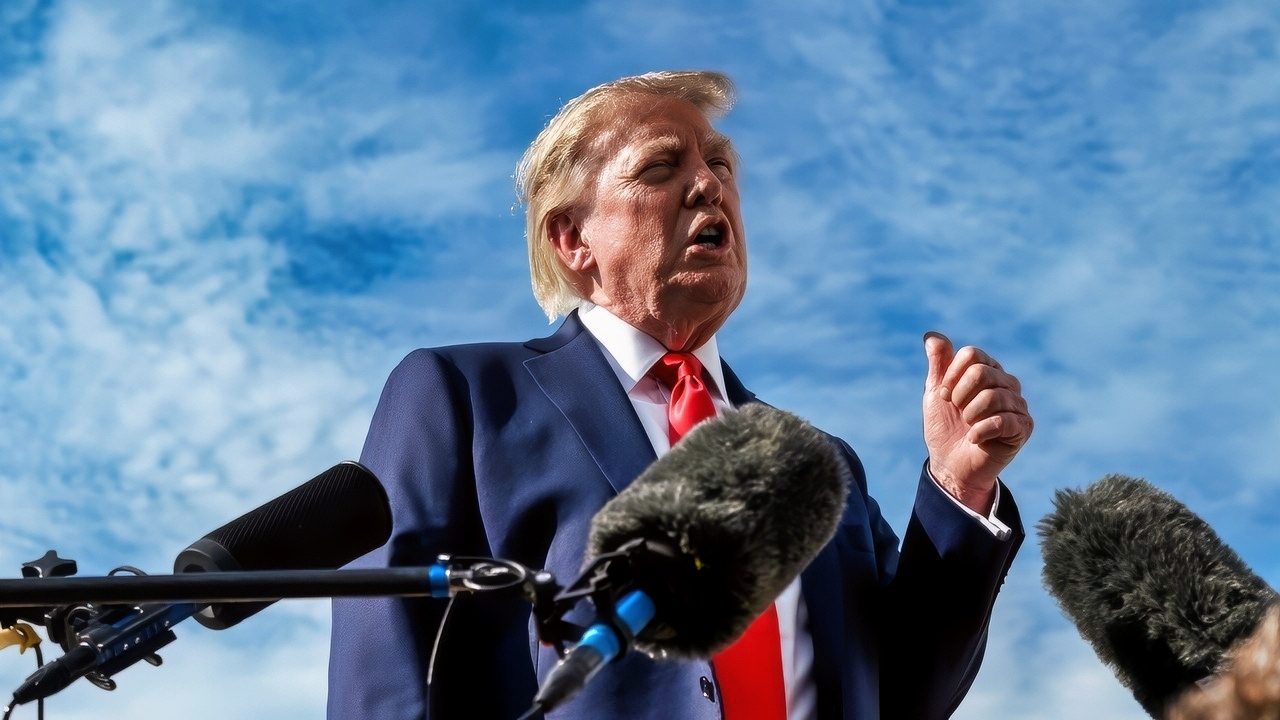
In the latest mediated talks on a potential ceasefire agreement and reopening the Strait of Hormuz, the U.S. and Iran have been exchanging proposals through mediators from Qatar.
According to FirstPost, Iran had made a proposal late last week for a timeline in which the Strait will be opened, in exchange for the U.S. unfreezing Iranian assets, lifting its blockade, and lifting sanctions.

President Donald Trump greets President Volodymyr Zelenskyy of Ukraine, Friday, February 28, 2025, in the West Wing Lobby. (Official White House Photo by Daniel Torok)

President Donald Trump signs an Executive Order alongside Kid Rock in the Oval Office, Monday, March 31, 2025. (Official White House Photo by Molly Riley)
President Donald Trump publicly rejected the proposal over the weekend, but according to the report, Iran has received the official U.S. response.
According to FirstPost, which cited Iranian government spokeswoman Fatemeh Mohajerani, Foreign Minister Abbas Araghchi presented the American proposal to Iranian President Masoud Pezeshkian at a cabinet meeting.
Iranian state media did not disclose the substance of the response.
Reuters, citing one unnamed official, said the main U.S. sticking point in the response was the “sequencing” of how the opening would work. The report also said Qatar stepped in to mediate after Trump rejected the original accusation.
The Status of the Strait
Iran had closed the Strait of Hormuz shortly after the war began this year, which has wreaked havoc on global energy markets due to the disruption in oil supplies.
Since then, the U.S. and its allies have tried various measures to reopen the Strait, including military strikes, a U.S. blockade, and clandestine efforts to get tankers through.
The idea has been that controlling the Strait gives Iran leverage over its adversaries. But recent indications suggest the U.S. has had some success reducing that leverage.
A CNN analysis said the U.S. Navy and Gulf oil producers have teamed up and have recently succeeded in “jamming crude through” the Strait of Hormuz.
As a result, according to Kplr data, 13.1 million barrels per day passed through the Strait last week, about 80 percent of the pre-war average.
“A Complex Operation”
CNN described a “complex operation” that has made this a reality, including “military-escorted shuttles engaging in surreptitious ‘dark’ transits” of the crucial waterway. In addition, pipelines in the region have redirected flows.
A CNBC story published Wednesday said that, as of earlier this week, crude oil flows through the Strait had officially reached pre-war levels. However, “refined product shipments” remained constrained, and the global fuel crisis remains.
Matt Smith, director of commodity research at Kpler, told CNBC that Iran is “losing its influence” over the Strait of Hormuz, as a result of these maneuvers.
Natasha Kaneva, head of global commodities strategy at JPMorgan, told CNBC that the “crude market has largely normalized,” although refined products remain constrained, in part because Russia and Ukraine continue attacking each other’s oil refineries.
Kaneva was also cited by CNN, stating that Morgan, for the first time, did not have a baseline view of the market.
“We simply don’t know how to model the endgame,” Kaneva said in a note earlier this month.
Diesel prices, however, remain at record highs, exceeding $6 per gallon for the first time in history and staying there in recent weeks.
Francisco Blanch, head of global commodities at Bank of America, told CNBC earlier this month that “the biggest source of pain is the diesel market.”
“Backed Into a Corner”
The CNN analysis stated that what could come next might not involve Iran backing down, but rather fighting back.
The other issue is that it is also losing economic leverage.
Treasury Secretary Scott Bessent said in an interview with Fox News this week that Iran is two weeks away from running out of oil to trade.
Once those 15 million barrels of oil go out, Bessent said on Fox, Iran will be left with “nothing left to trade for anything.”
Bessent argued this scenario is pushing Iran to make a ceasefire deal, like the one offered last week, to open the Strait in exchange for relief.
However, Scott Modell, CEO of Rapidan Energy — a former CIA officer with field experience in the Middle East — told CNBC earlier this week that there’s no evidence that Iran’s positions will change under U.S. pressure.
About the Author: Stephen Silver
Stephen Silver is an award-winning journalist, essayist, and film critic, and contributor to the Philadelphia Inquirer, the Jewish Telegraphic Agency, Broad Street Review, and Splice Today. The co-founder of the Philadelphia Film Critics Circle, Stephen lives in suburban Philadelphia with his wife and two sons. For over a decade, Stephen has authored thousands of articles that focus on politics, national security, technology, and the economy. Follow him on X (formerly Twitter) at @StephenSilver, and subscribe to his Substack newsletter.


