

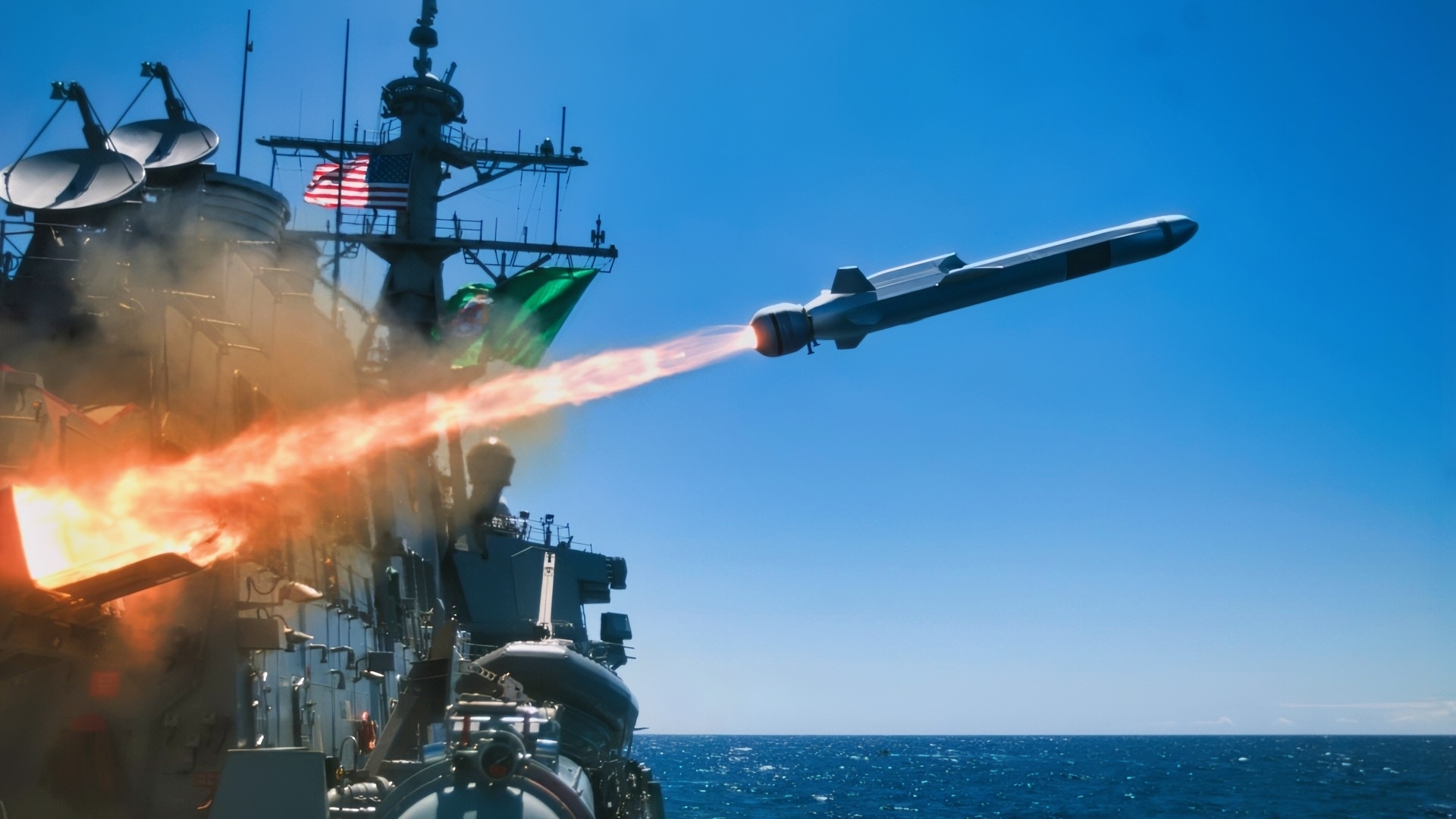
On November 18, another tanker was attacked while attempting to transit through the Strait of Hormuz. According to the UK Maritime Trade Operations (UKMTO) center, the ship’s crew was unharmed and fully accounted for.
The recent attack was the fifth attack this week, according to the maritime tracking agency.
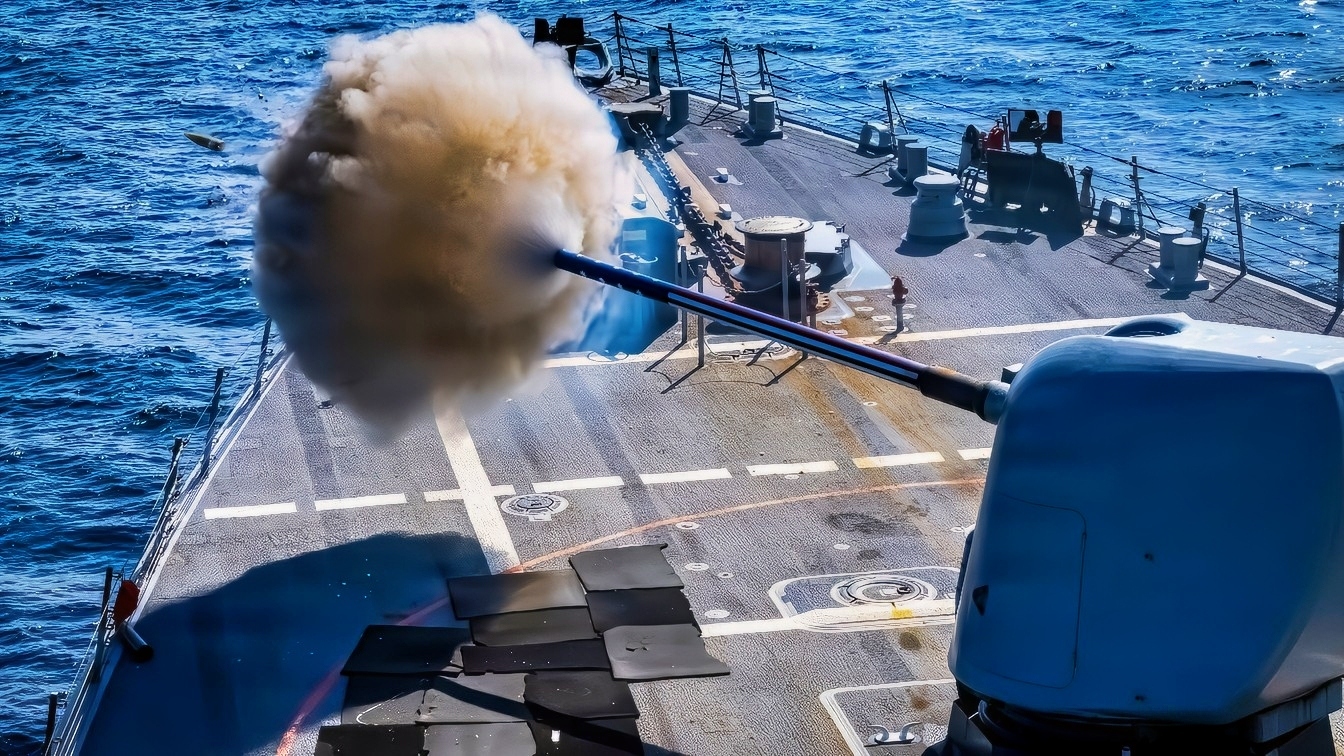
PACIFIC OCEAN (April 27, 2026) U.S. Navy Arleigh Burke-Class guided-missile destroyer USS John Paul Jones (DDG) 53, fires its Mk.45 5-inch deck cannon during a live fire exercise, April 27, 2026. John Paul Jones, part of the Theodore Roosevelt Carrier Strike Group, is underway in the U.S. 3rd Fleet area of operation conducting advanced training to bolster strike group readiness and capability. (U.S. Navy photo by Mass Communications Specialist 2nd Class Ryan Holloway)
Despite Iranian attacks, oil flows from the Gulf states are stabilizing, indicating that Iran is losing its leverage over the valuable waterway.
However, rather than signaling an imminent end to the conflict, some experts worry that Tehran may escalate as the U.S. continues its blockade, which has strangled Iran’s economy for several months.
Stabilizing the Energy Market
When the war in the Middle East first began, the conflict had serious detrimental impacts on the global energy market.
Before the war, roughly a fifth of the world’s oil flowed through the Strait of Hormuz.
After Iran announced its blockade of the Strait, traffic through the vital waterway ground to a halt.
Furthermore, Iranian ballistic missiles targeted vital oil infrastructure throughout the Gulf region, which, combined with the blockade, caused a critical oil shortage.
As a result, fuel prices around the world skyrocketed. Gas prices in the U.S. were at their highest since the pandemic, a fact that cost Trump and his Republican allies dearly at the polls in the recent midterm elections.
Iranian attacks, combined with Houthi activity in Yemen, caused some economists to fear that the energy crisis could spiral out of control and turn into a global recession.
Fortunately, the recession that many feared never materialized.
For the past several months, the war with Iran has been relatively quiet.
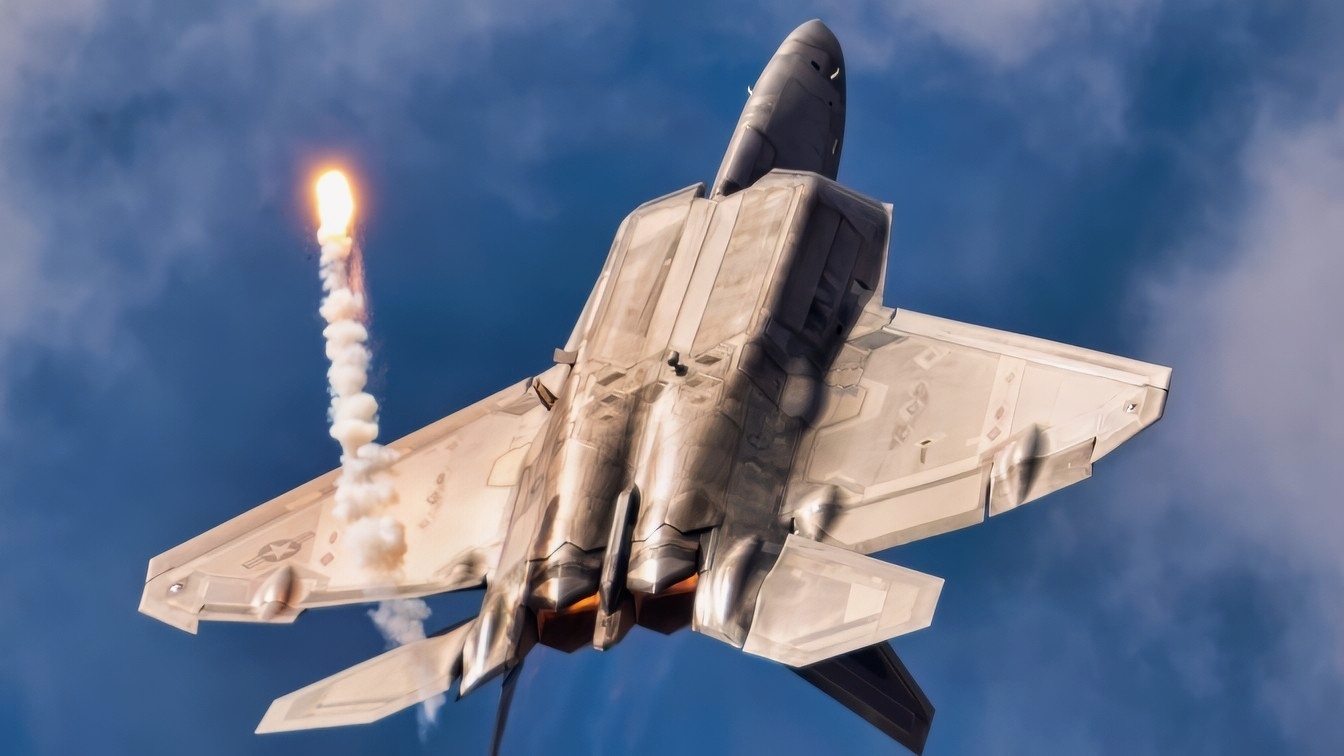
U.S. Air Force Capt. Nick “Laz” Le Tourneau, pilot and commander of the F-22 Raptor Aerial Demonstration Team, releases a flare during an aerial demonstration for the Amigo Airsho on Fort Bliss, Texas, Oct. 25, 2026. Each demonstration highlights the Raptor’s power, control and maneuverability, offering audiences a firsthand look at the aircraft’s role in maintaining air superiority. (U.S. Air Force photo by Staff Sgt. Mary Bowers)
Although there have been a few small-scale back-and-forth strikes between the U.S. and Iran in November, the recent strikes are nowhere near the intensity seen during Operation Epic Fury in March.
This pause has allowed the Gulf states to rebuild any damaged infrastructure and, more importantly, to look for ways to bypass the Strait of Hormuz.
Oil prices have notably decreased in November despite continued attacks on oil tankers in the Strait.
Transiting the Strait is still less safe than it was before the war.
However, the Gulf states, with U.S. assistance, have found ways to run oil through the Strait or, with infrastructure like the East-West Pipeline, bypass it entirely.
Iran Hasn’t Been Defeated Yet
While the energy market is slowly returning to normal, some experts fear that the softening oil prices could embolden Iran to escalate.
Hamidreza Azizi, a senior Iran analyst at the International Crisis Group, told CNN that the energy market’s recent confidence could be shattered if Iran decides to restart the war. “Markets appear to be increasingly assuming that a return to full-scale war is unlikely and that oil supplies will gradually recover,” he said. “But that assumption could change quickly if Iran decides to intensify the confrontation.” Although the regime has suffered tremendously from the military and economic actions of the U.S., Tehran is not ready to compromise on any of its demands.
In fact, after Trump’s loss in the midterms, the regime now appears more confident despite mounting pressure.
Fighting For Survival
From the regime’s perspective, Iran is fighting a war for its very existence. When given the option of capitulation or military escalation, Tehran is most likely to choose the latter option.
According to Danny Citrinowicz, a senior fellow at the Institute for National Security Studies in Israel, as Iran loses its leverage over Hormuz, the regime may choose to escalate the conflict to regain its sense of control. “When it feels cornered, it may become more aggressive, not less,” he said.
The regime may decide to increase pressure on tankers using the U.S.-supported route, or it may decide to attack oil infrastructure in the Gulf states again.
Iran’s options to force a U.S. concession are becoming ever more limited. One option is giving Trump an off-ramp from the conflict, giving him a symbolic and “ego-saving” victory. However, as many experts have noted, Iran has ruled out this option.
The regime views a symbolic defeat as less preferable than a material one, which makes it even harder to find a diplomatic end to the conflict.
However, despite economic pressure from the U.S. naval blockade, Tehran is unlikely to capitulate anytime soon.
According to some experts, the assumption that Iran will fold under economic pressure may be overly optimistic, as the regime is fighting a war for its existence.
About the Author: Isaac Seitz
Isaac Seitz, a Defense Columnist, graduated from Patrick Henry College’s Strategic Intelligence and National Security program. He has also studied Russian at Middlebury Language Schools and has worked as an intelligence Analyst in the private sector.


