

Iran is threatening to launch strikes against U.S. military bases and other U.S.-linked targets across the Middle East if President Donald Trump goes ahead with rumored plans to launch pre-emptive strikes against Iran ahead of the November 3 midterms.
The warning was issued by Iran’s Islamic Revolutionary Guard Corps (IRGC) on October 22, and comes as attacks against commercial shipping continue to intensify.

A F-15EX assigned to the 85th Test and Evaluation Squadron, Eglin Air Force Base, Florida, flies behind a KC-135 assigned to the 465th Air Refueling Squadron, Tinker AFB, Oklahoma, Oct. 15, 2021. In-air refueling allows fighter aircraft to stay airborne for longer periods of time without having to land to refuel. (U.S. Air Force photo by 2nd Lt. Mary Begy)

A U.S. Air Force KC-135 Stratotanker offloads fuel to U.S. Air Force F-15 Strike Eagles over the U.S. Central Command area of responsibility, April 11, 2025. The F-15E is deployed to the CENTCOM AOR to reinforce regional stability and deter aggression from violent extremist organizations.. (U.S. Air Force photo by Senior Airman Keegan Putman)
It also comes after the U.S. president told reporters that he is no longer negotiating with Iran, and that something will happen “soon.”
Iranian forces also claim to have attacked four vessels conducting oil transfers in the Persian Gulf, while another three ships have reportedly struck naval mines near the Strait of Hormuz.
Iran Issues Direct Warning to U.S. Military
The Times of Israel reported on Thursday that the IRGC issued a warning that it would attack American military installations throughout the region if Washington continues to protect vessels that attempt to cross the Strait of Hormuz without Iranian authorization.
“The US military must know that if this trend continues, the conflict will extend to its bases in the region,” the IRGC said in a statement via the Sepah News website. “This is a serious warning,” it continued.
The warning means that Washington now faces the likelihood of Iranian strikes, which may have otherwise only been triggered by U.S. military action, if it continues to escort ships through the vital shipping corridor.
And there’s no indication Washington plans to scale back those efforts.
The threat is a response to the success of an American system of protected shipping routes in the Strait of Hormuz that allows oil tankers to move through the waterway despite ongoing Iranian attacks.

A F-15 Strike Eagle, assigned to the 4th Fighter Wing, approaches a KC-135 Stratotanker, assigned to the 6th Air Refueling Wing, for refueling over the southeastern United States, Aug. 29, 2024. A multi-mission avionics system sets the F-15 apart from other fighter aircraft. It includes a head-up display, advanced radar, inertial navigation system, flight instruments, ultrahigh frequency communications, tactical navigation system and instrument landing system. (U.S. Air Force photo by Staff Sgt. Lauren Cobin)
According to an August 19 Axios investigation, U.S. forces began facilitating the passage of between 15 and 20 tankers every night through a southern channel near Oman – and in September, U.S. Central Command said it had assisted more than 1,600 vessels carrying over 800 million barrels of crude oil since May.
The operations have helped restore substantial oil exports, albeit at a much higher cost, even as Iran continues to strike ships.
An October 20 Wall Street Journal report found that about 14 million barrels of oil per day were moving through Hormuz and surrounding waters, about 82% of pre-war levels.
With additional supplies moving through pipelines and alternative export terminals, total Middle Eastern oil exports now exceed pre-war levels.
The recovery is the main driver of Tehran’s growing frustration, as the Strait of Hormuz was previously its main leverage.
Now, Tehran’s leverage is that U.S. military and political targets are within reach of its missiles, and the regime is willing to hit them.
Seven Ships Hit In Latest Iranian Attacks
Reuters also reported on October 22 that Iranian forces claimed responsibility for attacks on four vessels conducting what Tehran describes as “illegal” oil transfers in the northern Persian Gulf on Wednesday, October 21.
The IRGC Navy said it tracked the ships before striking them.
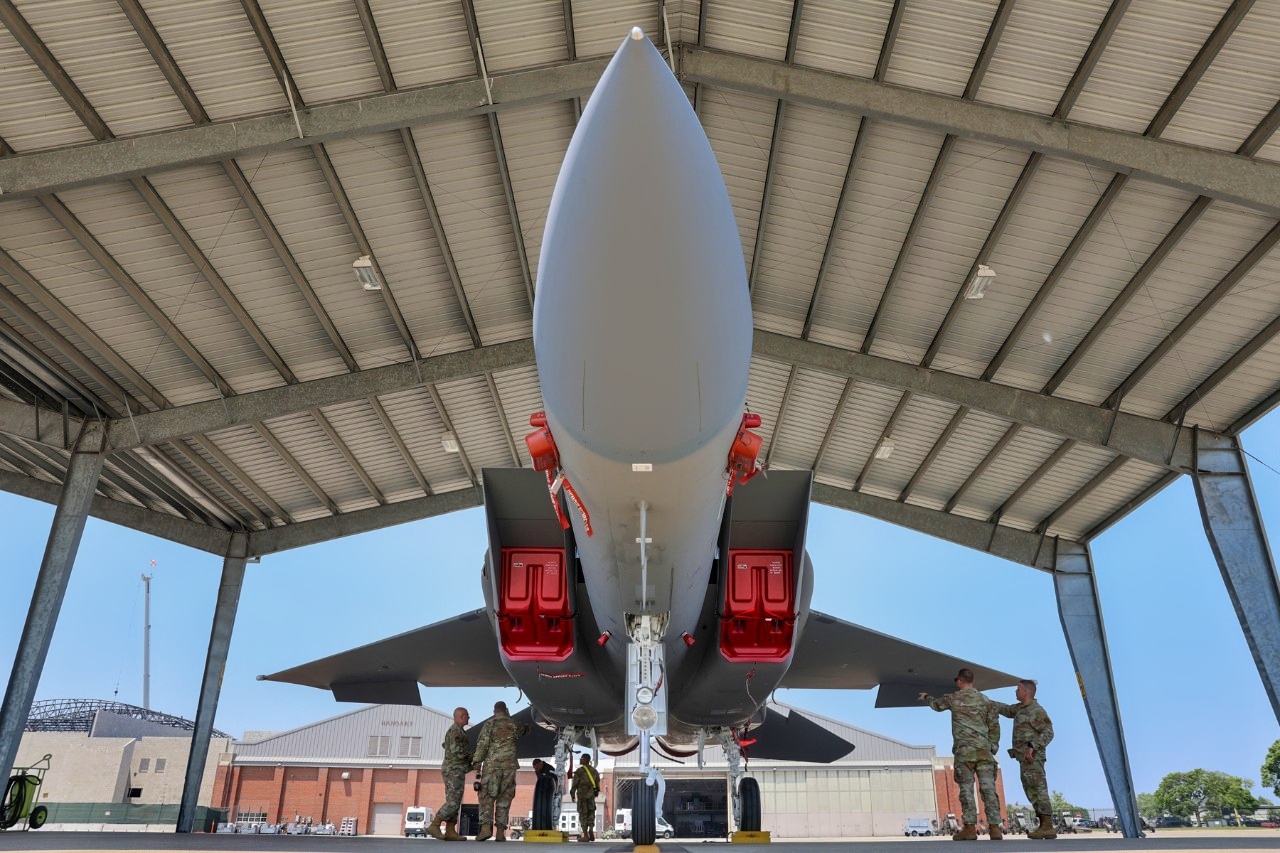
An F-15EX Eagle II from the Defense Contracting Management Agency Boeing St. Louis, sits on the flight line at Selfridge Air National Guard Base, Michigan, June 11, 2025. The aircraft visited the base as part of a site activation task force, an initial step to prepare the 127th Wing with the right infrastructure, personnel, and support the incoming F-15EX and KC-46 Pegasus missions . (U.S. Air National Guard photo by 1st Lt. Elise Wahlstrom)
The ships caught fire.
Three additional vessels struck naval mines west of the Strait of Hormuz, too – though the claims have not been independently verified and Iranian authorities have not identified the vessels.
The incidents come after attacks on commercial shipping through the waterway began to intensify several weeks ago, with Iranian forces deploying new tactics to identify ships via small boats.
The latest attacks prove that, while Iran’s communication and military infrastructure on its coast has been devastated in successive U.S. strike campaigns, it can still deploy small boats to identify targets and launch missile and drone attacks visually.
U.S. and Israel Prepare Another Round of Strikes
Tehran is also expecting an imminent round of strikes, this time from both U.S. and Israeli forces.
A New York Times report reveals how American and Israeli military officials have been preparing plans for another major offensive against Iran after the November 3 midterm elections – although President Trump left open the possibility of striking sooner than that when speaking to reporters at Joint Base Andrews, Maryland, on Wednesday evening.
Trump said he is “not negotiating” with Iran and that something will happen “one way or the other” with Iran, and “fairly soon.”
“Most people seem to think it’s after the election, we’re gonna see what happens,” he continued.
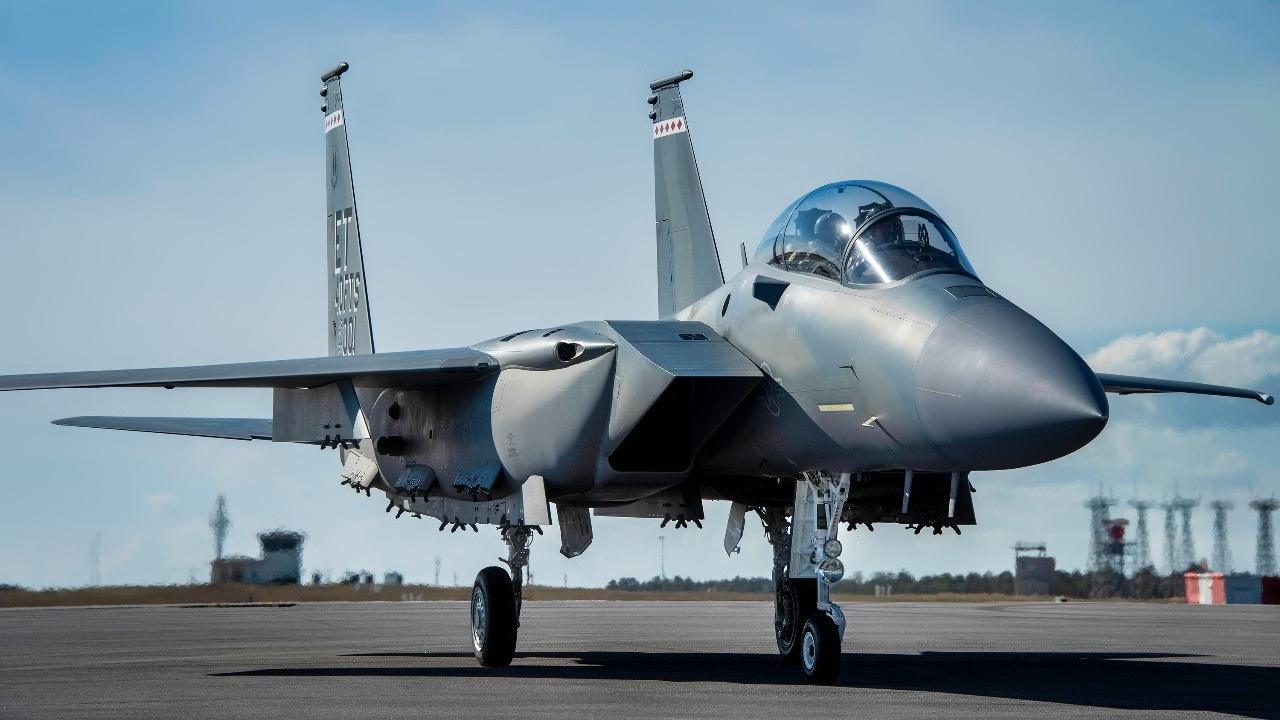
The F-15EX, the Air Force’s newest fighter aircraft, arrives to Eglin Air Force Base, Florida March 11. The aircraft will be the first Air Force aircraft to be tested and fielded from beginning to end through combined developmental and operational tests. The 40th Flight Test Squadron and the 85th Test and Evaluation Squadron personnel are responsible for testing the aircraft. (U.S. Air Force photo/Ilka Cole)
The conflict could escalate again before Americans go to the polls on November 3, and it’s clear why.
Every major national poll puts the Democrats ahead on the generic congressional ballot, and Tehran is preparing to inflict the kind of political damage on Trump that it did on Jimmy Carter in 1980.
Trump, however, already knows the Republicans are set to lose control of Congress this November, and may calculate that giving Tehran two more weeks of “leverage” simply isn’t worth it.
Striking ahead of the elections won’t change the fact that Republicans are set to lose, and could, in fact, give him an advantage over Iran.
About the Author: Jack Buckby
Jack Buckby is a British researcher and analyst specializing in defense and national security, based in New York. His work focuses on military capability, procurement, and strategic competition, and he produces and edits analysis for policy and defense audiences. He brings extensive editorial experience, with a career output spanning over 1,000 articles at National Security Journal, and has previously authored books and papers on extremism and deradicalization.\


