

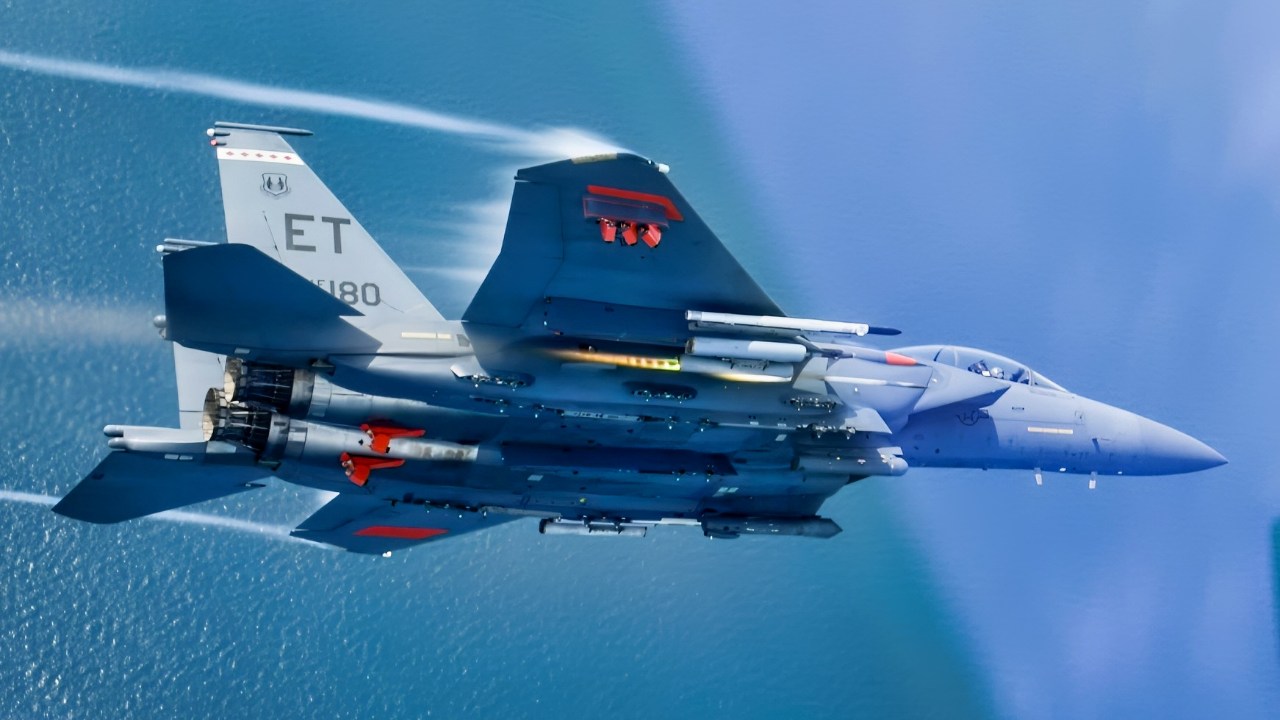
Iran just exposed one of the U.S. military’s most dangerous and overlooked vulnerabilities: five U.S. Air Force refueling tankers were struck while parked in the open at Prince Sultan Air Base in Saudi Arabia. The losses, paired with a separate mid-air collision over Iraq that killed six KC-135 crew members, have triggered alarm bells inside the Pentagon about a tanker fleet that is dangerously exposed and stretched far too thin.
The U.S. Air Force’s Tanker Troubles

A U.S. Air Force F-15EX Eagle II, assigned to 85th Test and Evaluation Squadron, Eglin Air Force Base, Florida, lands at Kadena Air Base, Japan, July 16, 2025. During the transition to the F-15EX, the U.S. Air Force will sustain a steady-state presence at Kadena through a combination of 4th and 5th generation aircraft. (U.S. Air Force photo by Airman Nathaniel Jackson)
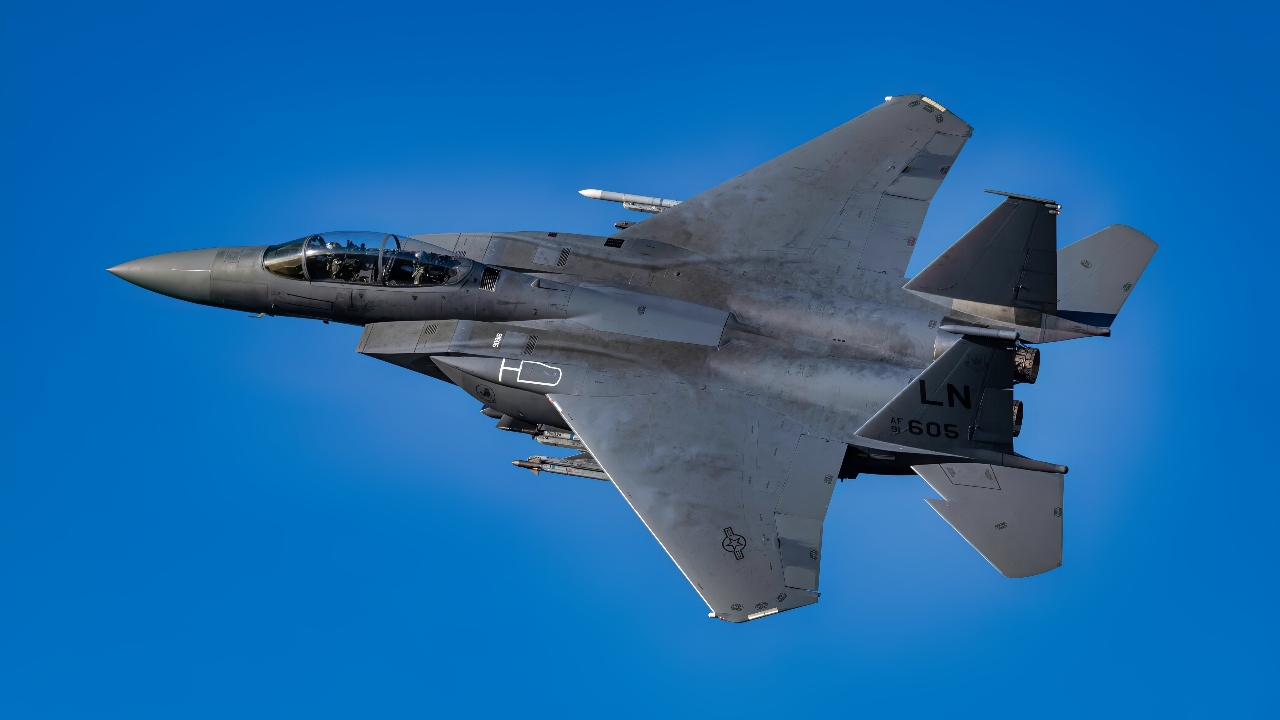
An F-15E Strike Eagle pulls out of a low approach and prepares to land at Royal Air Force Lakenheath, Jan. 5, 2022. The Strike Eagle is currently the second largest fighter aircraft in the U.S. Air Force’s inventory behind the new F-15EX. (U.S. Air Force photo by Senior Airman John Ennis)

A U.S. Air Force F-15EX Eagle II, assigned to 85th Test and Evaluation Squadron, Eglin Air Force Base, Florida, lands at Kadena Air Base, Japan, July 16, 2025.This short-term visit marked a key milestone in the Department of Defense’s ongoing effort to modernize U.S. airpower in the Indo-Pacific. (U.S. Air Force photo by Airman Nathaniel Jackson)
Though the ongoing war in Iran has not been completely casualty-free, some of the notable non-personnel losses have been aircraft.
Several F-15s have been shot down in incidents that were later shown to be cases of friendly fire. However, one of the more significant losses sustained has been the loss of tanker aircraft.
American officials confirmed that five U.S. Air Force refueling tankers were struck by Iran while parked at Prince Sultan Air Base in Saudi Arabia. Though damaged, reports say the aircraft are repairable. Previously, two other aircraft, Air Force KC-135s, collided while in flight over Iraq. One of the aircraft crashed, with the loss of all six crew members.
The incident in Saudi Arabia, in particular, showed how vulnerable aircraft parked out in the open can be, and that the lack of aircraft protection, such as hardened aircraft shelters, leaves them exposed.
It also underlined how complacency, driven by the overwhelming air superiority the United States enjoyed during the wars in Iraq and Afghanistan, has definitively come to an end.
Absolutely Necessary
Air refueling is, admittedly, not as attention-grabbing as, say, a sixth-generation fighter jet. But it is an absolutely important part of keeping other aircraft in the fight.
“Tankers and airlift are a big gap,” Major Claire Randolph, the Chief of Weapons and Tactics at Air Forces Central, explained during an event hosted by the Mitchell Institute for Aerospace Studies. “If I were writing our request list, our shopping list for procuring things, probably the first 100 things on there would be tankers.”
“I think because it’s not sexy, it’s not a weapon, and it’s not a fighter and it’s not a bomber, the tankers are often really left out of this conversation,” Major Randolph added. “So I’m very concerned about our MCO [major combat operations] readiness,” vis-à-vis tanker aircraft.
Range is a concern in any combat scenario, but is a particularly acute worry for Pentagon war planners gaming a fight in the Indo-Pacific.
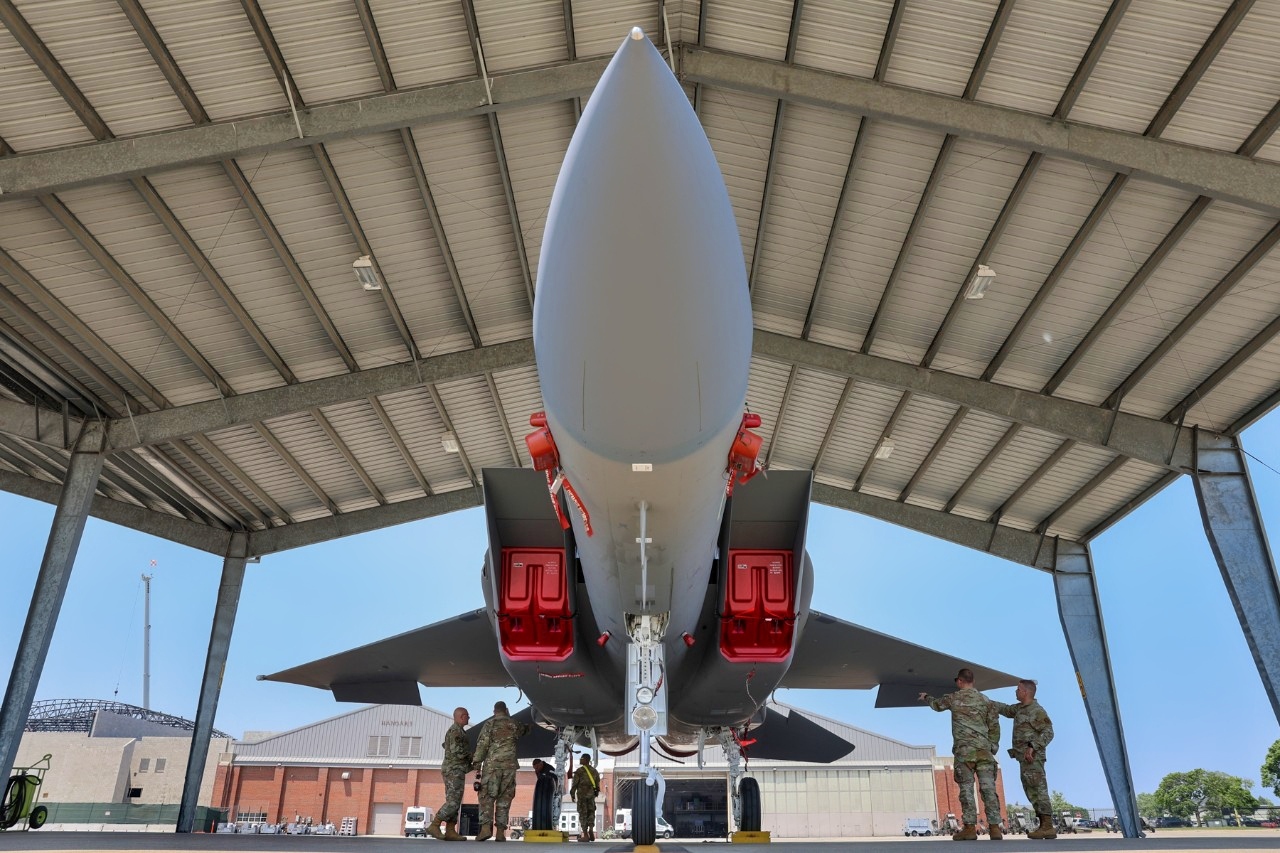
An F-15EX Eagle II from the Defense Contracting Management Agency Boeing St. Louis, sits on the flight line at Selfridge Air National Guard Base, Michigan, June 11, 2025. The aircraft visited the base as part of a site activation task force, an initial step to prepare the 127th Wing with the right infrastructure, personnel, and support the incoming F-15EX and KC-46 Pegasus missions . (U.S. Air National Guard photo by 1st Lt. Elise Wahlstrom)
Though the United States has the world’s largest fleet of aircraft carriers, as well as a series of air strips and fuel depots that dot the Pacific, a high-end fight in the Indo-Pacific would strain air-to-air refueling capacity. And, against a peer adversary with robust anti-air capabilities, the current tanker fleet would be hard-pressed to survive. A solution may, however, be on the horizon.
Tankers of the Future
The United States Air Force is continuing to invest in legacy tanker aircraft, but it also has several more advanced platforms in various stages of development.
The MQ-25 Stingray, a stealthy, unmanned tanker in development by Boeing, provides unique capabilities to the tanker force. And while the Stingray’s development has potential for a high-end fight — say, in the Indo-Pacific — it faces several shortcomings of its own. Compared to conventional aerial refueling aircraft, the Stingray has a lower range. And the amount of fuel it can carry is substantially less than that of larger tanker aircraft.
In parallel, the United States Air Force is researching future tanker aircraft. One recent request for information concerns the Air Force’s Next-Generation Air Refueling System.
Originally conceived as a stealthy, potentially unmanned tanker aircraft, the hypothetical Next-Generation Air Refueling System has to compete with other big-ticket Air Force projects, including the F-47, a sixth-generation stealth fighter, as well as the B-21 Raider, the Air Force’s upcoming stealthy strategic bomber that will replace the Cold War-era B-2 Spirit bomber.
Competing Funding Priorities
Senior Air Force personnel have expressed optimism about the tanker’s future, however, saying that there may be other, alternative measures to help protect a next-generation tanker besides stealth.
But for now at least, one of the biggest obstacles to a stealth tanker is other aircraft.
“What you can’t do is you can’t pit a tanker against a fighter. And that’s typically what we’ve done when we’ve gone through this, very vertically stove-piped. We have different portfolios, and they’re all pitted against each other. And you’re either gonna buy tankers or you’re gonna buy new fighters. You’re either gonna buy bombers, or you’re gonna buy new fighters,” Major General Joseph D. Kunkel, Director of Force Design, Integration, and Wargaming, explained during an event last spring.
“We’ve gotta think about the entirety of the system, and we’ve gotta buy the system. The way the chief says it is, hey, we need NGAD, but a critical neighbor to NGAD is the ability to reliably generate combat power from bases and also the ability to refuel, to get survivable air refueling is also a critical neighbor for that.”
About the Author: Caleb Larson
Caleb Larson is an American multiformat journalist based in Berlin, Germany. His work covers the intersection of conflict and society, focusing on American foreign policy and European security. He has reported from Germany, Russia, and the United States. Most recently, he covered the war in Ukraine, reporting extensively on the shifting battle lines in Donbas and writing about the war’s civilian and humanitarian toll. Previously, he worked as a Defense Reporter for POLITICO Europe. You can follow his latest work on X.


