

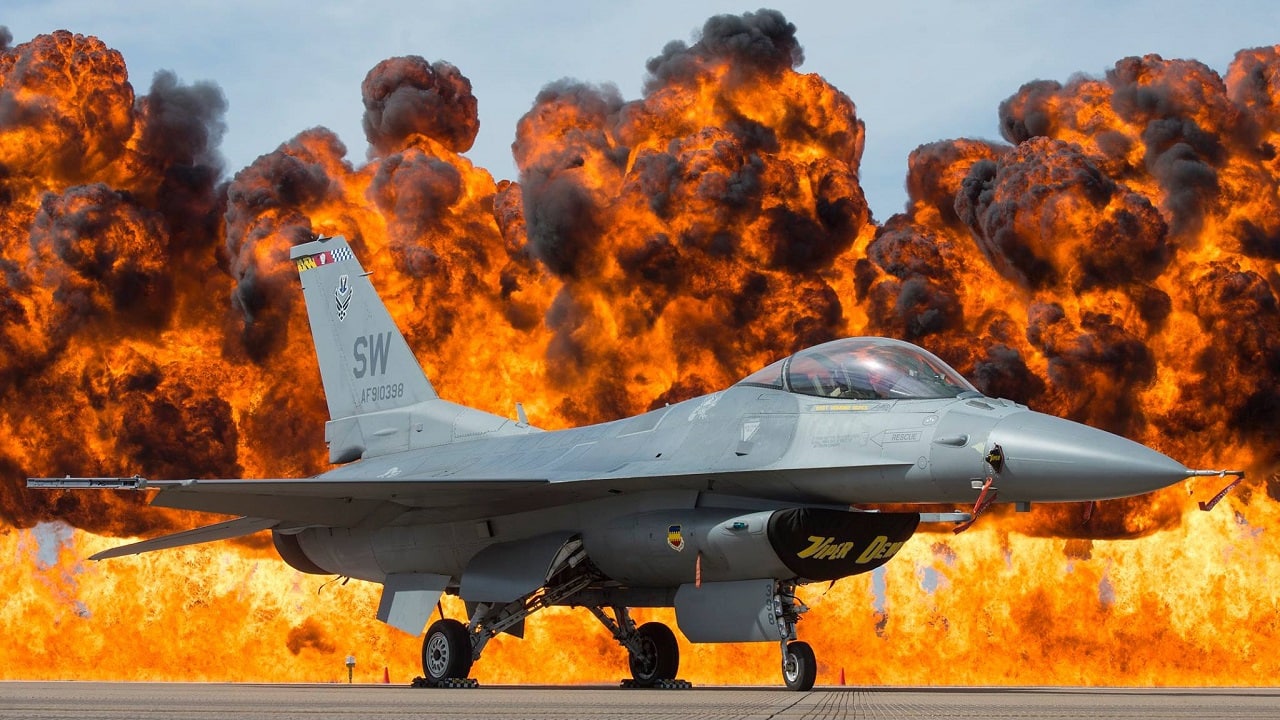
America Held Back From Iran’s Energy Grid for Five Months. The Next Strike Plan Puts It First: The United States is planning a new round of strikes on Iran that officials say will begin as early as today, and the plan targets locations Washington has avoided since the war began.
Two U.S. officials told CNN on Friday, July 31, that Central Command has prepared options for expanding the war, including a two-week bombardment of Iran’s missile sites, alongside planning against energy targets and nuclear infrastructure, with President Trump telling his Cabinet, “We will be hitting them very hard.” The officials who described the plans cautioned that they remain subject to cancellation.
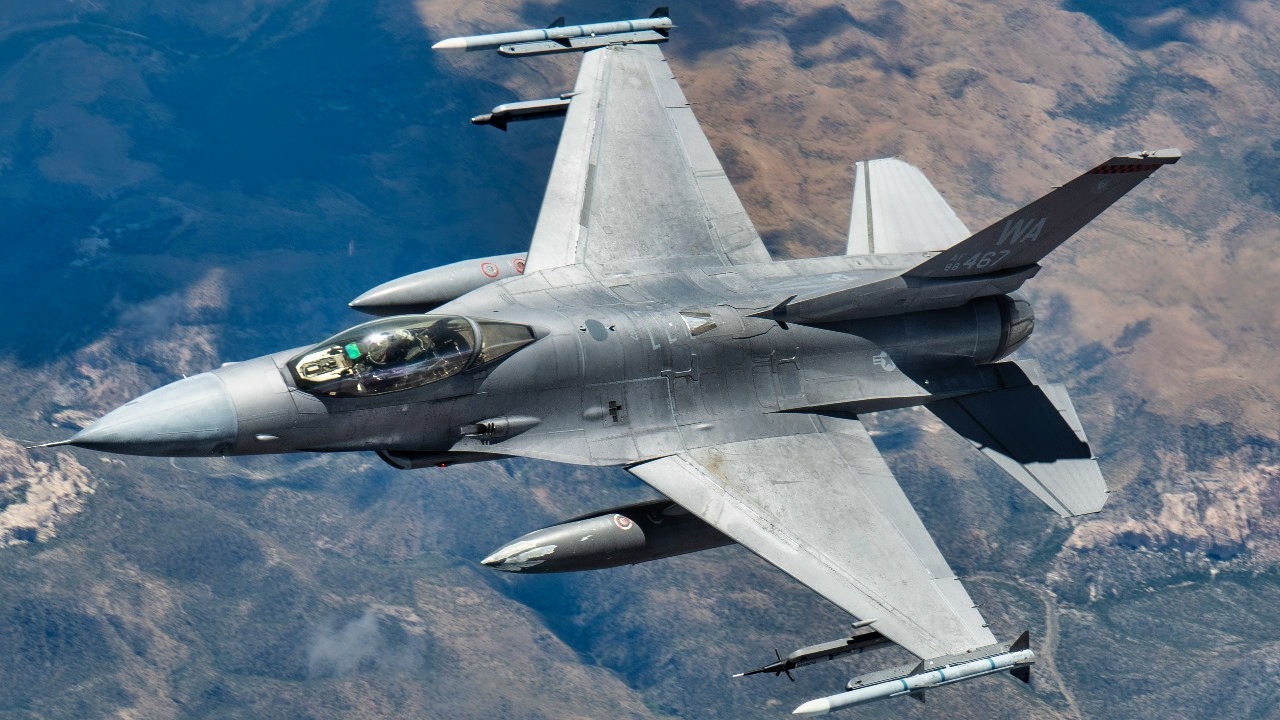
A U.S. Air Force F-16 Fighting Falcon assigned to the 16th Weapons Squadron flies over the Nevada Test and Training Range during a Weapons School Integration (WSINT) mission, June 9, 2025. WSINT is a graduate-level training event that combines multi-domain assets in large-force scenarios, enabling U.S. Air Force and joint service members to hone tactical expertise and integrate advanced capabilities in a dynamic threat environment. (U.S. Air Force photo by Staff Sgt. Jose Miguel T. Tamondong)

An F-35A Lightning II assigned to the 62nd Fighter Squadron prepares to takeoff, Dec. 15, 2020, at Luke Air Force Base, Arizona. The 62nd FS transitioned from flying F-16 Fighting Falcons to flying F-35 aircraft in 2015. There are four F-35 fighter squadrons and four F-16 fighter squadrons that directly support the base’s mission of training the world’s greatest fighter pilots. (U.S. Air Force photo by Airman 1st Class Brooke Moeder)
The scope is larger than a resumption. Multiple sources told CBS News the United States and Israel are jointly planning “one of the harshest bombing campaigns to date,” aimed at power stations and oil refineries, and that officials in Washington discussed on Friday the option of cutting electricity to Tehran entirely, a step on which no final decision had been made by Friday afternoon.
The Wall Street Journal reported the president’s stated aim in one word: forcing Iran to surrender.
By early Saturday, August 1, Kuwait’s military said its air defenses were intercepting Iranian drones, and a British maritime agency reported a tanker struck by an unidentified projectile off Oman.
A Pause That Produced Nothing
The new plans end the war’s quietest week. After thirteen consecutive nights of attacks, the two sides halted fire in late July, a pause President Trump said came at Tehran’s request and would last only if a new ceasefire deal followed.
None did. Iran’s government said on July 27 that no negotiations with the United States were underway, and the White House said Friday that Iran will keep paying until it comes to the table on the president’s terms.
By Friday, the choreography of escalation had resumed: Iran struck Kuwait and, through its Supreme National Security Council, announced it would tighten its declared closure of the Strait of Hormuz in answer to the American blockade of Iranian ports.
The Red Line Washington Drew for Itself
The energy target list inverts the war’s oldest constraint. For five months, administration officials resisted striking Iran’s refineries and power grid, reasoning that Tehran would retaliate against Gulf energy infrastructure and detonate markets already strained by the fighting.
The new planning treats that restraint as spent. A former senior U.S. military official told CBS that the value of striking energy facilities lies in undermining the Iranian state’s ability to provide services and govern.
The economic backdrop explains the stakes on both sides: traffic through the Strait of Hormuz, roughly 130 ships on a prewar day, has fallen to a handful, and Tehran, which rejected an Omani proposal for joint oversight of the waterway, warned on July 31 that the region faces “flames of war” if the strikes proceed.
An Arsenal Fighting on a Budget
The campaign’s ambitions now press against its inventory. Analysts at CSIS note that U.S. forces expended large stocks of air-defense munitions in the war’s first phase and have drawn them down further since fighting resumed, and NBC News reported that commanders are declining to intercept some Iranian projectiles judged non-critical in order to preserve interceptors.
In Congress, a bipartisan pair reintroduced legislation requiring the Pentagon to account for its war spending.
The war that officials expected to be short has killed thousands and displaced millions across the region, by Reuters’ accounting, and mediators, CSIS observes, are searching for an off-ramp as it enters its sixth month.
What Has Not Been Decided
The decisions that matter remain open as of this writing. The strikes are planned but not yet launched, and the officials who described them stressed that they can still be called off. The Tehran electricity option was discussed on Friday but was not resolved. Iran says it has prepared a response plan if the attacks come. And in the early hours of Saturday, August 1, the sound of air-defense interceptors over Kuwait City had everyone wondering what America would do next.
About the Author: Harry J. Kazianis
Harry J. Kazianis (@Grecianformula) was the former Senior Director of National Security Affairs at the Center for the National Interest (CFTNI), a foreign policy think tank founded by Richard Nixon based in Washington, DC. Harry has over a decade of experience in think tanks and national security publishing. His ideas have been published in the NY Times, The Washington Post, The Wall Street Journal, CNN, and many other outlets worldwide. He has held positions at CSIS, the Heritage Foundation, the University of Nottingham, and several other institutions related to national security research and studies. He is the former Executive Editor of the National Interest and the Diplomat. He holds a Master’s degree focusing on international affairs from Harvard University.


