

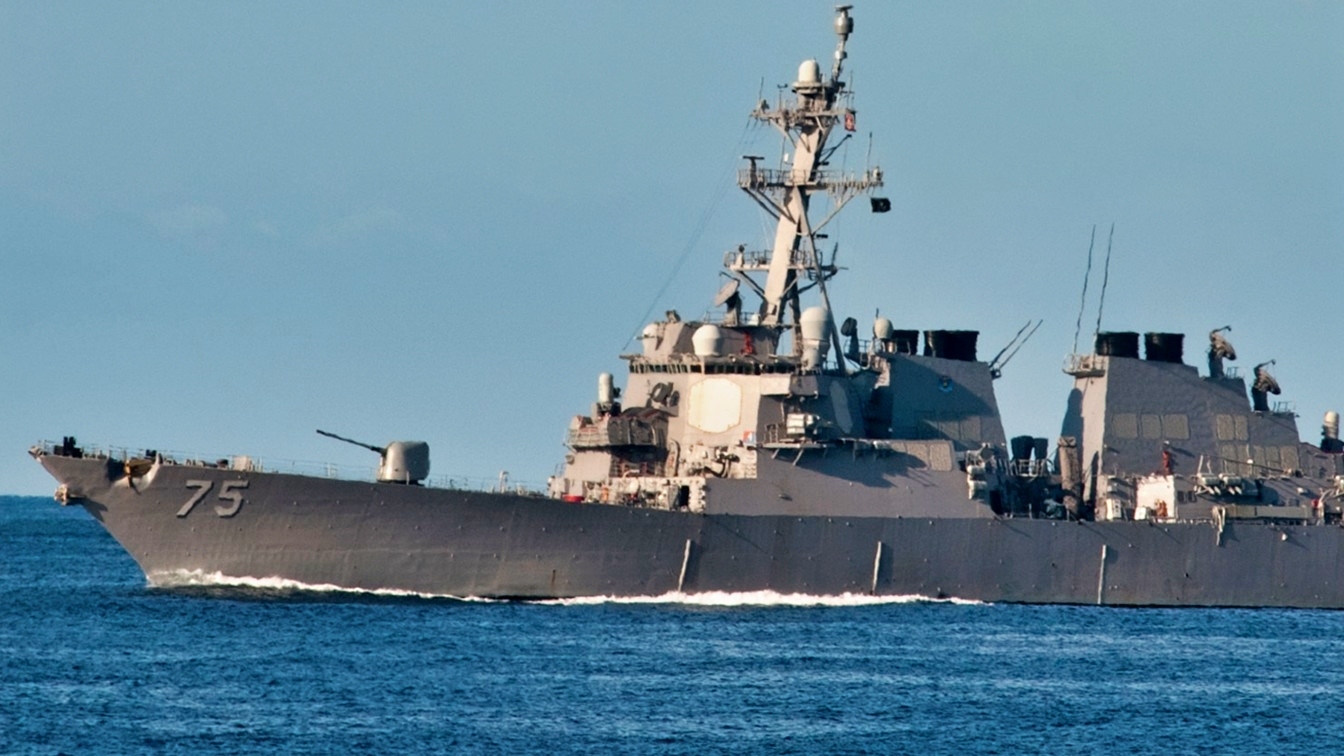
Back on September 9, Al Jazeera reported that Iran’s Islamic Revolutionary Guard Corps (IRGC) had claimed to have captured a Dive-LD vessel, an unmanned U.S. submersible, near the Strait of Hormuz, during the early-September period when the U.S. and Iran were exchanging attacks.
What We Know
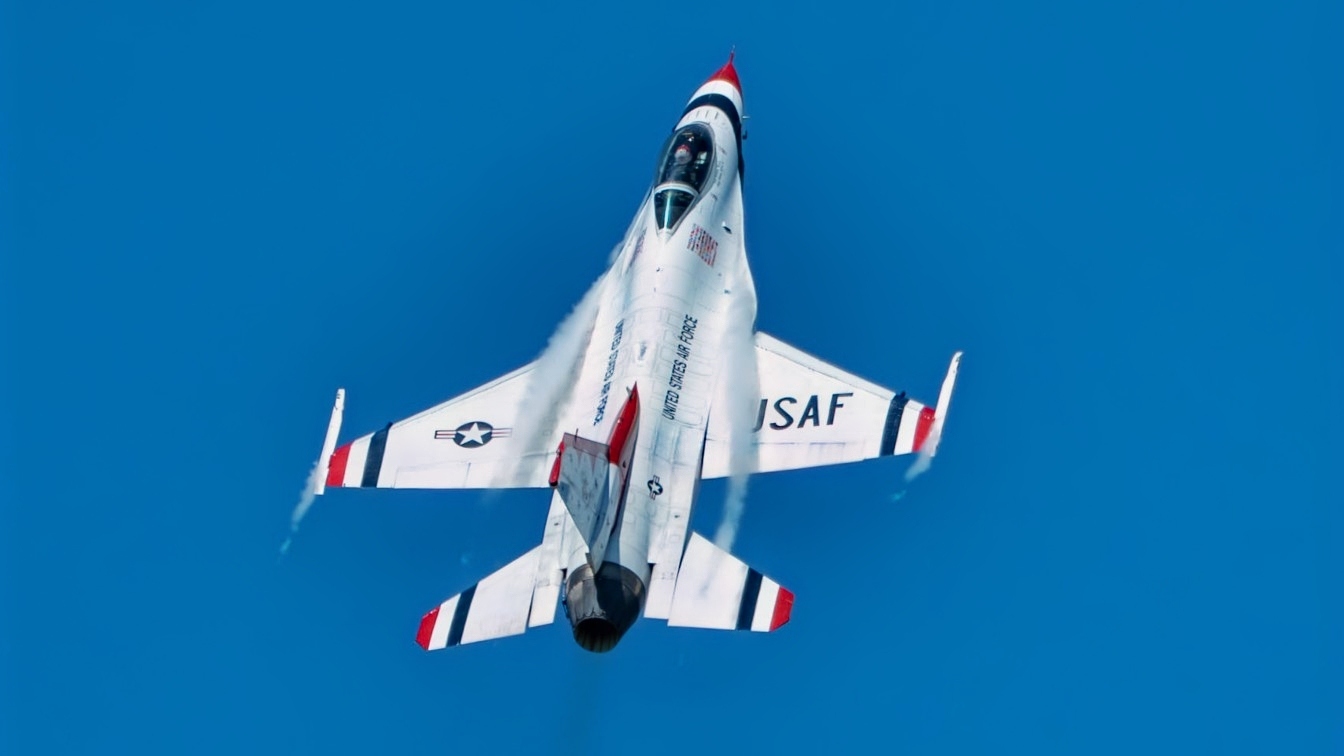
A U.S. Air Force F-16 Fighting Falcon assigned to the United States Air Force Air Demonstration Squadron “Thunderbirds” performs during the 2026 Sioux Falls AirShow: Power on the Prairie at Joe Foss Field, Sioux Falls, South Dakota, July 17, 2026. The Thunderbirds’ demonstration featured close-formation flying and solo routines showcasing the precision and performance of the F-16 Fighting Falcon. (U.S. Air National Guard photo by Master Sgt. Luke Olson)
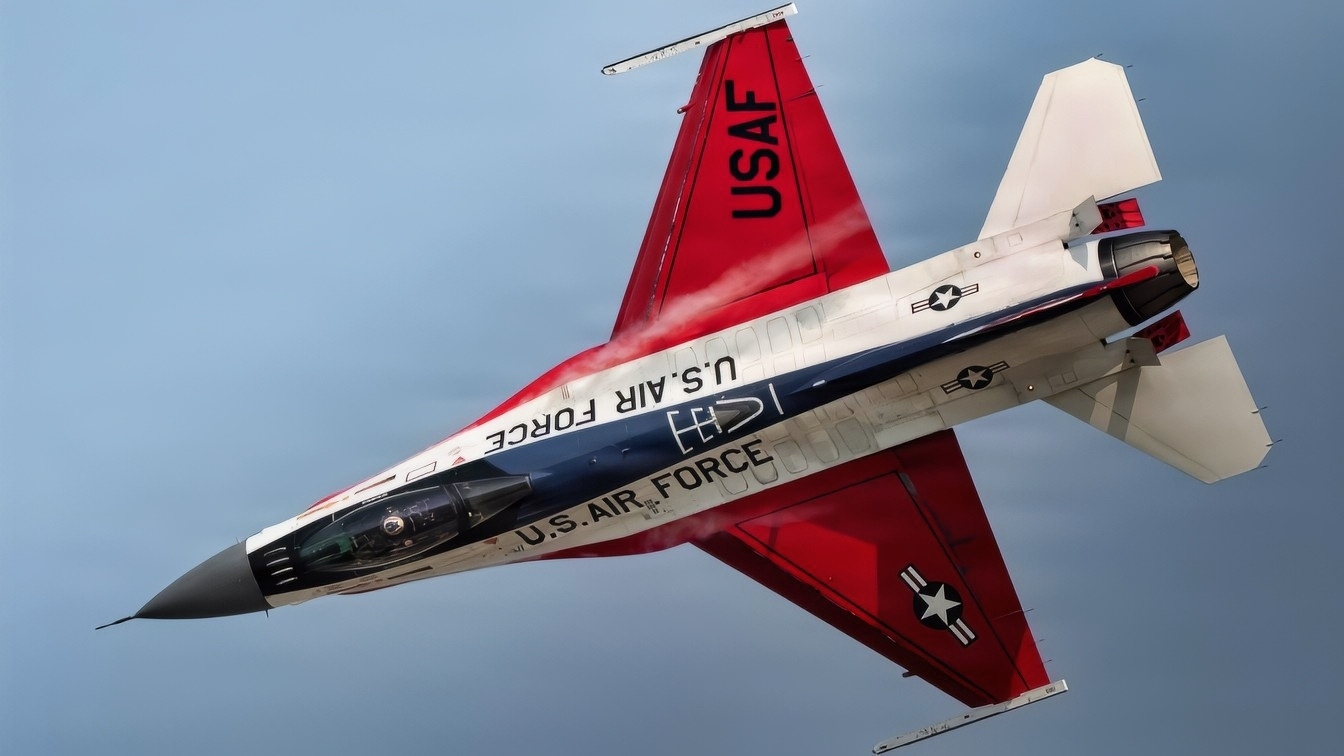
U.S. Air Force Maj. Taylor “FEMA” Hiester, F-16 Viper Demonstration Team commander and pilot, performs aerial maneuvers in a U.S. Air Force F-16C Fighting Falcon during AirVenture at Oshkosh, Wisconsin, July 24, 2026. The F-16, a multi-role fighter aircraft capable of both air-to-air and air-to-ground combat, demonstrates its versatility through dynamic aerial demonstrations across the U.S. and abroad. (U.S. Air Force photo by Staff Sgt. Steven Cardo)
The IRGC described the capture of the vessel as a “complex intelligence and operational mastermind operation.”
The U.S. said the vessel, a 20-foot-long submersible made by the California-based firm Anduril Industries at a cost of $2.5 million per vessel, had malfunctioned a day earlier. It was, as U.S. Navy Captain Tim Hawkins of U.S. Central Command said, an “older model” not involved in collecting sensitive data and not carrying “classified sonar or radar equipment.”
On Monday, Defense Post’s The Drone Front reported that Iran was planning to reverse-engineer the seized submarine.
IRGC spokesperson Brig. Gen. Hossein Mohebbi claimed the captured vessel contained “advanced military technology.”
In an interview with state-run ISNA last week, Mohebbi claimed that “the most advanced US technologies” had come under Iran’s control. He added that reverse-engineering “will begin.”
Iran has been gloating about the capture on social media, with the embassy in Hyderabad posting a picture of the vessel on September 9 and promising an “unboxing ceremony” to be held by its reverse engineers the following morning.
And now, Iran says it has a second underwater vessel.
A Second Capture?
The Jerusalem Post reported on Monday that while Iran has claimed that it captured a second autonomous underwater vehicle (AUV) in the Strait of Hormuz on Sunday, the U.S. military has denied that any such capture of one of its vessels had taken place.
Mohebbi had described the Strait of Hormuz as “a hunting ground” for the IRGC Navy, looking to capture American submarines. He claimed a “second catch,” this time an Mk 18 Mod 2 Kingfish.
Euronews reported Sunday that Iran had identified the alleged second captured vessel as a REMUS 600, from which the Mod 2 Kingfish is derived.
CENTCOM spokesman Hawkins had said that the U.S. maintains “positive control of all of our operational drone assets.”
Euronews stated that other NATO states use the REMUS 600, indicating that if Iran captured a vessel, it’s possible that it doesn’t belong to the U.S.
Can They Do It?
Reuters reported last week that while Iran will almost certainly attempt to study and reverse-engineer the first captured vessel, it’s a separate question whether they can actually glean anything valuable from it.
Both the Pentagon and its manufacturer, Anduril, have downplayed the significance of Iran’s capture of the Dive-LD vessel, although they have differing interests when it comes to that significance.
The Reuters report cited experts who said Iran is unlikely to gain any major military advantage from the capture, although the episode is still useful to the IRGC for propaganda purposes.
Farzin Nadimi, a senior fellow at the Washington Institute for Near East Policy, told Reuters that Iran will use “every opportunity as a propaganda win,” but that the IRGC would probably use the captured vessel to make “better versions of their own designs.”
Another expert, senior fellow Bryan Clark of the Center for Defense Concepts and Technology at the Hudson Institute, told Reuters that while Iran may get its hands on the vessel’s hardware, built-in defenses would likely protect the vessel’s software.
Reuters also said the Pentagon and Dive-LD manufacturer Anduril haven’t been exactly on the same page about the vessel’s significance after the capture. While Navy officials have sought to characterize the Dive-LD as an older, obsolete model, Anduril has described it as closer to the top of the line.
Some Precedents
Reuters reported that the U.S. has been concerned in the past about its own drone technology falling into Iran’s hands. In late 2011, when Iran captured a RQ-170 Sentinel stealth reconnaissance drone, President Barack Obama asked for its return, but Iran instead claimed that it not only reverse-engineered that drone, but used its technologies to make drones of its own.
In 2022, Iran came close to capturing a Saildrone surface vessel that was downed in the Persian Gulf, which required both a U.S. Navy patrol ship and an MH-60S Seahawk helicopter to be deployed to secure that vessel.
About the Author: Stephen Silver
Stephen Silver is an award-winning journalist, essayist, and film critic, and contributor to the Philadelphia Inquirer, the Jewish Telegraphic Agency, Broad Street Review, and Splice Today. The co-founder of the Philadelphia Film Critics Circle, Stephen lives in suburban Philadelphia with his wife and two sons. For over a decade, Stephen has authored thousands of articles that focus on politics, national security, technology, and the economy. Follow him on X (formerly Twitter) at @StephenSilver, and subscribe to his Substack newsletter.


